
NFPA 25C Section 4.5: Testing Requirements and Protocols for Fire Protection Systems
Quick Answer: NFPA 25C Section 4.5 sets out how testing is performed for fire protection systems to verify reliability, detect degradation, and document results. The section emphasizes correct test methods, controlled conditions, and compliant recordkeeping, aligned with the type of system and its components.
Facilities trying to tighten up inspection, testing, and maintenance often benefit from a broader service view, especially when sprinkler testing needs to connect cleanly with repairs, inspections, and ongoing compliance work. A natural place to start is Kord Fire Protection’s fire sprinkler services and repair support, which fits neatly into the real-world execution side of Section 4.5. ([kordfire.com](https://kordfire.com/fire-sprinkler-service/?utm_source=openai))
Why NFPA 25C Section 4.5 matters in commercial facilities
Commercial, industrial, and retail properties rely on water based and related fire protection systems that must perform under real emergency conditions. NFPA 25C Section 4.5 testing requirements fire protection systems address a practical gap between installation and real world readiness: systems drift out of compliance as components age, pressures change, alarms develop nuisance conditions, and maintenance is deferred.
In facility operations, the most common pressure points are not the written standard, but the execution. Scheduling testing without disrupting life safety operations, maintaining stable water supply conditions, coordinating control valves and supervisory switches, and producing defensible test documentation are the items that typically drive audit findings and rework.
What Section 4.5 requires: a testing mindset, not just a checklist
NFPA 25C Section 4.5 testing requirements fire protection systems are built around three core expectations. First, testing must confirm that components actuate and perform within allowable parameters. Second, protocols must control variables that can skew results, such as water supply condition, pre test system configuration, and test durations. Third, testing must generate records that support compliance, trend analysis, and corrective action.
To implement this mindset, technicians typically follow a repeatable workflow: verify system identity and applicable annex or referenced standards, inspect for obvious physical defects first, prepare the system and control interfaces, perform the required test sequence, restore the system to a safe operating configuration, and document outcomes with objective measurements and observations.
Testing protocols by system type: where failures actually occur
NFPA 25C testing protocols change in emphasis depending on the fire protection system in scope. Even when facilities operate under one common “fire sprinkler inspection” program, the tested devices and the most likely failure points differ by hazard profile, water supply arrangement, and control system design.
Water based fire protection systems: flow, pressure, and actuation
For sprinkler and water based systems, testing typically targets the ability to deliver correct water distribution and to ensure that related alarms and supervisory functions respond properly. Common failure points include partially obstructed strainers, inaccurate gauge readings due to out of calibration instruments, piping pressure losses not accounted for during acceptance, and control valve issues such as improper seating or incomplete supervisory switch transmission.
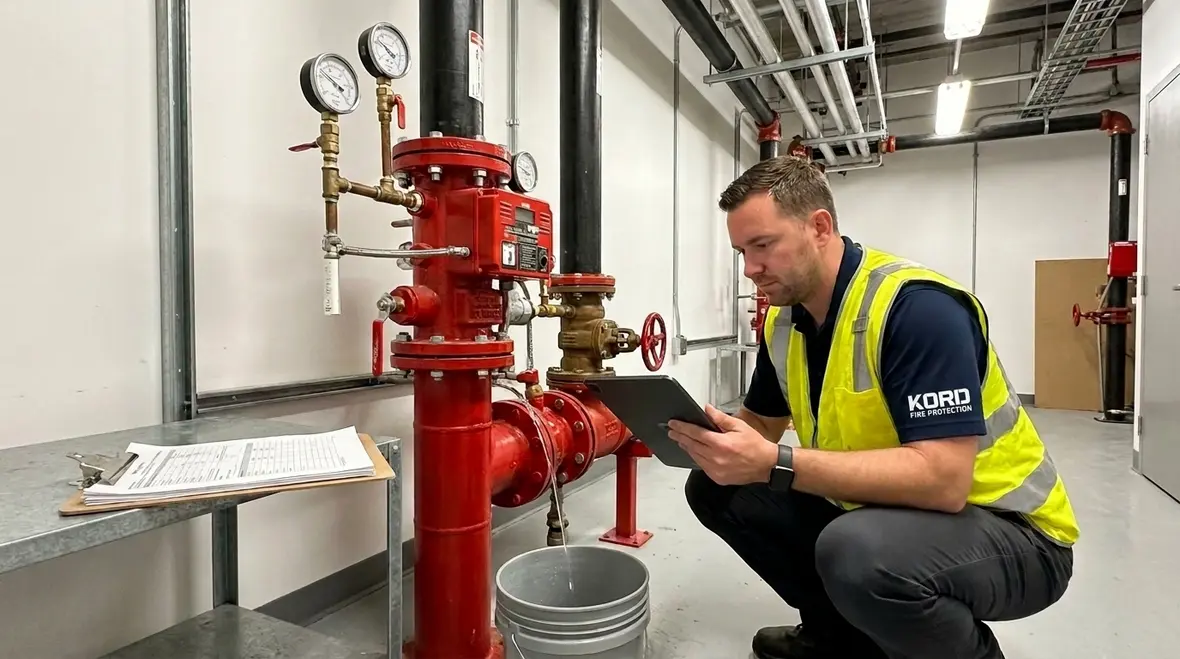
When testing includes system flow and pressure observation, technicians must ensure that discharge or drain operations do not create unsafe conditions, and they must restore the system after test completion. If a test requires staged or controlled actuation, technicians coordinate with facility operations to prevent interruptions to normal protective coverage and to manage temporary impairments properly.
That planning-heavy approach also lines up with Kord Fire Protection’s article on NFPA 25 Section 5.3 sprinkler system testing plans, which emphasizes doing the setup work before anybody starts touching valves and test assemblies. ([kordfire.com](https://kordfire.com/nfpa-25-section-5-3-sprinkler-system-testing-plan/?utm_source=openai))
Control valves, supervisory switches, and alarm interfaces
Many commercial compliance problems trace back to control and supervisory circuits. Supervisory switches can indicate “normal” when wiring is loose, when contacts are misadjusted, or when a valve position is not truly aligned. Alarm interface testing can also miss faults if the protocol does not confirm both device actuation and panel annunciation behavior.
Best practice is to confirm that tested endpoints match the programmed device identity in the fire alarm control unit and that supervisory status returns to normal after restoration. Facilities that rely on frequent subcontracting can also run into continuity issues unless documentation clearly identifies which devices were tested, when, and with what measured results.
Fire pumps and auxiliary components
Where fire pumps are present, testing focuses on pump performance and readiness of controls. Typical failure points include relief valve issues, starting circuit faults, calibration drift in pressure switches, and inadequate discharge control responses. The testing protocol also requires attention to pump discharge conditions to avoid overstressing components or creating unstable operating states.
For additional context on pump readiness resources, facilities often consult industry guidance such as FirePumps.org to align operational expectations with common maintenance and testing practices.
Common compliance challenges during execution
Even well staffed fire protection teams experience recurring field issues. Understanding them helps facilities plan testing that passes both the technical standard and the practical audit test.
1) Operational constraints and impairment management
Testing can require valve manipulation, controlled discharge, or temporary bypasses. The biggest risk is performing work without a clear impairment plan, signage, and communication to affected building personnel. A defensible approach includes documenting system impairment windows, notifying stakeholders, and restoring normal coverage immediately after the test sequence completes.
2) Inaccurate measurement and instrumentation drift
Pressure and flow readings must support objective verification. In practice, technicians sometimes rely on gauges that are due for calibration, or they read instruments without confirming accuracy at the installation conditions. This can produce test records that look plausible but fail scrutiny because the measurement basis is weak.
3) Documentation that does not match the field conditions
NFPA 25C documentation must reflect what was tested and what was found. Facilities often receive reports that list the test type but omit key results such as measured pressures, observed valve positions, alarm panel responses, or corrective actions taken. For compliance, records must be traceable and consistent with the system configuration.
How to build an NFPA 25C Section 4.5 compliant maintenance and testing program
A robust program aligns planning, test method control, and corrective action loops. It also integrates facility operational constraints so that testing does not become an interruption or a recurring struggle.
Step by step field workflow for technicians
- System verification: Confirm drawings, device identities, and the system configuration tied to the building’s hazard classification.
- Pre test inspection: Look for physical defects, valve issues, tamper evidence, obstruction risk, and indicators of water supply instability.
- Test preparation: Assemble calibrated instruments, confirm control interfaces, and coordinate impairment handling as needed.
- Controlled test execution: Follow the required sequence, control discharge conditions, and confirm endpoint response at the intended device and panel.
- Restoration and verification: Return components to normal operating positions and confirm supervisory and alarm states return to baseline.
- Defensible documentation: Record measurements, observations, and corrective actions with sufficient detail for audit review and trend analysis.
Integrating installation and maintenance expectations
Facilities reduce rework when they connect testing requirements to installation fundamentals. For example, an automatic sprinkler system installation approach affects how valves, gauges, and control interfaces behave during tests. For teams that need a foundation for how installation choices influence ongoing testing behavior, see this NFPA 13 overview of automatic fire sprinkler system installation.
For a maintenance focused overview of water based fire protection systems, including what typically gets inspected and why, review this NFPA 25 overview of complete water based fire protection systems maintenance breakdown.
Where local code adoption affects interpretation or compliance administration, facilities can benefit from regional guidance such as this explanation of California fire sprinkler code requirements.
If your team wants another strong companion piece on testing discipline, Kord Fire Protection’s write-up on NFPA 25 Section 13.13 component testing requirements pairs well with Section 4.5 because it zooms in on valves, switches, gauges, and the other parts that love to fail quietly until somebody finally checks them. ([kordfire.com](https://kordfire.com/nfpa-25-section-13-13-component-testing-requirements/?utm_source=openai))
Why Kord Fire Protection is positioned to support ongoing compliance
Testing that meets NFPA 25C Section 4.5 testing requirements fire protection systems must be repeatable, traceable, and tied to the actual system in the field. Kord Fire Protection supports commercial and industrial facilities with service plans that focus on correct protocol execution, coordinated impairment handling, calibrated measurement practices, and audit ready reporting.
Commercial stakeholders typically need more than “completion of the test.” They need clear corrective action recommendations, prioritization based on risk, and documentation that aligns with inspection and testing expectations. For organizations balancing compliance with uptime, Kord Fire Protection acts as a dependable partner for scheduled maintenance and verified system readiness.
Additional regional support information is available via Kord Electric and Kord Fire Protection Australia.
Frequently Asked Questions
Conclusion and Call to Action
NFPA 25C Section 4.5 testing requirements fire protection systems succeed when testing is executed with controlled conditions and audit ready records, not just performed on schedule. Kord Fire Protection can help commercial facilities plan compliant testing, handle impairments correctly, and document results that stand up to review. Contact Kord Fire Protection to assess current testing gaps and build a dependable compliance program for your water based and related fire protection systems.

Join Our Newsletter!
Get the latest fire safety tips delivered straight to your inbox From our Newsletter.


