NFPA 25 Section 5.3 Sprinkler System Testing Plan
Quick Answer: NFPA 25 section 5.3 expects facilities to plan and execute sprinkler system testing with clear scope, schedules, safety steps, and documentation. Teams must confirm water supply readiness, ensure proper monitoring, and manage impairments. Kord Fire Protection can act as a vital partner by coordinating compliant testing, reducing downtime, and keeping records audit ready.
That sounds straightforward on paper, but real buildings rarely behave like tidy checklists. Testing happens around operating hours, staff schedules, access restrictions, and all the little site surprises that somehow appear the moment someone touches a valve. For facilities that want a broader partner for inspections, service coordination, and testing support, full fire protection services can help connect sprinkler work with the rest of the building’s life safety needs. It also helps to understand the bigger maintenance picture through Kord Fire Protection’s NFPA 25 overview, especially when teams need the testing plan to make sense in the real world, not just in a binder on a shelf.
Sprinkler system testing topics under NFPA 25 section 5.3
NFPA 25 section 5.3 lays out sprinkler system testing requirements that demand more than “turn it on and hope.” Within the first 100 to 150 words, the core message is simple: facility teams must plan testing topics with purpose, control hazards, and maintain a traceable record. After all, sprinkler systems do not fail gracefully, and they do not care whether the team was busy during the school holidays. They just need to work when the smoke shows up.
In Australia, industrial, retail, and commercial facilities face the added pressure of operations running 24/7, strict compliance expectations, and complex building services. Therefore, the best results come when testing plans connect to real site realities: water supply conditions, access constraints, maintenance windows, and impairment controls. That is also why related topics like sprinkler system water flow monitoring for compliance matter so much. A testing plan is not just about proving something worked once. It is about building confidence that the system will behave properly when the stakes are very real and the room is definitely not in the mood for experiments.
What facilities must plan before testing begins
Scope, roles, and site control
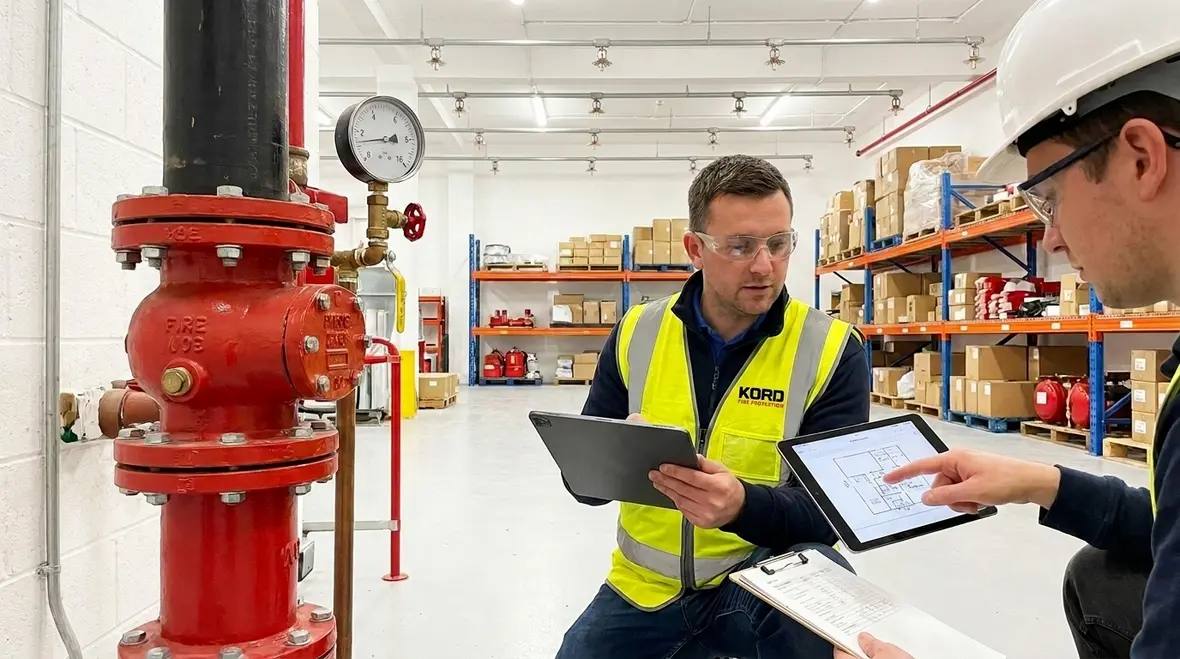
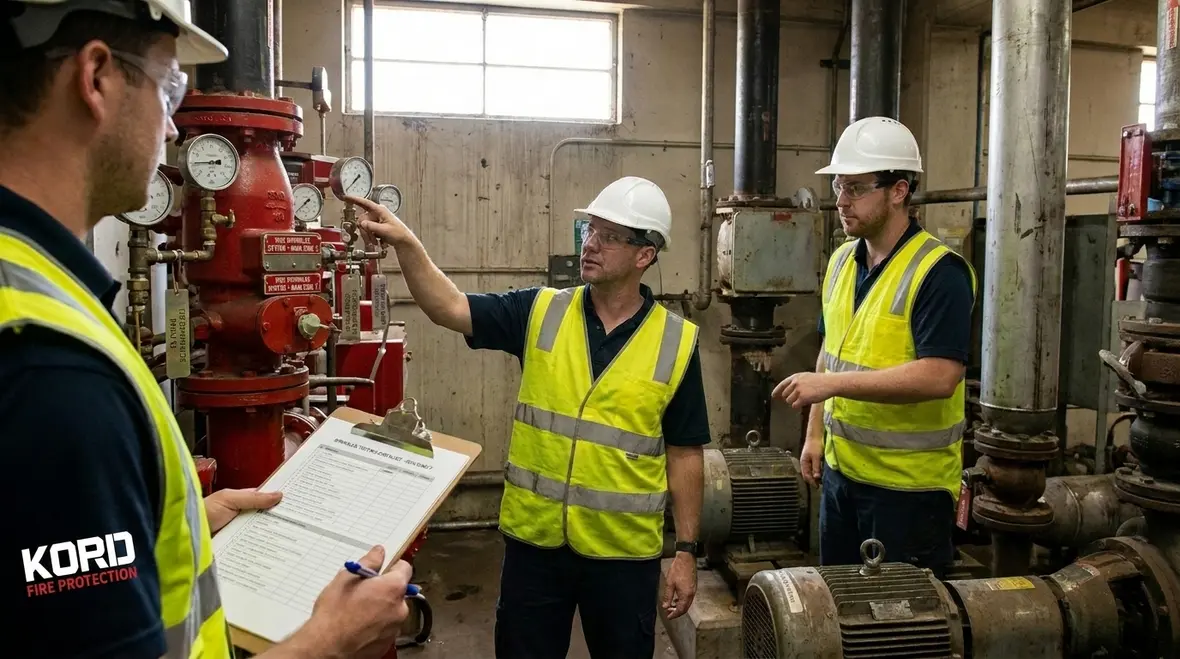
Facility teams usually focus on the how, but NFPA 25 sprinkler system testing requirements also reward strong planning before anyone touches valves or test assemblies. First, the team defines the test scope by system type, building zones, and equipment list. Next, they confirm roles and responsibilities so the right people approve impairments and sign off on results.
Then they address safety and site control. For example, testing can temporarily affect water flow, alarm monitoring, or sprinkler maintenance readiness in specific areas. Accordingly, the plan should include barricades, signage, fire watch procedures where required, and communication steps for contractors, operations, and security. If the site has layered protection systems, it can also help to think through related interfaces, including controls, signaling, and monitoring expectations before the test starts instead of learning about them in the middle of it.
Finally, documentation cannot be treated like a side quest. The testing record must link to the specific asset, date, location, readings, and observed results. This matters when auditors ask “show me,” not “tell me.” A smart team also decides in advance how findings will be categorized, who receives the report, how quickly corrections are escalated, and what evidence gets retained. None of that feels glamorous, but neither does a compliance gap discovered after the fact.
Water supply readiness and test performance checks
Why supply conditions deserve attention
A sprinkler system depends on its water supply and the ability to deliver water under demand. Therefore, testing topics should include supply readiness checks that verify pressure and flow conditions match the system design. If the water supply changes over time, testing often becomes the first early warning sign.
During planning, teams should confirm the condition of pumps, tanks, pressure reducing devices, and other components that influence effective delivery. In addition, they should coordinate with site utilities so the right personnel are available to support readings and ensure no unrelated changes occur during the test window. Kord Fire Protection’s discussion of water supply reliability analysis for fire suppression systems fits naturally here because a weak or inconsistent supply can make a healthy-looking sprinkler system perform far less heroically than expected.
Because Australia has diverse site layouts, the best testing plans include access routes and confirm safe working distances around underground services, plant rooms, and risers. If the test team has to squeeze past storage pallets or forklifts, the test becomes slower, more expensive, and occasionally more dramatic. And nobody wants a dramatic pump start like it is an action movie. Good planning also means noting who captures readings, where baseline values are stored, and how results will be compared to previous cycles so trends do not hide in plain sight.
Valve positions, impairments, and system control
Managing changes without losing control
When testing needs to control valves, manage impairments, or verify operational states, facility teams must plan tightly. Accordingly, they should identify which valves will be operated, which positions must be maintained, and which checks confirm the system returns to normal after testing.
Impairments require careful handling. The team should set clear timelines, approvals, and notification steps so the facility stays protected while work happens. Where monitoring interfaces exist, they should confirm that alarm and supervisory signals function correctly and that the right monitoring contacts receive updates. This is where a topic like fire sprinkler electrical monitoring systems in Australia becomes more than nice background reading. Signals and status updates matter because confusion during an impairment window is the sort of chaos nobody orders on purpose.
It also helps to pre-stage materials like caps, tags, test adaptors, hoses where needed, and signage. That way, the team does not spend the testing window searching for items in a storeroom that looks like a warehouse escape room. Planning reduces delays and keeps results cleaner. It can also help to review broader impairment thinking through related guidance such as fire suppression impairment signs, especially for sites where several systems overlap and one testing action may ripple into others.
Functional testing, inspection sequencing, and reporting
Turning field work into useful records
Once the plan is approved, the testing team should follow a logical sequence that prevents rework. For example, they can verify inspection steps first, then perform functional checks, and finally confirm system status. This order helps ensure that any abnormal observations get addressed before moving deeper into the system.
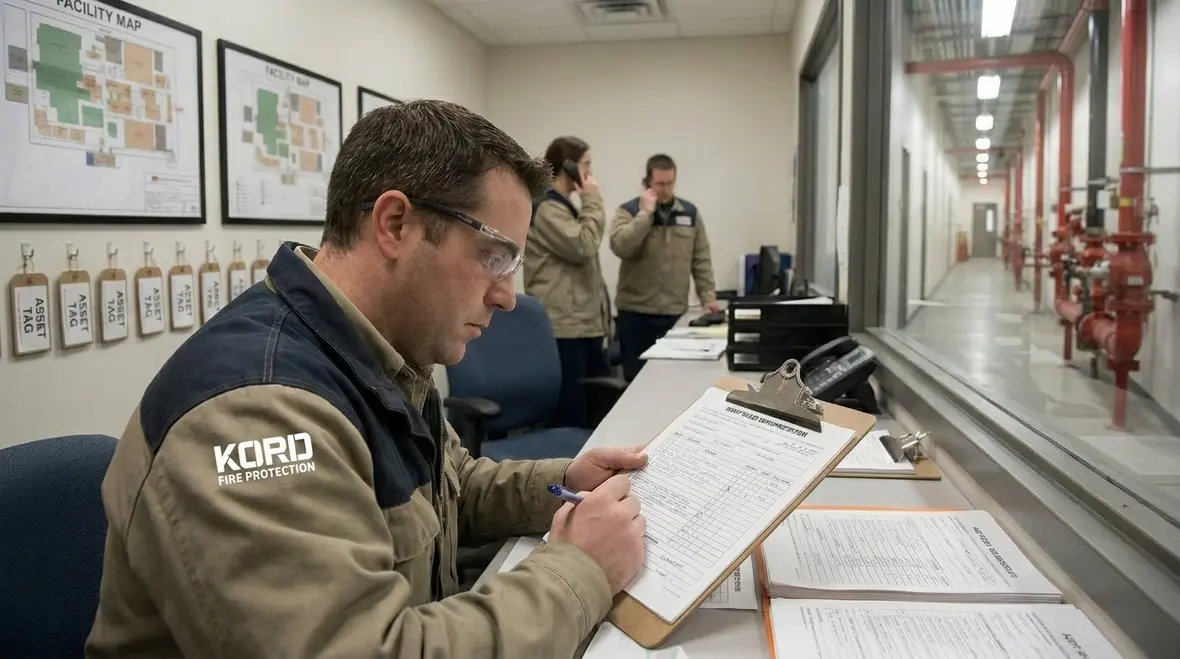
During testing, teams should capture readings in a consistent format so comparisons across prior cycles remain meaningful. Also, they should record any delayed response, abnormal pressures, unusual sound patterns, or accessibility constraints that could affect future inspections. This same disciplined rhythm shows up in Kord Fire Protection’s article on consistent testing preventing costly system failures, because the point of repeating tests is not repetition for its own sake. It is learning what changed, what drifted, and what needs attention before the building decides to teach the lesson at the worst possible moment.
After the test, reporting needs to be practical. The report should clearly describe what was tested, where it was tested, the results, and whether the system meets the expected performance. When issues exist, the report should outline the likely cause and recommended corrective actions, not just the problem statement. A report that says “something looked weird” may be honest, but it is not especially useful. The best closeout records make follow-up easier, budgets clearer, and future testing smarter.
How Kord Fire Protection supports NFPA 25 compliance on real sites
Facility teams often juggle production schedules, retail foot traffic, and seasonal changeovers. Therefore, hiring a specialist partner can turn a complex compliance task into a manageable service. Kord Fire Protection can become a vital partner by coordinating sprinkler system testing that aligns with NFPA 25 sprinkler system testing requirements, while also respecting your operational constraints across industrial, retail, and commercial sites across Australia.
Kord Fire Protection supports planning, execution, and closeout in a business friendly way that still stays serious about safety. They help teams map system assets, schedule work to reduce disruption, and manage impairments with clear communication. Then they deliver reporting that supports audits and internal governance so the paperwork does not haunt the maintenance manager after the job is done.
And yes, testing can be tedious. But nobody should have to roll dice with fire protection. Partnering with an experienced service provider helps keep your sprinkler system ready, your documentation accurate, and your downtime shorter. That is the goal, not the paperwork theater.
Scheduling for uptime, access, and seasonal risk
Making the calendar work for the building
Testing does not happen in a vacuum. It happens in real facilities with real constraints. So the scheduling plan should consider production cycles, customer traffic, high risk storage periods, and plant shutdown opportunities. For retail sites, after hours and planned access routes reduce disruption and keep customer safety front of mind.
For industrial sites, the team should coordinate with maintenance, utilities, and operations so the test window allows stable conditions. This matters because fluctuations in air pressure, water supply behaviour, or building occupancy can affect how tests are performed and interpreted. Reliability is not just about hardware. It is also about timing, preparation, and choosing a window where the results actually mean something. That is part of the same bigger story discussed in improving commercial fire sprinkler reliability in Australia.
Also, plan around seasonal risk. For example, periods with higher fire load, dust accumulation, or changes in stock density can increase the importance of verifying readiness. When facilities align testing with risk windows, they protect the building during the times it matters most. A good schedule is not just convenient. It is strategic, realistic, and a lot less painful than trying to fit serious testing into a window that was doomed from the start.
FAQ: NFPA 25 sprinkler testing requirements for facility teams
Conclusion: keep your sprinkler system ready and your compliance clear
NFPA 25 section 5.3 asks for planning that respects safety, operations, and documentation. When facility teams schedule wisely, manage impairments properly, and verify performance with consistent reporting, they protect people and assets without chaos. It is disciplined work, but it is the kind that pays off quietly long before an emergency ever arrives.
Kord Fire Protection can help coordinate compliant testing and deliver clear records across industrial, retail, and commercial sites in Australia. Reach out to plan your next testing window and keep your system ready for real emergencies. That is the point of the plan: fewer surprises, better readiness, and a lot less paperwork theater when the auditors come calling.

Join Our Newsletter!
Get the latest fire safety tips delivered straight to your inbox From our Newsletter.