NFPA 25 Section 13.13 Component Testing Requirements
Quick Answer: NFPA 25 Section 13.13 sets the testing rules for key fire protection components so they work when needed most. In practice, this means valves, switches, gauges, and other devices must be checked on schedule, documented well, and kept in ready condition. For industrial, retail, and commercial sites across Australia, Kord Fire Protection can support this work with disciplined testing, clear reporting, and dependable service.
NFPA 25 component testing requirements matter because a fire system is only as strong as its weakest part. Section 13.13 focuses on the devices that help a sprinkler or water based fire protection system do its job without delay. That includes common control components, alarm related parts, and other devices that can quietly fail if nobody checks them. In busy facilities, that risk grows fast. One missed fault can turn a simple maintenance issue into a very bad day, and nobody wants that kind of plot twist in the middle of a trading week.
When sites need broader support beyond one test item, full fire protection services fit naturally into the discussion because component testing works best when it connects to inspections, maintenance, repairs, and long term readiness. This is especially true for facilities balancing uptime, safety obligations, and the usual pile of daily operational surprises.
What NFPA 25 Section 13.13 Covers
NFPA 25 Section 13.13 addresses the testing of components that support system performance. It does not ask for busywork. It asks for proof that critical parts still operate as intended. As a result, facility teams must treat these tests as part of a live risk control plan, not as a paper exercise for the filing cabinet crowd.
In practical terms, the standard looks at devices that confirm pressure, trigger alarms, control flow, or support system response. Therefore, the aim is simple: verify that each part responds correctly under the right conditions. When a system depends on these devices to sense trouble, delay can become damage very quickly. That is why this section deserves more attention than it usually gets. The larger sprinkler network may take the spotlight, but these smaller components often decide whether the whole system responds cleanly or hesitates at the worst possible moment.
Why this section matters more than it first appears
A lot of fire protection conversations focus on big visible hardware. Pipes, pumps, tanks, and sprinkler heads usually get all the glamour. Yet Section 13.13 reminds everyone that smaller devices carry heavy responsibility. If a supervisory switch fails to report a closed valve, or a pressure switch does not respond in time, the system may still look fine while quietly losing reliability. That is not the sort of hidden drama any facility manager wants sneaking around the plant room.
Which Devices Need Testing in Commercial Sites
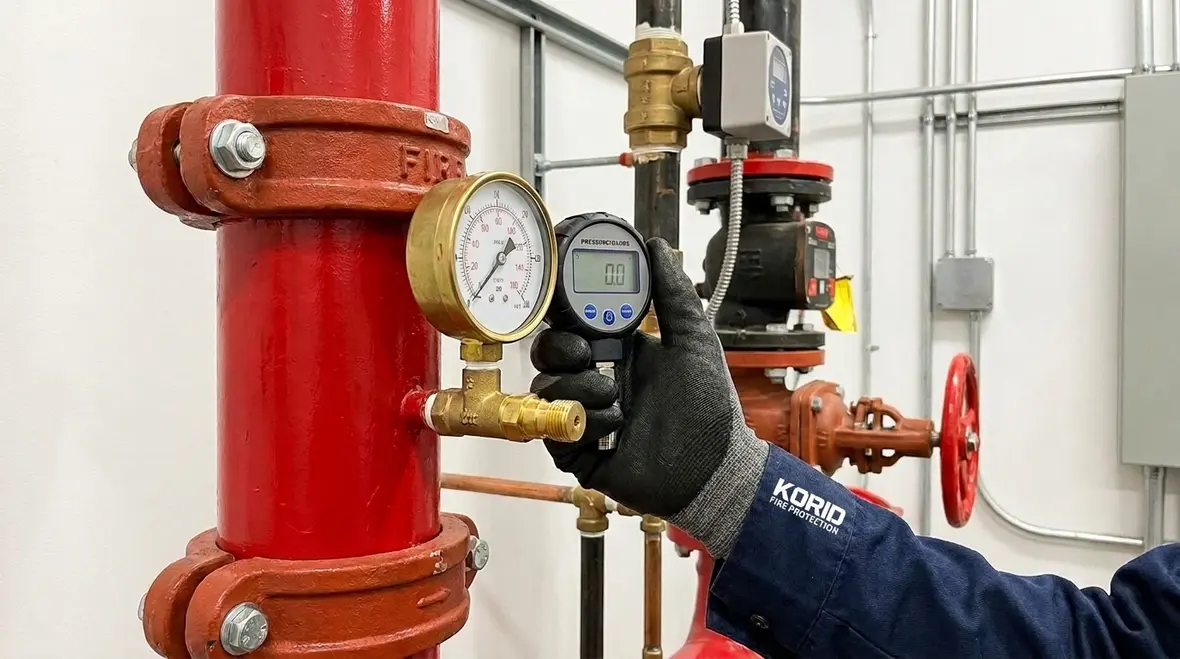
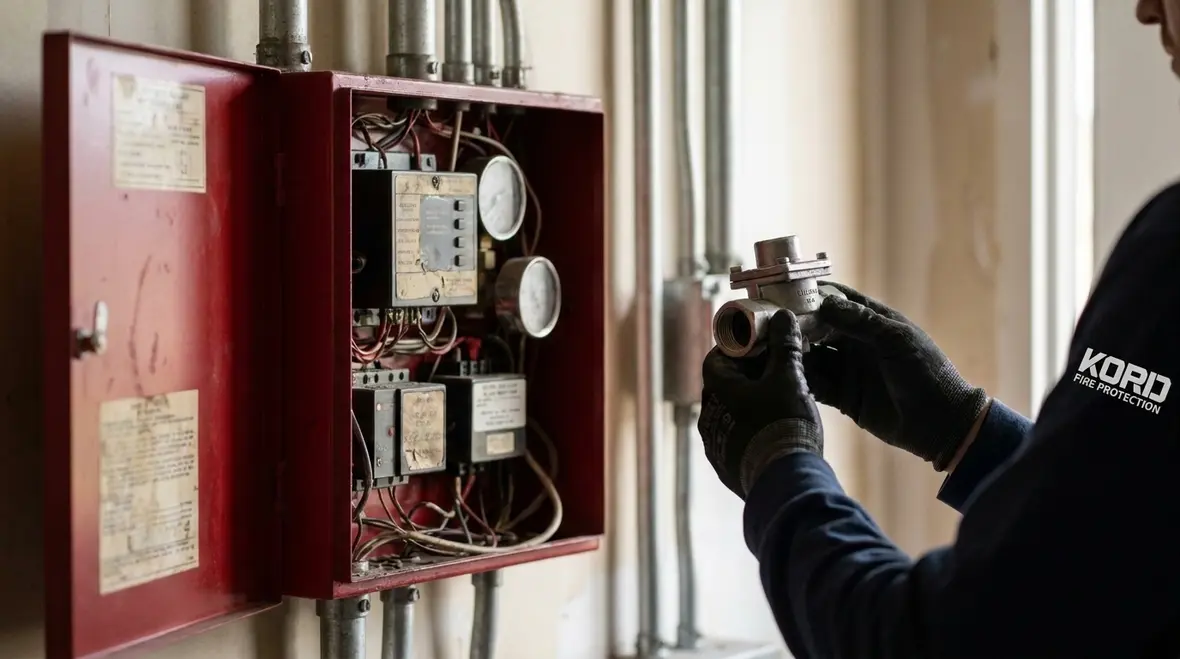
Common fire protection devices under this part of NFPA 25 often include gauges, water flow devices, valve supervision switches, alarm switches, pressure switches, and other related control parts. These items may seem small, yet they carry serious weight. After all, a sprinkler system can be dressed like a champion, but if the switches and gauges are asleep, the whole act falls flat.
For industrial, retail, and commercial properties across Australia, the exact mix of devices depends on the installed system and site layout. However, the testing logic stays the same. Each component must be checked for proper condition, correct operation, and sound response. In addition, any device that shows drift, damage, or delay should move quickly into corrective action. Waiting around rarely improves mechanical honesty.
| Component | What the test confirms |
| Pressure gauge | Shows readable and accurate system pressure |
| Water flow device | Detects flow and sends the right signal |
| Supervisory switch | Confirms valve position and tamper status |
| Alarm switch | Activates warning signals when needed |
| Pressure switch | Responds within expected operating limits |
What can go wrong if these parts are ignored
Ignored components tend to fail in dull, frustrating ways. A gauge becomes unreadable. A switch sticks. A signal lags. A valve indicator stops telling the truth. None of that feels dramatic during a calm Tuesday morning inspection, but those faults can become painfully important during an emergency. Component testing exists to catch the boring failures before they earn a starring role.
How Component Testing Should Be Scheduled
Testing frequency depends on the specific device and the system arrangement. Therefore, a good program must follow the standard and the site’s actual conditions. Some tests happen more often because the device plays a more active role in system response. Others support routine checks and periodic verification. Either way, the schedule should stay consistent, because fire systems do not reward improvisation.
Also, the site should account for access issues, production hours, trading hours, and safety rules. In a warehouse, a shutdown window may be short. In a shopping centre, disruption must stay low. Consequently, planning matters just as much as the test itself. The best service teams build a schedule that protects compliance and keeps operations moving. They do not just turn up with tools and optimism.
Scheduling around real world site conditions
The smartest programs fit the property instead of forcing the property into a generic template. High traffic retail sites may need low disruption windows. Industrial plants may need permit coordination, isolation procedures, and careful communication with operations staff. Multi tenant buildings may need staged notice and access planning. A testing calendar should look organized on paper, yes, but it also has to survive contact with reality.
Why Accurate Records Matter for NFPA 25 Component Testing Requirements
Testing without records creates confusion. Therefore, every inspection and test should include clear notes on what was checked, what passed, what failed, and what was repaired. This documentation helps managers track trends, spot repeat faults, and show evidence during audits or insurer reviews.
Strong records also support long term asset care. For example, if the same gauge keeps drifting or a valve switch keeps failing to return, the pattern becomes visible. Then the site can fix the cause instead of chasing the same issue like a rerun nobody asked for. Good paperwork may not sound exciting, but it keeps the system honest.
Clear reporting also helps handoffs between managers, contractors, compliance staff, and insurers. If records are vague, everyone ends up guessing what was tested, what condition it was in, and whether a defect is new or old. That is how small issues linger. Precise records turn maintenance history into something useful rather than a mystery novel with missing chapters.
How Kord Fire Protection Supports Testing and Compliance
Kord Fire Protection can become a vital partner because this work needs skill, timing, and discipline. A reliable service partner helps facilities manage NFPA 25 component testing requirements with less stress and more control. In addition, Kord Fire Protection can help identify weak points early, carry out the required tests, and keep results organized for future review.
For sites across Australia, that support matters. Industrial plants need minimal disruption. Retail spaces need fast, clean service. Commercial buildings need dependable compliance without drama. Kord Fire Protection can help bridge the gap between the standard and the real world, which is where most maintenance plans either shine or fall apart.
In many cases, the value goes beyond testing alone. A good partner can also help coordinate repairs, flag aging parts, and recommend practical next steps before minor issues become costly failures. That kind of support turns compliance into confidence. For readers who want a broader framework around inspections, valves, components, and water based system upkeep, Kord Fire Protection also offers a helpful NFPA 25 overview for water based fire protection systems that adds useful context to the bigger maintenance picture.
What Facilities Should Look For in a Testing Partner
Facilities should look for a partner that understands the standard, communicates clearly, and works around operational limits. Moreover, the team should document results well and explain defects in plain language. Nobody benefits from a report that reads like it was written by a toaster with a law degree.
It also helps when the provider understands different site types. A distribution centre has different risks than a retail complex or a large office building. Therefore, the testing plan should fit the property, not force the property to fit the plan. That flexible but disciplined approach saves time and reduces risk.
Beyond technical knowledge, good partners bring consistency. They arrive prepared, communicate before and after testing, note defects clearly, and avoid turning ordinary maintenance into avoidable disruption. In other words, they make competence look boring, which is exactly what you want from a fire protection program.
FAQ
Keep the System Ready Before Trouble Arrives
NFPA 25 component testing requirements protect more than equipment. They protect people, stock, operations, and peace of mind. Therefore, facilities should treat testing as a serious part of daily risk control. Kord Fire Protection can help keep those systems tested, documented, and ready, so the next alarm means a prepared response, not a scramble.
The main lesson is simple. Small components deserve serious attention. When gauges, switches, and related devices are tested on time and recorded properly, the whole system becomes more dependable. That is a much better story than discovering a hidden fault during the one moment nobody can afford surprises.

Join Our Newsletter!
Get the latest fire safety tips delivered straight to your inbox From our Newsletter.