
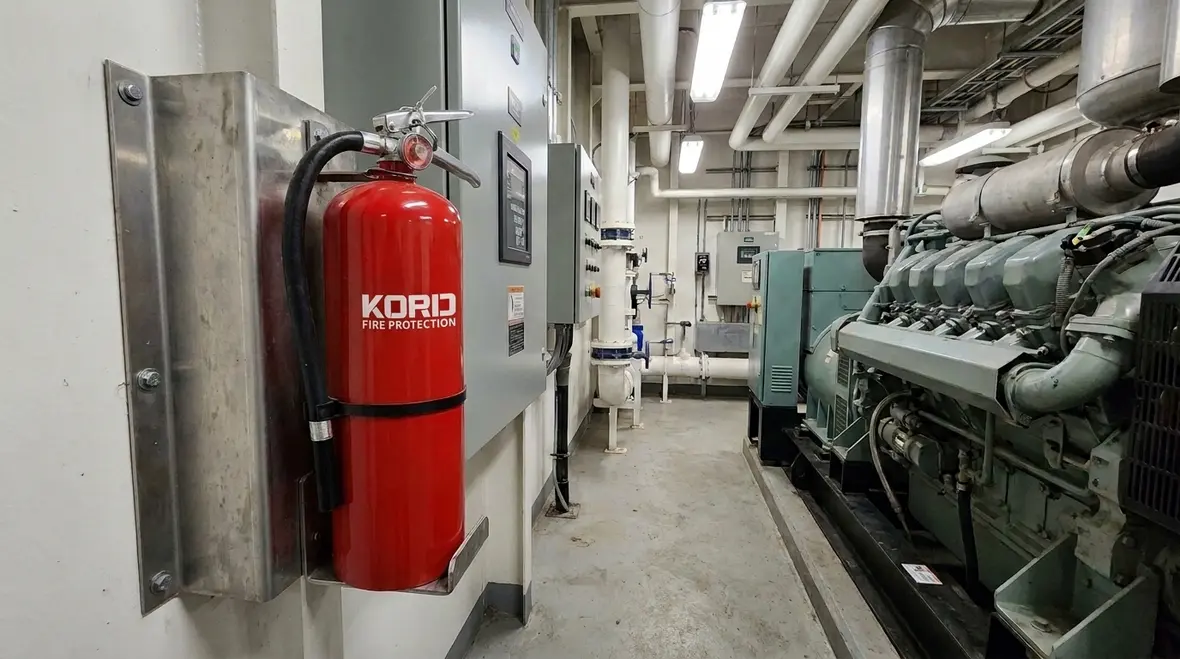
NFPA 37 Section 11.2: Portable Fire Extinguishers at Engine Locations
Quick Answer
NFPA 37 Section 11.2 requires portable fire extinguishers to be provided at engine locations and maintained in service-ready condition. Compliance focuses on correct placement, proper extinguisher type and rating, and disciplined inspection, testing, and recharge practices to ensure reliability during an incipient fire.
If your team is tightening up extinguisher readiness across commercial spaces, it helps to pair this with a practical monthly fire extinguisher inspection checklist so the units near engine areas do not quietly drift from ready to questionable. That little drift is how small compliance gaps become big headaches with brackets.
What does NFPA 37 Section 11.2 require for engine locations?
NFPA 37 Section 11.2 addresses the fire protection needs associated with engines and engine rooms or areas where engines are located. In practice, the regulation is implemented through a combination of “right equipment, right location, right serviceability.” For facilities managing engines in commercial, industrial, and retail settings, the NFPA 37 portable fire extinguisher requirements engine locations expectations translate into ensuring extinguishers are installed where they can be reached quickly and used safely by trained personnel, and that they remain properly charged and maintained.
Because Section 11.2 sits within a broader system of fire safety provisions, facilities typically confirm extinguisher coverage alongside related requirements such as hazard classification, access/egress protection, and maintenance program controls. The strongest compliance programs treat extinguishers as critical safety equipment rather than “set and forget” assets.
Where should extinguishers be placed at engine locations?
Engine location placement under NFPA 37 is driven by accessibility and the ability to respond early. Inspectors and auditors commonly look for extinguishers to be installed so that they are promptly reachable under realistic conditions, including smoke, heat, and visibility reduction.
Placement practices that reduce compliance risk
Mounting location aligned to hazards: Extinguishers should be positioned so a person approaching the hazard can reach the extinguisher before encountering the worst of flame impingement.
Clear access paths: Facilities should keep the path to the extinguisher free of storage, obstructions, and doors that could complicate immediate use.
Visibility and identification: Extinguishers must be identifiable and not hidden behind equipment, panels, or ductwork.
Consistent mounting height and securement: Standardize mounting height and secure bracket integrity so extinguishers remain accessible and do not drift over time from vibration or maintenance activity.
In many engine-adjacent spaces, mechanical vibration and routine maintenance access can cause bracket wear, partial obstructions, or displacement. Facilities that address these operational realities usually achieve smoother inspections.
Which extinguisher type and rating typically satisfy Section 11.2?
Section 11.2 focuses on portable extinguisher coverage at engine locations. While extinguisher selection must align with the specific fire hazards present, engine areas often involve combustible liquids, energized electrical components, hot surfaces, and surrounding materials. The commercial compliance objective is to provide the correct extinguisher capability for likely incipient fires.
Common selection considerations
Class of hazard: Determine whether the likely fire is associated with combustibles, flammable or combustible liquids, energized electrical equipment, or ordinary combustibles in the room.
Appropriate extinguishing agent: Select an agent type that addresses the hazard and offers safe discharge characteristics for the environment.
Minimum rating and quantity: Ensure the installed equipment meets the needed fire rating for the coverage intent. Under-documented installations are a frequent audit finding.
Facilities that rely on “whatever was previously installed” often fail because extinguisher inventory is not updated when equipment changes, fuel systems are modified, or electrical distribution evolves. A periodic hazard review tied to maintenance records reduces this gap.
Inspection and maintenance: the real compliance test
Even when extinguishers appear to be present, noncompliance usually emerges through maintenance breakdowns. NFPA 37 engine location coverage depends on extinguishers remaining service-ready, which means disciplined inspection routines and timely servicing.
What inspectors typically verify
Physical condition: Labels readable, tamper seals intact where applicable, pressure indicators within acceptable range, and no evidence of corrosion damage or valve leakage.
Accessibility: Extinguishers are not blocked by equipment, stored materials, or temporary work zones.
Maintenance records: Documented inspections and servicing intervals with traceable tags, dates, and technician documentation.
Correctness of the extinguisher: The extinguisher type and rating match the hazard intent for the engine location.
Common failure points in engine rooms and engine-adjacent areas
Discharged or partially discharged units: Pressure checks do not replace functional assurance over time. Vibration and environmental exposure can contribute to loss of readiness.
Valve and actuator issues: Improper storage position or mechanical stress can lead to sticking mechanisms or degraded components.
Blocked access during maintenance: The extinguisher may pass the initial walkdown but fail during ongoing work activities because temporary staging is not controlled.
Recordkeeping drift: Facilities sometimes have partial logs for annual service, but the monthly or periodic inspection trail is incomplete.
For ongoing compliance assurance, Kord Fire Protection supports commercial facilities with extinguisher inspections, service scheduling, and documentation practices aligned to real operational workflows. This helps facilities maintain readiness across multiple engine locations without relying on manual tracking alone.
For a deeper look at what technicians actually check, the annual fire extinguisher inspection guide is a strong companion read, especially if your extinguisher records are currently living in a folder that everyone swears exists somewhere.
Operational procedures: how to keep extinguishers usable during an incident
NFPA 37 Section 11.2 compliance does not stop at installation. Engine areas require operational procedures that keep equipment available and usable when staff need it most.
Recommended operational controls
Train responders: Ensure staff understands extinguisher limitations and basic use consistent with site policy, particularly where multiple hazard types exist.
Integrate into maintenance planning: When contractors or internal teams work near engines, require access to extinguishers as a defined control point.
Control temporary obstructions: Use checklists for staging, tool placement, and debris cleanup before leaving the work area.
Verify handoff ownership: Assign responsibility for inspections and corrective actions, with a documented process for addressing deficiencies promptly.
These controls reduce the most common field issue: extinguishers exist, but the workforce cannot quickly access them or correctly identify the right unit for the situation.
Compliance documentation and internal audit readiness
Commercial facility compliance is strongest when documentation aligns with how the site operates. For engine locations covered by NFPA 37 Section 11.2, facilities should maintain a clear picture of extinguisher inventory, placement, and maintenance history.
What a strong documentation set includes
Extinguisher inventory list: Model, serial number, rating, agent type, and location description for each unit.
Inspection and service logs: Dates, results, technician identifiers, and any corrective actions taken.
Site maps or location tagging: A quick reference for where each extinguisher is installed relative to engine hazards.
Maintenance triggers: Defined criteria for replacement or extended servicing based on condition indicators.
To support broader fire safety planning and internal consistency, many facilities pair extinguisher compliance with other fire protection program controls. If your organization also manages sprinkler systems, fire alarm inspections, or special hazard protection, coordinating the entire program improves audit outcomes. For related guidance on fire protection service planning, consider reviewing NFPA 10 fire extinguisher inspection, maintenance, and recharge.
Frequently Asked Questions
Next step: get engine area extinguisher compliance verified
Engine location coverage under NFPA 37 Section 11.2 works only when extinguishers are correctly placed, properly selected, and continuously maintained. Kord Fire Protection helps commercial facilities verify placement, document service readiness, and close gaps before audits. Request an extinguisher compliance review and maintenance plan for your engine locations to reduce risk and keep every unit ready to operate when it matters.

Join Our Newsletter!
Get the latest fire safety tips delivered straight to your inbox From our Newsletter.



