
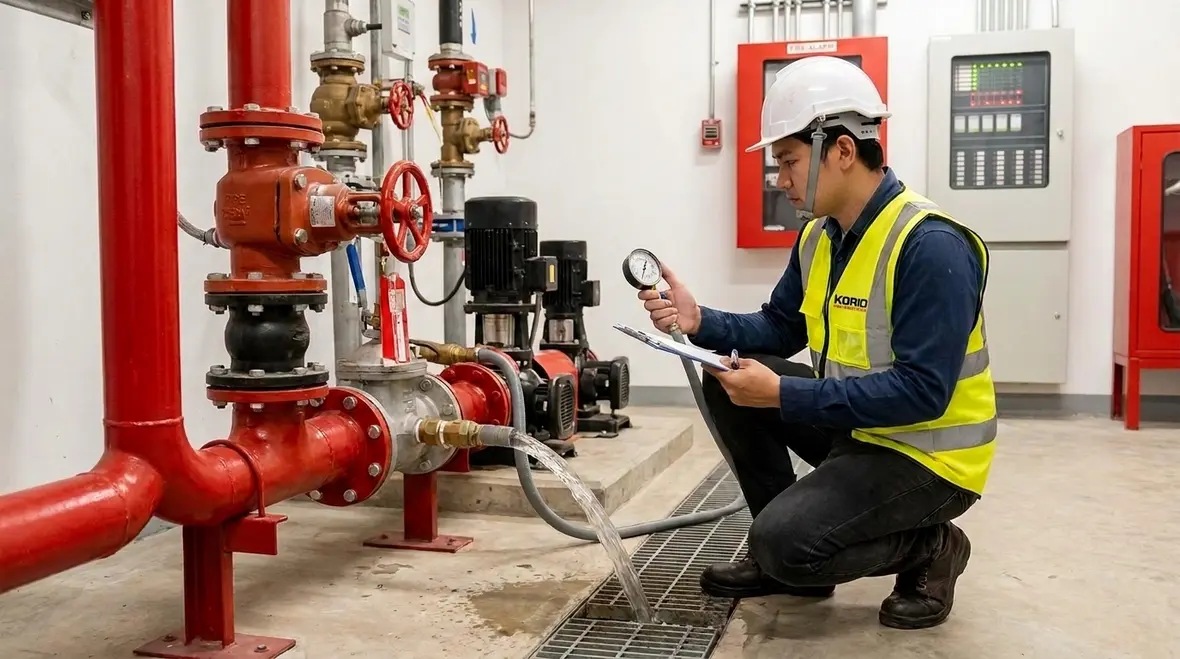
NFPA 25C Section 5.3 Sprinkler System Testing Requirements and Schedules
Quick Answer: NFPA 25C Section 5.3 sets the operational basis for testing sprinkler systems at defined intervals, including periodic flow tests, alarm and supervisory device checks, and verification of system readiness. Schedules depend on system type, hazard classification, and how the facility is maintained.
What NFPA 25C Section 5.3 Covers and Why It Matters
Commercial fire protection teams use NFPA 25C Section 5.3 sprinkler system testing requirements schedules to keep sprinkler systems in a known, reliable state. Testing is not a “tick-the-box” exercise. It verifies that water delivery, alarms, and control functions work together as designed when a sprinkler activates. In real facilities, the failure pattern usually appears where systems are least exercised: private fire service mains, inspector’s test assemblies, valve supervisory circuits, and remote alarm initiation paths.
To set expectations properly, teams should also align sprinkler testing with installation and maintenance fundamentals described in practical references like the Kord Fire Protection overview of water based systems and service needs: NFPA 13 overview of automatic fire sprinkler system installation and NFPA 25 overview and water based maintenance breakdown.
If your site needs hands-on support, Kord Fire’s commercial fire sprinkler services fit naturally into this conversation because the testing schedule only works when inspection access, system condition, and restoration discipline are handled correctly in the field.
How the Testing Schedule Is Built: Frequency, Triggers, and System Type
NFPA 25C Section 5.3 focuses on the testing actions that confirm system performance across the life of a sprinkler system. The testing schedule is driven by three practical factors: the system configuration, the type of hazard protection, and the operational dependencies of the equipment that moves water and reports status.
1) Frequency is driven by operational risk
Higher risk systems or components that directly affect water flow tend to receive more rigorous attention. Teams should expect routine periodic testing, plus targeted tests when the system or connected controls change. In commercial environments, “change events” include tenant buildouts, control valve replacements, alarm panel upgrades, and water supply modifications.
2) Testing must validate the end to end sequence
A valid test does not stop at “the water flowed.” It also confirms that alarms and supervisory signals function as required, that devices reset correctly, and that the system returns to normal readiness without creating nuisance conditions.
3) System type changes what gets tested
Wet, dry, preaction, and deluge systems create different operational pathways. For example, dry and preaction systems require verification of air or initiating conditions and clearing behavior, while deluge relies on correct trip and valve operation. NFPA 25C Section 5.3 testing requirements schedules should be maintained in a way that reflects those pathways rather than using one generic checklist for every site.
Section 5.3 Testing Requirements: What Technicians Actually Verify
In the field, technicians typically validate sprinkler system performance through a combination of flow verification, control and alarm confirmation, and supervisory coverage checks. Even though the exact tasks must follow the applicable schedule for the system, the operational themes remain consistent.
Flow and water delivery verification
- Inspector test and flow testing: Testing confirms that the hydraulically relevant components deliver water under test conditions and that pressure trends return to expected ranges.
- Valve operation under demand: Teams confirm that valves move to the correct positions, and that supervisory switches indicate correct state changes during and after testing.
- Water supply reliability: Private fire pumps, if present, and the water source supplying the system must remain within design intent. Where pump support exists, coordinating testing with pump system resources is common. For broader pump context, fire pump stakeholders often reference firepumps.org.
Alarm and supervisory device integrity
- Water flow alarms: Testing verifies that a flow condition results in the correct audible and visual alarm actions at the required locations.
- Supervisory status: Control valves and their associated initiating circuits must report correctly. A common compliance gap occurs when supervisory signals are discovered only after a tenant calls attention to an existing trouble state.
- Reset and restoration: After testing, the system must return to a ready state without leaving devices in a latched condition.
Control functions and interlocks
Many commercial buildings rely on interlocks that integrate sprinklers with fire alarm panels, smoke control systems, and emergency communications. Technicians should confirm the interfaces behave correctly during testing and that the system returns to normal programming. This includes verifying that test actions do not create unintended holds, lockouts, or missing supervisory feedback.
Compliance Challenges in Commercial Facilities: Common Failure Points
For retail, industrial, and commercial office environments, the toughest compliance hurdles often come from operational realities rather than technical theory.
Valve supervision and “silent failures”
Supervisory switches can fail mechanically, become misadjusted, or lose signal integrity due to wiring changes. In practice, these issues show up during scheduled testing, but they may have been present for months. Facilities should treat supervisory failures as urgent correction items because they can mask real system status changes.
Inspector’s test assemblies and restricted operation
Inspector test assemblies can accumulate debris or develop partial restrictions. If flow testing confirms inadequate discharge or abnormal pressure response, technicians must investigate root causes rather than repeating a similar test that produces the same performance shortfall.
Hydraulic changes caused by tenant improvements
Buildouts and renovations frequently involve reroutes, added sprinklers, and modified fire protection layouts. Even minor changes can alter how water reaches components and can affect alarm thresholds or supervisory circuit logic. The testing schedule should include a process to capture changes and confirm system readiness after the work is completed.
Regional code overlay considerations
Some jurisdictions and enforcement bodies add local requirements, so facility teams should confirm adoption language and any state or local amendments. For example, teams in California often review how fire sprinkler rules are explained in that jurisdiction. See: fire sprinkler code California explained.
Operating Procedures That Keep Schedule Compliance Realistic
Testing schedules work only when execution is managed. Successful compliance programs treat Section 5.3 as an operational process with documentation, access planning, and restoration control.
1) Pre test planning and access control
- Confirm valve locations, keys, and access paths in advance.
- Verify notification requirements for alarm testing, especially in mixed occupancy buildings.
- Confirm compatible test points are available and unobstructed, including test assemblies and panel interfaces.
2) Test execution and measured verification
- Record pressure readings, flow observations, and alarm outcomes in a structured format.
- Confirm supervisory status transitions during and after test conditions.
- Document any out of tolerance readings and correlate them with the system type and water supply conditions.
3) Post test restoration and corrective workflow
- Restore the system to normal readiness and verify reset behavior.
- Track corrective actions with ownership, due dates, and retest triggers.
- Update the maintenance record and schedule assumptions when valves, control panels, or water supply components change.
Many facility owners and property managers partner with Kord Fire Protection to keep these steps consistent across campuses, distribution centers, and multi tenant retail sites. Kord Fire Protection supports commercial compliance by aligning testing execution with ongoing water based maintenance practices described in the broader NFPA 25 maintenance overview. This helps reduce schedule drift and eliminates the common “we tested, but we did not fully validate restoration” gap.
How to Use the Schedule to Avoid Drift Over Time
The strongest compliance programs treat testing schedules as living documents. Drift happens when facilities rely on calendar dates without adjusting for actual system usage, occupancy changes, and equipment replacements.
Track three schedule drivers
- Equipment changes: valve replacements, panel upgrades, and water supply modifications should trigger schedule review.
- System downtime events: planned outages can affect readiness or delay corrective work, which should shift follow up testing.
- Trend analysis: recurring abnormal readings should accelerate investigation and may justify additional checks between standard intervals.
Confirm documentation quality
Schedule compliance often fails during inspection because documentation lacks the detail needed to show that testing actually validated operational behavior. Maintenance records should show what was tested, what was observed, and what was corrected.
Frequently Asked Questions
Conclusion and Call to Action
NFPA 25C Section 5.3 sprinkler system testing requirements schedules only deliver value when testing execution, documentation, and restoration control remain disciplined. Kord Fire Protection can help commercial facilities plan accurate intervals, validate alarm and supervisory functions, and close corrective actions with retest verification. Request a compliance review to align your site’s testing program with your system type, occupancy realities, and local enforcement expectations.

Join Our Newsletter!
Get the latest fire safety tips delivered straight to your inbox From our Newsletter.


