Commercial Kitchen Suppression System With Kord Fire Protection
When a kitchen gets busy, fires do not ask permission. A commercial kitchen suppression system helps protect cooking areas by detecting dangerous heat and releasing an agent that stops flames where they start. In other words, it buys time and reduces damage, so the business can reopen faster than a sitcom season renewal. As kitchens evolve, codes tighten, and cooking equipment gets hotter, fire protection planning becomes a real job, not a checkbox. That is where Kord Fire Protection steps in. They work as a vital partner, guiding operators through design, inspection, service, and compliance so the system stays ready, not just installed.
For operators trying to make sense of all the moving parts, it helps to look at the bigger picture. Kord Fire Protection has covered related topics in its kitchen fire suppression guide, which explains what these systems protect and where their limits begin. That context matters because a suppression system is not a magic trick hanging over the cookline. It is a planned safety response built around the way commercial kitchens actually behave when grease, heat, and airflow decide to start causing drama.
What a fire suppression system protects in commercial kitchens
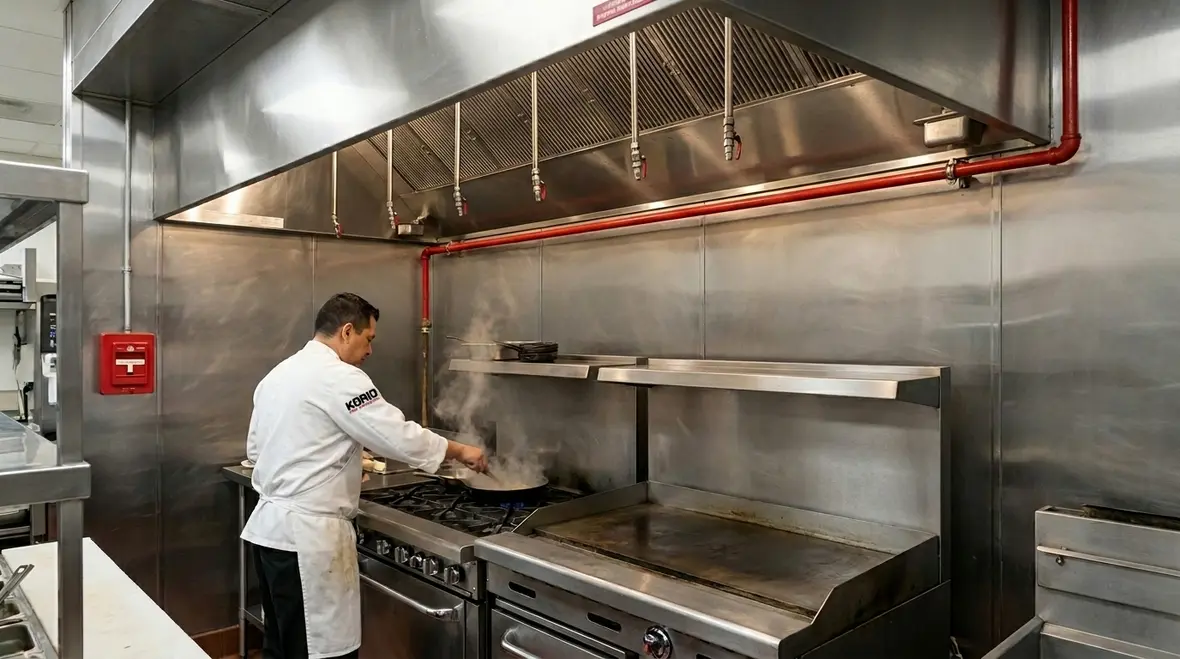
A commercial kitchen has unique hazards. Grease builds up on hoods, ducts, and filters. Oil and fat can ignite quickly, and once flames reach the duct, the fire can spread fast. Therefore, suppression systems focus on high risk zones, especially above cooking surfaces. This targeted approach is one reason commercial kitchen protection looks so different from general building fire protection. The cookline is not just another room. It is a concentrated heat source with fuel, airflow, and residue all working together in ways nobody wants to test live.
Typically, these systems protect the hood and the duct pathway. They also support coverage for specific equipment layouts, such as fryers, charbroilers, and ranges. Because smoke and heat rise in predictable patterns, engineers plan the discharge points to match how the kitchen behaves during a real emergency. Kord Fire Protection explores similar protection boundaries in its article on kitchen suppression systems for equipment and grease fires, which helps explain why one size fits all is not a phrase anybody should trust over a fryer.
In addition, operators should understand that suppression does not replace safe cooking. It complements prevention. Think of it like seatbelts. They do not stop speed, but they keep a bad moment from becoming a tragedy. When owners understand what the system covers, staff training, cleaning, and maintenance start making more sense because they support the same goal instead of competing for attention.
Why focused protection matters over general assumptions
Too many facilities assume that if the kitchen has sprinklers somewhere in the building, the cookline is automatically covered in every way that matters. That is not how this works. Kitchen suppression systems are designed around grease fire behavior, appliance arrangement, and exhaust routing. If those details are ignored, the gap between feeling protected and actually being protected gets uncomfortably wide, and that is not the kind of surprise anyone wants with a full dining room.
How commercial kitchens choose the right system design
Kitchens differ in cooking style, hood size, duct length, and ventilation rate. So, the first step involves assessing the entire exhaust system, including fans, duct sections, and the hood type. Then, teams determine the agent type, piping layout, nozzles, and detection triggers. The point is not to throw hardware at the ceiling and hope for the best. The point is to match the suppression system to the real cooking hazard below it.
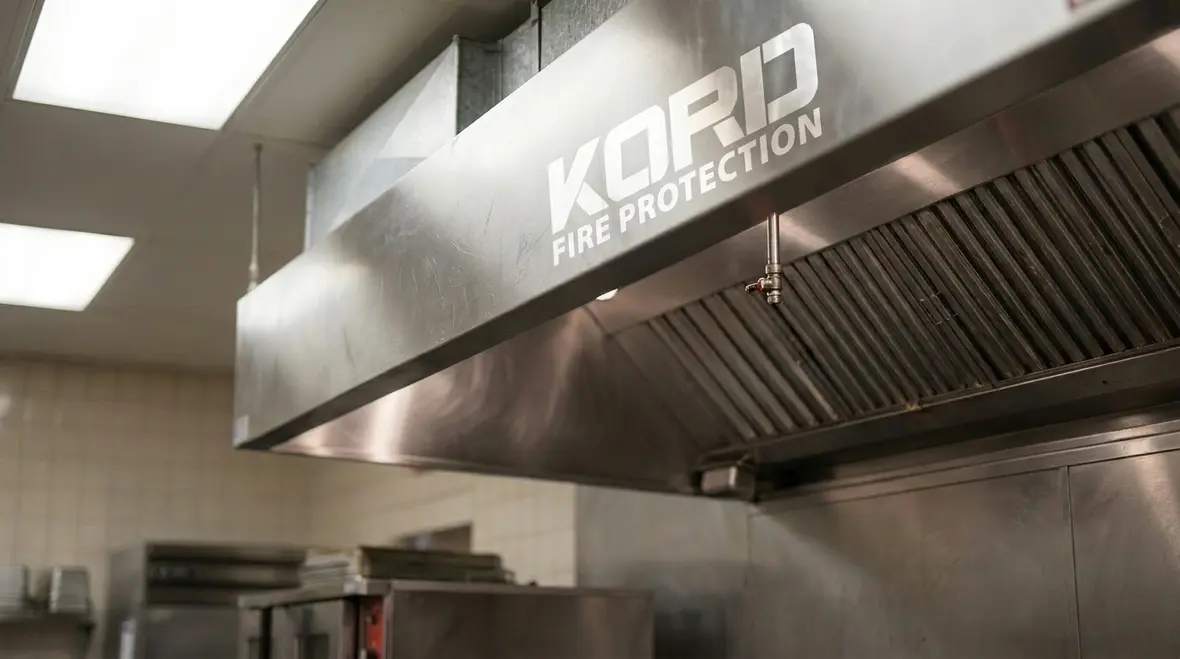
For many sites, the commercial kitchen suppression system includes heat detection that links to a control unit. After the trigger, the system releases extinguishing agent through strategically placed nozzles. As a result, flames get attacked rapidly and hot gases get cooled and contained. Kord Fire Protection also breaks down product specific examples in articles such as Amerex kitchen protection system explained and ANSUL R-102 system for restaurant fire suppression, which show how design choices connect with actual cookline conditions.
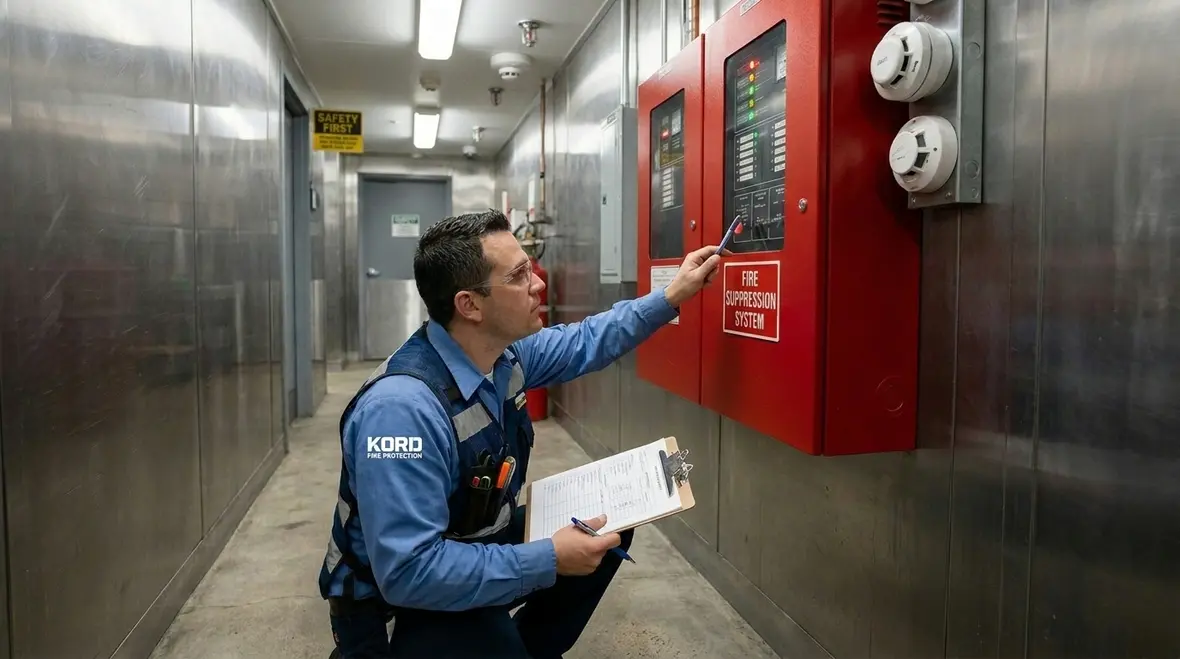
When the layout changes, the design needs review. Remodels, hood replacements, and new appliances can shift risk. Therefore, a kitchen should not assume yesterday’s plan fits tomorrow’s buildout. Kord Fire Protection can help during planning and later during service, so the system remains aligned with the kitchen’s real operating conditions. That is especially useful for growing operations that keep adding equipment like the menu expansion fairy showed up at midnight with a credit card and big ideas.
Layout changes are not small details
Even one added fryer or a shifted appliance line can affect discharge coverage and hazard alignment. A system that was correctly planned for one setup may no longer match the cooking lineup after renovations. That is why design review belongs in renovation planning instead of being remembered later with the same panic people reserve for health inspections and payroll deadlines.
Common components and how they work during a real event
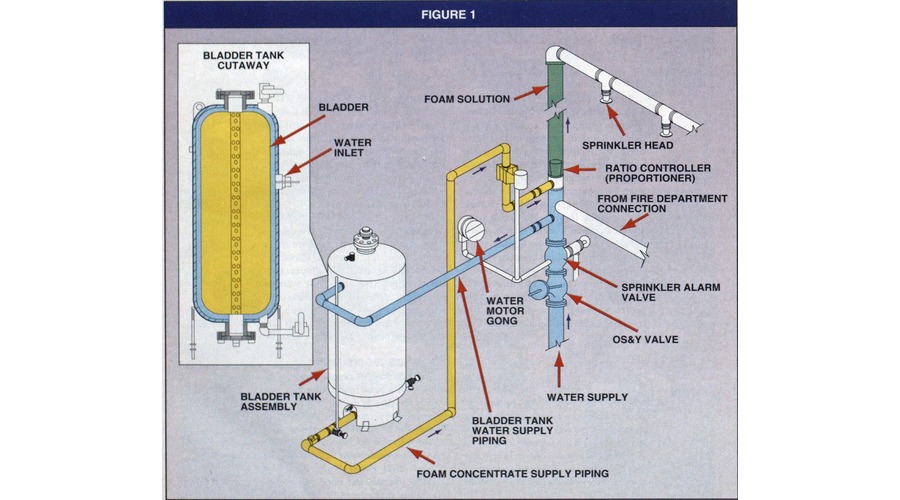
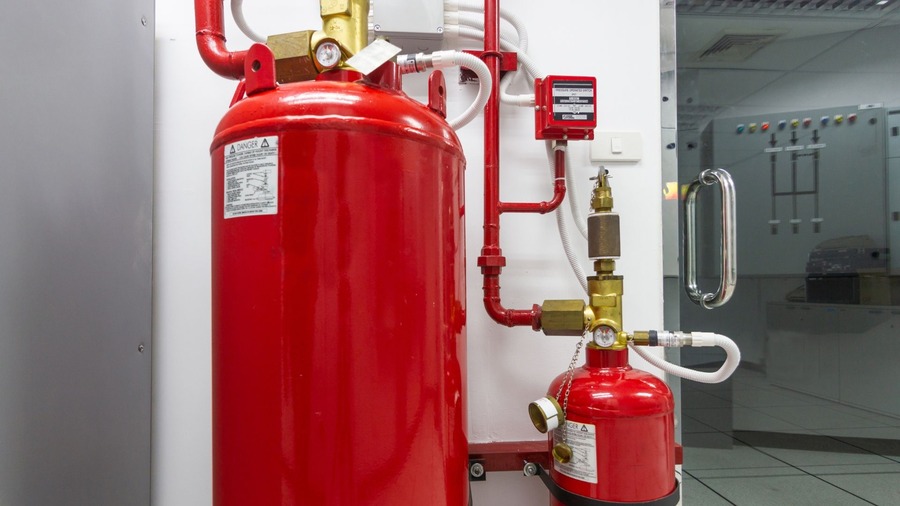
A suppression system is more than a canister. It is an integrated set of parts that must work together under stress. Key components often include detection, actuation, distribution piping, and nozzles, plus a control panel. In some systems, connected functions also help coordinate fuel or power shutdown, because a smart fire response is not just about releasing agent. It is about controlling the environment around the fire so it does not keep getting fed.
Once heat reaches a preset threshold, the detection mechanism activates. Then, the control unit signals actuation, and the stored extinguishing agent discharges. After that, nozzle placement spreads the agent across the protected surfaces in the hood area and into the duct where the fire could travel. Kord Fire Protection also discusses related coordination logic in its article on commercial kitchen fire suppression electrical interlocks, which is useful for understanding why shutdown sequencing matters so much.
Because kitchens can be harsh environments, components face heat, grease vapor, and vibration from equipment. That is why maintenance matters. When operators skip service, valves can stick and nozzles can clog. And yes, that is when Murphy’s Law shows up and ruins the day like an uninvited guest at a staff party. Reliable performance depends on the boring stuff being done on time, which is exactly why it works when the exciting stuff happens by accident.
The system works as a chain, not a single part
If detection fails, the agent never releases. If nozzles clog, discharge does not land where it should. If controls are not coordinated, fuel may continue feeding the problem. Looking at only one component misses the reality that suppression depends on the full chain doing its job at the exact moment everybody wishes there were no fire to talk about in the first place.
Inspection, testing, and service that keeps compliance real
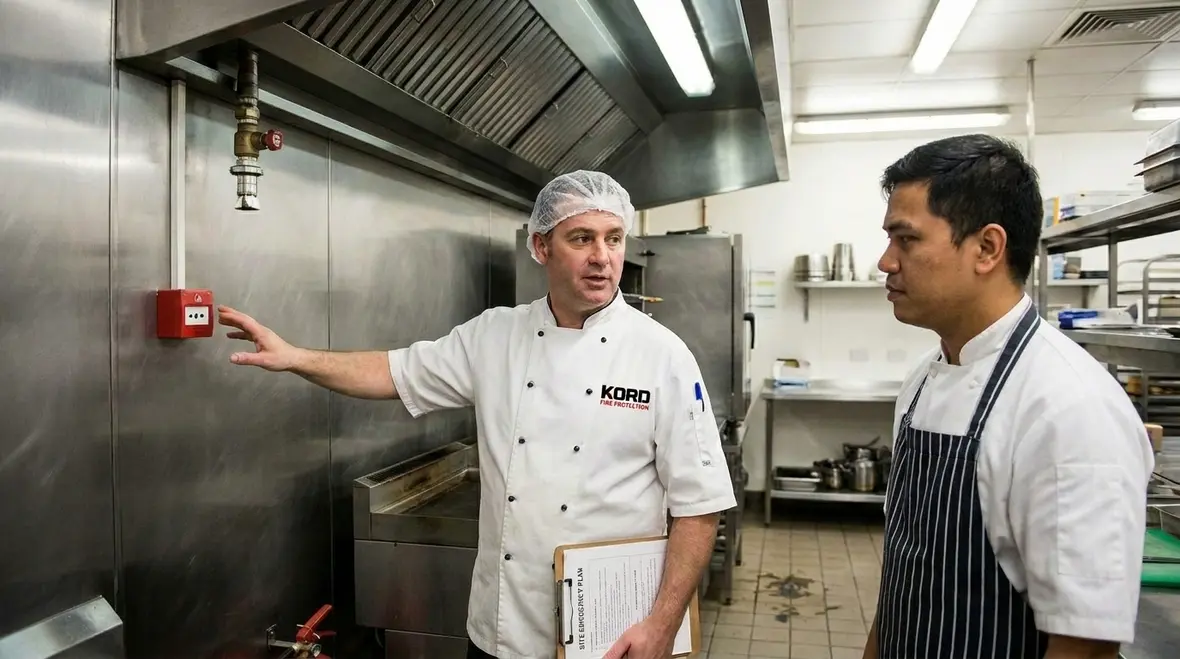
Codes require routine inspection and periodic testing. However, the real goal is reliability. A system that looks fine can still fail if components degrade or if kitchen modifications altered airflow. Therefore, service should include more than a visual check. A solid inspection looks at how the system is functioning, whether the protected hazards still match the original plan, and whether the kitchen has drifted away from compliance through everyday changes.
Technicians typically verify conditions like nozzle cleanliness, proper wiring and detection function, correct pressure or agent status, and panel communication. They also review tamper points and check for signs of impact or corrosion. Then, they document the results for audits and internal safety records. For a look at how Kord addresses specific systems, their Pyro-Chem Kitchen Knight II fire suppression service article gives another practical example of why ongoing service matters after installation.
At this stage, Kord Fire Protection becomes a vital partner. They help teams schedule service, track documentation, and address issues before they turn into a costly downtime event. In addition, they can coordinate with kitchen operations so service visits do not halt a dinner rush. That matters because nobody wants a preventable compliance issue showing up right when the kitchen is trying to keep pace with a full house and three special requests per table.
Training and readiness: what kitchen staff should do
Even the best equipment requires smart response. Staff should know the difference between a small grease problem and a situation that needs immediate shutdown and evacuation. They should also understand basic steps like activating the system if the manual pull is part of the setup, and following the site emergency plan. Training is not about turning cooks into firefighters. It is about giving them clear actions that make sense under pressure.
Training works best when it stays simple and practiced. People under pressure do not memorize long manuals. Instead, they follow clear steps. Therefore, kitchens should run short drills that align with local procedures, and they should review roles for cooks, supervisors, and managers. The goal is calm repetition, not theatrical panic. If everyone knows what to do, the response gets faster and safer, and nobody has to improvise like they are auditioning for a disaster movie set in a fryer station.
Also, staff should learn how to report issues early. For example, if a nozzle discharge was tested or if a sensor shows a fault, that information should move quickly to the service team. Kord Fire Protection can help organizations set up practical routines so readiness becomes normal, not accidental. The more predictable the reporting process is, the less likely small issues are to sit around quietly getting worse.
Integrating suppression with hood ventilation, fire prevention, and local codes
A kitchen does not run on one system. It runs on a chain of protection steps. Hood ventilation influences grease behavior, and cleaning schedules reduce buildup. Therefore, a sound approach connects suppression with prevention and code aligned operations. When those pieces support one another, the overall safety plan becomes more dependable and much less reactive.
Ventilation design impacts airflow and grease movement. Cleaning reduces the fuel load. And proper storage and electrical safety reduce ignition sources. When these pieces align, the risk drops, and the suppression system does less work during emergencies. Kord Fire Protection touches on this broader strategy in its advanced commercial kitchen fire safety strategies article, which helps connect prevention, system readiness, and daily operations.
However, compliance depends on documentation and correct installation. That means using approved components, following the correct layout, and maintaining records of inspections and repairs. Kord Fire Protection supports this process by helping facilities keep their paperwork and their protection in step, so the system performs when it matters. Good documentation may not be glamorous, but it is a lot better than trying to explain missing records after an incident or during an inspection.
Costs, downtime, and planning for the least disruption
Facilities often worry about service visits and how fast they can return to normal operations. That concern is fair. A kitchen runs on timing, and shutdowns can hurt margins. The good news is that disruption can usually be reduced with planning, communication, and a service partner that understands how restaurant schedules actually work instead of pretending every kitchen is free at two in the afternoon on a Friday.
To reduce downtime, teams can plan service during slower periods, coordinate after hours when possible, and confirm parts availability before the visit. Also, preventive service can lower the chance of emergency repairs that take longer and cost more. When inspections are handled on schedule, managers gain more control over labor, interruptions, and surprise expenses that tend to arrive at the worst possible moment.
Investing in a well maintained commercial kitchen suppression system can also prevent bigger losses. Fire damage does not just break equipment. It impacts ventilation, flooring, permits, insurance outcomes, and brand trust. In other words, skipping service can feel like saving money, but it often charges interest later, with flames and paperwork. Near the operational end of the process, businesses that need direct support can explore Kord Fire Protection’s fire suppression services to connect inspections, maintenance, and real world response planning.
FAQ
Conclusion
Fire suppression is not a gamble, and it is not a seasonal project. A properly designed and maintained commercial kitchen suppression system helps protect employees, customers, and equipment while supporting real code compliance. Kord Fire Protection can become a vital partner by guiding inspections, service planning, and readiness so your kitchen stays protected through busy nights and unexpected moments.
If the system is overdue or the kitchen has changed, reach out to Kord Fire Protection today and get a maintenance plan that fits the way your restaurant actually runs. For operators ready to take the next step, Kord Fire Protection’s fire suppression services page is a practical place to start that conversation.

Join Our Newsletter!
Get the latest fire safety tips delivered straight to your inbox From our Newsletter.