
Commercial Kitchen Fire Suppression Electrical Interlocks
How Commercial Kitchen Fire Suppression Electrical Meets Electrical Interlocks
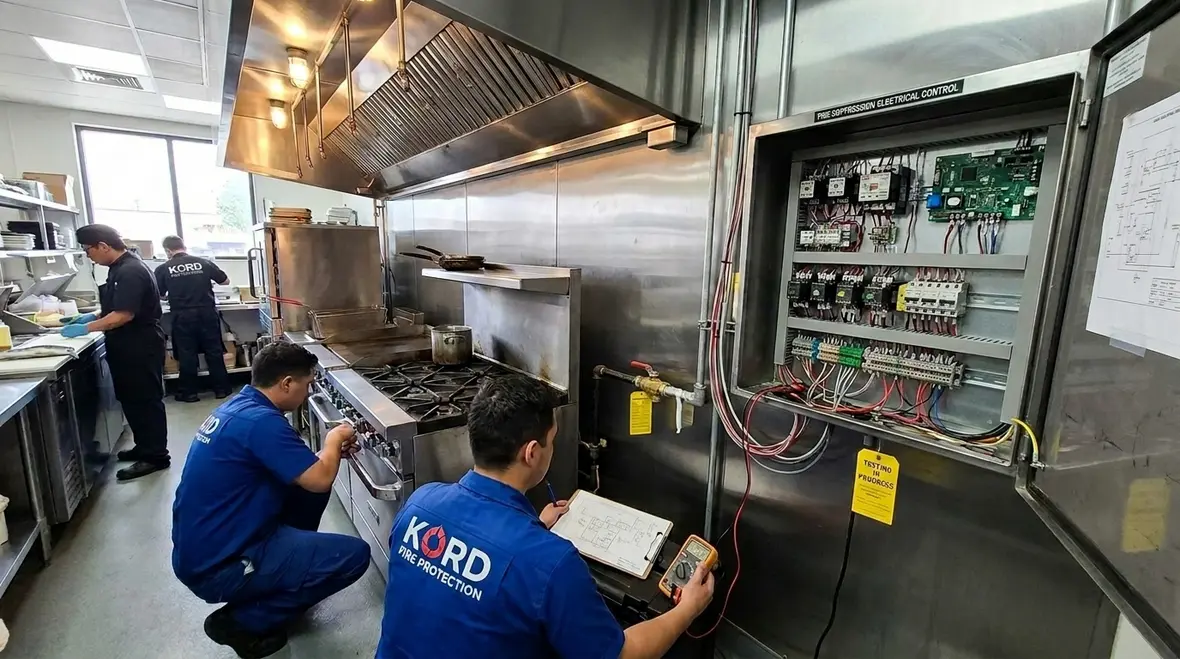
Commercial kitchen fire suppression electrical systems do more than fight flames. They also coordinate with kitchen safety hardware so the right actions happen in the right order. When a hood system releases agent, the fans stop, the gas shuts down, and the controls stay locked out to prevent a “surprise” restart during an emergency. That is where electrical interlocks come in. In fact, a well planned integration turns chaos into choreography.
To make it real, kord fire protection technicians often explain this like they are walking someone through a heist movie. First, they show the map. Next, they confirm every door opens when it should and never when it should not. Then, they test the whole sequence under real world conditions, not just on paper. After all, nobody wants the kitchen equivalent of a smoke detector that “works great” as long as you do not press the test button.
A reliable interlock strategy also supports the bigger picture of restaurant fire protection. Kord Fire Protection discusses how kitchen systems are designed to protect cooking equipment, hoods, and ducts in its commercial kitchen suppression overview, which makes a useful companion read for owners who want the broad view before diving into electrical logic. Read the related guide on commercial kitchen fire suppression systems.
What Electrical Interlocks Actually Do in Kitchen Safety
They keep every critical action in sync
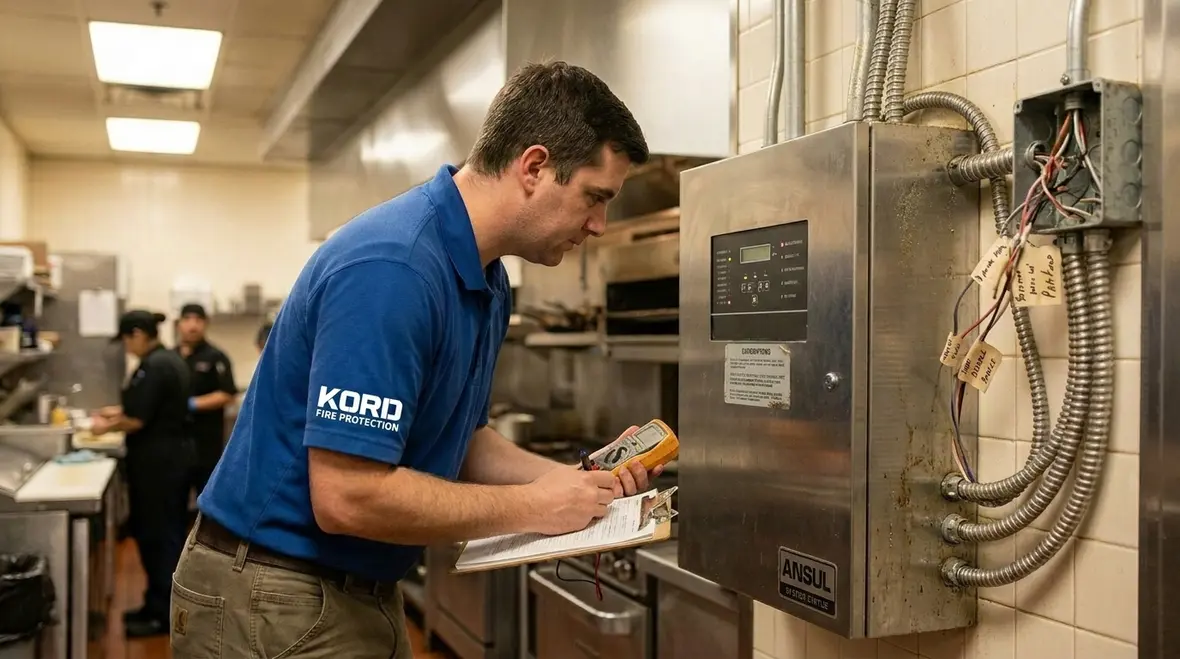
Electrical interlocks are control paths that force equipment states to match the fire event logic. Instead of letting devices behave independently, interlocks tie them together through relays, input circuits, and control module outputs.
In a suppression scenario, the interlock logic commonly ensures that these actions stay aligned. When the release signal happens, the exhaust fan control changes state, the power to certain cooking appliances is prevented, and related dampers or shutdown devices operate as the design requires.
Moreover, good interlock design prevents “half responses.” For example, if a hood system discharges agent but the ventilation equipment keeps running, the kitchen may redistribute smoke and heat in ways the design did not intend. Therefore, interlocks help maintain the suppression strategy, protect occupants, and support predictable agent coverage.
That matters because a fire event is not the time for kitchen equipment to freelance. If one device gets the memo and another decides it is still business as usual, the whole sequence starts looking less like engineered protection and more like a group project with zero supervision.
Why Timing and Fail Safe Logic Matter Most
A sequence is only good if it still works under stress
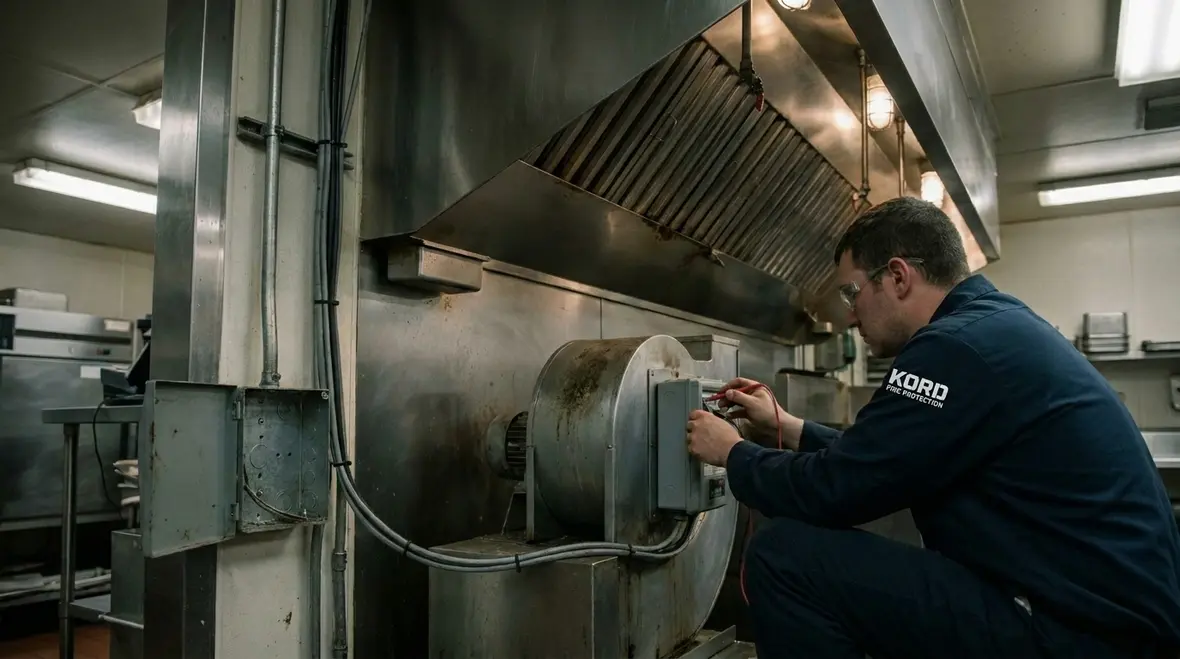
Timing is where many integrations succeed or stumble. Suppression systems rely on controlled sequences, and delays have to match the equipment response times. For instance, fans may take a moment to stop, gas valves may require proof of closure, and dampers may need verification feedback. If the electrical interlocks ignore these realities, the system could lock out too early, or release too late.
Additionally, fail safe logic keeps the kitchen safer when signals get messy. If a circuit fails, the system should move to a safer state instead of guessing. In everyday terms, it should not behave like a faulty remote control that only works when you hit it. Instead, it should degrade in a controlled way, using monitored inputs, supervision circuits, and correct fault handling.
kord fire protection technicians emphasize that the “best” logic is the one that stays consistent under stress. Smoke, heat, and power variations do not care about the spreadsheet. So, technicians validate timing and supervision during commissioning and service.
This is also where disciplined service connects to broader life safety planning. If your property includes alarm monitoring, notification, or other integrated systems, Kord Fire Protection’s fire alarm services page is a practical place to understand how coordinated controls fit into overall building protection.
Integrating Interlocks with Agent Release and Fan Shutdown
Release, shutdown, lockout, and reset all have to agree
In most commercial kitchens, the suppression control panel initiates agent release and must also manage ventilation. That is where electrical interlocks connect the suppression controller to fan starters, control relays, and sometimes damper actuators.
First, the system uses monitored release outputs and status feedback where available. Then, it routes those outputs through interlocked circuits designed for the fan control method. Some kitchens use starter relays, some use motor controllers, and others use dedicated fan interface modules. Regardless of the method, the wiring must match the control intent.
Next, interlocks enforce shutdown rules during discharge. For example, the exhaust fan should stop, or switch to a controlled mode, based on the design of the hood and agent strategy. After that, the system should hold a lockout so the fan does not restart immediately. Otherwise, a restart could pull hot gases back into the hood area.
Finally, the integration should include manual override logic that does not break safety. If a technician needs to reset the system, the controls should require the proper sequence so the kitchen does not return to operation without inspection and verification.
When this part is done well, the system behaves with the confidence of a veteran line cook on a Friday night. When it is done poorly, it is more like three people shouting different orders over the fryer while nobody touches the actual problem.
Managing Power, Circuits, and Supervision Without Creating New Risks
More wires are not the answer unless the logic is clean
Electrical interlocks do not just “add wires.” They add logic, and logic needs proper power handling. Suppression systems often use specific voltage levels for inputs and outputs, and interlocks must respect those levels to avoid unintended states.
Additionally, supervised circuits matter because kitchens are not quiet places. Vibrations, cleaning chemicals, and maintenance activity can stress wiring over time. Supervision helps detect open circuits and faults before a failure becomes a surprise during a real event.
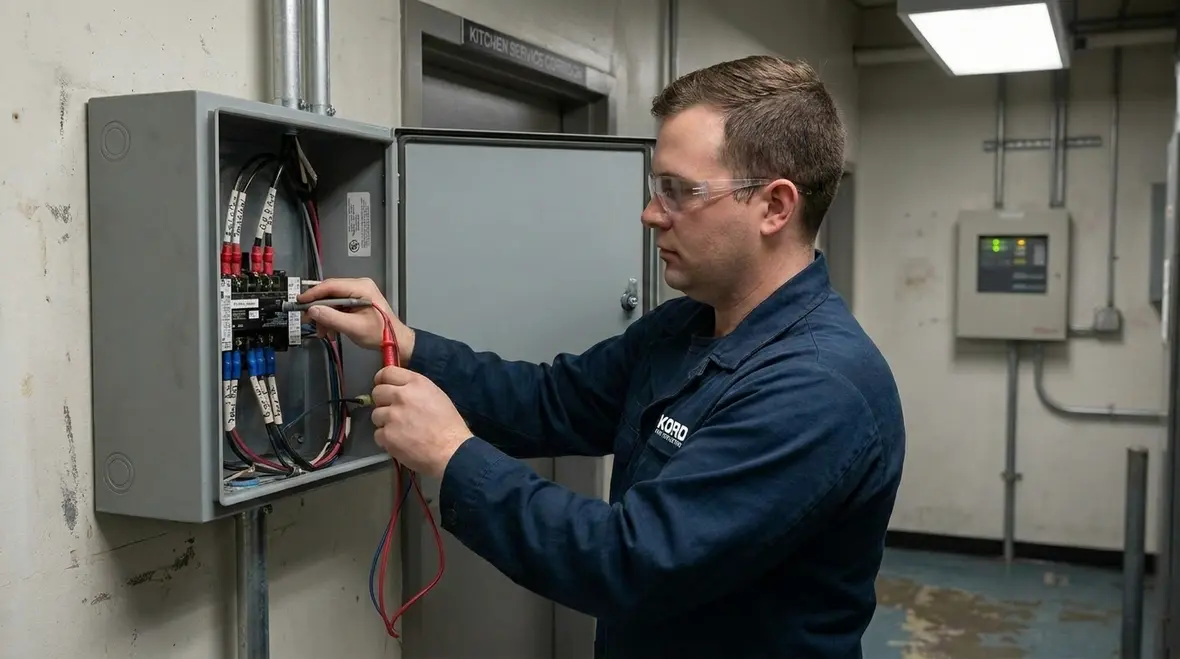
Therefore, technicians plan for correct separation of power and control wiring where needed, proper routing to avoid heat exposure, and secure terminations. They also confirm that interlock contacts and relays match the load and switching requirements. This reduces the chance of contact welding, nuisance trips, or unreliable shutdown behavior.
kord fire protection technicians typically recommend a clear labeling plan and a clean documentation set. When a system is serviced months later, clear circuit maps save time and prevent guesswork. In the world of fire protection, guesswork is like seasoning pasta by smell. It can work once, but it rarely stays consistent.
Commissioning, Testing, and Ongoing Service for Real Reliability
Testing proves whether the sequence works outside the drawing set
After installation, commissioning verifies that electrical interlocks and suppression functions perform as a single system. Testing should confirm both normal and alarm states, and it must validate what happens during discharge and after reset.
First, technicians check control logic, verify input monitoring, and confirm correct output behavior to fan starters and shutdown devices. Next, they simulate alarm and release events using the approved test method. Then, they verify that appliances and ventilation equipment do not return to unsafe states.
In addition, service routines should include inspection of interlock components such as relay contacts, wiring integrity, and interface modules. Technicians also validate that field changes have not altered the logic. A kitchen remodel can move equipment, swap starters, or adjust panel locations, and those changes can break interlock assumptions if they are not reviewed.
During ongoing service, kord fire protection technicians often stress documentation reviews. When a system is modified, the interlock scheme should be revalidated. Otherwise, the system may still “pass” a basic check but fail under the exact conditions it was designed to handle.
If you need a service path that ties inspections, testing, and system readiness together, Kord Fire Protection also highlights its broader suppression support on its fire suppression services page. Explore Kord Fire Protection’s fire suppression services.

FAQ: Electrical Interlocks and Kitchen Suppression Electrical
Next Steps: Get the Integration Checked Before It Gets Tested by Fire
Electrical interlocks can make commercial kitchen fire suppression electrical far more reliable, but only when the logic, wiring, timing, and supervision match the real equipment. A kitchen owner should request a site review, confirm the interlock sequence, and schedule commissioning and service checks with qualified professionals. kord fire protection technicians can evaluate the control scheme, validate shutdown behavior, and document every test result for future maintenance.
If your kitchen hood system needs a closer look, contact Kord Fire Protection through its fire alarm services page or explore its suppression support options to line up the right inspection, testing, and integration help. Act now so your system performs under pressure, not after an emergency forces the lesson.

Join Our Newsletter!
Get the latest fire safety tips delivered straight to your inbox From our Newsletter.



