Restaurant Fire Suppression Systems With Kord Fire Protection
When flames threaten a kitchen, time becomes the real ingredient that no restaurant can replace. A restaurant fire suppression system helps protect kitchens, storage areas, and the routes where heat and smoke spread. However, the best results happen when the system is installed correctly, tested on schedule, and supported by a partner who understands restaurant operations. That is where Kord Fire Protection steps in, not as a distant vendor, but as a hands on ally who helps owners stay compliant and keep service moving.
Restaurant Fire Suppression Systems: Why Kitchen Risks Need More Than Luck
Restaurants run on speed. Orders come fast, grease gets everywhere, and staff move with the focus of a tight crew during a Sunday rush. Meanwhile, cooking equipment builds real risk. Grease fires can climb quickly, and hood fires can grow before anyone grabs an extinguisher, even if the extinguisher is sitting there like it is waiting for a heroic moment. The restaurant fire suppression system is designed for the specific hazards of commercial kitchens, where suppression has to activate correctly, at the right time, and in the right area.
This is not a set it and forget it tool. It is a life safety system that needs proper design, correct placement, and ongoing inspection. Kord Fire Protection’s own guidance on UL 300 and restaurant hood suppression systems and its restaurant hood fire suppression inspection checklist guide reinforces that coverage, nozzle placement, and real world kitchen conditions all matter if a system is expected to perform when the heat stops being culinary and starts being catastrophic.
Why the kitchen environment changes the stakes
Commercial kitchens create a moving target. Equipment gets bumped, menu demand changes, grease loads build, and staff priorities understandably lean toward getting orders out hot and on time. That means the protection strategy has to match how the kitchen actually operates, not how it looked on paper the day the hood went in.
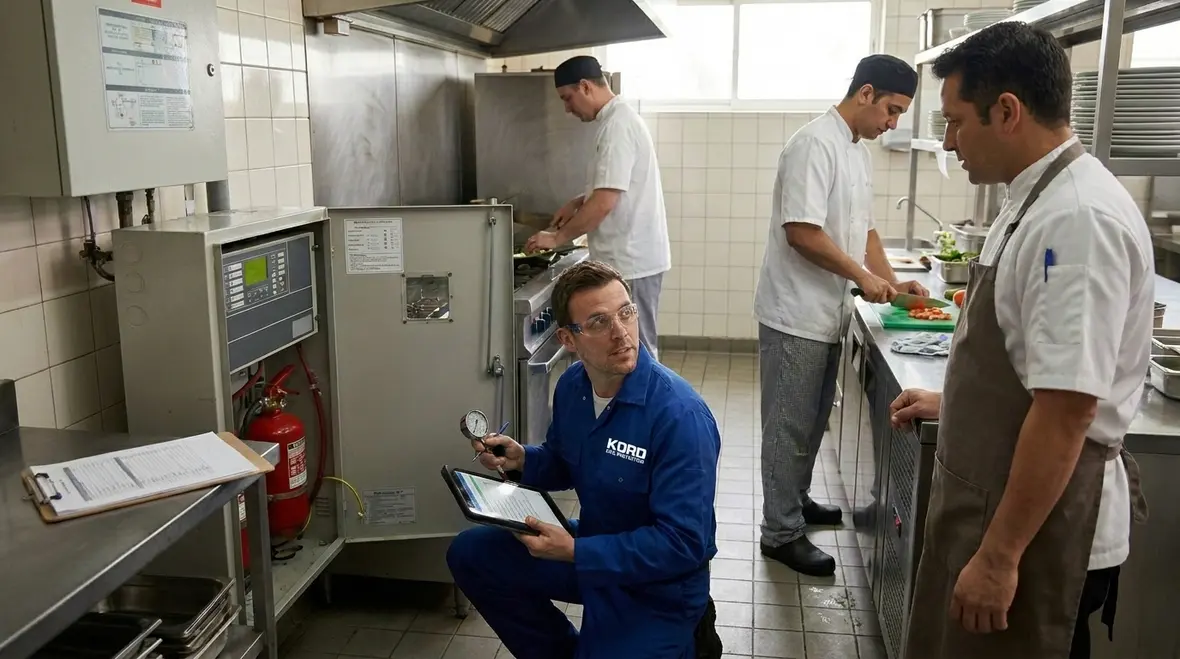
How Fire Suppression Works in Commercial Kitchens
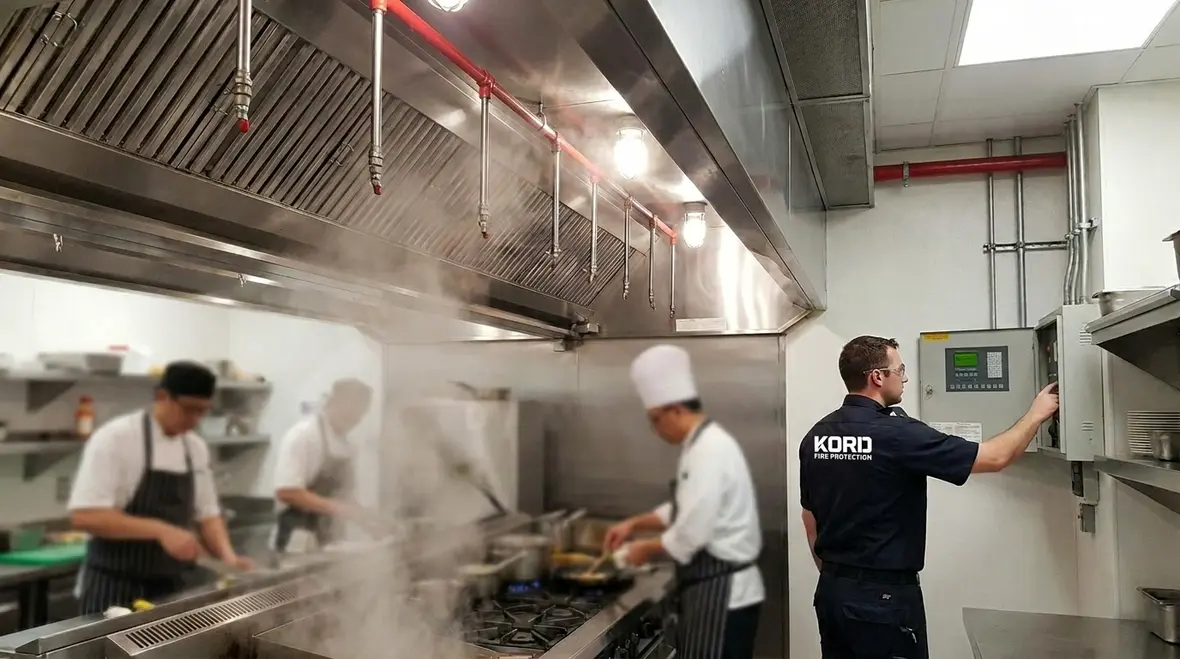
Most restaurant setups rely on hood and duct suppression, plus protection for specific cooking appliances. Typically, the system includes a detection method, piping, and an agent that discharges when it senses heat or fire conditions. Once triggered, the agent helps stop the fire by interrupting the conditions that allow it to burn. That matters because a kitchen fire does not behave like a candle in a movie scene. It behaves like a problem that wants to spread.
Kord Fire Protection’s suppression service page for kitchen and UL 300 fire suppression describes these systems as purpose built for grease laden hazards and commercial cooking equipment. Their recent overview of the ANSUL R-102 system for restaurant fire suppression also highlights how restaurant protection ties together hoods, ducts, appliance coverage, manual activation, and shutoffs rather than treating each risk like it exists on its own little island.
In practical terms, the system needs alignment between the hazard and the coverage. The hood needs proper exhaust coverage, the piping layout must match the kitchen equipment, and the protected appliances need nozzle placement that reflects the actual hazard area. Installers also have to consider grease collection, staff cleaning patterns, and how doors or airflow can affect smoke movement. Otherwise, the system may technically exist, but it may not perform the way it should.
Key components that have to work together
- Detection line or fusible links that react to heat conditions
- Nozzles and piping that aim the agent at the real hazard zones
- Wet chemical or other approved agent matched to commercial cooking risks
- Manual pull station so staff can trigger the system if needed
- Fuel and power shutoffs to stop feeding the fire after discharge
Choosing the Right System for Your Menu and Layout
A one size plan fails restaurants more often than a chef forgetting an order of fries. Different cooking methods create different hazards. A kitchen that leans on deep frying needs protection strategies that account for intense grease buildup. A menu focused on heavy sauteing also carries risk, but the pattern of grease and heat exposure may differ.
Layout changes everything too. Some restaurants have long hood runs, tight ceiling spaces, or nonstandard duct pathways. When a system does not fit the real floor plan, coverage gaps can show up. Kord Fire Protection’s article on kitchen suppression systems for equipment and grease fires makes the same point in plain language: hazard protection has to match the equipment, the grease load, and how the kitchen is actually built.
Owners should expect a detailed design process that reviews equipment types, hood configuration, clearance needs, and maintenance access. Then comes the part many people underestimate: how the system will be serviced after installation. Because even the best design becomes complicated when maintenance access is poor. Kord Fire Protection can help coordinate that reality, so the restaurant fire suppression system stays workable, not just installed.
Inspection, Testing, and Clean Service Day Operations
Restaurant schedules make inspections tricky. Managers hate downtime, staff get busy, and a quick check can become a slow walk through the kitchen. Yet inspections must happen, and testing must confirm the system can operate when needed.
Kord Fire Protection’s kitchen fire suppression inspection requirements guide and inspection checklist guide both point to the same operational truth: inspections commonly review nozzles, detection components, pressure status, pull stations, shutoffs, and documentation, and many restaurant hood systems are serviced on a semi annual basis depending on the system and local requirements.
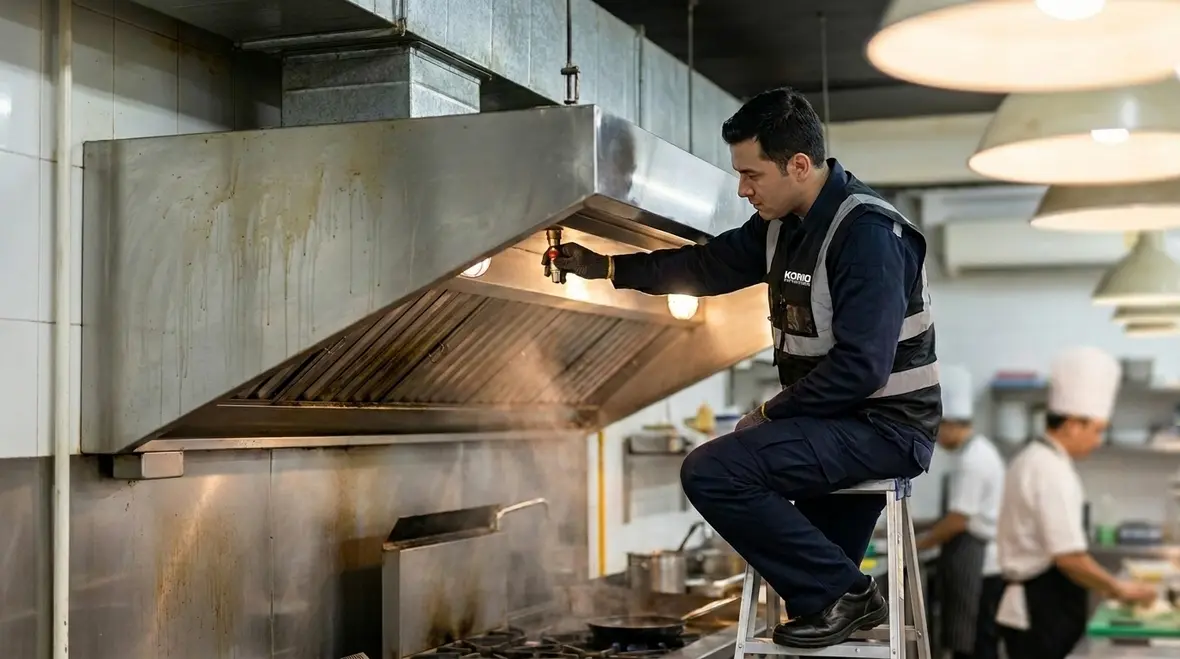
During inspections, technicians review components, verify control readiness, check for visible damage, and confirm detection performance. They also look hard at grease prone and corrosion prone areas, because those are the places where systems can quietly degrade faster. If a restaurant waits too long, it may face surprise repairs at the worst possible time, like the day before a busy holiday event, which is about as welcome as a broken fryer at kickoff.
To keep the process calm, Kord Fire Protection can act like a scheduling partner. Instead of showing up like a storm cloud, they coordinate service windows, provide clear documentation, and help restaurants plan tasks around peak hours. That reduces disruption and supports steady compliance.
What a smooth service visit usually involves
- Reviewing the last service records and current system tags
- Checking nozzle condition, alignment, and cleanliness
- Confirming pull station access and labeling
- Testing shutoff connections for gas or electric equipment
- Documenting findings clearly so managers are not left guessing
What Compliance Looks Like for Restaurant Fire Suppression
Compliance does not mean chasing checkboxes like it is a side quest in a video game. It means maintaining a life safety system according to local code and industry expectations. Kord Fire Protection’s UL 300 guidance explains that restaurant hood systems are commonly expected to align with local fire code requirements and standards such as NFPA 17A and NFPA 96, while also maintaining proper appliance, hood, and duct coverage through regular service.
When restaurants treat compliance as a last minute scramble, the risk grows. Documentation falls behind, maintenance gets postponed, and someone eventually discovers a problem during an inspection that could have been caught earlier. On the other hand, a stable inspection rhythm keeps the restaurant ready whether the inspector appears on a quiet Tuesday or during the lunch rush.
Some systems also require recurring service intervals that must be tracked carefully. Kord Fire Protection helps simplify that process by aligning inspection planning with the restaurant’s operating calendar and reporting needs, which is a lot better than digging through a pile of old tags while pretending that was always the plan.
Common Failures That Restaurants Can Prevent
Fire protection failures rarely come from bad luck. They usually come from predictable gaps: poor installation, missed service intervals, incorrect discharge coverage, or components exposed to grease and impact. Sometimes staff change the kitchen layout, add new equipment, or alter the hood without updating protection coverage. Then the hazard changes, but the system stays the same. That mismatch can be dangerous.
Kord Fire Protection’s inspection and UL 300 resources repeatedly point to the same types of preventable trouble: blocked nozzles, outdated links, pressure issues, appliance changes that disrupt coverage, and access problems that slow service or emergency response. In other words, most failures give warning signs before they become expensive drama.
- Grease build up that interferes with detection or contaminates critical areas
- Improper modifications when equipment gets swapped without checking coverage and clearances
- Blocked access that makes inspections slow and repairs incomplete
- Outdated documentation that creates compliance stress during audits
- Delayed service that lets small problems grow into bigger repairs
The smart move is ongoing support and a partner who tracks what matters. Kord Fire Protection can help restaurants avoid those potholes before the system becomes the last line of defense and the first thing to fail.
FAQ: Restaurant Fire Suppression Systems
Conclusion: Get Restaurant Protection That Stays Ready
Fire protection should not feel like a yearly scramble. A well managed restaurant fire suppression system protects staff, property, and your ability to serve the next guest. To get there, the right design, inspections, and maintenance matter, and timing matters too. Kord Fire Protection’s growing library of restaurant hood, UL 300, and inspection resources shows exactly why the strongest protection strategy is the one that stays current with the kitchen instead of falling behind it.
When it is time to move from hoping the system is fine to knowing it is ready, explore Kord Fire Protection’s fire suppression service page and schedule an assessment that fits the rhythm of your restaurant. With the right support, your operation can stay compliant, protected, calm, and a whole lot more confident when the line gets hot in every possible sense.

Join Our Newsletter!
Get the latest fire safety tips delivered straight to your inbox From our Newsletter.