Amerex Kitchen Protection System Explained by Kord Fire Protection
Amerex Kitchen Protection System Explained for Safer Commercial Cooking
When a kitchen runs hot, fires move fast. That is why Amerex kitchen fire suppression helps businesses protect people, property, and operations without drama. The Amerex Kitchen Protection System is designed for commercial cooking risks, where grease and heat create the kind of problem that does not wait for anyone’s schedule. And yes, kitchens have a habit of turning “just a small flare up” into “everybody panic,” even when everyone swears they were being careful. This article walks through how the system works, what it protects, and how Kord Fire Protection becomes a vital partner for successful service and job execution.
For a broader look at how these systems fit into overall restaurant safety, Kord also covers the topic in its commercial kitchen fire suppression systems guide. That companion article pairs nicely with this one because it frames the big picture before we zoom in on Amerex.
What the Amerex Kitchen System Protects
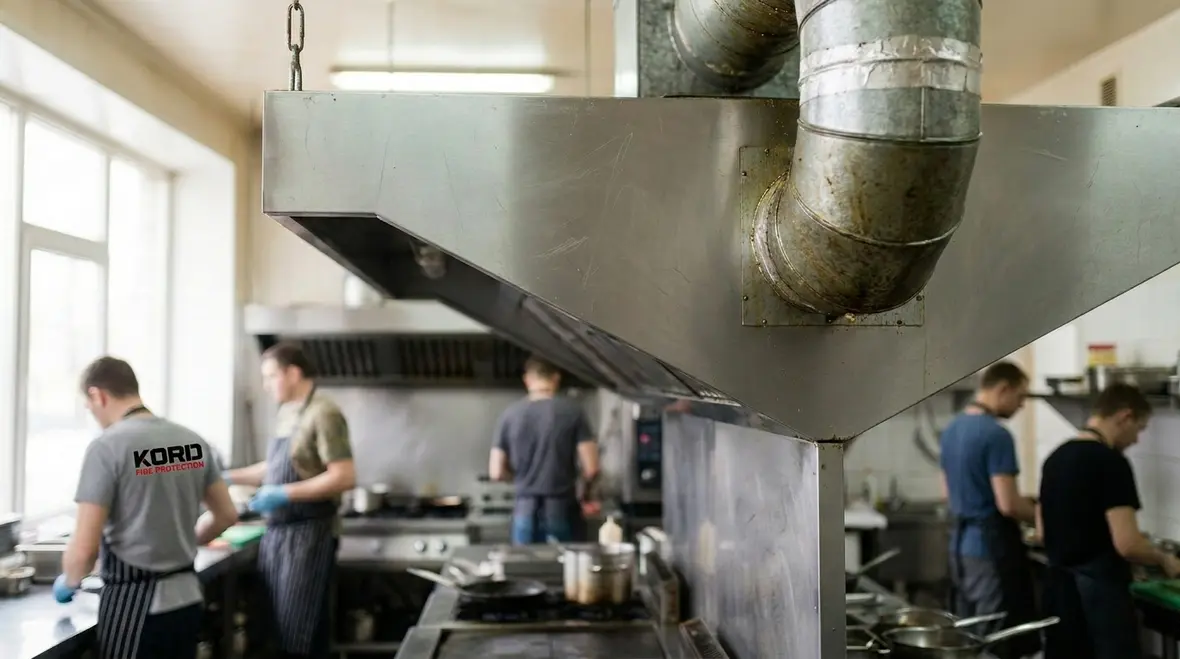
The Amerex kitchen protection plan focuses on the places where cooking fire risk stacks up: the hood, duct, and the parts that sit between the kitchen and the exhaust world. Grease collects, heat builds, and if a fire starts, it can spread into airflow paths in seconds. Instead of treating the event like a surprise pop quiz, the system targets the chain of exposure.
It also supports safer shutdown and cleanup planning. In other words, it helps reduce the chance that a small incident becomes a full restaurant reset. When the kitchen stays open and staff stay safe, that counts as a win in any business, even if the CFO does not clap.
Coverage Starts Where Grease and Heat Team Up
Commercial cooking creates a very specific hazard profile. Fryers, griddles, charbroilers, ranges, and hood systems all contribute to a fire path that can move upward and outward if it is not stopped quickly. That is why kitchen suppression is not aimed at the whole building like a general sprinkler layout. It is focused on the cooking zone, the exhaust route, and the surfaces most likely to support fire spread.
Kord Fire Protection discusses those boundaries in more detail in its guide on what kitchen fire suppression covers and does not cover. That is an especially useful read for owners who assume one system somehow handles every fire risk in the building with superhero powers.
How the System Detects and Responds
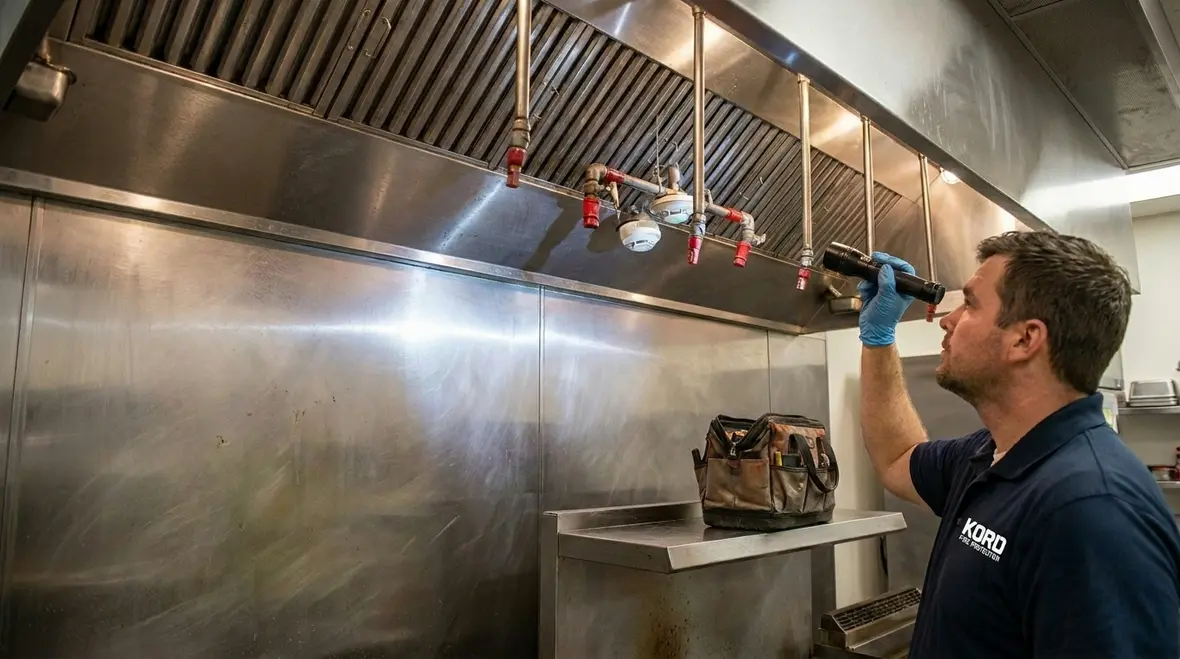
In commercial kitchens, temperature changes are the early warning. The Amerex kitchen fire suppression approach uses heat and activation components to trigger suppression at the right time. Once conditions reach the set activation point, the system releases suppression agent into the protected area. This helps control the fire where it starts, rather than letting it climb and travel.
Furthermore, the response supports consistent operation. A well designed system does not depend on a single person noticing smoke at the exact right moment. That sounds obvious, but the truth is that stress makes humans miss things. The system helps close those gaps.
Why Automatic Response Matters During the Rush
Busy kitchens are loud, fast, and full of distractions. Tickets stack up, pans move around, and somebody is always asking where the backup tongs went. In that environment, a reliable automatic release sequence matters because it is not distracted by dinner service. It simply responds when the trigger condition is met.
That response often works alongside connected shutdown functions and safety controls. Kord’s article on commercial kitchen fire suppression electrical interlocks explains why the sequence matters so much. If the system activates but fuel sources or connected electrical actions are not coordinated correctly, things can get messy in a hurry, and not the fun kind of messy like taco Tuesday.
Key Components That Make It Work
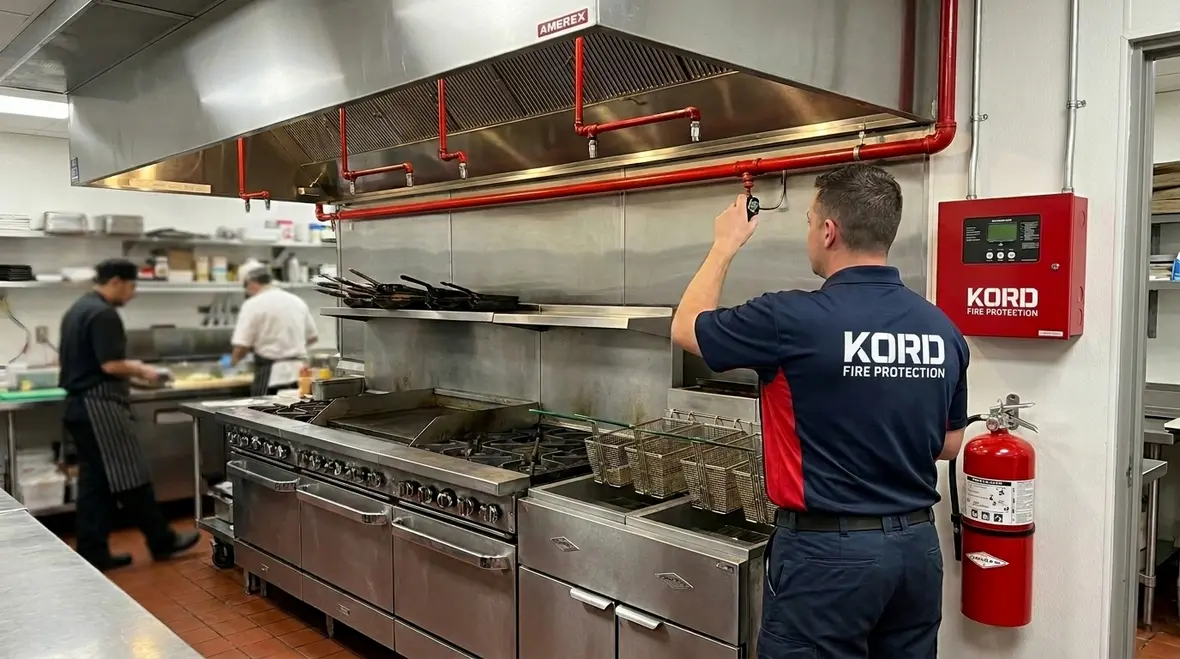
A kitchen protection system works because each part has a job. When one section fails, the whole plan suffers. Typically, the key components include detection and activation parts, the discharge or release section, and the protected distribution pathway. In practice, Amerex kitchen fire suppression systems are built around careful placement so the agent reaches the right zones under hood and exhaust conditions.
When Kord Fire Protection supports the service side, it helps ensure components stay aligned with the original design intent. That matters, because kitchens change. Equipment gets replaced. Hood ductwork gets modified. Staff habits shift. Over time, the system needs verification so it still matches the risk.
System Parts Need to Match the Actual Cookline
That last point is easy to underestimate. Owners often think the suppression system installed years ago will continue to fit forever, even after appliance swaps, line expansion, or duct adjustments. But a system designed for one layout is not automatically perfect for the next one. If the protected hazard changes, the suppression design should be reviewed with the same seriousness as the menu changes that somehow turned one fryer into three.
Installation and Job Planning That Avoids Costly Surprises
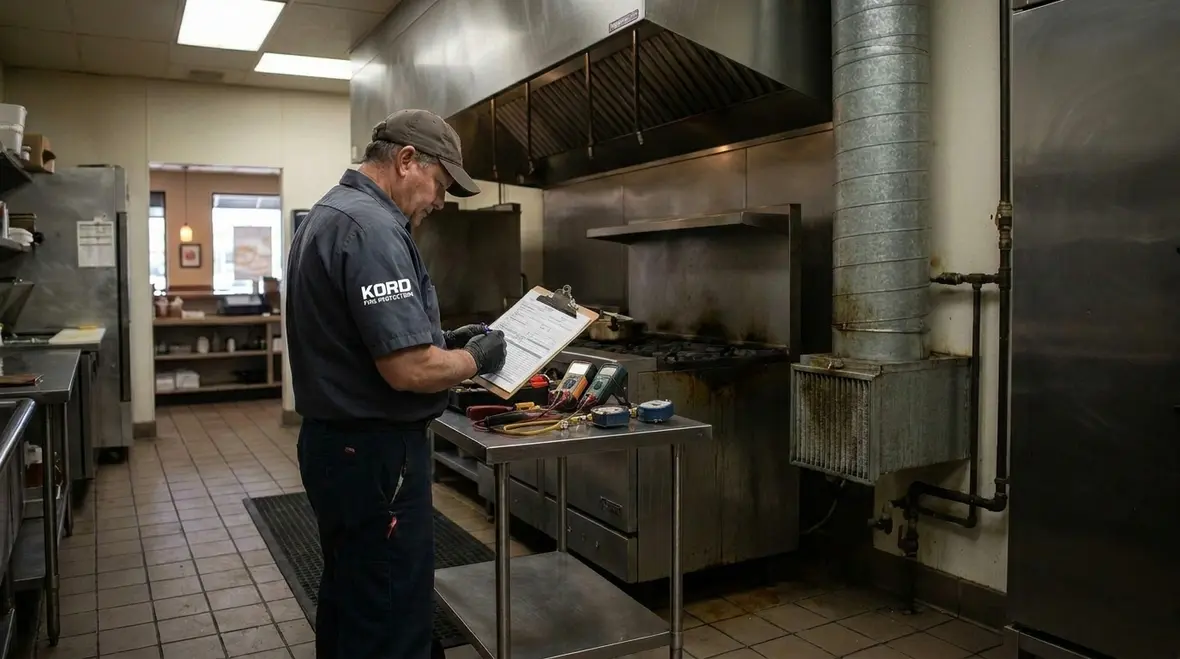
Installation success comes down to planning and details. The kitchen layout sets the boundaries. The hood configuration and duct routing affect discharge coverage. The schedule affects access. And the code requirements affect the final setup.
Then comes the part nobody wants to talk about: downtime. A weak plan can trap a contractor in a multi day delay, turning a simple job into a “why does this always happen” story. A strong partner reduces those delays with coordinated staging, clear documentation, and a checklist approach to system readiness.
That is where Kord Fire Protection often becomes a vital partner with this service job. It helps align installation, training, and follow up checks so the system does not just look correct on day one, but performs correctly later.
Good Planning Saves Time, Labor, and Headaches
A smooth install is rarely about luck. It usually comes from pre-job coordination, equipment verification, site access planning, and making sure everybody involved understands what is happening and when. That is especially important in working restaurants, commissaries, schools, and healthcare kitchens where service windows are tight and nobody wants a surprise shutdown in the middle of lunch.
For operators comparing options, Kord’s UL 300 kitchen suppression service page gives a practical look at how kitchen systems are designed, installed, and maintained. It is a helpful reference when you want the service side explained without turning the conversation into a graduate seminar on nozzle coverage.
Maintenance and Testing That Keeps Coverage Real
Fire suppression is not a set it and forget it product. With cooking activity, grease residue, and airflow changes, a system must stay dependable. Maintenance and testing help confirm correct status, readiness, and performance. If inspection finds issues, adjustments restore confidence before the next busy rush.
Just as important, maintenance helps businesses avoid last minute surprises during inspections. Nobody wants a surprise notice from an inspector any more than a person wants to find out their favorite show got canceled mid season. Regular upkeep helps keep records clean, fixes timely, and compliance on track.
Kord Fire Protection supports this phase by treating service like a real process, not a quick stop. It helps coordinate tasks, manage service schedules, and ensure the system stays tied to the kitchen’s current setup.
Inspection Readiness Is Better Than Inspection Panic
Routine service is where confidence comes from. It confirms the system is still in place, still accessible, and still configured for the actual hazards under the hood. It also reduces the risk of discovering a problem only when a fire marshal, insurance representative, or nervous owner is already standing there waiting for answers.
Operators should also remember that suppression systems work alongside other protection tools. Kord’s article on commercial kitchen fire extinguisher requirements is worth reviewing because suppression does not replace extinguishers, training, or emergency procedures. It supports them.

Pairing Amerex Systems with Kord Fire Protection for Better Outcomes
When a business pairs Amerex kitchen fire suppression with Kord Fire Protection, it gains a stronger safety workflow. This partnership helps with job site readiness, service documentation, and long term follow through. And because kitchens keep evolving, the partnership supports updates as equipment and layouts change.
In a practical sense, this means fewer gaps between install, training, inspection, and ongoing care. It also means staff can learn the “what to do” steps with less confusion. A good system protects, but the best protection plan includes people, process, and follow up.
To keep it simple: Amerex delivers the protection design, and Kord Fire Protection helps maintain that design in the real world where carts get moved, ducts get cleaned, and life happens.
If you want a broader service overview, Kord’s main fire suppression services page outlines the kinds of suppression systems the team installs and maintains. Near the end of any project discussion, that page is a useful next stop because it connects the kitchen conversation to the larger service offering.
FAQ
Final Thoughts and Call to Action
Cooking should never feel like a gamble. The Amerex Kitchen Protection System helps manage grease fire risk with a focused, fast response, and ongoing service keeps coverage dependable. To get the best results, businesses should pair the system with Kord Fire Protection for job support, inspections, and long term readiness.
If a kitchen team wants safer operations and calmer inspections, it starts with scheduling a service review today. Reach out through Kord’s fire suppression services page to get a clear plan for your site and your timeline.

Join Our Newsletter!
Get the latest fire safety tips delivered straight to your inbox From our Newsletter.