Advanced Commercial Kitchen Fire Safety Strategies by Kord
In every busy commercial kitchen, commercial kitchen fire safety is not a “nice to have.” It is a daily business need that protects people, property, and service speed. Because when cooking heat meets grease, the wrong spark can turn dinner service into a headline. Still, the good news is that advanced fire protection strategies exist, and they work best when they are planned, installed, and maintained like a system, not a hope. Kord Fire Protection technicians often explain it this way: fire safety is not one product. It is a chain of protection, from detection to suppression to staff actions, and that chain must hold under pressure.
That is exactly why strong kitchen protection plans look beyond a single tank, nozzle, or pull station. They connect hood protection, alarm response, inspections, cleaning, and team training into one dependable workflow. Kord has covered this topic from several angles, including its guides on commercial kitchen fire suppression systems, restaurant hood fire suppression inspections, and commercial kitchen fire extinguisher requirements. This article ties those ideas together into a more advanced strategy for kitchens that cannot afford downtime, confusion, or fire protection shortcuts.
Why advanced systems matter for busy kitchens
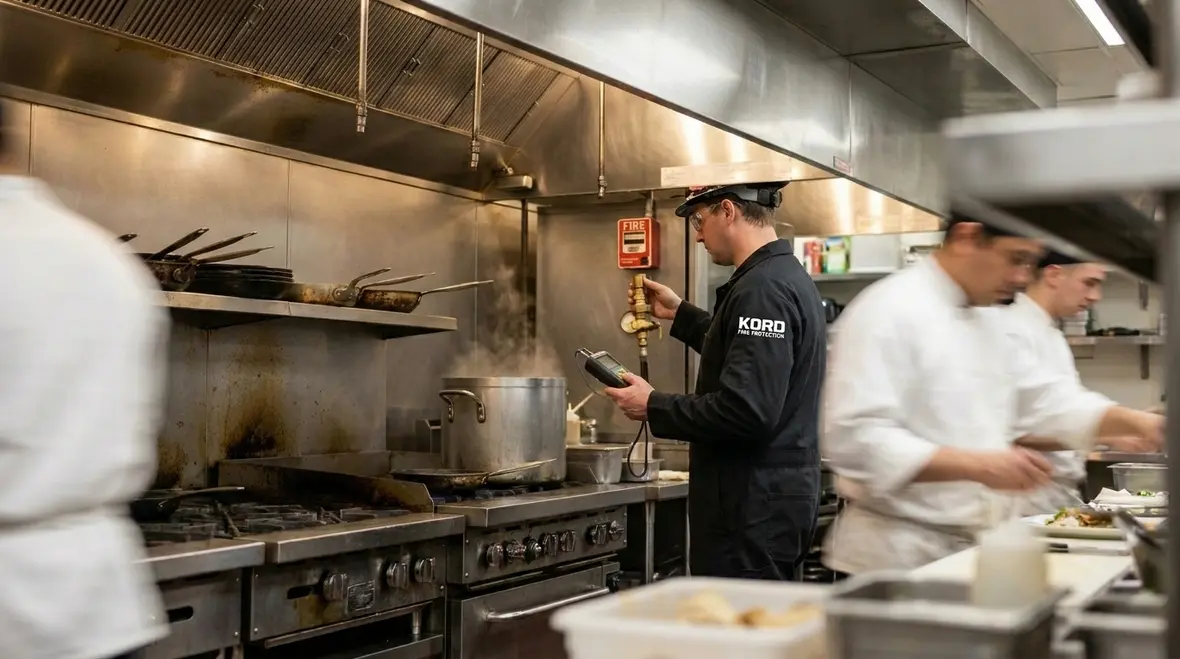
Commercial kitchens handle constant ignition sources, high temperatures, and greasy surfaces. So a fire may start small, spread fast, and hide behind equipment where it can feed on fuel. For that reason, advanced fire protection goes beyond basic alarms. It focuses on early detection, rapid suppression, and reliable checks that keep the system ready. Kord Fire Protection technicians typically point out that a system that looks fine can still fail under real conditions, like a sensor with drifting sensitivity or a damper that does not open on demand.
And yes, fires can start in places people forget. Grease filters, hood liners, exhaust fans, and duct runs can build up fuel over time. Then one flare up becomes a chain reaction. The goal is to stop that reaction before anyone has to shout “get out of the kitchen” like it is an emergency scene from a TV drama. When protection is designed as a layered system, the kitchen gains time, clarity, and a much better chance of keeping a bad moment from becoming a total shutdown.
What “advanced” really means in a commercial kitchen
In practical terms, advanced protection means the system is matched to the actual cooking environment instead of being treated like a generic box to check. It means looking at fryer load, charbroiler use, hood geometry, duct path, appliance spacing, and shutdown controls. It also means understanding that speed matters. A few seconds of delay can feel tiny on a clock and enormous inside a grease fire.
Designing suppression with the cooking reality in mind
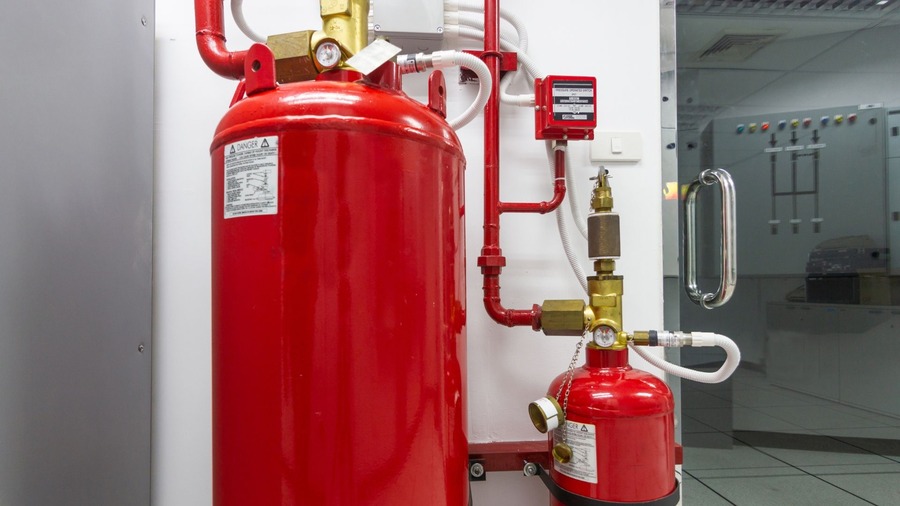
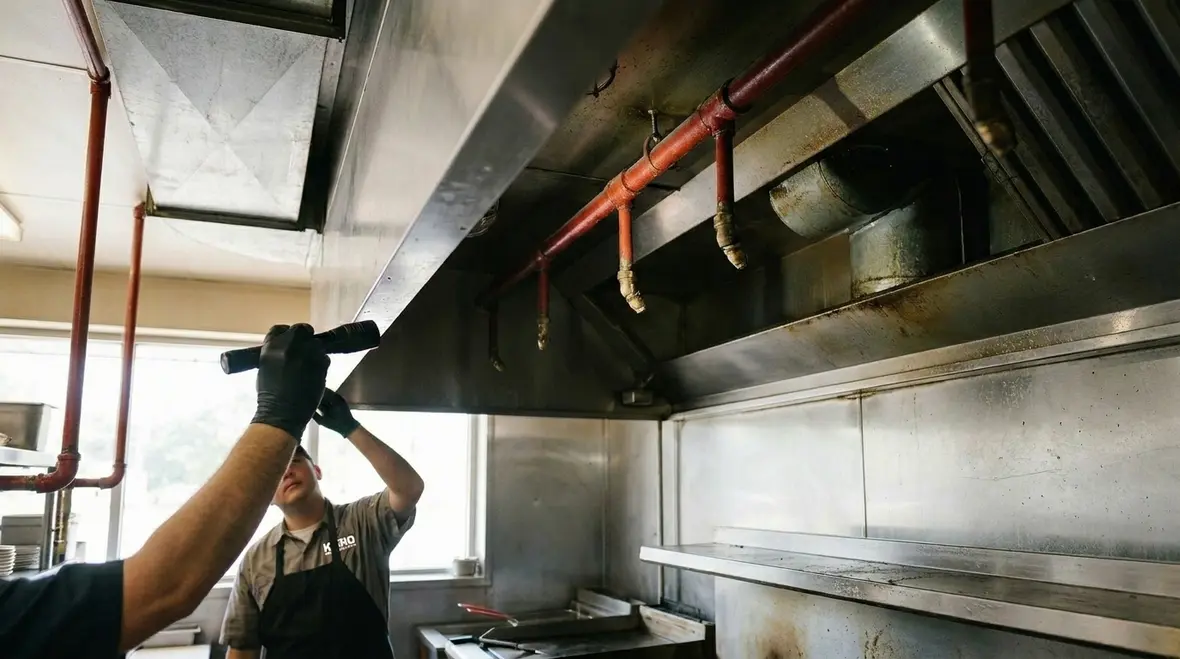
Advanced suppression planning starts with how the kitchen actually cooks. Kord Fire Protection technicians review hood types, cooking equipment layout, duct runs, and fuel load patterns. Then they match the system coverage to those details, because one size does not fit all. For example, a kitchen with charbroilers needs different attention than one that relies on fryers and griddles. As a result, the discharge strategy, agent type selection, and nozzle layout must reflect real airflow and real fire behavior.
Even placement matters. If the nozzles discharge at the wrong angles, the agent might not reach the seat of the fire inside the hood or duct. Likewise, if the system relies on cylinder pressure that is not within spec, it can discharge weakly at the worst moment. Kord’s team often stresses that commissioning is part of design, not an afterthought. In short, the kitchen should feel like it runs on autopilot, and the fire protection should too.
That approach lines up with Kord’s service work on UL 300 restaurant systems, where the focus is on designing, installing, and maintaining protection built for commercial cooking conditions. If the layout changes, the menu changes, or the equipment lineup changes, the suppression strategy should be reviewed too. Fire protection should keep pace with the kitchen it protects, not stay frozen in time like an old floor plan taped in the office.
Integrating detection and alarm to buy time
Detection that works early reduces damage and improves safety. Many commercial kitchens rely on heat and flame sensing designed for hood spaces and cooking zones. However, modern approaches also include alarm signaling that directs staff quickly. When alarms trigger, the system should do more than beep. It should send the right message to the right people, with clear steps based on the site plan.
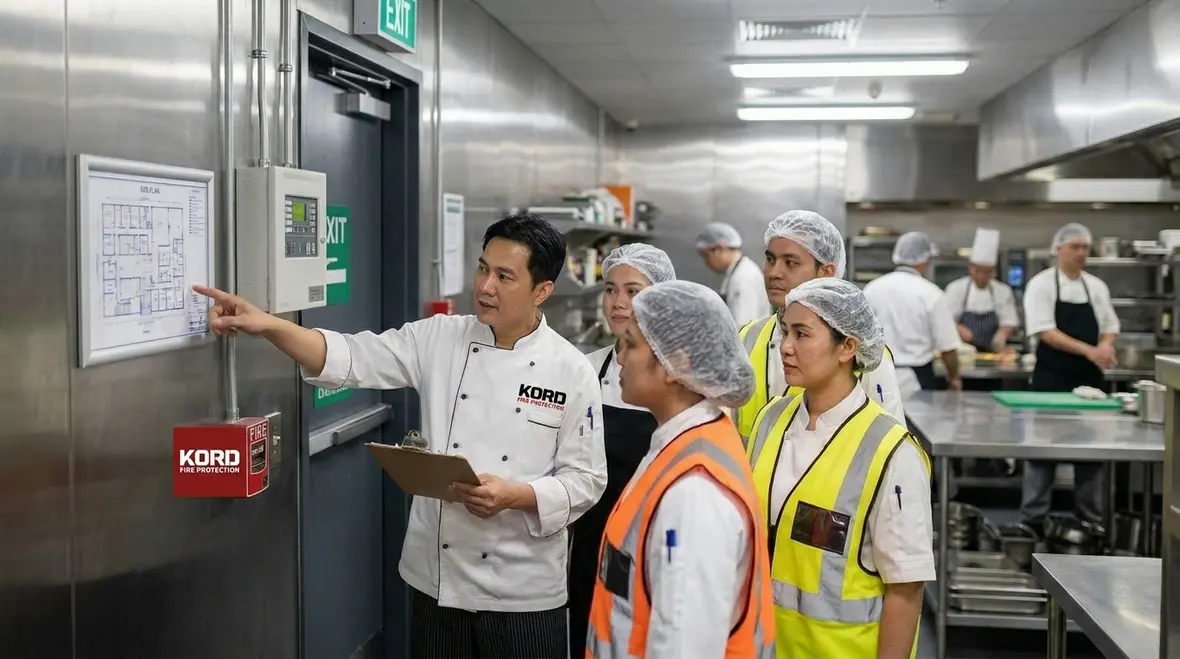
For example, staff need to know whether to evacuate immediately, shut down specific equipment, or follow a local procedure for suppression activation. Transitioning from discovery to action should take seconds, not minutes. Kord Fire Protection technicians often emphasize that training plus correct alarm mapping prevents confusion. A false sense of “it is probably fine” can be as dangerous as ignoring a real alarm. After all, fires do not care about staffing schedules or who is on break.
The value of clear alarm response
An alarm should trigger a sequence, not a debate. The more obvious the response path, the less likely people are to freeze, improvise badly, or crowd the same space. Good alarm integration helps managers know what happened, where it happened, and what the next step should be. That buys time, and in a commercial kitchen, time is one of the most valuable things a fire safety system can create.
Grease management that actually supports suppression
Suppression systems and good cleaning work together. If grease stays on hood surfaces and inside duct components, fires can grow even if the suppression system does its job. Therefore, commercial kitchen fire safety includes a grease management plan that follows the cooking schedule, not a random calendar.
Kord Fire Protection technicians commonly recommend written procedures that specify cleaning frequency, filter handling, duct inspection intervals, and responsibilities by shift. They also encourage documentation, since it helps management see patterns. If grease buildup keeps occurring in one area, the plan should adjust, like updating workflow or revising filtration and maintenance steps.
Here is the key idea: suppression cannot “clean up” fuel. It can control the fire long enough for safe action, but fuel still feeds fires. So the business should treat cleaning like a process, not a punishment for the night shift. If a kitchen is serious about prevention, grease management belongs in the same conversation as suppression system readiness.
Maintenance and inspections that prevent hidden failures
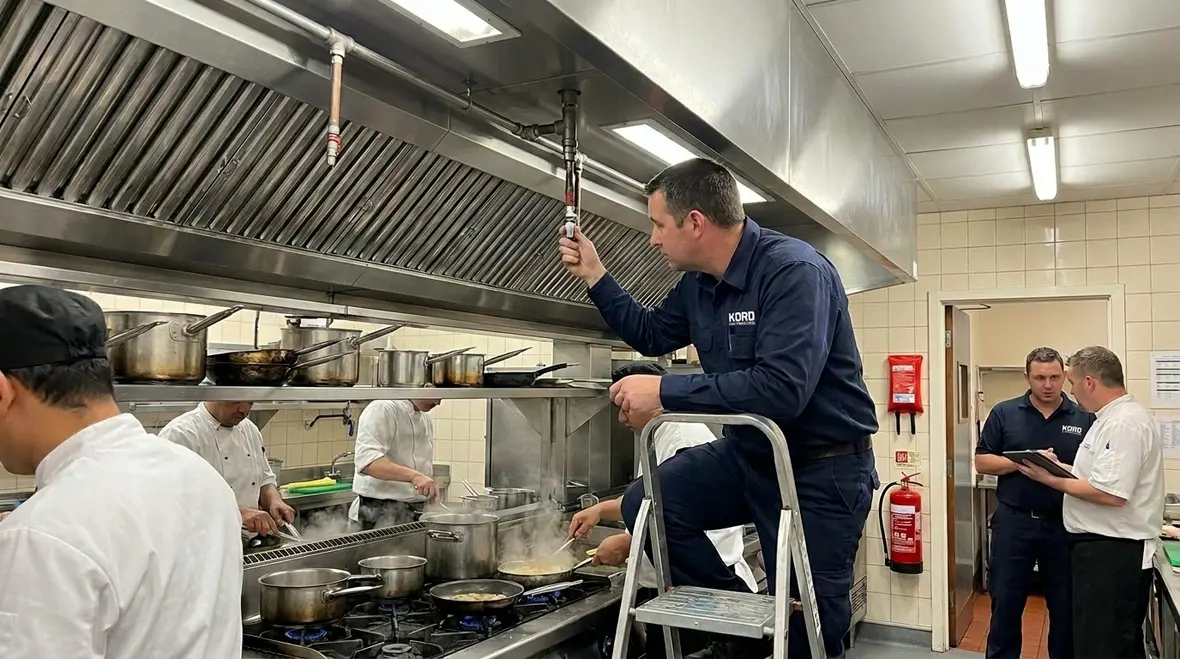
Advanced fire protection fails quietly when maintenance is weak. That is why Kord Fire Protection technicians focus on inspection depth, not just checklists. They verify cylinder pressure, inspect agent lines, check manual pulls, test alarm circuits, and confirm actuators respond correctly. They also inspect the physical condition of components, because heat, vibration, and grease exposure can degrade parts over time.
In many systems, testing can reveal issues like clogged nozzles, damaged wiring, or improper mounting. Then technicians can correct the issue before the system faces a real event. Moreover, they ensure documentation is consistent, since inspections should be traceable. A kitchen manager should be able to see what was checked, when it was checked, and what was fixed, without hunting through folders like it is a treasure map.
To keep continuity, kitchens also benefit from a maintenance rhythm aligned to cooking intensity. Busy seasons require tighter review. Quiet periods still need service, because “no incidents” does not mean the system is perfect. For teams that want a practical starting point, Kord’s restaurant hood fire suppression inspection checklist guide is a useful companion read.
Staff training, drills, and the calm response plan
No system replaces a trained team. Advanced commercial kitchen fire safety includes role based training for chefs, cooks, and managers. Kord Fire Protection technicians often explain that training should cover not only how to respond, but when to respond. Staff must understand alarm sounds, how suppression activation signals work, and what actions support safety.
Drills should simulate real steps, like shutting down specific equipment, using designated exits, and confirming the hood area is clear. Transition words matter here because response must follow a sequence: when an alarm starts, staff should assess quickly, then follow the plan, and then communicate with the lead manager. If the response is random, people hesitate. If people hesitate, time slips.
Also, business casual does not mean informal during emergencies. A drill is not about turning the kitchen into a comedy sketch. It is about making the correct reaction feel automatic, so fear does not drive decisions. The ideal result is calm movement, fast communication, and no one trying to invent a heroic plan in the middle of hot grease and confusion.
Shielding the hood, duct, and exhaust path
Many fires start in the hood and then travel through ductwork. Therefore, advanced strategies treat the exhaust path like a protected corridor. That means careful selection and protection of components in the hood system, duct sections, and exhaust fans. Kord Fire Protection technicians often stress that duct runs can accumulate grease and that airflow changes can shift where the agent needs to reach.
Additionally, businesses should confirm that fire stopping and protective measures follow local requirements and are installed correctly. If a duct passes through walls or ceilings, the integrity of the rated assemblies can affect whether heat and flame spread into other spaces. As a result, the kitchen should work as one fire resistant system, not a pile of parts that happen to sit nearby.
This is where small fixes matter. Better access for inspections, tighter sealing, and updated protective measures can reduce risk without shutting down the kitchen for months. And if a facility is reviewing the full protection package, it also makes sense to compare hood suppression planning with Kord’s broader kitchen hood fire suppression service options near the end of that review, especially when upgrades or replacement work are already on the table.
FAQ
Conclusion
Advanced fire protection strategies help commercial kitchens stay safe without slowing service to a crawl. Kord Fire Protection technicians guide businesses through design that fits real cooking, detection that buys time, and maintenance that prevents hidden failures. Then training turns equipment into action, so staff respond calmly instead of guessing.
If a kitchen wants fewer surprises and more control, now is the moment to review its fire protection plan, inspection history, and grease management routine. For businesses ready to take the next step, explore Kord’s kitchen hood fire suppression service and set up an assessment that builds a safer workflow for the team.

Join Our Newsletter!
Get the latest fire safety tips delivered straight to your inbox From our Newsletter.