
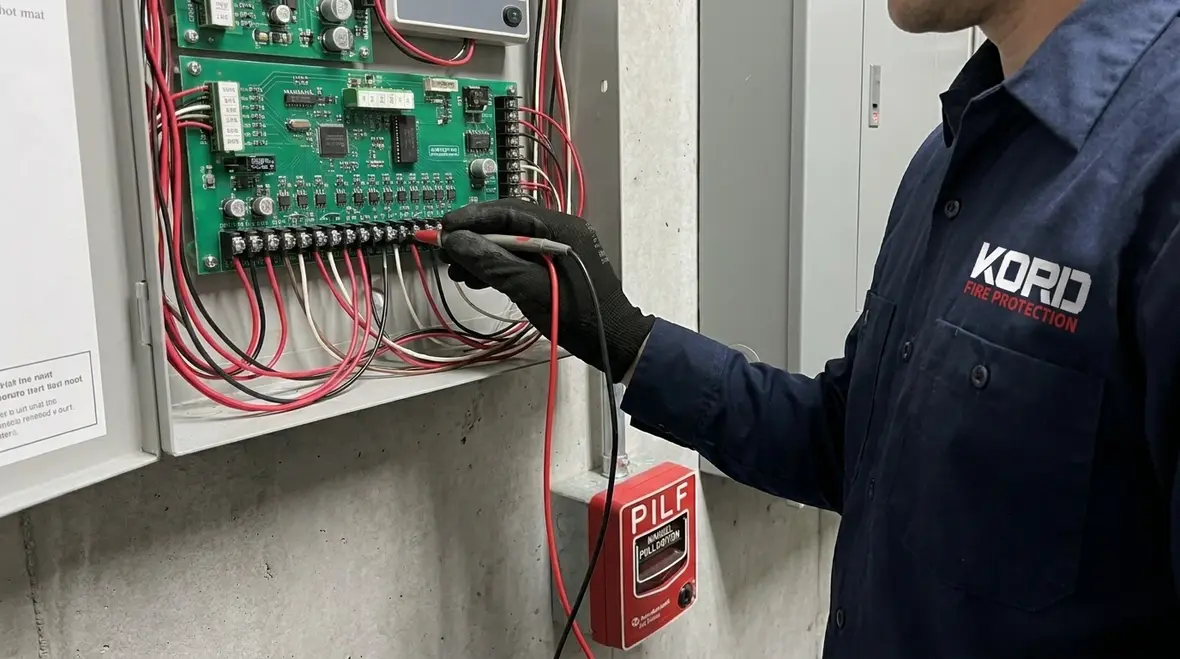
Clean Agent Releasing Circuit Testing and Service Plan
When a clean agent fire suppression system must stay ready, the clean agent releasing circuit becomes the quiet hero behind the scenes. It watches, decides, and then initiates release at the right moment, without guesswork and without drama. And yes, like any good sidekick, it must work every time, even when the fire alarm panel is sweating under real world conditions. In this guide, third person explains how releasing circuits function, how contractors and installers handle commissioning, and why KORD Fire Protection can become a vital partner for this type of service job. From wiring and testing to documentation and handoff, the process stays clean, controlled, and built for reliability.
What is a clean agent releasing circuit and why it matters
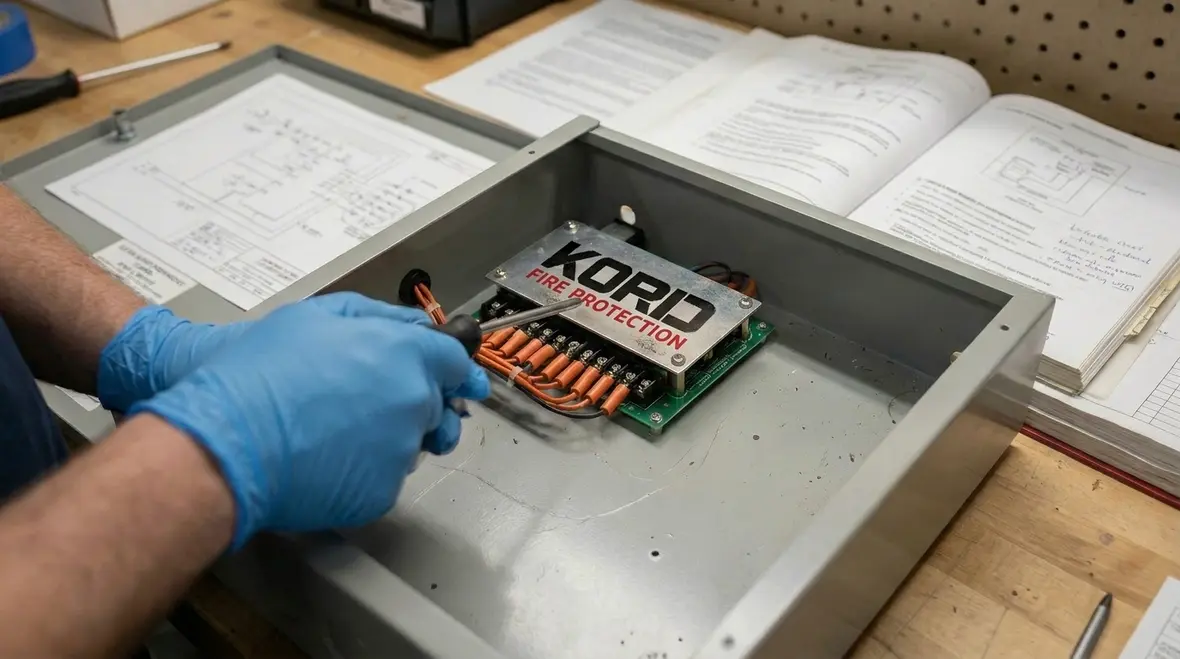
The releasing circuit in a clean agent system provides the pathway for control power and release signals that trigger the agent to discharge. In plain terms, it ensures the system can move from standby to action. Then it does that while following strict timing and safety rules, because discharge is not a casual event. Next, the circuit design accounts for correct supervision, correct zone behavior, and safe monitoring so faults get caught before they can turn into failures.
In many installations, the releasing circuit also supports interlocks. For example, the system may delay discharge to allow evacuation or to account for door closures and airflow conditions. Additionally, the circuit protects equipment by supervising components like end of line devices, initiating devices, and output modules. When everything functions together, the agent releases only when the logic decides it should. That logic, in turn, depends on clean wiring, correct polarity, and solid termination practices.
And if that sounds like a lot, it is. However, the goal stays simple: reliability. Because when the real moment arrives, nobody wants the system acting like a remote control with dead batteries. Facilities that rely on sensitive electronics, protected enclosures, and mission critical uptime often depend on clean agent systems specifically because they avoid residue and support precise fire response, which is exactly why the releasing circuit deserves more respect than it usually gets. KORD Fire Protection highlights the value of clean agent solutions in settings where equipment protection matters and where service quality can make the difference between confidence and crossed fingers.
For readers comparing protection strategies more broadly, KORD also explains how these systems fit into wider suppression planning in Clean Agent vs Traditional Fire Suppression Systems. That internal perspective helps connect the releasing circuit to the bigger picture, because the wiring only matters if the entire suppression sequence is built to perform together.
Planning the releasing circuit: zones, logic, and safety interlocks
Start with the protected area and intended sequence
Before any wire gets landed, the installer usually plans the releasing strategy. First, they identify the protected area and the system type, then they map initiating circuits and output control points. After that, they define how the control panel will evaluate alarm conditions. In most cases, the panel uses supervised inputs and then activates the releasing outputs based on approved logic.
Next, technicians verify interlock requirements. For clean agents, these can include abort time logic, ventilation shutdown, door hold or release behavior, and sometimes occupant notification sequences. Then, they confirm the releasing circuit supports the intended sequence, including any cross zone dependencies or special conditions required by code and manufacturer instructions.
Good planning reduces surprises later
Because plans drive results, quality planning reduces rework. Moreover, good planning makes commissioning faster, since test steps match what was designed. KORD Fire Protection can support this phase by aligning field practices with design intent, especially when existing sites need updates. In other words, the service job becomes less like guesswork and more like a checklist with confidence.
That bigger integration mindset also appears in KORD’s article on fire suppression system integration for life safety and in the related resource industrial fire suppression integration tips for safer buildings. Both make a useful point for this topic: a releasing circuit should never be treated like a lonely piece of wire. It belongs to a sequence, a building, and a life safety strategy.
How technicians wire and terminate control components correctly
Wiring discipline matters more than speed
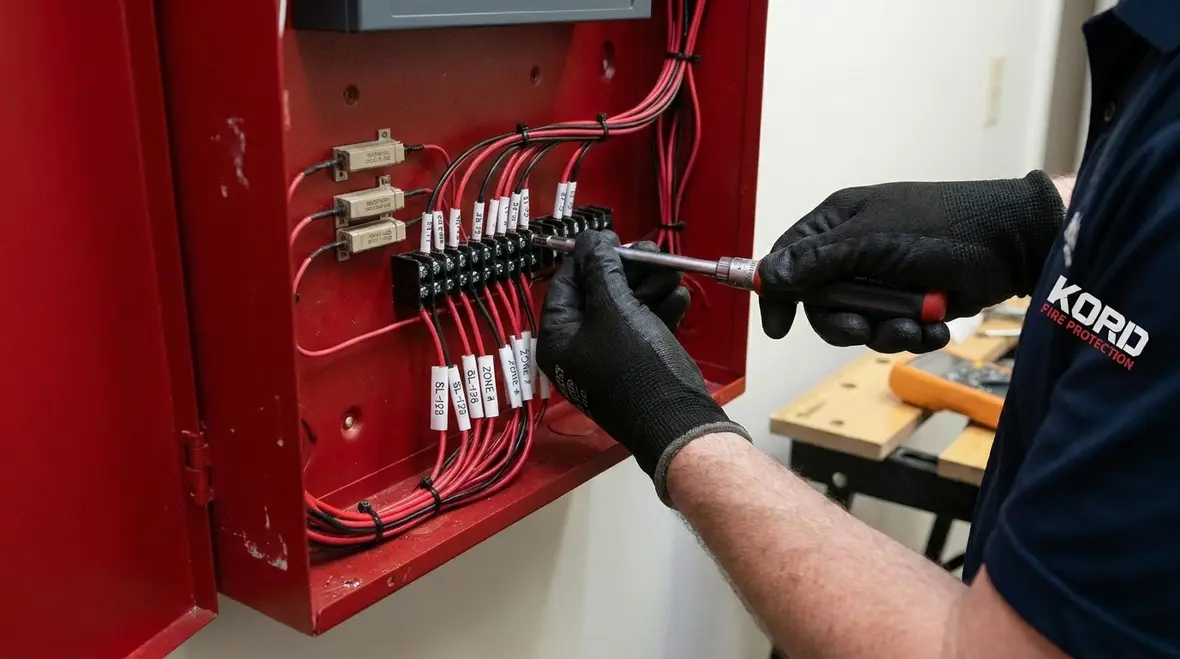
Wiring a releasing circuit means more than connecting “A to B.” First, technicians follow the system diagrams and label wiring by function. Then, they ensure correct polarity and proper grounding where required. After that, they handle termination quality. That includes consistent stripping lengths, secure screw torque, and proper ring or spade use based on the terminal type.
Additionally, technicians confirm conductor type and gauge match the manufacturer requirements. Even small deviations can cause voltage drop issues or nuisance faults. Furthermore, they check that wire routing avoids heat sources, mechanical damage, and electrical noise. As a result, the releasing circuit stays stable during long monitoring periods, not just during one quick test.
Then they verify supervising devices where used. For example, end of line resistors or supervised modules must match the panel settings and the control logic. If the supervision values do not match, the system may report trouble. And trouble reports rarely get better with age, sadly.
This is also where experience starts paying rent. A seasoned technician spots cable routing problems, inconsistent labeling, and awkward field changes before they create expensive confusion. KORD Fire Protection’s service approach for clean agent fire suppression system services centers on installation quality, servicing, and repairs, which makes it a natural fit for facilities that need the releasing circuit tested and documented correctly the first time.
Commissioning and releasing circuit testing that holds up under scrutiny
Functional testing should match the actual sequence
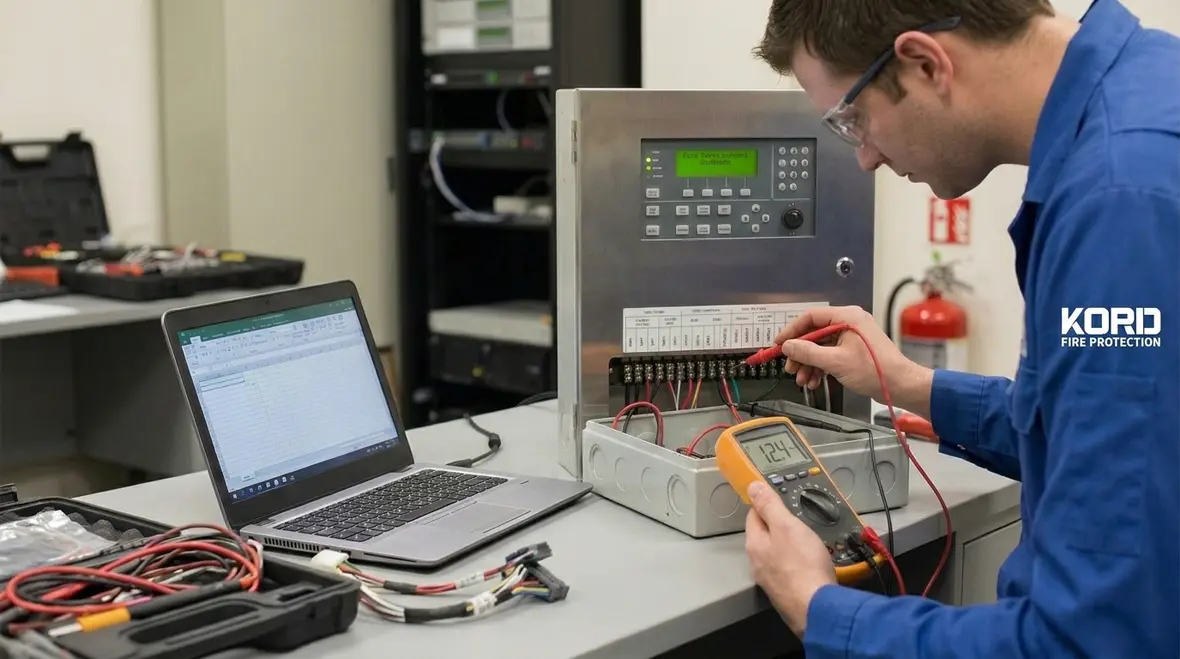
Once wiring completes, commissioning takes over. Technicians typically test the system step by step, verifying supervision, alarm pathways, and release outputs. First they confirm normal standby conditions, then they introduce controlled faults to confirm trouble behavior. Next, they simulate alarm conditions and verify the panel initiates the correct timing and release sequence.
During release circuit testing, they focus on real-world behaviors like voltage at terminals under load, proper module response, and the expected outputs to release hardware. They also confirm that abort timers, evacuation delays, and any shutdown interlocks match the approved logic. Then they document what they did and what the system reported.
Documentation matters because future service depends on it. When a releasing circuit gets serviced again, the technician needs accurate records. Otherwise, the job turns into a scavenger hunt with voltmeters. KORD Fire Protection helps sites build that strong paper trail, and it supports the testing process with an approach that respects code requirements, manufacturer steps, and the realities of occupied facilities.
Facilities that protect server rooms and other electronics-heavy spaces can also benefit from related KORD resources like Data Center Clean Agent Fire Suppression Guide and Clean Agent Fire Suppression for Critical Equipment. Those articles reinforce a simple truth: testing is not paperwork theater. It is the proof that the release path will behave when the building stops being calm.
Common failure points in clean agent releasing circuits and how to prevent them
Most failures are preventable with disciplined service
Even well installed systems can face issues. However, most problems come from predictable areas. First, loose or improperly torqued terminations can create intermittent faults. Then, incorrect resistor values or misconfigured supervision can cause persistent trouble indications. After that, wiring errors like swapped conductor pairs can prevent the releasing circuit from energizing the release module.
Another common issue is logic mismatch. If the system design calls for a specific sequence and the panel settings do not match, the release timing can fail. Additionally, field changes like adding detectors, moving junction points, or rerouting cable can disturb the original intent. Therefore, technicians need a disciplined change control process.
To prevent these failures, teams should verify labels, confirm panel programming, and perform a final functional test before handoff. Moreover, they should check that any modifications receive updated wiring diagrams and updated test records. When sites partner with KORD Fire Protection, they gain a service team that treats these details as mission critical, because they are.
Maintenance and service intervals: keeping the circuit ready without unnecessary downtime
Routine service keeps small issues from becoming large ones
A clean agent system does not live in a “set it and forget it” world. Instead, it needs periodic inspections and functional checks. Technicians often confirm status indicators, verify trouble log history, and inspect control modules for damage or corrosion. Then they test initiating devices and confirm the panel still supervises the releasing circuit as expected.
During scheduled service, technicians also look for environmental issues. For example, moisture, vibration, or dust can affect connectors. Additionally, they verify that panel software settings remain unchanged after any building upgrades. As a result, the releasing pathway stays consistent even as the facility evolves.
Of course, service should minimize downtime. That means scheduling work carefully, using clear communication with facility teams, and testing in a way that avoids unintended discharge conditions. KORD Fire Protection can act as that dependable partner for recurring service, especially when a building needs continuity and cannot close operations for long periods.
If room performance is part of the maintenance conversation, KORD also offers a useful internal reference in Clean Agent Suppression System and Room Integrity Testing. That topic often sits next to releasing circuit service in the real world, because even the best release path cannot save a room that leaks agent like a screen door on a submarine.
Why KORD Fire Protection can act as a vital partner for this service job
Clean agent releasing circuit work demands coordination between design intent, manufacturer steps, code requirements, and field reality. KORD Fire Protection brings that together by supporting installation quality, commissioning discipline, and service readiness. Then, it helps teams avoid the expensive kind of surprise, the kind that shows up after the inspector leaves. Additionally, KORD Fire Protection focuses on clear documentation so future service does not rely on memory.
So when the job includes releasing circuit verification, circuit repairs, or system updates, the partnership reduces risk. Instead of juggling vendors, contractors, and loose notes, the site gets one dependable path forward. And that path stays calmer than a sitcom courtroom, where everyone swears they followed the rules. In this case, they truly do.
Near the practical end of the decision process, it helps to have a direct service path instead of another vague promise. KORD’s Clean Agent Fire Suppression Systems service page gives facilities a clear next step for inspections, repairs, installation support, and recurring maintenance. That makes it a natural call to action for teams that need a releasing circuit service plan with real field backing.
FAQ

Join Our Newsletter!
Get the latest fire safety tips delivered straight to your inbox From our Newsletter.



