
Fire Suppression System Integration for Life Safety
Fire safety does not start when smoke appears. It starts during facility design, when engineers, architects, and contractors decide how life safety systems will work together. That is where fire suppression system integration becomes critical. When these systems are built as one coordinated plan, the facility protects people, limits damage, and reduces downtime. Meanwhile, Kord Fire Protection technicians often explain that integration is not “just another line on a drawing.” It is the difference between a system that reacts and a system that performs, calmly and on time, even when the stakes feel like a movie scene where everyone forgot the script.

Why fire suppression must match the building plan
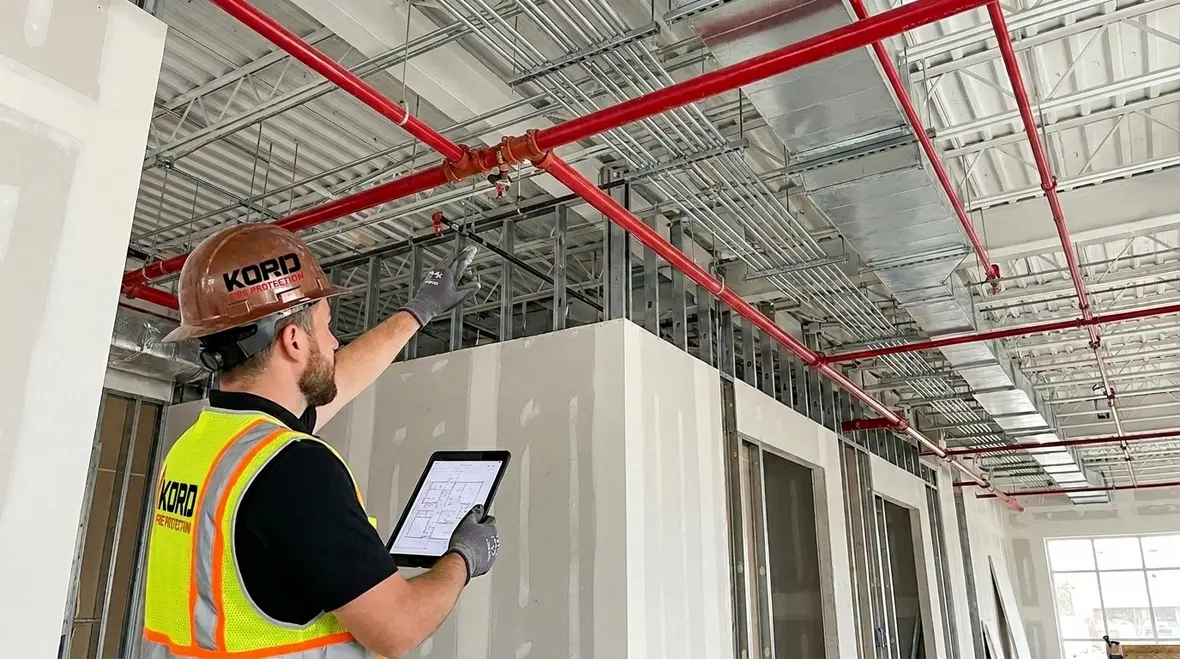
In a typical design cycle, teams move fast. They model ducts, size rooms, and route power. However, if fire suppression system integration gets treated like a late add on, the design starts to fight itself. For example, sprinklers may land in awkward zones, valves can end up behind walls, or control panels may sit where access is hard for maintenance crews. Therefore, the system either loses performance or costs more than planned to fix after construction.
Proper integration keeps the fire protection layout aligned with the HVAC plan, electrical routes, and building occupancy. As a result, the suppression system works with detection and alarm devices instead of competing with them. Kord Fire Protection technicians often point out that a system that “sort of” fits the building still has to fight heat, smoke, and confusion in the real world. And smoke never cares about scheduling.
That coordination matters far beyond neat drawings. A building plan shapes how people move, where equipment sits, how smoke travels, and how emergency responders access the site. When suppression design ignores those realities, the system may still exist on paper while falling short in practice. The cost of that gap shows up in change orders, inspection delays, and frustrating field adjustments that somehow always happen when everyone is already busy.
This is also why integrated planning supports better long term maintenance. If risers, valves, and control components are placed with service access in mind, routine inspections become easier and more reliable. If they are hidden behind equipment or packed into impossible corners, maintenance crews lose time and patience. Fire safety should not depend on acrobatics.
How Kord Fire Protection technicians connect detection, control, and suppression
Fire safety is a chain. If one link fails, the chain breaks. Kord Fire Protection technicians explain that integration means the links share timing, locations, and logic. Detection must send the right signal. Control must interpret that signal correctly. Suppression must activate in the right zone. Then alarms must guide occupants to safety while building systems respond as planned.
To do this well, technicians review what the building actually needs, not what a template assumes. They look at hazards, ceiling heights, and obstructions that can block coverage. They also verify where water or agent flows, how it routes through piping, and how the system announces events. Meanwhile, they consider that a facility may include multiple fire areas, varied occupancy types, and different risk levels. In other words, one size fits nobody, especially not when code officials show up.
In many projects, this step becomes the difference between a coordinated system and a collection of expensive parts that barely tolerate one another. Detection devices need to reflect real hazard conditions. Control logic needs to match those devices. Suppression equipment needs to respond based on the correct sequence. If any of that logic gets muddled, testing day becomes a very awkward group project.
For readers who want a broader view of how these elements work together, Kord Fire Protection also covers this topic in Fire Protection Systems Components and Coordination. That article pairs nicely with integration planning because it explains the moving parts before they all have to behave under pressure.
Coordinating zones and piping so response stays fast
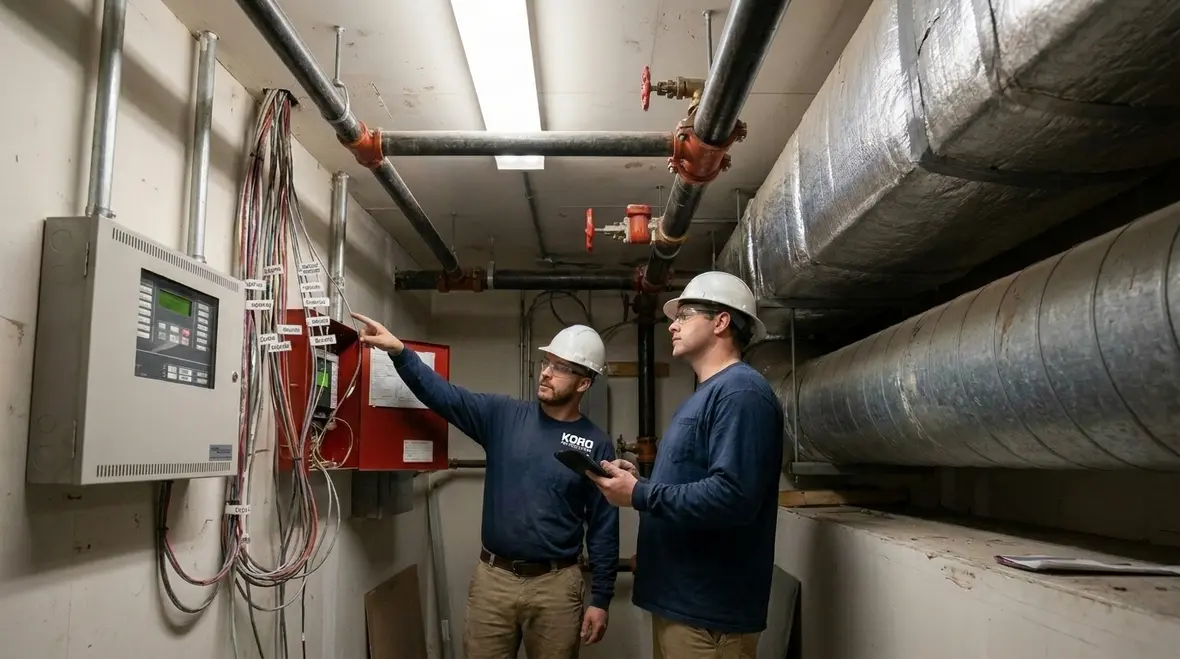
Even when a system is correctly installed, poor coordination can delay results. For instance, if zones overlap in confusing ways, suppression may activate outside the intended area. Conversely, if zoning is too narrow, suppression may struggle to reach the true seat of the fire. Therefore, designers and installers need a clear suppression map tied to the building’s compartment layout and occupancy plan.
Integration also affects piping routes. When HVAC runs through the same ceiling space, piping can get squeezed. Then installers might use fewer supports, which impacts long term stability. If the layout forces elbows into tight spaces, flow can change. And if maintenance access is blocked, inspections become harder, which is a classic way to turn a safety system into a future problem.
Kord Fire Protection technicians typically guide teams through the tradeoffs early. They encourage decision makers to review drawings for clearance, access paths, and control locations. In that stage, changes cost less than they do after drywall is in place. That is not a motivational slogan. It is math, and math usually wins.
Clear zoning also helps staff understand what happens during an event. If a facility team can quickly identify which area triggered detection, which controls responded, and which suppression components were involved, the response becomes more efficient. Confusing maps and vague labels may not seem dramatic at plan review, but they become memorable during emergencies for all the wrong reasons.
Electrical and control integration that avoids frustrating failures
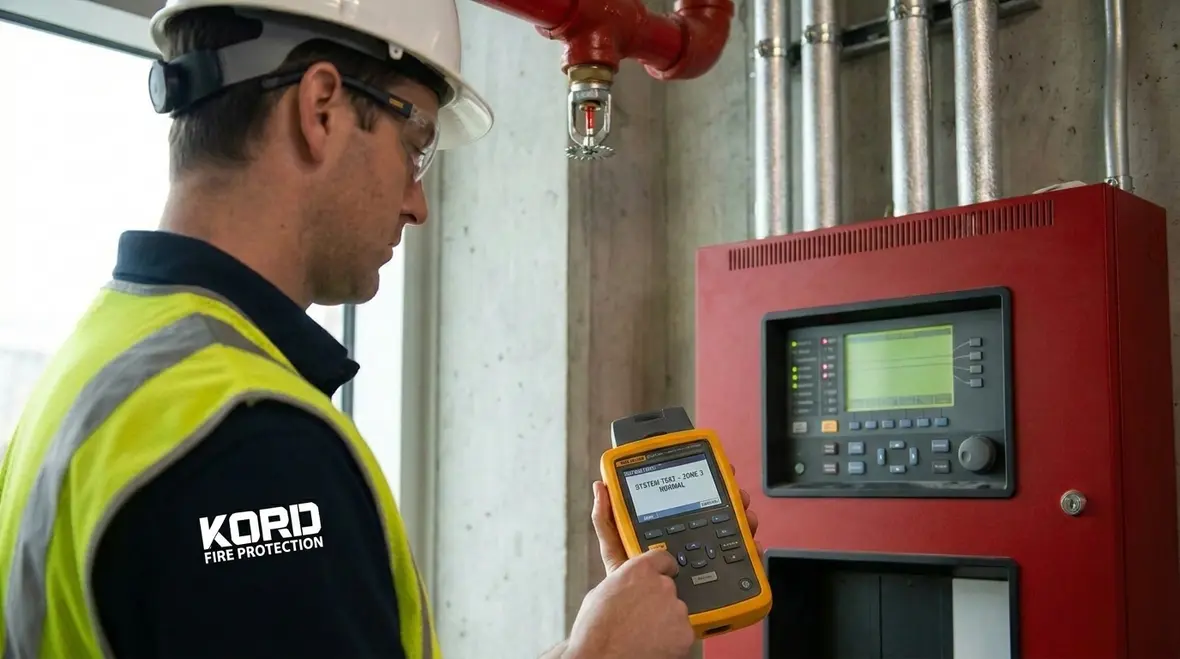
Suppression systems do not operate alone. Electrical power, control wiring, and interfaces determine whether activation happens reliably. When fire suppression system integration is done well, the electrical design matches the control strategy, and the wiring plan supports proper signaling and supervision.
Technicians often verify critical points such as panel locations, battery backup requirements, and how alarms interface with suppression controls. They also check that device mapping matches the physical layout so technicians can troubleshoot quickly during inspections. Additionally, they confirm that supervisory signals behave correctly. This matters because a “normal” trouble condition can become a real failure later if it is ignored or misrouted.
From a business standpoint, owners care about uptime and continuity. Fire safety downtime creates operational strain. Therefore, clean integration reduces false alarms and supports smoother testing. When technicians follow a consistent integration approach, the system stays trustworthy, like a reliable coworker who shows up on time and does not blame the printer.
This is one reason facilities often benefit from pairing integration planning with regular inspection and testing. Kord Fire Protection discusses that side of readiness in Fire Alarm Inspection and Testing for Commercial Buildings and Fire Suppression System Maintenance Checklist Guide. Good design creates reliability, and disciplined testing proves it.
Interface with other building systems for safer evacuation
Real facilities include more than fire suppression. They include smoke control, emergency lighting, access doors, elevators, and sometimes ventilation logic that changes during an emergency. Integration ensures suppression actions connect to these building responses in a coordinated sequence.
For example, smoke control strategies often depend on detection inputs. If those inputs fail to align with suppression zoning, smoke movement can become unpredictable. Likewise, door releases and alarm signals must match the evacuation plan, or occupants may lose time finding exits. As a result, integration protects both the fire scene and the human side of safety.
Kord Fire Protection technicians commonly stress that the goal is not only to extinguish. It is also to guide people out of danger and keep critical areas stable. That means the system should activate in the right order and provide clear communication. In a crisis, confusion is like a leak in a pipe. It spreads, it wastes resources, and it makes everything harder to fix.
This wider view of life safety is what turns integration from a technical checkbox into a practical strategy. A coordinated response protects more than equipment. It supports orderly evacuation, preserves access for responders, and reduces the number of small failures that can stack up into a serious problem.
Using an integrated design workflow to reduce cost and rework
When teams handle integration like a workflow, the facility benefits from fewer surprises. The best approach starts with early hazard review and continues through coordinated design, submittals, and installation verification. Then it moves into testing, documentation, and training.
One effective method uses shared design milestones. First, fire protection design teams align with architectural and mechanical drawings. Next, they identify conflicts in ceiling spaces, shafts, and equipment rooms. Then they confirm clearances and access routes for valves, inspector test connections, and control panels. After that, they coordinate schedules so piping and wiring install in the planned order.
Below is a helpful look at how teams can balance risk, cost, and schedule in an integrated workflow. It is not magic, but it does feel like good fortune.
| Step | What to verify |
Early coordination | Hazards, ceiling obstructions, room usage, and zone boundaries |
Design alignment | HVAC routing, electrical paths, and access for valves and panels |
Submittal review | Device mapping, control logic, and materials that match the drawings |
Installation checks | Piping support, wire terminations, labeling, and supervision integrity |
Testing and training | Acceptance tests, record updates, and staff training for response |
What strong workflow reviews usually catch early
Teams that review integration in stages usually catch the same trouble spots before they become expensive. They find blocked service clearances, unsupported piping routes, mismatched device labels, awkward access to inspector test connections, and control logic that does not match how the building will actually operate. None of these issues are glamorous. All of them are expensive when ignored.
Key actions that owners and designers should take
Owners want predictable results. Designers want smoother approvals. Technicians want fewer change orders. Therefore, a shared set of actions helps everyone win.
- Start integration during early facility planning, not after walls go up.
- Require coordinated review across fire, electrical, and mechanical drawings.
- Confirm zone logic and device mapping before final submittals.
- Plan access routes for inspection, testing, and maintenance work.
- Document interfaces between suppression controls and other building systems.
And yes, technicians will still ask “why is this here.” But when the answers are based on integration planning, those questions become clarifications instead of delays.
Near the end of planning, it also helps to involve a partner that can support inspection, testing, installation, and long term service under one roof. Kord Fire Protection highlights those capabilities on its Full Fire Protection Services page, and facility teams looking for system specific support can also review Fire Suppression services for a direct next step.
FAQ
Conclusion
Fire suppression system integration protects lives and lowers losses, but it only works when designers and builders treat it as a coordinated effort. When Kord Fire Protection technicians review hazards, verify zoning and control logic, and align suppression with other building systems, facilities gain reliability. That means faster, clearer response and fewer surprises during testing.
If your team is planning a new site or upgrading an existing one, reach out through Kord Fire Protection’s Fire Suppression service page or explore Full Fire Protection Services for broader support. Then build safety into the plan, not into a panic.

Join Our Newsletter!
Get the latest fire safety tips delivered straight to your inbox From our Newsletter.



