Clean Agent vs Traditional Fire Suppression Systems
When a fire starts, seconds matter. That is why many facilities compare clean agent vs traditional fire suppression systems before they sign a contract and before the sprinkler contractor starts charging for “just one more site visit.” In simple terms, clean agent systems use engineered extinguishing chemicals that leave little to no residue, while traditional suppression relies on water, foam, or chemical discharge that can create cleanup and downtime. However, the best choice depends on the space, the hazard, and how quickly the system must respond. For accurate guidance, Fike Fire Protection Systems technicians, such as Kord Fire Protection Technicians, often walk stakeholders through operation, risk, and real world maintenance impacts so the decision stays practical and code aligned.
System Operation: how clean agent and traditional systems behave
Both system types protect a space by detecting smoke or heat, then triggering a release. Yet the way they stop the fire differs in a way that matters for design and occupants.
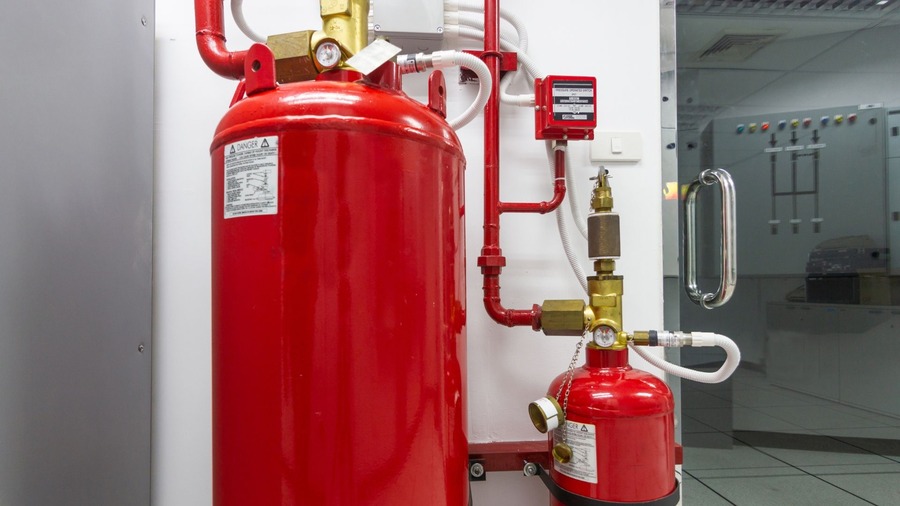
Clean agent operation typically seals a protected enclosure or uses detection and actuation that release a fire suppressant gas into the hazard area. The agent works by interrupting the fire chemistry and reducing oxygen availability, depending on the agent type used and the design concentration. Because the agent is clean, it tends to leave minimal residue on electronics, control panels, and sensitive materials.
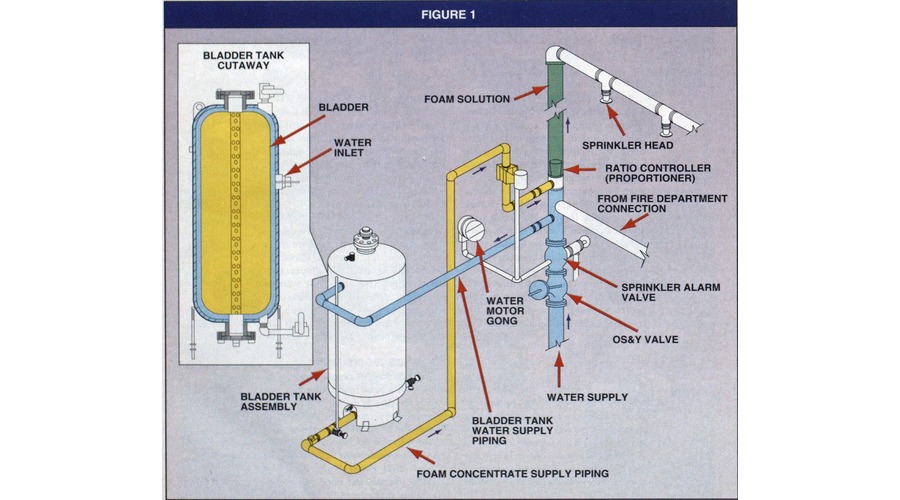
Traditional suppression operation often floods a protected area. Water based systems cool the fuel and reduce heat, while foam or dry chemical targets the fire in different ways. These systems can be extremely effective for the right hazard, but they can also wet equipment, contaminate surfaces, or require longer restoration after discharge.
Kord Fire Protection Technicians frequently explain that the “start” of protection is not the discharge. Instead, it begins with correct zoning, correct detection placement, and correct discharge timing. In other words, the system does not fail because it is “bad.” It fails when the design does not match the hazard, or when maintenance turns into a once a year guessing game.
Typical Applications for facility planners
When people compare clean agent vs traditional fire suppression systems, they usually start with the space. Then they move to the hazard and finish with the occupancy impact.
Common clean agent applications
Common clean agent applications include data centers, server rooms, telecom closets, museums, archives, and certain industrial control spaces. These areas often contain high value equipment where cleanup time affects revenue. Also, there may be a need to avoid water damage. For some facilities, a clean agent release provides strong suppression while limiting residue and post event restoration.
Common traditional suppression applications
Common traditional suppression applications include warehouses, commercial kitchens, parking structures, mechanical rooms, and spaces where water based protection is acceptable or preferred. For certain cooking and grease hazards, other traditional methods may fit the hazard profile better. These designs often align with the fire risk and the available water supply.
Meanwhile, Fike Fire Protection Systems can support both design directions based on the intended protection strategy. Still, the best fit depends on smoke detection logic, protected volume assumptions, and how the space controls air movement. If doors open constantly, no one wants to find out that the agent concentration cannot stay where the engineer planned. And yes, that is as frustrating as it sounds.
Advantages and limitations: choose based on business impact
Here is where the decision becomes less “which is newer” and more “which causes the least pain afterward.”
Advantages of clean agent
- Lower residue helps reduce cleanup and may shorten restoration time.
- Better for sensitive electronics where water damage or residue can be costly.
- Fast occupant awareness when paired with alarms, shutdown interlocks, and clear signage.
- Works in enclosed spaces when the enclosure management is part of the design.
Limitations of clean agent
- Strict design requirements exist for volume, leakage assumptions, and enclosure control.
- Management of hazards must match the agent and hazard type, including concentration needs.
- Discharge planning matters for occupants, downtime, and ventilation after release.
- Maintenance discipline stays critical because cylinders, valves, and detection systems must remain within spec.
Advantages of traditional suppression
- Strong cooling effect that helps control heat and fire spread.
- Widely understood deployment with many proven field experiences.
- Often simpler cleanup can be true in some settings, especially where surfaces tolerate water.
- Good match for many building hazards when the hazard type aligns with the system choice.
Limitations of traditional suppression
- Water and discharge effects can damage equipment and increase restoration costs.
- Downtime may grow after wet suppression events, especially for electronics and materials.
- Obstruction and coverage require correct layout so discharge reaches the right locations.
- Risk of water runoff can require additional containment or planning.
Importantly, Kord Fire Protection Technicians often highlight that a “perfect” system does not exist in isolation. It works with detection, controls, building access procedures, and post event response. If the response plan is vague, even the best suppression system can become a very expensive science project.
Inspection and Maintenance: what good looks like in the real world
Maintenance is not a checklist for the sake of a checklist. It is how facilities protect life and protect budgets.
Inspection and testing for clean agent systems
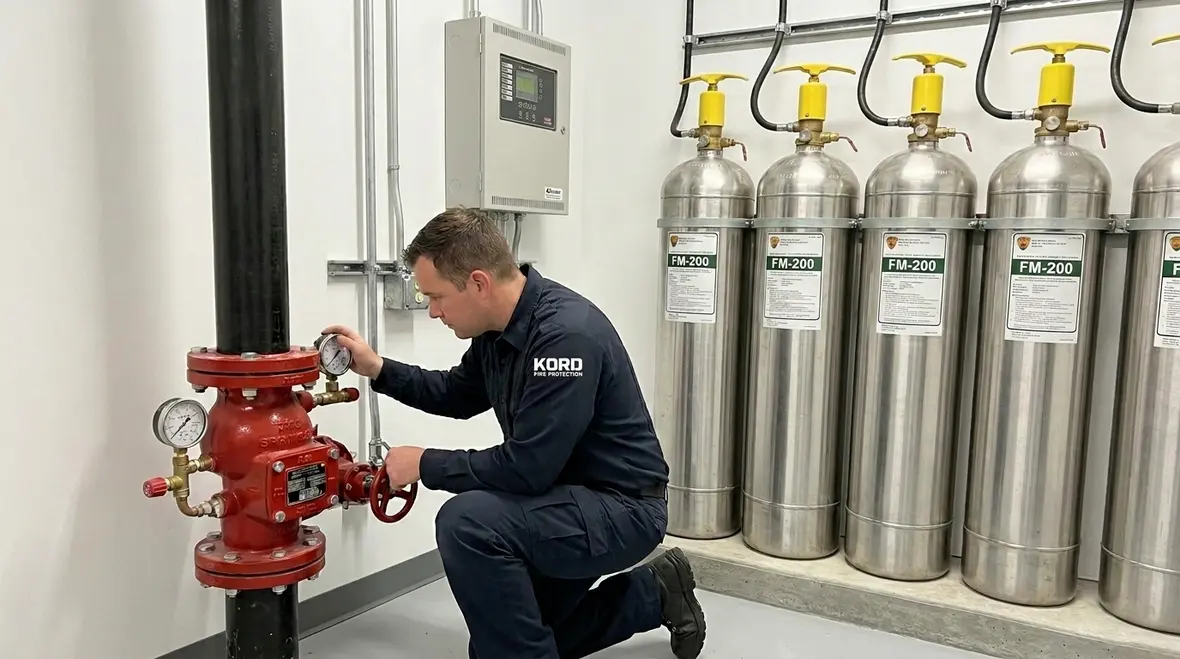
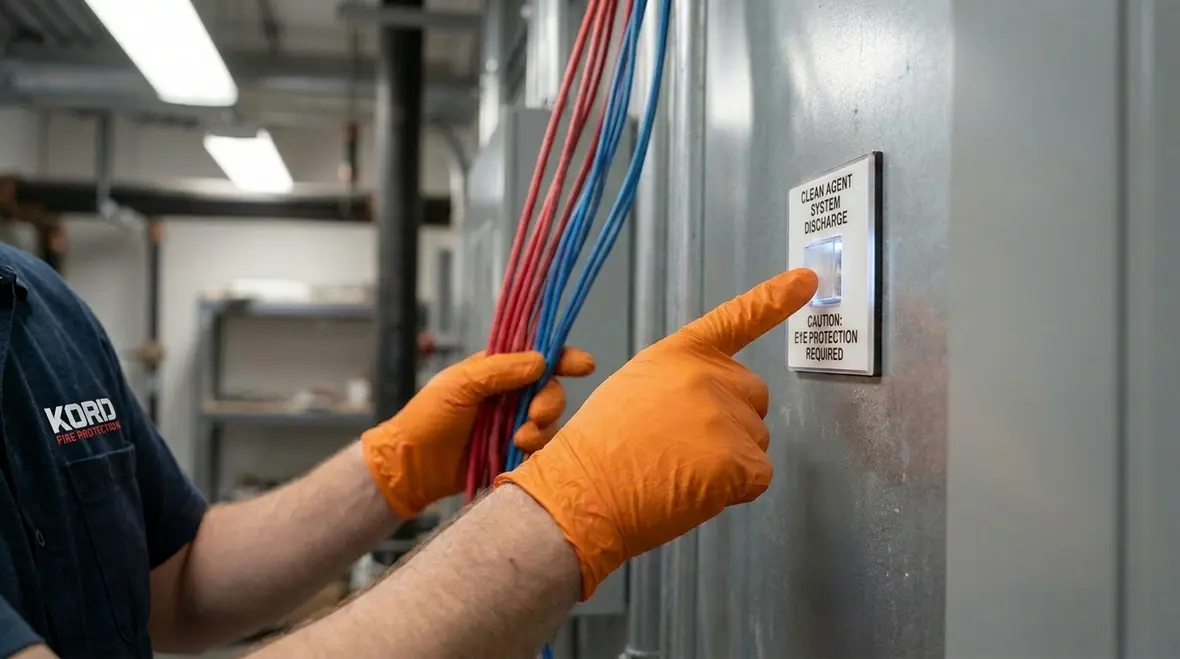
Inspection and testing for clean agent systems generally includes confirming detection performance, verifying control panel operation, checking agent cylinder pressure and condition, inspecting manual release devices, and ensuring release pathways stay clear. Technicians also verify that alarm and supervisory circuits operate correctly. Additionally, they review enclosure conditions and confirm that seals, dampers, and door management align with design assumptions.
Inspection and testing for traditional systems
Inspection and testing for traditional systems includes verifying water supply and pressure, inspecting sprinkler or nozzle configurations where applicable, checking control valves, testing alarm flow switches, and confirming that extinguishing components remain free from obstruction. For foam or dry chemical systems, professionals also verify agent stock status, valve operation, and correct system labeling.
To keep it practical, Fike Fire Protection Systems technicians typically document results, track trends, and repair issues quickly. In many facilities, the most overlooked item is not the discharge equipment. It is the “supporting cast” such as detection placement, damaged wiring, ignored supervisory signals, and door hardware that slowly turns into a draft factory.
Also, if anyone treats fire protection like it is optional, it is worth remembering that fire does not care about annual calendars. It cares about fuel, heat, and oxygen. And it shows up right on schedule in the worst possible moment, like a pop quiz during lunch.
Code and compliance considerations: staying aligned across standards
Fire protection design and maintenance must follow applicable codes, local amendments, and the engineering basis of the system. While specific requirements vary by jurisdiction and hazard, these systems generally follow recognized standards for design, installation, operation, and inspection.
When clean agent vs traditional fire suppression systems are compared, compliance often comes down to the hazard classification and the approved system approach for that space. Authorities having jurisdiction may require specific agent types, concentration limits, enclosure integrity assumptions, and occupant notification procedures. For traditional water based protection, they typically focus on water supply adequacy, obstruction rules, coverage criteria, and alarm integration.
Kord Fire Protection Technicians commonly stress two compliance realities. First, the engineered design basis controls performance. Second, field changes can break compliance if they alter protected volume, add obstructions, or change room function. A small renovation can turn “code compliant” into “code adjacent,” and that is not the flex facilities want.
Therefore, teams should keep drawings current, update sequence of operations, and confirm that any tenant improvements go through review. That is how compliance stays alive instead of becoming a folder of outdated documents.
Clean agent vs traditional systems: a quick decision guide
People often ask which system “wins.” In practice, professionals match the system to the hazard and the business goals.
- If a space holds sensitive electronics and moisture damage would be costly, a clean agent approach often fits better, assuming enclosure and design controls remain intact.
- If the hazard involves material types that tolerate water or foam well, traditional suppression may deliver efficient fire control with proven field performance.
- If restoration speed affects operations, decision makers should include after event recovery time in the evaluation, not just the discharge mechanism.
- If the space has frequent door openings or high air leakage, teams must address those conditions before expecting clean agent performance.
And yes, the best way to avoid surprises is to ask for an on site hazard review, not to pick a system based on a brochure photo that definitely did not include your ductwork.

FAQ: quick answers for featured snippets
Conclusion: next steps to protect assets and people
Choosing between clean agent vs traditional fire suppression systems deserves more than a quick comparison spreadsheet. A facility should match the hazard, enclosure behavior, occupant needs, and restoration goals, then support that design with disciplined inspection and maintenance. Kord Fire Protection Technicians and Fike Fire Protection Systems specialists can review the space, confirm system operation logic, and help ensure the solution stays aligned with code. If the decision feels uncertain, request a professional assessment today and protect the business you worked hard to build.
Related Kord Fire content: If you manage testing and want a clear reference for ongoing readiness, review Regulation 4 Fire Pump Test.
Next step CTA: For help choosing and maintaining the right suppression approach, contact Kord Fire Protection for an on site hazard review and inspection support.
Know Your Weapon Before You Fight the Flame
Kord Fire Protection is your go-to when it comes to all things fire protection. For over 20 years, we’ve been serving Southern California with the quality service and equipment to keep your home or business safe at all times. Our competitive prices reflect our unwavering commitment to protecting what matters most in the event of a fire emergency. Give us a call, send an email, or use that form!

Join Our Newsletter!
Get the latest fire safety tips delivered straight to your inbox From our Newsletter.