
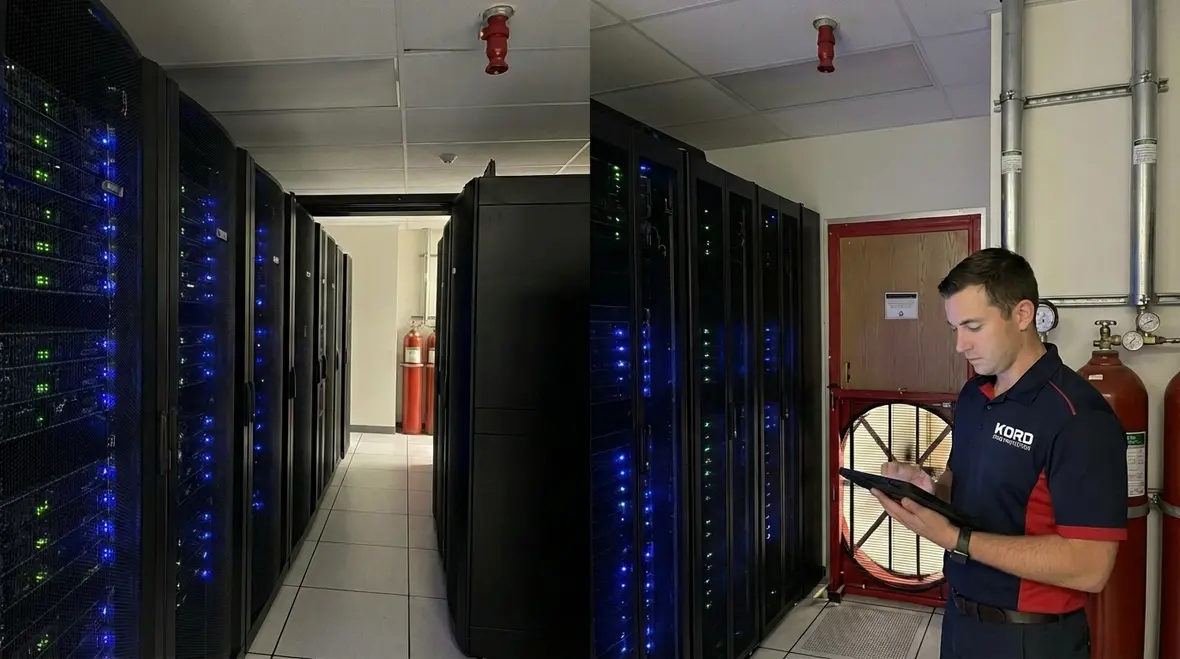
Clean Agent Suppression System and Room Integrity Testing
In mission critical spaces, seconds matter. That is why a clean agent suppression system stands guard in data centers, control rooms, medical labs, and archives where water would cause more damage than fire. Unlike traditional sprinklers, these systems release a gas that extinguishes flames without soaking servers or frying circuitry. However, installing the system is only half the story. Without proper enclosure and testing, even the best equipment can fall short. That is where room integrity testing enters the scene, and where Kord Fire Protection technicians calmly explain the science in a way that makes even airflow sound fascinating.
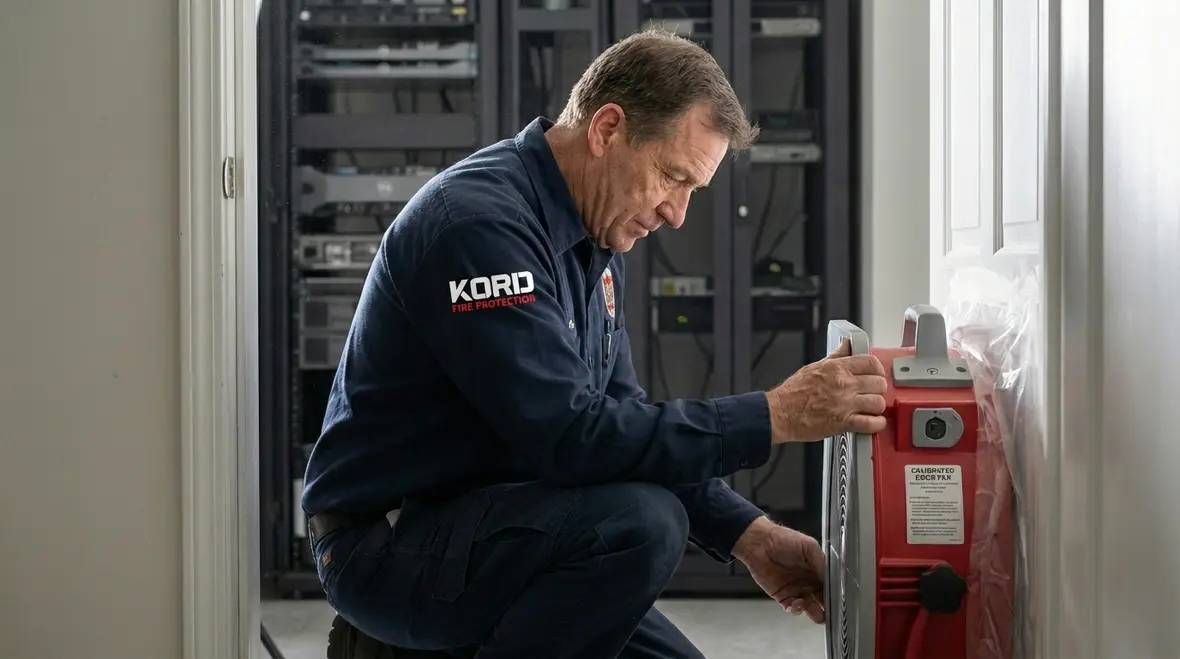
What a Clean Agent Suppression System Actually Protects
At its core, a clean agent suppression system protects assets that cannot afford water damage, residue, or long downtime. Think of rooms filled with humming servers, hospital imaging suites, financial trading floors, museums, and telecom hubs. In these environments, a small electrical spark can escalate quickly. Yet, spraying water on sensitive electronics would feel like solving a leaky faucet with a fire hose.
Instead, clean agent fire suppression systems use gases such as FM 200, Novec 1230, or inert blends. Once activated, the agent floods the room and interrupts the fire triangle. It either absorbs heat or reduces oxygen to a level where flames cannot survive, while still allowing occupants to exit safely. As a result, the fire stops without leaving residue or harming equipment.
Kord Fire Protection technicians often explain it this way. The agent does not fight the fire with brute force. It quietly removes what the fire needs to breathe. It is less action movie explosion and more calm, calculated strategy. James Bond in a tailored suit, not a superhero smashing through walls.
Moreover, these systems protect:
- Data infrastructure
Servers, switches, and storage arrays that power businesses and cloud services. - High value electronics
Control panels, robotics, and automated manufacturing equipment. - Medical and laboratory equipment
Devices that must remain sterile and operational. - Irreplaceable records
Archives, museums, and legal documents that cannot be restored once damaged.
Therefore, when someone searches for protection that will not destroy what it saves, this type of fire suppression system stands at the top of the list. For a deeper dive into where these systems shine, Kord Fire’s overview of fire suppression services connects specific hazards with the right suppression technology across different industries.
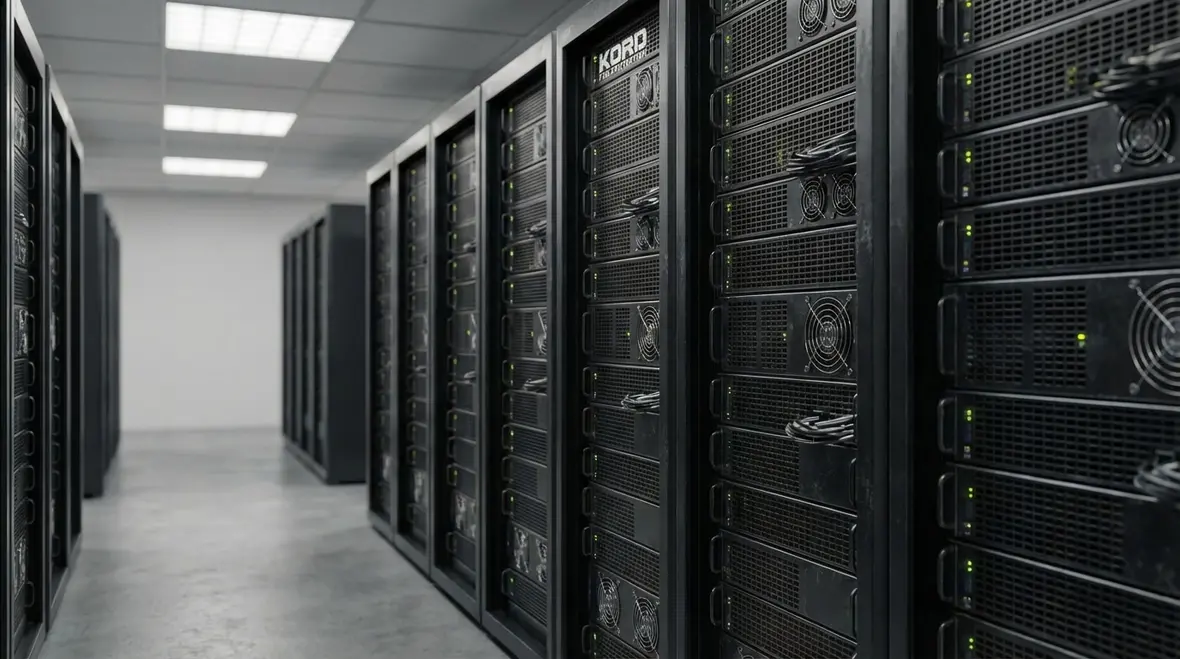
How a Clean Agent Suppression System Works Inside a Sealed Room
Although the concept sounds simple, the engineering behind it is precise. A clean agent suppression system relies on accurate detection, fast discharge, and proper room containment. First, smoke or heat detectors sense trouble. Then, the control panel confirms the signal to avoid false alarms. After a brief delay that allows evacuation, the agent releases through nozzles designed to distribute it evenly.
However, the key factor is concentration. The gas must reach and maintain a specific level for a set time, often ten minutes. If the concentration drops too soon, the fire can reignite. Fire has a stubborn personality. Give it a little oxygen, and it tries to make a comeback tour.
This is why enclosure integrity matters so much. Walls, ceilings, raised floors, cable penetrations, and even door gaps influence how long the agent stays in the room. Kord Fire Protection technicians frequently walk clients through these details. They point out that even a small unsealed conduit can become the escape route that undermines the entire system.
In short, the system does not work in isolation. It depends on the room acting like a well sealed container. Without that, the agent disperses too quickly, and performance drops.
If you want to see how this concept plays out in real-world testing, Kord Fire’s article on what room integrity testing is and why it matters walks through the pressure testing process and common issues found in critical rooms.
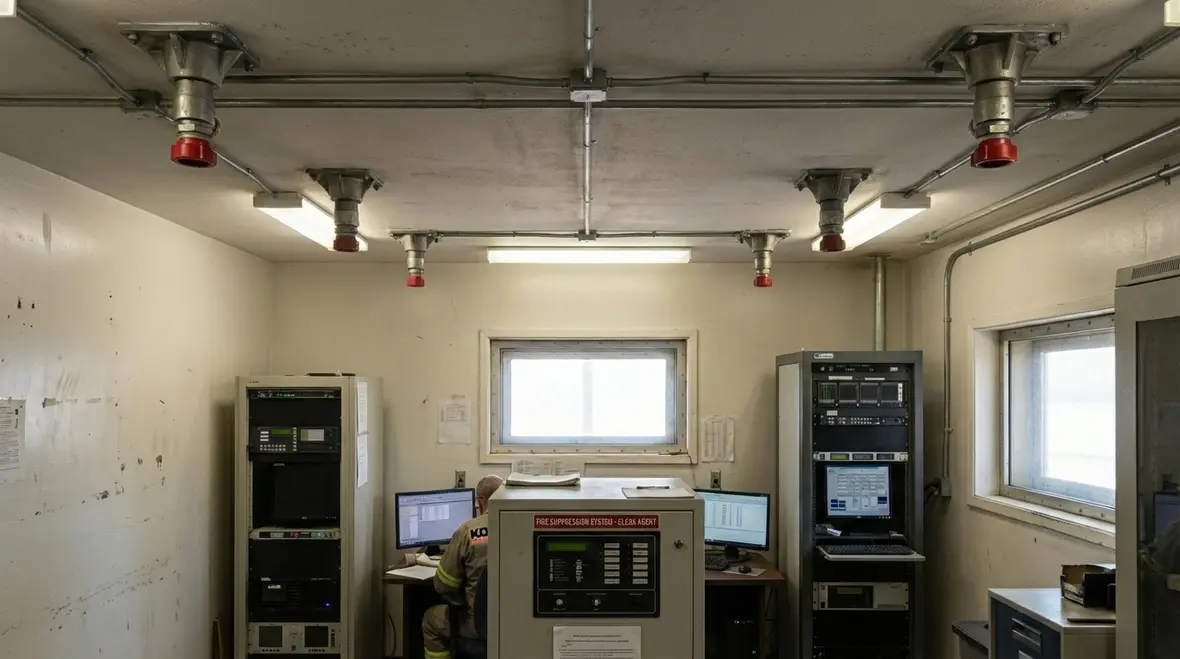
Why Room Integrity Testing Matters More Than Most People Realize
Room integrity testing, often called a door fan test, measures how well a protected space holds the clean agent. During the test, technicians mount a calibrated fan in a doorway. The fan creates pressure differences, and sensors measure how much air leaks through cracks and openings. Software then predicts whether the room will maintain the required concentration.
So why does this matter? Because codes and standards require proof that the system can perform as designed. Installing cylinders and piping is not enough. Building changes, renovations, or even routine wear can create new leaks over time. Consequently, a system that passed inspection years ago may not meet current requirements today.
Kord Fire Protection technicians often explain that skipping integrity testing is like buying a safe but never closing the door. The investment exists, yet the protection does not. Moreover, insurance providers and authorities may require documented testing to confirm compliance with NFPA standards.
- Verification of hold time
Confirms that the agent will remain at effective levels. - Identification of leakage paths
Pinpoints areas that need sealing. - Regulatory compliance
Supports code requirements and inspection readiness. - Peace of mind
Ensures the system will perform during an actual event.
Therefore, the test is not an optional extra. It is a core part of the fire protection strategy. Kord Fire’s dedicated room integrity testing services page outlines how their technicians evaluate gas retention time, document compliance, and support clean agent system upgrades.
When Should Room Integrity Testing Be Scheduled
Many facility managers ask when testing should occur. The answer depends on several factors, yet a few clear guidelines exist.
First, testing should take place after installation of a clean agent suppression system. This confirms that the enclosure meets design assumptions. Next, it should follow any construction changes. Adding cable trays, new ductwork, or wall penetrations can alter airflow paths. Even small upgrades can affect hold time.
Additionally, periodic testing supports long term reliability. Standards often recommend retesting at defined intervals or after significant modifications. If a facility undergoes renovations, changes ceiling tiles, or modifies door hardware, testing should not wait.
Kord Fire Protection technicians frequently remind clients that buildings evolve. Technology upgrades, layout shifts, and tenant improvements happen. Consequently, the fire suppression strategy must evolve as well. A room that was tight five years ago may now resemble a colander. Not ideal when dealing with fire.
In high value environments such as data centers, many organizations include room integrity testing in their routine maintenance plan. This proactive approach reduces risk and prevents surprises during inspections.
Clean Agent Suppression System vs Traditional Sprinklers
When comparing fire protection methods, decision makers often weigh clean agent systems against water based sprinklers. Both serve important roles. However, they protect different priorities.
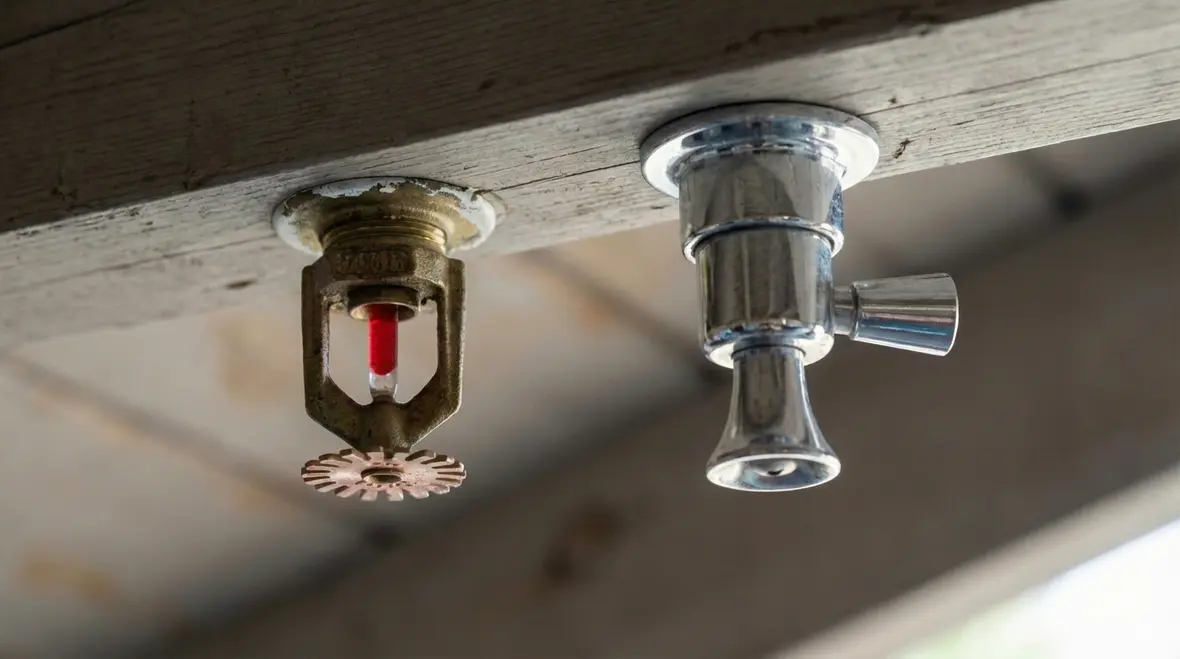
Sprinklers control or suppress fire using water. They are cost effective and widely required by code. Yet, water can damage electronics, paper records, and sensitive machinery. In contrast, a clean agent suppression system extinguishes fire without leaving residue or moisture. As a result, downtime decreases and cleanup becomes simpler.
To clarify the distinction, consider the following comparison.
Traditional Sprinklers
- Designed for life safety and structural protection
- Use water as the extinguishing medium
- May cause secondary damage to electronics
- Often required throughout general building areas
Clean Agent Fire Suppression
- Designed for asset protection and rapid suppression
- Use gaseous agents that leave no residue
- Minimize damage to sensitive equipment
- Common in server rooms and specialized spaces
Therefore, many facilities use both systems in different zones. The sprinkler system protects the overall building, while the clean agent system safeguards critical rooms. It is not a rivalry. It is a coordinated effort.
Common Misconceptions About Clean Agent Fire Suppression
Despite its proven track record, several myths surround clean agent fire suppression systems. Kord Fire Protection technicians often address these during consultations.
- Myth one. The gas is dangerous to people.
In reality, systems are designed with safety margins. Concentrations extinguish fire while allowing occupants time to exit. Warning alarms and delays support safe evacuation. - Myth two. Once installed, it never needs attention.
Like any safety system, it requires inspection, maintenance, and testing. Cylinders must remain properly charged. Detection devices need verification. Room integrity testing confirms enclosure performance. - Myth three. It will damage electronics.
Clean agents leave no residue and do not conduct electricity. In fact, they exist specifically to protect sensitive equipment.
Furthermore, some assume the system activates at the slightest hint of burnt toast. Modern detection logic reduces false discharges by requiring multiple signals. The system behaves less like an overcaffeinated smoke alarm and more like a disciplined professional.
How Kord Fire Protection Technicians Guide Facility Teams
Technical systems can intimidate even experienced managers. However, clear guidance transforms complexity into confidence. Kord Fire Protection technicians approach each project with a methodical process.
First, they evaluate the hazard. They assess fuel sources, room volume, ventilation, and occupancy. Then, they design the clean agent suppression system to meet code requirements and performance goals. Calculations determine the correct agent quantity and nozzle placement.
After installation, they conduct acceptance testing, including room integrity testing when required. Moreover, they document results in clear reports that support compliance and insurance needs. If leakage appears, they identify likely paths and recommend sealing solutions.
During maintenance visits, they inspect cylinders, control panels, detectors, and discharge components. They also review any building changes that could affect performance. Because communication matters, they explain findings in plain language. No dramatic jargon. No unnecessary scare tactics. Just facts delivered with steady assurance.
As a result, facility teams understand not only what the system does, but why each component matters. That understanding leads to better decisions and stronger protection.
FAQ About Clean Agent Systems and Room Integrity Testing
Protect What Matters Before Fire Tests It
Fire does not schedule appointments. Therefore, preparation must happen in advance. A properly designed clean agent suppression system, supported by thorough room integrity testing, protects the assets that keep organizations running. With guidance from Kord Fire Protection technicians, facilities gain clarity, compliance, and confidence.
Now is the time to evaluate protected spaces, schedule testing, and ensure every sealed room can truly perform when it matters most. If you are planning a new installation or need to verify an existing system, explore Kord Fire’s fire suppression services and dedicated room integrity testing services to align your clean agent system with current standards and real-world performance.
Know Your Weapon Before You Fight the Flame
Kord Fire Protection is your go-to when it comes to all things fire protection. For over 20 years, we’ve been serving Southern California with the quality service and equipment to keep your home or business safe at all times. Our competitive prices reflect our unwavering commitment to protecting what matters most in the event of a fire emergency. Give us a call, send an email, or use that form!

Join Our Newsletter!
Get the latest fire safety tips delivered straight to your inbox From our Newsletter.


