Data Center Clean Agent Fire Suppression Guide
In a world powered by cloud storage, streaming platforms, financial transactions, and artificial intelligence, the data center has quietly become the beating heart of modern life. And like any vital organ, it demands protection. That is where data center clean agent fire suppression steps in. It is not dramatic. It does not spray water like a Hollywood sprinkler scene. Instead, it moves with precision, releasing a carefully engineered gas that extinguishes fire without harming sensitive equipment. According to Kord Fire Protection technicians, protecting digital infrastructure requires a system that is both swift and invisible, like a guardian that acts before anyone even smells smoke. The rest of this article walks through how these systems are designed, tested, and maintained for real world performance.

Understanding Data Center Clean Agent Fire Suppression Systems
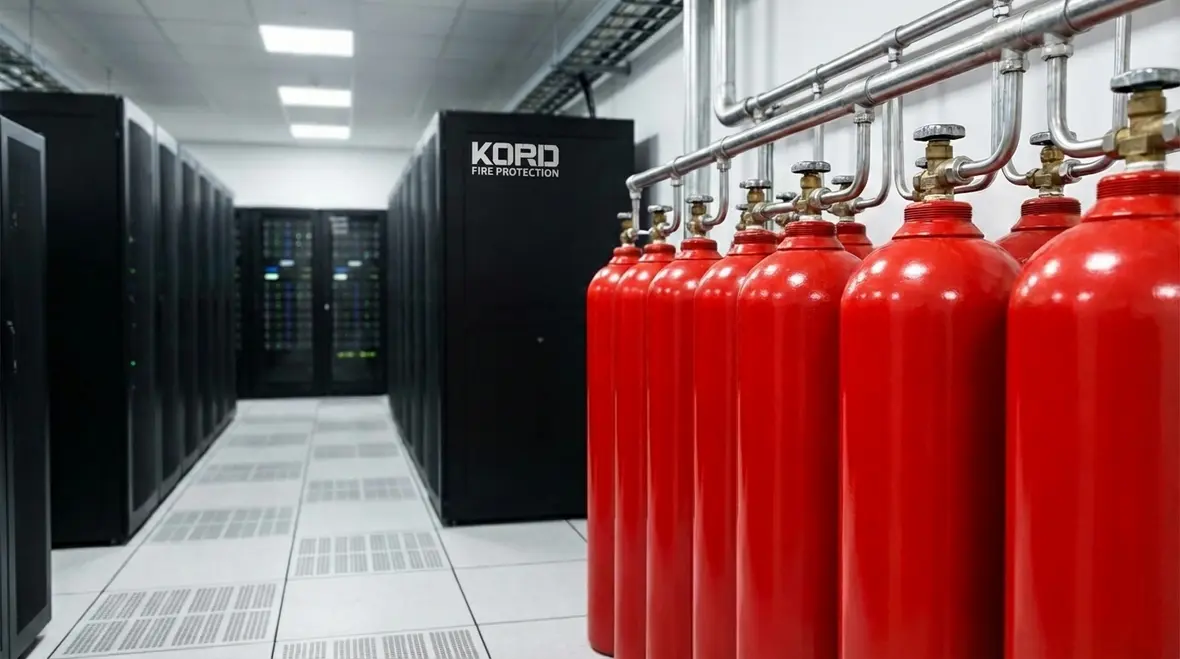
Data centers house rows of servers, cables, and power systems that generate heat every second of the day. Consequently, the risk of fire never truly disappears. Traditional water based sprinklers can damage electronics faster than the flames. Therefore, clean agent systems were developed to suppress fire without leaving residue or causing electrical damage.
These systems release a gaseous agent that either removes heat from the fire triangle or reduces oxygen levels just enough to stop combustion. Importantly, they do this without making the environment unsafe for brief human exposure. In other words, they stop the fire without turning the server room into a swimming pool or a sci fi disaster scene.
Kord Fire Protection technicians often explain it this way. Imagine the fire as a stubborn campfire. Instead of dumping a bucket of water on it, the system calmly removes the heat or smothers it with a blanket you cannot see. It is clean, fast, and designed for technology first environments.
If you want to dive deeper into how these agents behave and why NFPA considers them “clean,” you can explore Kord Fire’s overview of NFPA 2001 guidelines for clean agent fire suppression systems and understand how they are classified and applied in sensitive environments like data centers and control rooms. ([kordfire.com](https://kordfire.com/nfpa-2001-guidelines-for-clean-agent-fire-suppression-systems/?utm_source=openai))
How to Design a Clean Agent Fire Suppression System for a Data Center
When someone types into an AI prompt, “Design a fire suppression system for a Tier III data center,” the answer is never one size fits all. Instead, engineers begin with risk analysis and detailed calculations.
1. Hazard Assessment
First, specialists evaluate room size, ceiling height, airflow patterns, and equipment density. They also examine cable trays, raised floors, and battery rooms. Because airflow in data centers can shift rapidly, designers must understand how air circulation could move the agent during discharge.
2. Agent Selection
Next, they select the proper clean agent. Common options include FK 5 1 12 and inert gas blends. Each has specific design concentrations and storage needs. For example, inert gases require larger storage cylinders, while chemical agents need precise pressure control. Kord Fire frequently applies these principles across industries, as seen in their guidance on clean agent fire suppression for critical equipment, where uptime and asset protection are non negotiable. ([kordfire.com](https://kordfire.com/clean-agent-fire-suppression-for-critical-equipment/?utm_source=openai))
3. Concentration Calculations
Engineers then calculate the exact volume of agent required to achieve extinguishing concentration. Too little will fail. Too much wastes resources. Therefore, software modeling and hydraulic flow calculations ensure accurate discharge times, usually within 10 seconds.
4. Nozzle Placement
Strategic nozzle placement ensures even distribution. Kord Fire Protection technicians emphasize that poor placement can create “dead zones,” which sounds like a zombie movie but is simply an area where the gas concentration falls short.
5. Detection and Control Integration
Finally, designers integrate early warning smoke detection systems. Very early smoke detection apparatus systems can detect microscopic particles long before flames appear. As a result, the suppression system activates quickly and minimizes damage.
In many projects, clean agents are deployed alongside other advanced solutions such as water mist fire suppression systems in areas where limited water and fine droplet control are necessary. Combined strategies allow each zone in a data center to get exactly the type of protection it needs. ([kordfire.com](https://kordfire.com/water-mist-system-service/?utm_source=openai))

Core Components That Make the System Work
Although the concept sounds simple, several components must operate in perfect harmony.
Agent Storage Cylinders
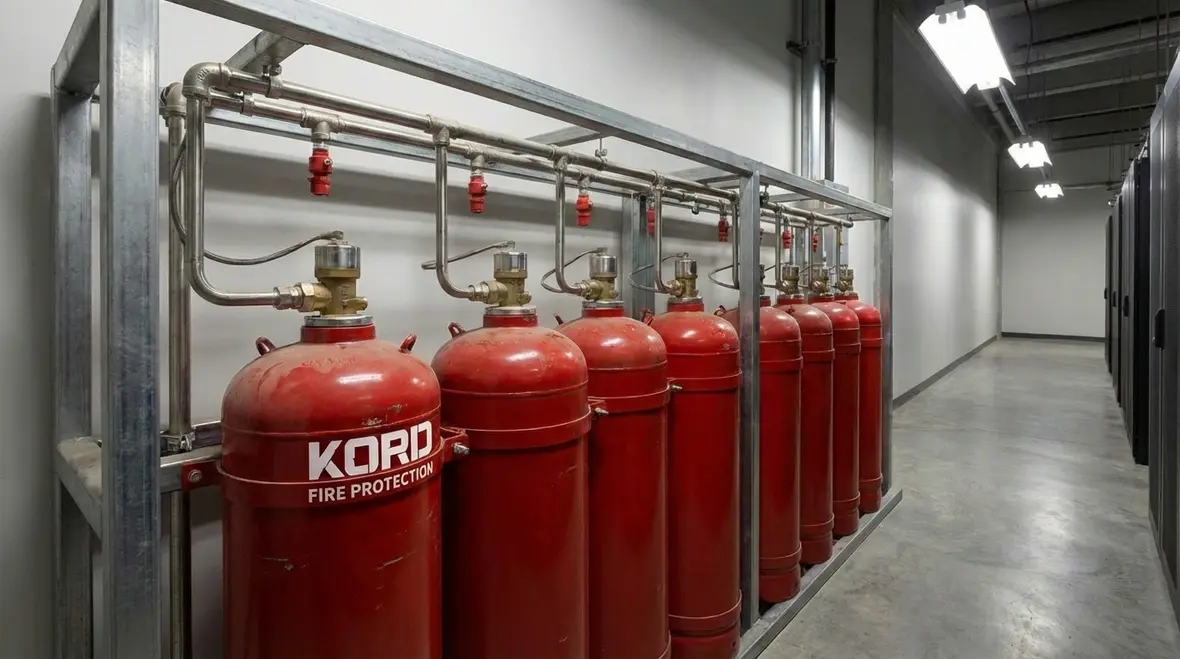
These hold the clean agent under pressure. Depending on the design, cylinders may sit in a dedicated room or along a wall rack.
Discharge Piping Network
Steel piping carries the agent from cylinders to nozzles. Because pressure changes rapidly during discharge, the piping must meet strict strength standards.
Discharge Nozzles
Nozzles distribute the gas evenly throughout the protected space. Their orifice size and orientation matter greatly.
Detection System
Advanced smoke detectors sense incipient fires. When thresholds are met, the control panel initiates alarms and countdown timers.
Control Panel
The brain of the system coordinates detection, alarms, shutdowns, and agent release. It can also integrate with building management systems.
When these parts operate together, the system reacts faster than most humans can process what is happening. One moment everything is calm. The next, the fire is gone. It is efficient, quiet, and almost anticlimactic. And in fire protection, anticlimactic is a compliment.
To see how these components come together across different agent technologies and applications, Kord Fire’s clean agent fire suppression systems overview breaks down options like FM 200, Inergen, and CO2 for facilities that cannot afford downtime. ([kordfire.com](https://kordfire.com/clean-agent-fire-suppression/?utm_source=openai))
Testing and Commissioning: Proving Performance Before It Matters
Design means nothing without proof. Therefore, testing and commissioning stand as critical steps before a data center goes live.
Room Integrity Testing
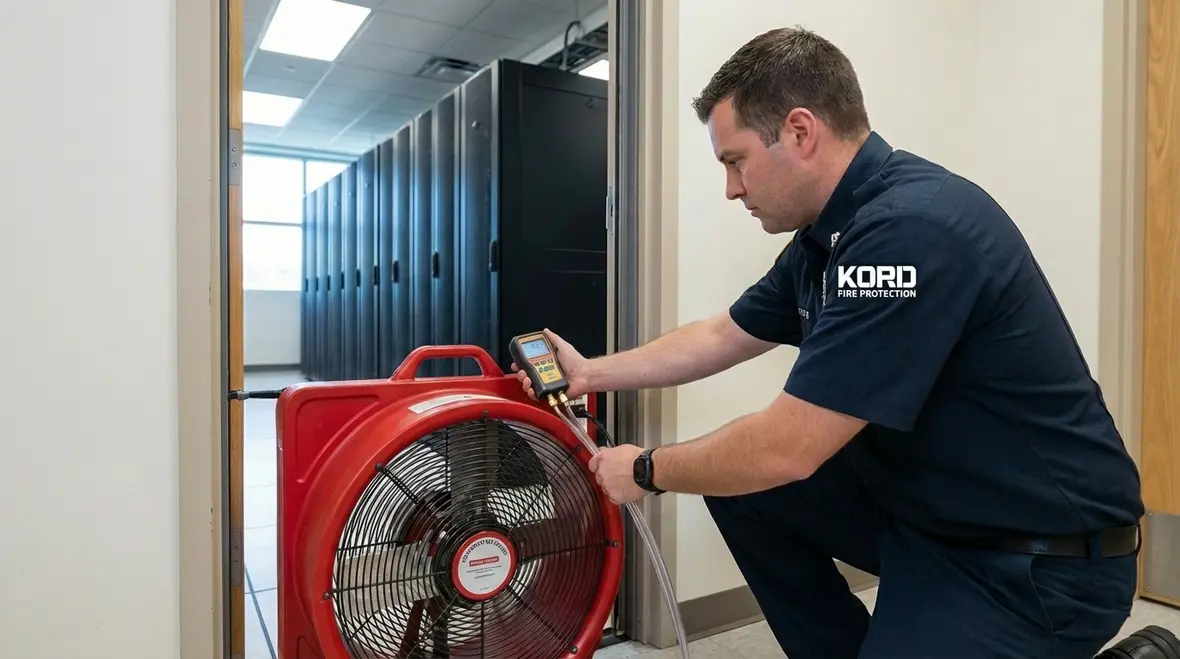
Also known as door fan testing, this process measures how well a room can hold the clean agent. Technicians mount a calibrated fan in the doorway and measure air leakage. If the room leaks excessively, the agent concentration will drop too quickly. Consequently, contractors seal gaps in cable penetrations, door frames, and ceiling joints.
Kord Fire explains in detail why this step is so critical in their article on room integrity testing, noting that failed tests can leave a data center effectively unprotected even if the suppression hardware looks perfect on paper. ([kordfire.com](https://kordfire.com/whats-room-integrity-testing-and-why-should-i-care-about-it/?utm_source=openai))
Functional Testing
Technicians verify detection circuits, alarm signals, and control sequences. They simulate fire conditions to ensure the system activates correctly. However, they typically do not release the agent during routine testing unless it is part of a discharge demonstration.
Discharge Testing
In some cases, especially during initial commissioning, teams conduct a full discharge test. This confirms flow rates, timing, and nozzle distribution. It is loud. It is sudden. And yes, it can feel like a scene from a spaceship launch sequence.
Kord Fire Protection technicians often remind facility managers that testing is not an expense. Instead, it is an investment in certainty. Because when a real fire occurs, there is no time for guesswork.
Compliance, Codes, and Standards That Guide Design
Clean agent fire suppression in mission critical facilities follows strict standards. In the United States, NFPA 2001 governs clean agent systems. Additionally, NFPA 75 addresses fire protection of information technology equipment.
These codes define minimum design concentrations, safety factors, inspection intervals, and maintenance procedures. Furthermore, environmental regulations influence agent selection due to global warming potential requirements.
Compliance is not just about passing inspection. Rather, it ensures occupant safety and system reliability. Insurance carriers also review adherence to these standards. Therefore, working with experienced professionals becomes essential.
For IT environments in particular, Kord Fire’s breakdown of NFPA 75 for IT environments and data centers walks through classifications, risk levels, and protection strategies that align your clean agent system with broader facility requirements. ([kordfire.com](https://kordfire.com/nfpa-75-for-it-environments-and-data-centers/?utm_source=openai))
Common Design Mistakes and How Experts Avoid Them
Even advanced systems can fail if designed poorly. However, seasoned technicians know what pitfalls to avoid.
Ignoring Airflow Dynamics
High velocity cooling systems can push agent away from the hazard. Engineers must account for this during modeling.
Overlooking Underfloor and Ceiling Voids
Fires often start in hidden spaces. Therefore, designers may extend protection below raised floors and above suspended ceilings.
Insufficient Room Sealing
Without proper sealing, concentration levels drop too fast. Routine integrity testing prevents this issue.
Poor Maintenance Planning
A system is only as good as its upkeep. Regular inspections ensure cylinders remain pressurized and detection devices calibrated.
As Kord Fire Protection technicians like to say, fire does not care about assumptions. It responds only to preparation.
Design and Testing Overview
| Design Phase | Testing Phase |
| Hazard and airflow analysis | Room integrity door fan test |
| Agent selection and concentration calculations | Functional alarm and detection test |
| Nozzle and piping layout | Discharge verification when required |
| Integration with control systems | Documentation and compliance review |
Why Clean Agent Systems Remain the Gold Standard for Data Centers
Water mist and pre action sprinklers still serve important roles. Nevertheless, clean agent systems offer unmatched protection for sensitive electronics. They leave no residue. They minimize downtime. And they allow businesses to resume operations quickly after an incident.
Moreover, as digital demand grows, uptime becomes sacred. Streaming platforms, financial markets, healthcare records, and government systems all depend on uninterrupted service. Therefore, reliable data center clean agent fire suppression remains central to risk management strategies worldwide.
It may not wear a cape. It may not get applause. Yet when a small electrical fault threatens millions in hardware, this system responds with calm authority. In a way, it is the strong, silent type. Think less action hero explosion, more seasoned detective who solves the case before anyone knows there was one.
Frequently Asked Questions
Protecting What Powers the Modern World
Every email sent, every movie streamed, and every online purchase relies on secure infrastructure. Fire remains one of the few threats capable of stopping it all in minutes. Therefore, investing in properly designed and tested clean agent systems is not optional. It is essential. Kord Fire Protection technicians stand ready to design, test, and maintain solutions that protect critical assets with precision and confidence.
For facilities that rely on servers, automation, or other high value electronics, Kord Fire’s clean agent fire suppression for critical equipment resource is a practical next step, outlining where these systems fit and how they keep your operations online. ([kordfire.com](https://kordfire.com/clean-agent-fire-suppression-for-critical-equipment/?utm_source=openai))
When uptime matters, expert protection makes all the difference. Whether you are upgrading an existing data hall, building a new facility, or reviewing code compliance, Kord Fire can help you align design, testing, and maintenance with NFPA standards and real world performance expectations. Explore their dedicated clean agent fire suppression services page to schedule a consultation and start hardening your infrastructure today. ([kordfire.com](https://kordfire.com/clean-agent-fire-suppression/?utm_source=openai))
When you are ready, reach out and secure the future of your facility with a data center clean agent fire suppression system that is as modern, quiet, and powerful as the technology it protects.
Know Your Weapon Before You Fight the Flame
Kord Fire Protection is your go-to when it comes to all things fire protection. For over 20 years, we’ve been serving Southern California with the quality service and equipment to keep your home or business safe at all times. Our competitive prices reflect our unwavering commitment to protecting what matters most in the event of a fire emergency. Give us a call, send an email, or use that form!

Join Our Newsletter!
Get the latest fire safety tips delivered straight to your inbox From our Newsletter.