NFPA 25C Section 14.4: Ice Obstruction in Fire Protection Systems Guide
Quick Answer: NFPA 25C Section 14.4 addresses how ice obstructions can interfere with water delivery and system performance. It outlines inspection expectations, impairment handling, and conditions requiring corrective action to restore reliable fire protection.
What NFPA 25C Section 14.4 requires when ice is present
In commercial, industrial, and retail facilities, ice obstruction can reduce or fully stop water flow at the most critical moment. NFPA 25C Section 14.4 ice obstruction fire protection systems focuses on preventing and correcting conditions where freezing affects components in water-based fire protection systems. The practical intent is straightforward: identify the obstruction quickly, evaluate system impairment, and restore normal water delivery.
For facilities exposed to outdoor plumbing, unheated spaces, docks, parking structures, loading areas, and vestibules, ice risk is not theoretical. It becomes a maintenance discipline that must integrate weather monitoring, inspection documentation, and rapid impairment correction.
Facilities that need hands-on seasonal support often pair this guidance with professional fire sprinkler system service to catch freeze risks before they turn into impairments.
Where ice obstruction typically forms in water-based systems
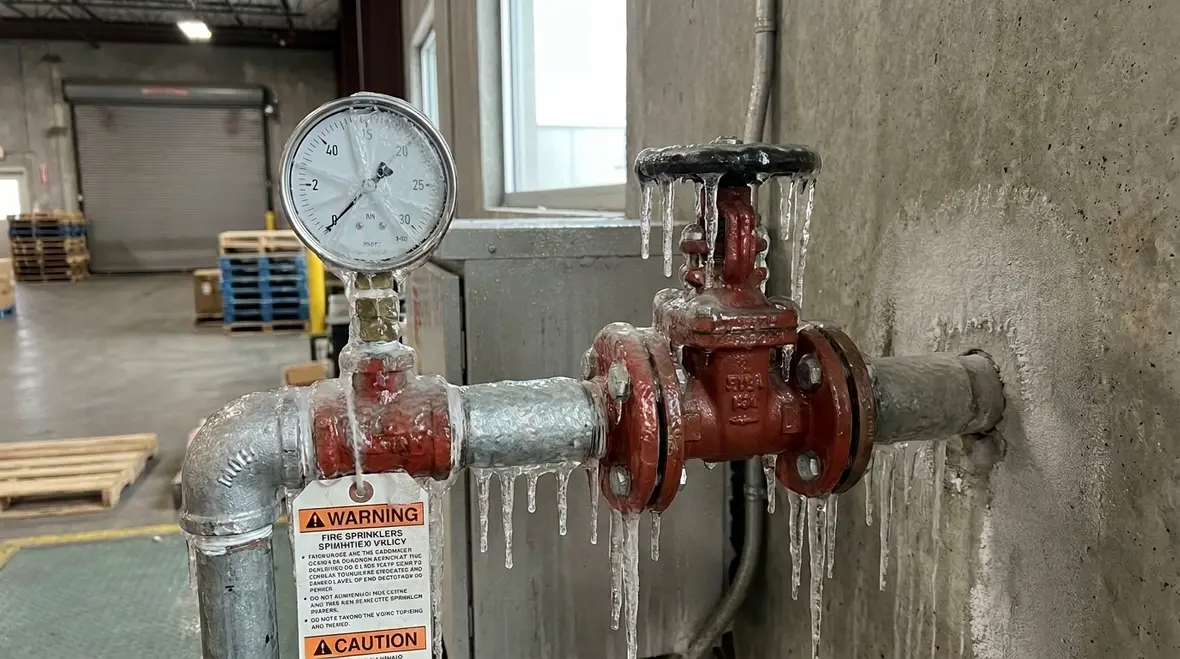
Ice obstruction in fire protection systems most often develops at locations where water can remain static or where temperatures drop below freezing long enough for freezing to occur. Common problem areas include:
- Exposed piping and mains: Uninsulated or poorly protected portions of the fire protection system in exterior walls, attics, or service corridors.
- Valves, drains, and low point piping: Water can collect, then freeze, especially where piping has low spots.
- Standpipes and hose connections: Areas exposed to cold air movement or where water can stagnate in threads and fittings.
- Sprinkler drops to unheated spaces: Piping that extends into cold warehouses, mezzanines, or loading bays.
- Water supply equipment interfaces: Freeze exposure can also affect components that influence pressure and flow, even if the primary obstruction occurs downstream.
Facilities with frequent door openings, rooftop air infiltration, or wind driven drafts commonly experience earlier and more severe freezing than expected. That operational reality should drive the inspection frequency and the winter readiness plan.
Inspection and impairment response: how teams should verify operability
Compliance depends on more than “looking for ice.” NFPA 25C Section 14.4 ice obstruction fire protection systems expectations translate into a field workflow that confirms operability and addresses impairment without delay.
1) Identify and document the condition
During routine inspections and after weather events, fire protection personnel should locate evidence of freezing or ice formation at known risk points. Documentation should include:
- Component identification, location, and system zone affected
- Date, time, ambient conditions, and observed temperature exposure
- Clear notes describing the obstruction and where water entry or discharge might be blocked
2) Assess whether the system is impaired
Ice obstruction often blocks effective water delivery, even if other parts of the system appear normal. The impairment assessment should consider:
- Whether ice is present on piping sections, valve bodies, drains, or at water discharge paths
- Whether any water flow testing indicates restricted movement
- Whether downstream outlets, hose connections, or sprinkler distribution points are likely affected
3) Restore operability using approved corrective actions
Corrective action typically includes thawing and verifying flow pathways, followed by reinspection to confirm the system returns to service. The goal is restoration plus verification, not temporary partial function. The exact method and sequence should follow the facility’s approved maintenance procedures and applicable code requirements for water based systems.
For background on installation and system foundation practices that influence freeze vulnerability, facilities often reference Kord Fire Protection’s guidance on automatic sprinkler system installation: NFPA 13 overview for automatic fire sprinkler system installation.
Common failure points during winter inspections
Commercial maintenance teams frequently discover the same recurring issues. Understanding these failure points helps facilities prevent recurrence and improve audit outcomes.
Blocked drainage and trapped water
Frozen low points and blocked drains can trap water in sections that then ice over. Even when the main supply remains unaffected, the trapped section can still create downstream impairment.
Inadequate insulation or heating coverage
Improper insulation thickness, gaps in insulation coverage, and failed heat tracing can create localized freezing. A single missed segment can compromise a full run of piping.
Delayed corrective action after ice is discovered
Where a facility treats ice as a nuisance rather than an operability issue, response times often increase. NFPA 25C Section 14.4 ice obstruction fire protection systems is intended to drive timely correction because the impairment risk is not reduced by time.
Incomplete re verification after thawing
After thawing, personnel must confirm that water movement is restored and that no component integrity was compromised. Thawing alone does not validate system performance.
Maintenance planning for commercial sites exposed to freezing conditions
A compliant winter readiness plan should integrate inspections, documentation, and corrective maintenance cycles. Many facilities also benefit from aligning maintenance expectations across the broader water based system, not only the portion impacted by ice.
For a practical seasonal companion, Kord Fire Protection also covers freeze-specific strategies here: sprinkler freeze prevention methods by Kord Fire Protection.
For a comprehensive view of ongoing maintenance expectations and system-level responsibilities, facilities can use this reference: NFPA 25 overview and water-based fire protection systems maintenance breakdown.
Best practice steps for winter readiness
- Pre winter walkthrough: Identify exposed piping, unheated spaces, low points, and areas with frequent air intrusion.
- Define inspection triggers: Use temperature thresholds and weather events to increase inspection frequency proactively.
- Coordinate with operations: Align with loading dock usage, door opening schedules, and any building HVAC changes.
- Verify impairments are managed: Ensure the facility has a clear process for impairment notifications, documentation, and restoration confirmation.
- Maintain evidence: Keep technician notes, photos where permitted, and test results that demonstrate the system returns to service.
Commercial compliance teams frequently face audit questions about consistency and response time. Using repeatable procedures and complete records is a primary way to reduce risk during plan checks and insurance reviews.
How Kord Fire Protection supports NFPA 25C Section 14.4 compliance
Kord Fire Protection supports commercial facilities with practical, field verified maintenance programs that address winter impairment risk. The most effective programs combine readiness planning, targeted inspections of freeze sensitive locations, and prompt corrective actions that restore system performance.
In addition to NFPA 25C related service, Kord Fire Protection helps teams maintain the broader ecosystem of water based fire protection compliance. Facilities often need consistent interpretation of code expectations across installation, inspection, and maintenance activities.
For California based facilities, code context can matter. This guide helps teams understand state specific considerations: fire sprinkler code California explained.
Where water supply reliability is a focus, teams also benefit from understanding fire pump ecosystem resources, including operational and testing considerations through fire pump inspection checklist guidance.
Facility owners and managers also maintain local coverage requirements and service coordination by region. For Australian operations, Kord Fire Protection provides additional regional information at kordfire.com.au.
Frequently Asked Questions
Conclusion and call to action
Ice obstruction can turn a code compliant system into a non functional one during critical moments. Facilities should treat NFPA 25C Section 14.4 ice obstruction fire protection systems as a winter operations requirement, not a reactive task. Engage Kord Fire Protection to develop a freeze risk inspection plan, verify impairments quickly, and restore operability with documented evidence. Contact Kord Fire Protection today to schedule a winter readiness review and compliance focused maintenance service.

Join Our Newsletter!
Get the latest fire safety tips delivered straight to your inbox From our Newsletter.