NFPA 25C Section 10.4 ultra-high-speed water spray operational tests: What commercial facilities must verify
Quick Answer
NFPA 25C Section 10.4 focuses on verifying that ultra-high-speed water spray systems achieve required operational performance during acceptance and recurring inspections. Facilities must test pumps, valves, controls, water delivery conditions, and alarm interfaces while documenting results and correcting deficiencies promptly.
For facilities tightening inspection-readiness around water delivery performance, a practical next step is reviewing Kord Fire Protection’s full fire protection services, which includes scheduled inspections, routine testing, preventive maintenance, and fire pump testing support for commercial properties. ([kordfire.com](https://kordfire.com/full-fire-protection-services/?utm_source=openai))
What NFPA 25C Section 10.4 requires during operational testing
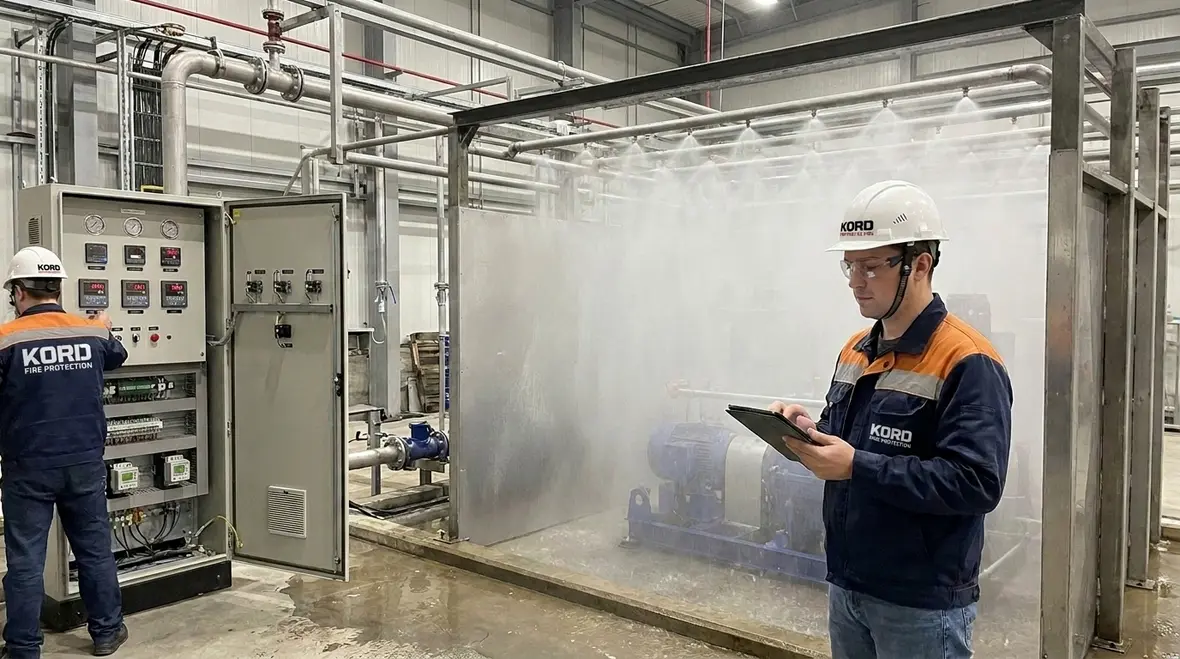
NFPA 25C Section 10.4 ultra-high-speed water spray operational tests verify that a water spray system responds correctly and delivers water at the required performance parameters when actuated. In practical terms, this section confirms system readiness, not just component existence. Commercial and industrial facilities typically discover gaps during operational tests because operating conditions reveal issues that static inspections cannot.
Operational testing usually evaluates the system in a sequence that matches intended actuation. That sequence commonly includes detecting the condition, initiating pumps or water flow, confirming valve positions, and ensuring the water spray reaches the correct distribution state. The test process also checks the interfaces that support emergency response and building safety operations such as alarm reporting, supervisory signals, and control panel behavior.
How the operational test sequence works in real buildings
Ultra-high-speed water spray systems rely on rapid water delivery and fast actuation to control fire spread within the protection design basis. NFPA 25C Section 10.4 ultra-high-speed water spray operational tests therefore emphasize functional performance under dynamic conditions.
1) Pre test readiness checks
Before initiating any controlled discharge or flow simulation, technicians should verify system status and operational permissives. Common readiness checks include:
- Confirming the system is in the correct operational mode (automatic when required).
- Verifying that isolation valves, alarm devices, and detection or interface components are in their tested positions.
- Confirming pressure monitoring devices and water supply instruments are connected and calibrated.
- Reviewing recent maintenance records and identifying unresolved impairments.
2) Actuation and response timing verification
Operational tests must demonstrate that the system transitions from standby to water delivery quickly and correctly. In practice, this is where facilities see repeat failures. Typical problems include:
- Delays caused by control logic, wiring faults, or incorrectly set control relays.
- Interlocks that prevent pump start or valve travel due to stale supervisory conditions.
- Actuator issues that prevent full stroke of valves within expected time windows.
3) Water delivery and discharge performance
Once actuation occurs, technicians verify that water reaches the spray distribution system with adequate pressure and flow stability for the required operational duration. This includes confirming supply adequacy, pump operation characteristics, and the absence of unintended restrictions. For facilities, the operational test output should map to what the sprinkler and pump design expects for the protected hazard.
Equipment mechanisms that fail during ultra-high-speed water spray operational tests
Even well maintained commercial systems can fail during NFPA 25C Section 10.4 ultra-high-speed water spray operational tests because operational testing stresses components differently than typical flow or inspection checks.
Pumps and jockeying systems
Operational tests can reveal problems with pump starting reliability, check valve performance, and pressure control stability. For example, a pump may start but not reach required pressure due to suction conditions, clogged strainers, misaligned couplings, or incorrect rotation direction. Jockey pumps may also mask a supply problem until the main pump is called for at full demand.
Valves, trim, and actuation hardware
Ultra-high-speed water spray systems often use specialized valves and trim components designed for fast response. During operational tests, technicians frequently identify:
- Partial valve travel due to hydraulic issues, binding, or worn linkages.
- Damaged seals or leaking relief components that reduce effective pressure at the discharge.
- Misconfigured or obstructed strainer elements affecting flow path conditions.
Controls, detection interfaces, and alarm reporting
Commercial facilities often require coordinated reporting to building management and fire alarm systems. Operational tests should confirm supervisory signals, alarms, and panel indications match the intended system state. Failures can include incorrect point mapping, disabled trouble routing, or loss of notification at the monitoring interface.
As a practical compliance partner, Kord Fire Protection supports facilities with test planning, documentation quality assurance, and maintenance follow ups that address root cause rather than only symptom correction. This approach is especially important in multi-tenant retail, warehouse, and industrial environments where access constraints and schedule coordination matter. Kord Fire’s service pages highlight scheduled inspections, routine testing, preventive maintenance, and specialty testing support across commercial and industrial properties. ([kordfire.com](https://kordfire.com/?utm_source=openai))
Compliance documentation and quality control expectations
Operational testing under NFPA 25C Section 10.4 ultra-high-speed water spray operational tests must produce verifiable records that show what occurred, what measured, and what corrective actions followed. A typical documentation set includes test dates, system identifiers, test method, measured values, and impairment status if any components were out of service.
What inspectors and AHJs typically want to see
- Clear identification of the system and hazard served.
- Evidence that the test sequence matched the required actuation and response conditions.
- Measured performance outcomes such as pressure and flow indicators where applicable.
- Recorded valve positions, pump run status, and control panel indications during testing.
- Deficiency descriptions, risk justification if any components were temporarily bypassed, and completion of corrective actions.
Reducing repeat failures through maintenance discipline
Facilities that experience recurring operational test failures usually lack consistent maintenance discipline for the exact components stressed during actuation. Kord Fire Protection helps address that by aligning preventive maintenance tasks with the failure points most commonly revealed during operational testing and by verifying corrective work with follow up functional checks.
For facilities integrating water based fire protection strategies beyond ultra-high-speed water spray, Kord Fire Protection also supports broader code alignment and maintenance planning. For example, reviews related to complete water based systems and ongoing upkeep are covered in the Kord Fire resources here: NFPA 25 overview of complete water based fire protection systems maintenance breakdown.
Operational testing challenges in commercial and industrial environments
In real facilities, compliance is shaped by production schedules, equipment access, and safety constraints during testing. NFPA 25C Section 10.4 ultra-high-speed water spray operational tests can require coordination because operational actuation can create flow and water discharge conditions that affect adjacent areas.
Scheduling and facility readiness
Retail, data adjacent spaces, manufacturing floors, and distribution centers may require phased testing plans. The test plan should address:
- Water collection, runoff control, and slip or environmental concerns.
- Protecting sensitive process equipment during the test window.
- Notifying building occupants, security, and operations teams.
- Managing any temporary impairments according to facility safety procedures.
System complexity across code scopes
Operational testing often becomes complicated when ultra-high-speed water spray systems interface with other life safety systems. Facilities commonly manage multiple water based technologies, including automatic sprinkler systems and dedicated water supplies. If documentation and interfaces are not maintained, the system can operate but reporting may not match intended supervisory categories.
For guidance related to automatic fire sprinkler system installation concepts that often appear in water based projects, Kord Fire Protection provides a practical overview here: NFPA 13 overview automatic fire sprinkler system installation.
Where local compliance adds additional layers, such as in California, Kord Fire Protection also summarizes important code context in: Fire sprinkler code California explained. This helps facilities align their operational test approach with local enforcement patterns and documentation expectations.
For broader industry resources on fire protection water supplies and pump performance context, facilities may also reference firepumps.org when developing internal standards for pump testing discipline.
Best practices for passing NFPA 25C Section 10.4 ultra-high-speed water spray operational tests
Passing operational tests requires more than checking components. Facilities should build a repeatable process that verifies performance, reporting, and readiness while minimizing disruption.
Build a test plan that matches the hazard design
Ultra-high-speed performance depends on the system design basis. Test planning should reference the installed arrangement, water supply type, controls logic, and discharge distribution configuration. When technicians understand what the design intends, they can correctly interpret results during NFPA 25C Section 10.4 ultra-high-speed water spray operational tests.
Verify instrumentation and calibration status
Operational tests produce measurable evidence. If pressure gauges, flow meters, or control panel indicators are inaccurate, documentation can fail even if the system performs acceptably. Facilities should ensure instruments are within calibration dates and that readings are captured in a consistent manner.
Close out deficiencies with root cause validation
When a failure occurs, corrective work should address the underlying mechanism. A typical root cause validation includes verifying valve travel, pump control response, relief or check valve function, and alarm signal mapping after repair. Kord Fire Protection emphasizes follow up checks so that deficiencies do not reappear at the next operational test cycle.
Facilities can also explore related commercial and technical support from Kord Fire Protection partners at kordelectric.com and the Kord Fire Protection AU presence at kordfire.com.au, where electrical and integrated life safety considerations often intersect with water based system controls.
Teams looking to tighten pump-side reliability can also review Kord Fire Protection’s proactive maintenance for fire pump system reliability, which naturally complements operational testing by focusing on verification, documentation, and repeatable maintenance discipline. ([kordfire.com](https://kordfire.com/proactive-maintenance-for-fire-pump-system-reliability/?utm_source=openai))
Frequently Asked Questions
Call to action
Commercial facilities that manage ultra-high-speed water spray systems should plan operational testing with a documented procedure, instrument readiness, and a corrective action workflow. Kord Fire Protection helps teams prepare for NFPA 25C Section 10.4 ultra-high-speed water spray operational tests, execute functional verification, and close deficiencies with root cause validation. Contact Kord Fire Protection to align testing schedules, reduce repeat failures, and maintain dependable protection performance.

Join Our Newsletter!
Get the latest fire safety tips delivered straight to your inbox From our Newsletter.