NFPA 25C Section 10.3: Water Spray Fixed System Operational Testing
Quick Answer: NFPA 25C Section 10.3 requires periodic operational testing of water spray fixed systems to confirm the system can deliver water as designed. This includes verifying the water supply, controls, alarms, and actuation devices perform correctly under simulated operating conditions.
What NFPA 25C Section 10.3 is really checking
NFPA 25C Section 10.3 water spray fixed system operational testing focuses on performance, not paperwork. For commercial facilities, this section verifies that when the system is called to operate, water spray patterns, water delivery paths, and initiating and supervisory functions work as intended. In practice, compliance gaps usually appear at the interface between the actuation, valves, flow control devices, and the water supply stability required by the system design.
Because water spray systems depend on correct mechanical movement and reliable actuation, the operational test verifies functional readiness rather than only visual condition. For facilities that already manage sprinkler and water based protection, the operational testing discipline outlined here aligns with broader maintenance expectations covered in water based system standards. For background, see Kord Fire Protection’s overview of complete water based systems and maintenance planning: NFPA 25 overview of complete water based systems and maintenance planning. Facilities that also need hands-on service support can naturally pair this work with fire sprinkler services and repair to keep testing, maintenance, and corrections on the same track.
Scope of operational testing: where systems commonly fail
Operational testing under NFPA 25C Section 10.3 typically addresses the ability of system components to perform their roles during an activation event. Operational tests should confirm that supervisory and alarm functions respond properly and that water delivery components move and regulate as designed.
1) Actuation and control readiness
Water spray fixed systems commonly rely on detection or manually initiated logic that leads to valve operation and water delivery. In the real world, operational failures cluster around control and actuation components, including:
- Supervisory switch misalignment or contact degradation that prevents correct signal reporting
- Valves that move sluggishly due to lack of exercise, corrosion, or internal debris
- Solenoid or pilot pressure issues that delay or prevent the main valve from opening
- Control panel configuration drift after renovations or contractor changes
2) Water supply and pressure stability
Operational testing also validates that water supply conditions support the system’s design. Even when the system has passed acceptance, operational testing can reveal:
- Hydraulic changes from building modifications that alter flow demand or pressure losses
- Partially obstructed strainers or debris in water delivery paths
- Undetected reductions in pump performance or pressure set points
- Inconsistent performance from stored water supplies or make up arrangements
3) Water distribution components
Water spray performance depends on distribution accuracy. While fixed system heads and piping typically fall under broader inspection and maintenance categories, operational tests can still uncover distribution constraints such as:
- Blocked or mispositioned nozzles that reduce effective spray
- Improper piping support that causes misalignment or localized strain
- Localized corrosion in water ways that restricts flow during real operation
Operational test procedure: a practical compliance workflow
Facilities should treat NFPA 25C Section 10.3 water spray fixed system operational testing as a structured procedure, not a cursory functional check. A strong operational testing workflow protects both life safety outcomes and compliance defensibility.
Step 1: Pre test coordination and hazard control
Operational testing can introduce water flow, alarm activity, or valve operations that affect occupancy. Strong programs include:
- Advance scheduling to reduce disruption to critical operations, retail traffic, or production lines
- Notification of building operations staff and monitoring any related supervisory circuits
- Verification that test conditions align with the system design and permit requirements
Step 2: Confirm system supervisory status before testing
Before initiating any operational action, technicians verify that the system is in the expected standby condition. This includes confirming supervisory signals and confirming that the control system reflects the correct state. Any pre test discrepancy should be documented, diagnosed, and corrected to prevent misleading test results.
Step 3: Initiate the operational test mode in a controlled manner
Operational testing should simulate the real operating call. Depending on the design, this may occur through a control interface, a monitored initiation input, or a controlled sequence that results in valve opening and water flow. Technicians should ensure:
- The initiating sequence produces the intended valve operation
- Alarms and supervisory signals activate correctly at the correct times
- Actuation timing is reasonable and consistent with design and prior records
Step 4: Verify water delivery and functional response
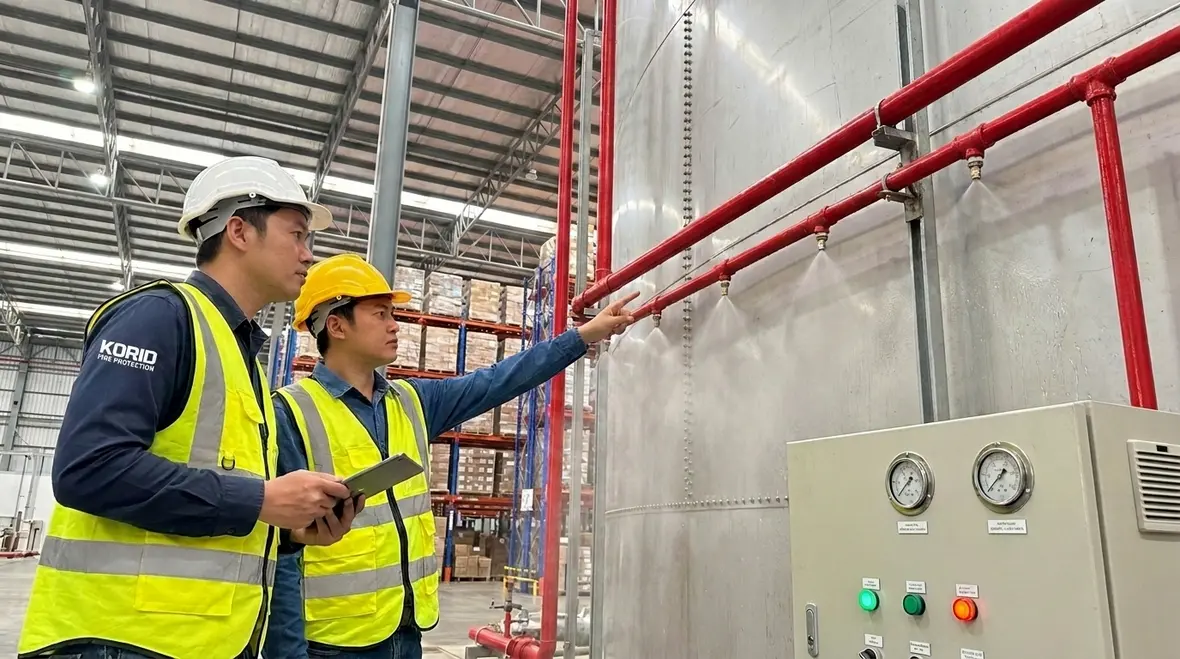
During the operational period, the technician confirms that water delivery occurs and that the system performs in a stable condition. The test should check operational indicators such as valve position, flow response, pressure behavior, and the alarm sequence response. Where applicable, verification may include observing spray actuation behavior and confirming that no abnormal conditions develop in the piping or delivery components.
Step 5: Secure the system and record results
After the test, the system returns to its standby state. Documentation must capture what occurred, what was observed, what was corrected, and any deviations. This record becomes crucial during inspections and for internal audits, especially in commercial environments that face frequent tenant turnover or facility reconfiguration.
Equipment mechanisms technicians must understand
Operational testing fails when testers treat components as black boxes. Water spray fixed systems integrate valves, pressure regulating components, detection or manual initiation controls, and supervisory devices. Understanding the mechanism reduces repeat call backs and shortens corrective action cycles.
Valves and actuation assemblies
Technicians should understand the valve type and how it receives operating energy. A valve that relies on pressure or electrical actuation must respond predictably when commanded. Common problems during operational testing include delayed response due to clogged pilot passages, binding from corrosion, or unstable control logic. If a valve does not reach its expected state during testing, the system should not be returned to service until the root cause is corrected.
Alarm and supervisory interfaces
NFPA 25C operational testing includes confirmation that supervisory and alarm functions behave as required for the system configuration. In retail and industrial facilities, this often becomes a coordination issue between fire alarm panels, auxiliary control panels, and monitoring devices. Faulty point mapping, post construction wiring changes, or outdated device labels can create “false failures” that waste time and delay compliance sign off.
Water supply and pumps, when applicable
Where pumps supply the system, operational testing must reflect the actual hydraulic and control behavior of pump systems. Pump performance and reliability are central to water based protection system readiness. For additional context on pump system considerations, reference Fire Pumps and align operational testing practices with documented commissioning and maintenance principles.
Common compliance challenges in commercial facilities
Even well designed facilities struggle to maintain ongoing compliance. The typical NFPA 25C water spray fixed system operational testing challenges appear in these areas.
- Renovations and tenant improvements: New partitions, ceilings, and equipment can affect detection circuits, valve access, and spray distribution readiness.
- Deferred maintenance: Delayed servicing increases corrosion, internal fouling, and component friction, leading to inconsistent operational response.
- Inadequate access and labeling: Valve assemblies and control cabinets may become hard to access or misidentified after changes.
- Water quality and debris: Strainers and water delivery paths can accumulate sediment, especially in older commercial buildings.
- Coordination with sprinkler related systems: Many facilities maintain multiple water based systems. Testing one without verifying interfaces can miss integration problems.
Because commercial facilities often require a unified approach across sprinkler and water spray systems, a coordinated maintenance program improves both compliance and operational reliability. For sprinkler system installation context and system integration concepts, see: NFPA 13 overview of automatic fire sprinkler system installation.
For regions with additional interpretations and administrative requirements, businesses should also align local compliance expectations with the underlying code intent. If California is relevant to the facility’s compliance jurisdiction, review: fire sprinkler code California explained.
How Kord Fire Protection supports ongoing NFPA 25C readiness
Kord Fire Protection helps commercial, industrial, and retail facilities maintain water spray fixed systems as dependable life safety assets, not seasonal obligations. Kord Fire Protection provides operational testing support, corrective action tracking, and maintenance documentation that helps facilities demonstrate consistent readiness over time.
With program support across water based fire protection systems, Kord Fire Protection can help reduce operational surprises by focusing on integration points, access constraints, and recurring failure modes. Explore related maintenance guidance from Kord Fire Protection at Kord Electric, Kord Fire Australia, and Kord Fire Protection.
Frequently Asked Questions
Next step: schedule operational testing coverage
Ensure NFPA 25C Section 10.3 water spray fixed system operational testing stays current and defensible by assigning it to a qualified fire protection partner. Kord Fire Protection supports commercial facilities with structured operational testing, documentation, and corrective actions that keep water based systems reliable between inspections. Contact Kord Fire Protection to confirm your test schedule, review prior results, and address common operational failure points before they affect compliance or safety.

Join Our Newsletter!
Get the latest fire safety tips delivered straight to your inbox From our Newsletter.