NFPA 25C Section 15.4: Impaired Equipment Protocols and Safety Measures
Quick Answer: NFPA 25C Section 15.4 requires documented protocols when fire protection equipment is impaired, including immediate notification, controlled impairment limits, compensating safeguards, and verified return to service. Facilities must protect occupants, maintain system reliability, and track impairments through the full maintenance cycle.
Why NFPA 25C Section 15.4 governs “impaired” conditions in real operations
In commercial, industrial, and retail facilities, fire protection systems operate continuously under harsh conditions: corrosion, water quality issues, tampering, construction activity, and seasonal demand. When any component becomes nonfunctional, degraded, or out of tolerance, NFPA 25C Section 15.4 impaired equipment protocols safety measures establish what must happen before, during, and after the impairment. The goal is not only compliance, but also operational control so the facility understands risk and compensates effectively.
In practice, teams often struggle with three gaps: identifying impairments early, implementing compensating measures quickly, and documenting closure with verification testing. A properly managed program prevents “silent failures” and ensures the facility can demonstrate due diligence during audits and incident reviews.
For a broader practical walkthrough on documenting outages, temporary safeguards, and fast restoration, see Fire Protection Impairment Management Guide.
What qualifies as impaired equipment under Section 15.4?
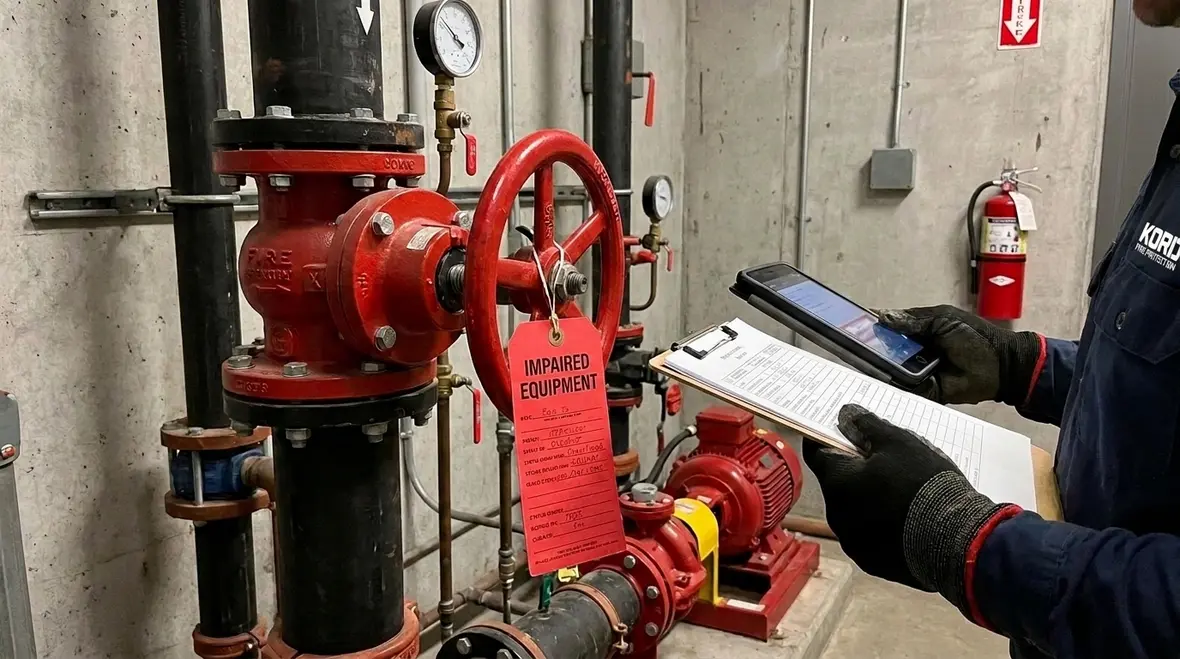
NFPA 25C treats impairment as more than a complete shutdown. Equipment can be impaired when it cannot perform its intended function within specified performance expectations. Examples in water-based fire protection and related subsystems often include:
- Fire pump or pump controller faults that prevent automatic startup or correct pressure delivery.
- Sprinkler system sections that are out of service due to a leak, capped outlet, isolated valve position, or defective control valve.
- Backflow preventers, alarm check valves, or waterflow devices that fail inspection criteria or are bypassed improperly.
- Preaction, deluge, or fire suppression control components that cannot maintain required supervised status.
- Tank supplies, level indicators, or related controls that do not meet functional monitoring requirements.
Because impairment can originate from maintenance, construction interference, or component degradation, facilities need a clear, field-ready definition. The definition must align with the system’s inspection and testing results, not just a technician’s perception. That alignment is where many commercial operators experience compliance friction, especially when multiple vendors touch the same system.
Core impaired equipment protocols safety measures: what the facility must do
NFPA 25C Section 15.4 impaired equipment protocols safety measures typically follow a risk controlled sequence. Facilities should implement procedures that ensure impairments are handled consistently, regardless of who discovered the problem.
1) Immediate notification and communication control
The impairment triggers internal communication and, when required, coordination with system stakeholders. A strong protocol establishes:
- Who receives impairment alerts (fire safety manager, facility leadership, affected operations, security monitoring).
- How impairments are communicated (work order system plus real-time notification when life safety systems are impacted).
- How accountability is assigned (the person responsible for confirming compensating measures are in place).
Commercial sites with remote monitoring frequently fail because notification happens informally, not through a controlled process that can be audited. Documentation needs to reflect both the condition and the response timeline.
2) Establish compensating safeguards appropriate to the impairment
Section 15.4 protocols require compensating safety measures when impairments reduce protection capability. Compensating measures must match the risk created by the specific subsystem impairment. Common compensating safeguards in commercial settings include:
- Enhanced fire watch procedures when automatic protection is impaired or water delivery is restricted.
- Restricted operations that increase ignition risk (hot work controls, curtailing storage loads, or limiting vehicle or equipment usage near affected areas).
- Temporary supervision or alternative detection pathways when applicable and approved.
- Controlled access to affected zones to reduce the likelihood of ignition and improve response.
The facility must not treat compensating measures as optional “best effort.” The safeguards should be planned, documented, and verified as installed before the impairment proceeds beyond brief intervals.
3) Maintain impairment limits and manage the time-to-repair
Section 15.4 frameworks push facilities toward shortening the impairment duration. The operational mechanism is simple: the impairment persists only as long as required to correct the defect, obtain parts, and complete verification testing.
Commercial challenges often include vendor lead times, access restrictions, and coordination with construction schedules. A mature program mitigates these by stocking common components, using pre-identified service escalation paths, and scheduling repair windows that preserve occupant safety.
4) Document impairments and closures with traceable records
Documentation must support three questions: What was impaired, why it was impaired, and what safeguards were implemented until the system returned to service. Records should include:
- Inspection and testing data that identifies the impairment condition.
- Work orders, valve tagging or isolation logs, and system configuration changes.
- Compensating measures details, including start and end times.
- Verification testing results before re-energizing the system to normal operation.
When audits or investigations occur, incomplete closure documentation becomes the most frequent compliance failure because the impairment was corrected, but the proof of safe reactivation was not properly compiled.
Common impairment failure points in sprinkler and water based systems
Even when teams intend to comply with NFPA 25C Section 15.4 impaired equipment protocols safety measures, operational realities create recurring failure points. Addressing these early reduces both risk and administrative rework.
Valve positioning errors and supervisory mismatches
Isolating valves, post indicator valves, and control valves can be left in incorrect positions after maintenance. If supervisory reporting is not aligned with actual valve configuration, operators can misinterpret system readiness. Field verification must include both physical position and system supervisory status.
Water supply issues that degrade function
Problems in water supply, such as pressure deficiencies, tank level monitoring faults, or incomplete reestablishment after repair, often create delayed impairment awareness. Teams should treat water supply verification as part of closure testing, not a separate activity.
Construction activity that introduces hidden impairment
During remodels, suspended ceilings, piping modifications, and temporary capped lines can unintentionally impair system sections. Protocols must include a construction coordination checklist so impairments are identified before the site resumes normal occupancy operations.
Deferred repairs and “waiting on parts” without safeguards
Lead time is real, but Section 15.4 expects safeguards while the impairment exists. Facilities that postpone compensating measures until a later date create unacceptable exposure. A documented impairment plan aligned with maintenance duration helps prevent this gap.
How commercial facilities operationalize compliance: a practical maintenance workflow
A compliance-ready workflow turns NFPA 25C Section 15.4 impaired equipment protocols safety measures into daily behavior rather than a binder requirement. A practical approach includes:
Step-by-step workflow from discovery to return to service
- Detect and classify the condition. Use inspection and test results to confirm whether the equipment is impaired, not merely “not working today.”
- Trigger the impairment protocol immediately. Open a controlled impairment record and assign responsibility for response actions.
- Implement compensating safeguards. Apply fire watch, operational controls, and site communications based on the impairment scope.
- Execute the repair plan with time targets. Order parts, schedule access, and define completion criteria for verification testing.
- Verify system performance. Complete testing to the required inspection standard and confirm supervisory and alarm interfaces restore normal conditions.
- Close the impairment record with evidence. Attach results, logs, and documentation of compensating safeguards duration.
To support these activities in commercial environments, Kord Fire Protection positions impairment response as an extension of ongoing inspection and maintenance. For facilities aligning fire code expectations with maintenance operations, Kord Fire Protection also supports water based system planning and care. Related guidance includes an automatic sprinkler overview at NFPA 13 overview for automatic fire sprinkler system installation and a broader maintenance breakdown at NFPA 25 overview and maintenance breakdown.
Owners dealing with reduced readiness can also review fire suppression impairment signs and response considerations for added context on how these problems show up in the field.
Return to service testing must match the impairment story
Closure testing should confirm not only that the component works, but that it returns the system to the configuration that existed before impairment. This includes verifying supervisory status, alarm integration, and water delivery readiness, as applicable. Facilities should also confirm any changes made during repair do not introduce new impairment risks.
FAQ
Call to action
Commercial fire protection teams should not wait for an audit or incident to improve impaired equipment controls. Kord Fire Protection helps facilities implement NFPA 25C Section 15.4 impaired equipment protocols safety measures through disciplined documentation, verified testing, and maintenance planning. Contact Kord Fire Protection to evaluate your impairment workflow, close common failure points, and strengthen ongoing compliance for sprinkler and water based systems.
Review NFPA 25 maintenance structure and align it to your impairment response program.

Join Our Newsletter!
Get the latest fire safety tips delivered straight to your inbox From our Newsletter.