
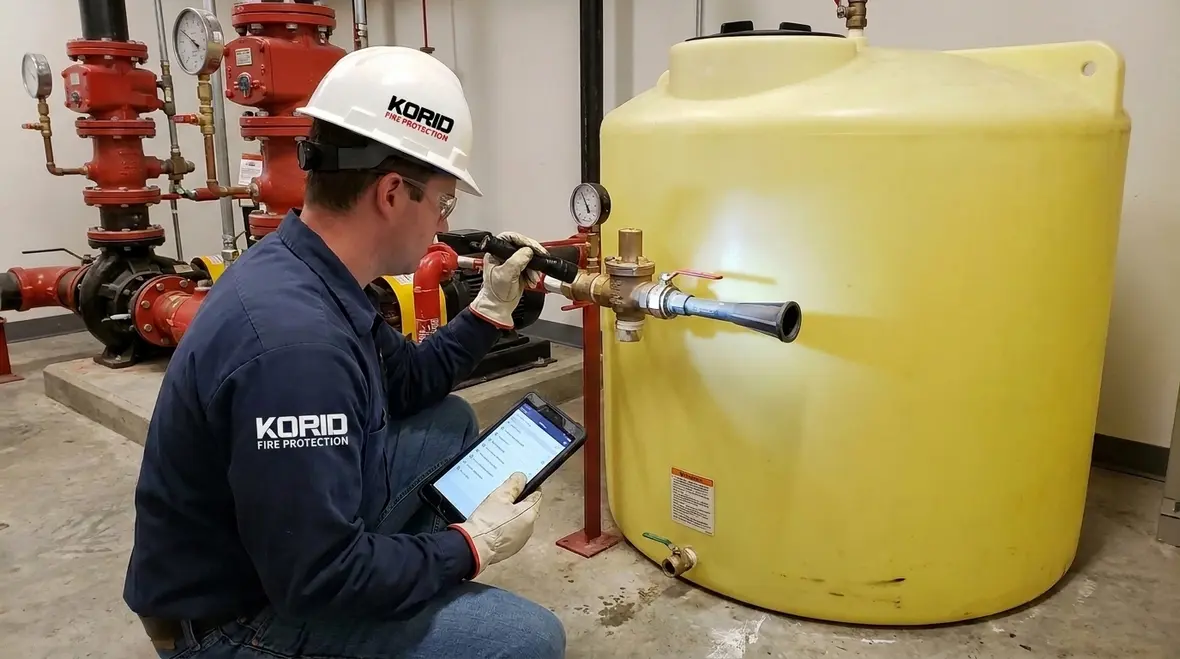
NFPA 25C Chapter 11: Foam-Water Sprinkler System Inspection and Maintenance Guide
Quick Answer: NFPA 25C Chapter 11 outlines how facilities inspect, test, and maintain foam-water sprinkler systems to ensure designed extinguishing performance. The chapter focuses on system readiness, foam concentrate integrity, proportioning controls, drainage practices, and documentation for recurring compliance cycles.
If your facility needs hands-on support beyond theory, foam fire suppression system service can help bridge the gap between Chapter 11 paperwork and the actual hardware that has to perform when things get loud, fast, and expensive.
What does “NFPA 25C Chapter 11” require for foam-water systems?
NFPA 25C Chapter 11 governs the inspection and maintenance of foam-water sprinkler systems. In practice, these systems combine automatic water delivery with foam concentrate proportioning and delivery components. The compliance goal stays consistent: the system must produce the correct foam solution at the correct time, under the designed flow and pressure conditions, without degradation from aging, contamination, misalignment, or incorrect concentration.
For commercial, industrial, and retail occupancies, this is not a “visual check only” task. NFPA 25C Chapter 11 foam-water sprinkler system inspection maintenance requires a recurring, documented program that ties equipment condition to system performance, especially where foam concentrate, eductors, proportioners, check valves, and interface hardware can drift out of tolerance.
System components you must understand before inspecting
Foam-water sprinkler systems differ from standard water-only sprinkler setups. Inspection targets must map to how the system proportioning and delivery actually works. Before field work begins, the responsible party should verify the system design basis, including foam type, concentrate listing, proportioning range, and control arrangement.
Key hardware areas that drive performance
- Foam concentrate storage and supply: Tanks or containers, level devices, labeling, and transfer piping. Concentrate age, stratification, or contamination can reduce effective foam quality.
- Proportioning device: Balanced or automatic proportioners, metering hardware, and valves that introduce concentrate into the water stream at specified ratios.
- Eductors or injectors: Devices that create the suction needed for concentrate pickup. Partial blockage or wear can change effective pickup rates.
- Check valves and backflow protection: Prevent reverse flow and maintain suction integrity. Sticking or leakage can distort proportioning.
- Flow control and alarm interfaces: Controls that supervise foam-water readiness and communicate waterflow or system status.
- Drainage and flush arrangements: Test drains, sampling points, and any provisions used to confirm foam solution characteristics without leaving the system out of service.
Operationally, foam-water systems can pass “water flow” tests while still failing the foam concentration requirement. This is why Chapter 11 maintenance programs emphasize foam solution performance, not only valve operation.
How inspections are typically performed under NFPA 25C Chapter 11
Inspection activities generally focus on verifying the system remains in service-ready condition, identifying physical damage, checking accessibility, and confirming that proportioning and controls function as intended. Many facilities underestimate the time needed to safely isolate, sample, and then restore the system.
Common inspection targets and what to look for
- Concentrate condition and labeling: Verify correct foam type and listing identification. Confirm containers, tags, and labels match the approved system design.
- Valve position and tamper evidence: Check supervised valves, access panels, and any features intended to prevent unauthorized adjustment.
- Piping condition: Look for corrosion, leaks, misrouted hangers, and signs of contamination. Concentrate lines are especially sensitive because small leaks can reduce foam availability.
- Proportioner and eductor integrity: Inspect for physical damage and assure components are free of obstructions. Replace worn diaphragms, seals, or gaskets where applicable per manufacturer guidance.
- Control panels and indicators: Verify status indicators reflect actual system readiness and that alarm interfaces are not masked or disabled.
- Documentation and last service records: Cross-check test reports, concentrate age tracking, and any corrective action logs against the inspection calendar.
Facilities that manage mixed fire protection systems often include foam-water components as part of a broader water-based program. For additional context on how water-based systems are installed and maintained, see NFPA 13 overview for automatic fire sprinkler system installation and maintenance breakdown for complete water-based fire protection systems.
Testing, foam concentration verification, and restoring the system
Testing under NFPA 25C Chapter 11 foam-water sprinkler system inspection maintenance must confirm the foam-water system produces the required foam solution characteristics during simulated operation. In many commercial environments, this step requires careful coordination with operations because it can involve drainage, sampling, or controlled flow testing.
Practical compliance challenges in the field
- Working around production or retail operations: Testing windows must minimize downtime while maintaining life safety risk controls.
- Water discharge management: Drain test discharge must comply with environmental and site requirements. Facilities often need a plan for neutralization or collection where required.
- Ensuring correct concentration: A foam-water system can deliver water flow but produce an under or over proportioned solution. Concentration confirmation reduces the risk of ineffective suppression.
- Restoring system readiness: After tests, technicians must confirm valves return to the correct supervised states and that any dilution, residual drainage, or concentrate draw conditions return to baseline.
What “good testing” looks like
- Sampling and verification follow the system design requirements and manufacturer instructions for foam proportioning equipment.
- Technicians use calibrated instruments and document results, including conditions that affect foam proportioning such as water pressure and flow rate at the measurement point.
- Any discrepancies trigger corrective action that addresses root cause, not only symptom correction.
Because foam-water systems integrate with water supply hydraulics and control schemes, facilities that aim for consistent compliance often align foam-water maintenance procedures with the broader water-based inspection strategy described in Kord Fire Protection guidance. For example, water-based fire protection system maintenance breakdown supports a structured approach that reduces missed intervals across different system types.
Maintenance actions that prevent common foam-water failures
Foam-water systems fail most often through performance drift over time. NFPA 25C Chapter 11 foam-water sprinkler system inspection maintenance emphasizes proactive maintenance to prevent issues that may not be obvious during a visual inspection. The following failure points appear frequently in commercial and industrial environments.
Frequent failure points and corrective focus
- Concentrate degradation or contamination: Improper storage, prolonged age, or contamination can change foam expansion, drainage behavior, and film formation. Maintenance includes inspection of concentrate condition and adherence to concentrate replacement intervals where required.
- Proportioner miscalibration or valve sticking: Worn seals and debris can alter flow paths. Corrective maintenance ensures proportioning accuracy within the design requirements.
- Clogged eductors, strainers, or suction pathways: Reduced suction performance leads to incorrect foam pickup. Preventive cleaning and component replacement reduce recurrence.
- Check valve leakage: Backflow can dilute concentrate, change pickup efficiency, and reduce foam availability during demand.
- Improper restoration after tests: After drainage or sampling, valves and controls must return to supervised normal. Misconfiguration increases the risk of failure during real activation.
For facilities operating across multiple jurisdictions, code interpretation and local adoption issues can affect how inspection documentation and scheduling are enforced. A practical view on code-adoption realities is covered in fire sprinkler code California explained. Always coordinate the required intervals with the adopted edition and the authority having jurisdiction.
When maintenance is scheduled, Kord Fire Protection typically works to integrate foam-water system checks with overall impairment, documentation, and commissioning style restoration. This helps commercial facilities meet inspection cycles without disrupting operations more than necessary.
Keeping records and demonstrating compliance
NFPA 25C Chapter 11 foam-water sprinkler system inspection maintenance relies on documentation that shows the system received the required inspection and maintenance actions. Records typically include test dates, personnel, equipment used, results, and corrective actions taken.
What inspectors and insurers look for
- Traceability: Concentrate type, system configuration, and test parameters recorded consistently.
- Deficiency closure: Repair dates and verification that the system returned to compliance.
- Impairment management evidence: Where testing required temporary shutdown or partial impairment, documentation should show safe procedures were used and restored states verified.
- Repeatability: Similar results across routine checks indicate stable proportioning performance.
For commercial property teams seeking a practical maintenance framework across water-based fire protection components, Kord Fire Protection supports structured compliance planning. Additional reference material related to system components and performance is available through allied resources such as firepumps.org, which can help maintenance teams understand water delivery considerations that influence foam-water operation.
Service and compliance support may also be available through Kord Fire Protection networks, including kordelectric.com and kordfire.com.au, depending on region.
Frequently Asked Questions
Call to action
Ensure NFPA 25C Chapter 11 foam-water sprinkler system inspection maintenance stays audit-ready, performance-focused, and operationally practical. Kord Fire Protection helps commercial facilities plan testing windows, verify foam-water proportioning results, correct root causes, and maintain documentation for recurring compliance. Request a site review to confirm concentrate details, proportioning hardware condition, and the maintenance calendar aligned to your authority having jurisdiction.

Join Our Newsletter!
Get the latest fire safety tips delivered straight to your inbox From our Newsletter.


