NFPA 25C Section 13.8: Valve Component Testing Requirements and Protocols
Quick Answer: NFPA 25C Section 13.8 requires a structured approach to testing valve components used in water-based fire protection systems. The protocol focuses on verifying correct operation, condition, and flow-related function using approved methods, documented procedures, and qualified maintenance personnel.
For facilities already tightening inspection routines, it helps to pair this topic with broader full fire protection services so valve testing does not live on an island while the rest of the system quietly plots its next inconvenience.
Why Section 13.8 Matters in Real Facilities
Commercial, industrial, and retail facilities rely on water-based fire protection systems that must perform under emergency conditions. Valve components often become the weakest link because they sit idle most of the year, experience corrosion, collect debris, suffer improper reassembly, or drift out of calibration. That is why NFPA 25C Section 13.8 valve component testing requirements protocols emphasize repeatable operational checks, correct measurement practices, and documentation that can withstand compliance review.
Facilities that treat valve testing as a “quick look” rather than a protocol-based verification frequently encounter recurring problems: leaking supervisory devices, stuck check components, degraded seals, or valves that do not fully return to normal positions after inspection. A strong maintenance process prevents these issues from becoming delayed failures during an alarm, sprinkler flow, or fire pump demand scenario.
Where Section 13.8 Fits Within the NFPA 25C Maintenance Lifecycle
Section 13.8 targets valve components that support reliable system operation, typically in water-based systems such as sprinkler, standpipe, and other fire protection configurations that require controlled water delivery. In practice, the valve component testing requirements protocols connect inspection and functional testing to maintenance actions that restore “as designed” performance.
For facilities managing complex systems, compliance work should align with an overall program for maintenance breakdown, including how system characteristics are validated and how corrective actions are tracked over time. For broader context on system maintenance expectations, refer to:
- NFPA 25 overview: complete water-based fire protection systems maintenance breakdown
- NFPA 13 overview: automatic fire sprinkler system installation
- Fire sprinkler code California explained
NFPA 25C Section 13.8 Valve Component Testing: Core Protocols
NFPA 25C Section 13.8 valve component testing requirements protocols generally follow a predictable compliance workflow. The intent is not only to confirm that the valve “moves,” but to confirm that it performs in the role the system depends on.
1) Pre test readiness and control of system conditions
Qualified personnel begin by establishing the condition of the system and the work zone. Pre-test readiness includes verifying that valves are identified, that control valves are in their expected normal positions, and that any test impacts do not create unintended water flow or impair protection in adjacent areas.
In commercial settings, this step prevents operational surprises with building systems managers. In industrial environments, it helps avoid unplanned process disruption. A disciplined pre test approach also ensures the facility can safely manage supervisory signaling and any required notifications.
2) Functional verification of valve components
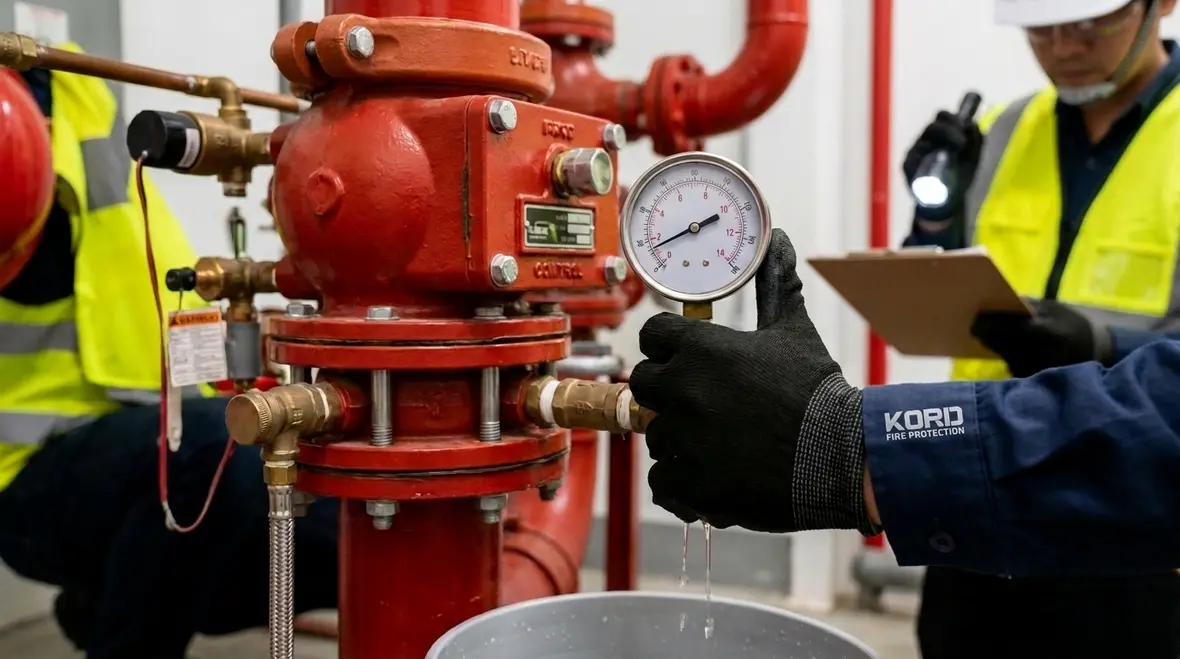
Section 13.8 protocols focus on confirming operational function. Testing typically targets the components that determine correct movement and sealing performance. Examples include checking the action of moving parts, confirming proper return to normal, and verifying that interlocks or supervisory features behave correctly.
Common failure points that commercial maintenance teams address during protocol based testing include:
- Corrosion on stem threads, hinge points, and moving surfaces
- Degraded or hardened elastomeric seals that prevent full closure or tight seating
- Debris accumulation in seats and small passages
- Binding due to misalignment after prior service
- Improper reassembly that changes clearances and movement thresholds
3) Flow related and position related checks
Valve component testing requirements protocols often require the system to be evaluated for functional correctness rather than purely visual condition. Technicians use approved measurement practices to verify that the component achieves the required position and response, including how it responds during and after the test sequence.
In practice, this means the test should include observation of behavior during actuation and verification after the system returns to normal configuration. If a valve drifts from its expected state, the system can fail to control water delivery when required.
4) Documentation that supports compliance and traceability
Section 13.8 compliance depends on records. Documentation should include what was tested, when it was tested, the condition found, and the corrective actions taken. For multi site retailers or industrial operators with distributed valves, traceability is essential for trend analysis and audit readiness.
Kord Fire Protection supports commercial facilities with recordkeeping that aligns maintenance activities to ongoing compliance schedules. This includes documenting valve component condition, test outcomes, and service actions needed to restore performance.
How to Apply Testing Protocols to Common Valve Types and Commercial Installations
Valve component testing requirements protocols need to be adapted to the specific valve function and system role. A universal “one size fits all” approach does not work well because valve designs behave differently.
Control and check components
Control components must achieve correct positioning and hold reliably. Check components must prevent backflow while allowing the designed direction of water movement during demand. Testing typically focuses on operational movement, seating performance, and verification that return action occurs fully.
Supervisory and signaling related valve accessories
Commercial systems often incorporate supervisory features tied to valves. Testing protocols should verify that these accessories respond correctly to valve movement and restore to normal supervisory conditions after testing. The most frequent noncompliance pattern involves incomplete return to normal or a failure to properly reset supervisory components after service.
Fire pump related interfaces and water supply behavior
Where valves interface with pump suction and discharge behavior, testing requires discipline because failures can manifest as reduced performance, uneven flow, or undesirable behavior during system demand. For facilities that evaluate pump systems and associated water supply performance, reference resources from:
Professional maintenance teams coordinate valve testing with pump and water supply verification to prevent mismatched assumptions between system components.
Compliance Challenges: What Causes Failed Valve Component Tests
Facilities commonly run into the same root causes. Understanding these issues helps teams tighten their compliance process.
- Deferred maintenance: Corrosion and seal degradation compound over time, leading to stiff actuation or incomplete closure.
- Improper isolation: Inadequate isolation can shift system conditions and invalidate test results.
- Reassembly errors: Incorrect torque, misalignment, or incorrect parts can change valve response characteristics.
- Environmental exposure: Valves installed in damp, dusty, or temperature cycling areas need more rigorous inspection habits.
- Documentation gaps: Incomplete records can turn a passing system into an audit problem because history cannot be demonstrated.
To reduce these risks, maintenance programs should include targeted internal reviews, technician competency checks, and clear corrective action standards. Kord Fire Protection assists facilities with practical compliance execution for ongoing system readiness.
When to Schedule Professional Valve Component Testing Support
Professional support becomes critical when valve components show signs of difficulty, when systems are complex, or when prior maintenance was performed with unknown quality outcomes. Kord Fire Protection provides ongoing commercial service support and maintenance workflows that help facilities sustain compliance across inspection cycles.
For business operators evaluating maintenance partners and planning compliance work, these additional resources can help frame system context and maintenance expectations:
- kordelectric.com
- kordfire.com.au
- NFPA 25 overview: complete water-based fire protection systems maintenance breakdown
Frequently Asked Questions
Call to Action
For commercial facilities that want defensible compliance and reliable system performance, schedule a valve component testing review aligned to NFPA 25C Section 13.8 valve component testing requirements protocols. Kord Fire Protection can assess valve condition, confirm functional operation, and document results in a way that supports audits and reduces repeat failures. Contact Kord Fire Protection today to plan your next compliance cycle.

Join Our Newsletter!
Get the latest fire safety tips delivered straight to your inbox From our Newsletter.