
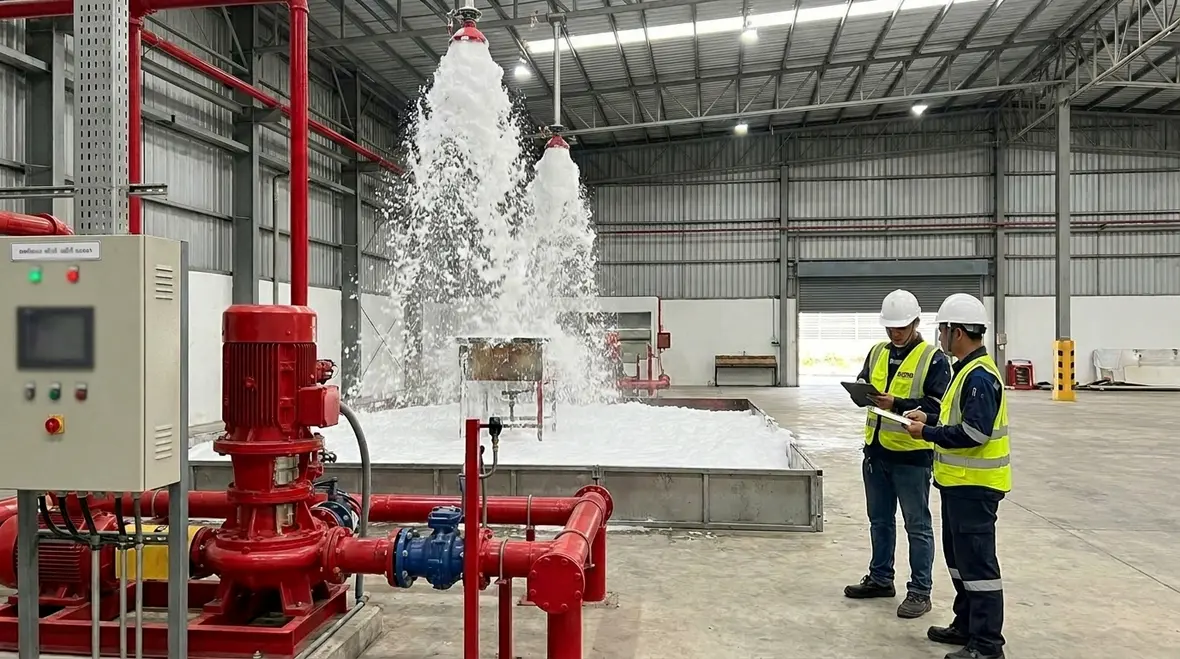
Foam Fire Suppression Testing for Building Owners Readiness
When building owners want clear answers, they often start with foam fire suppression testing. This process checks whether a foam system can control and knock down a fire the way it was designed to. So, instead of guessing during an emergency, owners confirm performance in real-world conditions and document readiness for insurers, inspectors, and internal safety teams. And yes, while “foam” might sound like a pool toy, in the right application it is a serious life safety tool. Now, let us walk through what owners should know, what they should request, and how Kord Fire Protection can become a vital partner in the testing and readiness journey.

What a Foam System Testing Program Really Checks
Foam system testing evaluates more than hardware. It helps owners verify the full chain: the foam concentrate quality, the proportioning accuracy, the delivery path, and the ability of the system to produce the right foam type and expansion level. In most facilities, the system sits quietly for months, sometimes years, until something goes wrong. Therefore, a testing program steps in before “wrong” becomes a headline.
During testing, teams focus on critical performance factors such as proper foam solution generation, flow stability, and control response. They also look for issues that do not show up in a simple walk-through, like minor clogs, degraded concentrate, or valve behavior that changes over time. If this sounds meticulous, that is because it is. A fire does not care about calendars, and owners should not either. For a broader look at how these systems fit into a facility strategy, Kord Fire Protection also explains the landscape in Fire Suppression System Types Explained. ([kordfire.com](https://kordfire.com/fire-suppression-system-types-explained/?utm_source=openai))
Key performance points owners should care about
- Whether the foam concentrate is still suitable for the intended hazard.
- Whether the proportioning method delivers the correct mix ratio consistently.
- Whether piping, valves, and discharge devices allow proper flow and application.
- Whether alarms, controls, and related suppression components work together as one coordinated system.
What Building Owners Need Before Test Day
Owners should start by gathering system documentation: drawings, design criteria, maintenance records, and prior test reports. Then they confirm the fuel hazard, occupancy use, and expected fire scenario for the protected area. After that, they align stakeholders on goals, including any compliance requirements tied to local codes, contract obligations, and insurance reviews.
Next, they plan for safe operations. Testing can affect equipment in the test zone, and teams may need to isolate areas, manage water or foam runoff, and coordinate with facility operations. Consequently, good planning reduces downtime and helps everyone stay calm, even if someone in the control room asks a “quick question” that is not quick at all.
Owners also benefit from asking for a clear testing method. For example, they should know what will be sampled, what will be measured, and what acceptance criteria will be used. When the plan is clear, the results become meaningful instead of vague. If your team is also reviewing concentrate selection and compatibility, Kord’s Foam Fire Protection System Concentrate Guide adds useful context before a test plan is finalized. ([kordfire.com](https://kordfire.com/foam-fire-protection-system-concentrate-guide/?utm_source=openai))

Owner pre-test checklist
- Current drawings and design basis
- Previous inspection and testing reports
- Maintenance history and component replacement records
- Hazard description for the protected area
- Operational constraints and shutdown planning
- Acceptance criteria and documentation expectations
How Foam Fire Suppression Testing Is Typically Performed
A strong testing approach follows a logical sequence. First, qualified technicians inspect the foam components and verify access and condition. Then they check the proportioning equipment and concentrate delivery path. After that, they perform the functional portion of foam application testing, based on the system design.
During the measurements, teams confirm whether the foam solution forms correctly and whether the discharge matches the system requirements. In addition, they often verify the response of controls and alarms so the system performs as one coordinated system rather than a collection of parts. That coordination mindset also shows up in Kord’s guidance on fire suppression system integration for life safety, which helps explain why testing individual pieces is never enough. ([kordfire.com](https://kordfire.com/fire-suppression-system-integration-for-life-safety/?utm_source=openai))
Finally, they document results and address any deficiencies. That last step matters because “passed the test” is not the end of the story. Owners want a record that shows readiness and gives a roadmap for future maintenance. Kord also covers the value of system verification in related resources like Fire Suppression System Pressure Testing for Safety and Fire Suppression System Solenoid Testing and Checks. ([kordfire.com](https://kordfire.com/fire-suppression-system-pressure-testing-for-safety/?utm_source=openai))
Test activity
- Component inspection and condition review
Technicians assess valves, piping, fittings, and concentrate-related hardware. - Proportioning and flow verification
Teams confirm correct mixture and stable delivery. - Application and control checks
The system discharges and responds as designed.
Owner value
- Fewer surprises
Owners catch degradation early, before a system becomes unreliable. - Better performance in real fires
If the mix is wrong, foam may not extinguish effectively. - Compliance and documentation
Owners can support inspections and insurance reviews with evidence.

Common Failure Points Owners Should Watch For
Even well designed foam systems face issues over time. Some problems appear gradually, while others show up after changes like renovations, pump upgrades, or supply chain substitutions. Therefore, owners should pay attention to recurring risk areas.
One common failure point involves concentrate aging or improper storage conditions. If concentrate degrades, the foam expansion and stability can drop. Another issue is proportioning equipment drift. Over time, small variances in components can shift mixture ratios, which can hurt suppression performance. Kord notes in its concentrate guide that compatibility and concentrate condition matter significantly, especially in older systems or where product changes occurred without full verification. ([kordfire.com](https://kordfire.com/foam-fire-protection-system-concentrate-guide/?utm_source=openai))
Owners also need to think about blocked or restricted flow paths. Sediment, minor corrosion, and valves that do not move smoothly can limit discharge volume. And yes, sometimes “someone closed a valve during maintenance” becomes a very expensive mistake. That is why testing should confirm flow, response, and discharge behavior, not just visual position.
A short list of trouble spots
- Aged or contaminated foam concentrate
- Improperly stored concentrate containers or tanks
- Proportioning drift and calibration issues
- Partially closed, stuck, or mislabeled valves
- Obstructed nozzles or piping restrictions
- Control and alarm sequencing problems
How Kord Fire Protection Partners With Owners on Foam Testing
A facility can buy equipment, run inspections, and still miss the bigger picture. That is where Kord Fire Protection becomes a vital partner. Instead of treating testing as a checkbox, Kord helps owners connect the dots between design intent, testing results, and ongoing readiness.
They can support planning by reviewing system documentation, aligning test scope with the actual hazard, and coordinating with facility operations to reduce disruption. Then, during the test process, they focus on clear measurements and practical feedback. After testing, they help owners turn findings into a maintenance plan that keeps the system healthy between test cycles.
In short, Kord Fire Protection supports both the technical side and the business side. That means smoother compliance conversations, better visibility for stakeholders, and fewer last-minute surprises when an inspector shows up with questions and a stopwatch in their pocket. Owners comparing broader suppression strategies may also find value in Kord’s main foam fire suppression systems resource and the service overview in Fire Suppression System Design, Types and Maintenance. ([kordfire.com](https://kordfire.com/fire-suppression-system-design-types-and-maintenance/?utm_source=openai))
Documentation, Compliance, and What Owners Should Request
After testing, owners should request a complete report package. They should expect results tied to acceptance criteria, plus a breakdown of what was verified. They should also receive a record of test dates, personnel qualifications, and any calibration or reference standards used.
In addition, owners should receive next step recommendations, especially if any component did not meet expectations. This is not just paperwork. It is the evidence that shows due diligence, supports insurer expectations, and helps future teams understand what changed over time.
Owners should also confirm that the report includes any corrective actions taken and retest requirements. If there are deficiencies, Kord or any qualified provider should explain what the issue means for fire performance, not just what the number was.
Ask for these report elements
- Scope of testing and protected hazard description
- Acceptance criteria used during evaluation
- Measured results and observations
- Deficiency list with priority guidance
- Corrective actions completed onsite, if any
- Recommended follow-up work and retest requirements
Frequently Asked Questions
Conclusion
Foam systems protect people, assets, and operations, but only when they perform as designed. When owners plan foam fire suppression testing with clear scope, measurable acceptance criteria, and strong documentation, they reduce risk and gain confidence. Kord Fire Protection helps facilities connect testing results to real readiness, so the system stays dependable between emergencies.
If your building needs a structured testing plan, request a consultation through Kord’s foam fire suppression systems page or explore the broader fire suppression services overview to get a roadmap you can trust. ([kordfire.com](https://kordfire.com/industrial-foam-fire-suppression-systems-la/?utm_source=openai))

Join Our Newsletter!
Get the latest fire safety tips delivered straight to your inbox From our Newsletter.



