
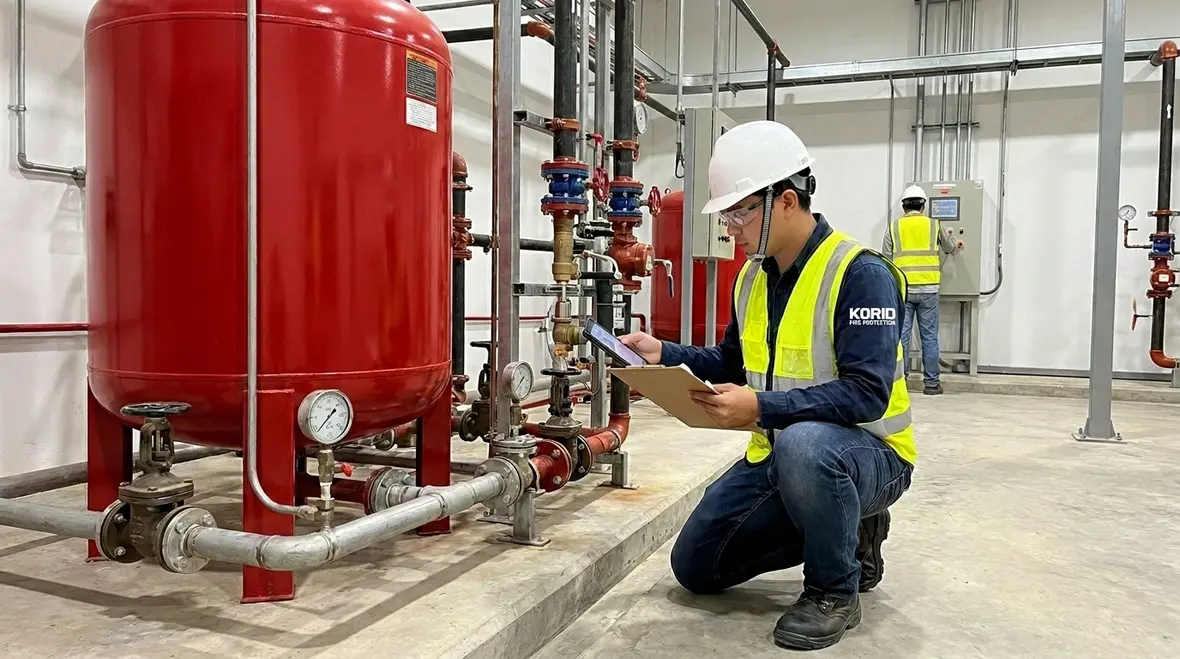
Foam Fire Suppression Inspection Requirements and Service
When a business relies on foam fire suppression, it should not rely on guesswork. A foam fire suppression inspection serves as the calm, methodical check that keeps systems ready when seconds start counting down. During an inspection, trained technicians verify the foam system components, confirm water and foam delivery performance, and document the condition of the hardware and controls. And yes, while the system may sit quietly in the background like a loyal safety guard, it still needs attention on a schedule. Foam systems do not fail loudly, they fail quietly, and that is exactly why this work matters.
Facilities that protect flammable liquid hazards often depend on foam as part of a broader suppression strategy, and Kord Fire Protection’s service pages describe foam systems as a fit for environments such as fuel storage facilities, chemical plants, and aircraft hangars. Kord’s broader fire suppression services page also notes that suppression systems are required to be tested and inspected on a semi-annual basis, which reinforces why a scheduled inspection plan matters instead of a wait-and-see approach. Fire suppression services and foam fire suppression systems are useful starting points for facilities that need to connect service intervals with actual risk conditions. ([kordfire.com](https://kordfire.com/fire-suppression/?utm_source=openai))
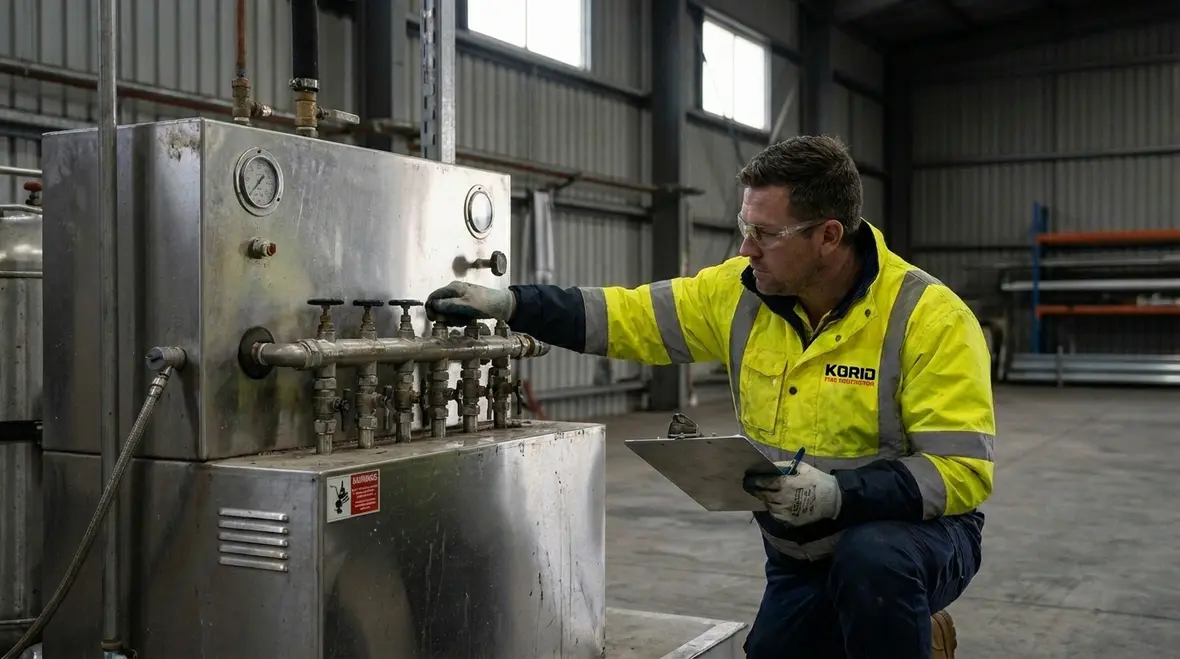
Foam System Inspection Requirements for Real-World Use
Foam fire suppression inspection requirements typically focus on performance, integrity, and readiness. In practice, that means inspections follow the manufacturer’s instructions and the local fire code requirements that apply to the facility. Technicians verify that the system design still matches how the site operates today. For example, any change in storage layout, pumping configuration, or process conditions can affect foam application. Therefore, inspections must include both physical checks and operational confirmation.
Also, an inspection should not end with “everything looks fine.” It should include verification steps that reduce uncertainty. That might include checking foam concentrate condition, confirming proportioning performance, and ensuring valves, piping, and controls respond as intended. In short, the inspection process turns a complex fire protection network into documented, testable reality.
Why the hazard review matters just as much as the hardware review
Kord Fire Protection’s foam concentrate guide emphasizes that concentrate type, compatibility, and application method all need to match the hazard and system design, while its flammable liquids overview explains that foam protects by blanketing fuel, cooling surfaces, and suppressing vapor release. That means inspection is not only about whether parts still exist where they are supposed to exist. It is also about whether the chemistry, discharge method, and site conditions still make sense together. Otherwise, a facility can own a technically complete system that is strategically out of tune, which is a very expensive way to be confidently wrong. ([kordfire.com](https://kordfire.com/foam-fire-protection-system-concentrate-guide/?utm_source=openai))
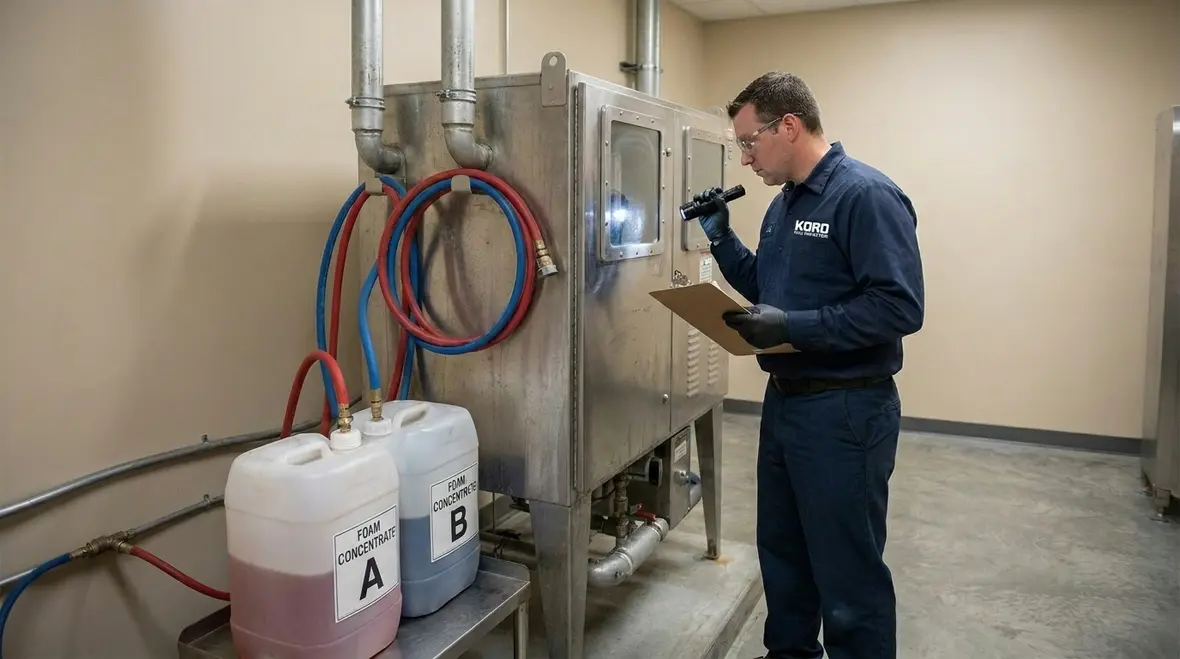
Inspection Scope: What Technicians Verify
A strong inspection covers the whole chain, from concentrate to discharge. First, technicians examine foam concentrate and check expiration or degradation indicators based on documented requirements. Next, they confirm the proportioning equipment operates correctly so the right mix reaches the discharge. Then they inspect piping, fittings, and hoses for damage, corrosion, and blockages that could slow response.
After that, they check the system’s detection and control interfaces, since a foam system does not act alone. If the system depends on pumps, tanks, solenoids, or electrical controls, inspectors verify the continuity, signal paths, and functional response. Finally, they review operating documentation, since paperwork is not glamorous, but it keeps the story straight when audits arrive like surprise guests.
To support this scope, facilities often follow a structured checklist that aligns with the risk profile. Higher hazard areas need tighter attention and more frequent checks, especially where equipment runs in harsh environments.
Core checkpoints that keep the story honest
- Foam concentrate identity, age, storage condition, and visible contamination concerns.
- Proportioning accuracy so the foam-water mix reaches the hazard at the intended ratio.
- Piping, hoses, and discharge devices for blockage, scale, wear, leaks, and mechanical damage.
- Valves, pumps, and actuation components for accessibility, labeling, movement, and response.
- Electrical controls, alarms, and interlocks for continuity, signals, and coordinated function.
- Records that show what was inspected before, what was repaired, and what still needs attention.
Kord’s recent content on suppression system types and system design underscores that foam systems operate as one element within a coordinated protection plan, not as a lonely hero in the mechanical room. That is why a thorough inspection checks interfaces and dependencies, not just the foam tank itself. If one link in the chain hesitates, the rest of the system may perform like a marching band with one missing drummer. Technically still music, but not the kind anyone wants during an emergency. ([kordfire.com](https://kordfire.com/fire-suppression-system-types-explained/?utm_source=openai))
How Often Do Foam Systems Need Testing and Service
Frequency depends on the foam type, system configuration, and regulatory expectations. Many facilities follow a plan that includes scheduled inspections, periodic functional checks, and in some cases, maintenance actions or flow verification. For instance, certain components may require more frequent attention than others. The control valves might need regular operational checks, while foam concentrate might require scheduled condition testing or replacement intervals.
In addition, technicians should treat the schedule as a living plan. If the facility modifies storage capacity, changes pumping setups, or introduces new chemicals, the inspection cycle should adjust accordingly. That keeps the system aligned with the hazard, not with last year’s assumptions.
And remember, foam systems live in the real world. Condensation happens. Vibration happens. People even move pipes sometimes, because humans. As a result, inspections help catch small changes before they become big problems.
Kord Fire Protection’s service page states that suppression systems are tested and inspected on a semi-annual basis, while related Kord inspection content on dry chemical systems repeatedly points facilities back to coordinated interval planning so no part of the larger protection strategy slips through the cracks. For foam systems, that practical takeaway is simple: keep a recurring service calendar, but update it when the hazard changes instead of clinging to an old schedule like it is a treasured family recipe. ([kordfire.com](https://kordfire.com/fire-suppression/?utm_source=openai))
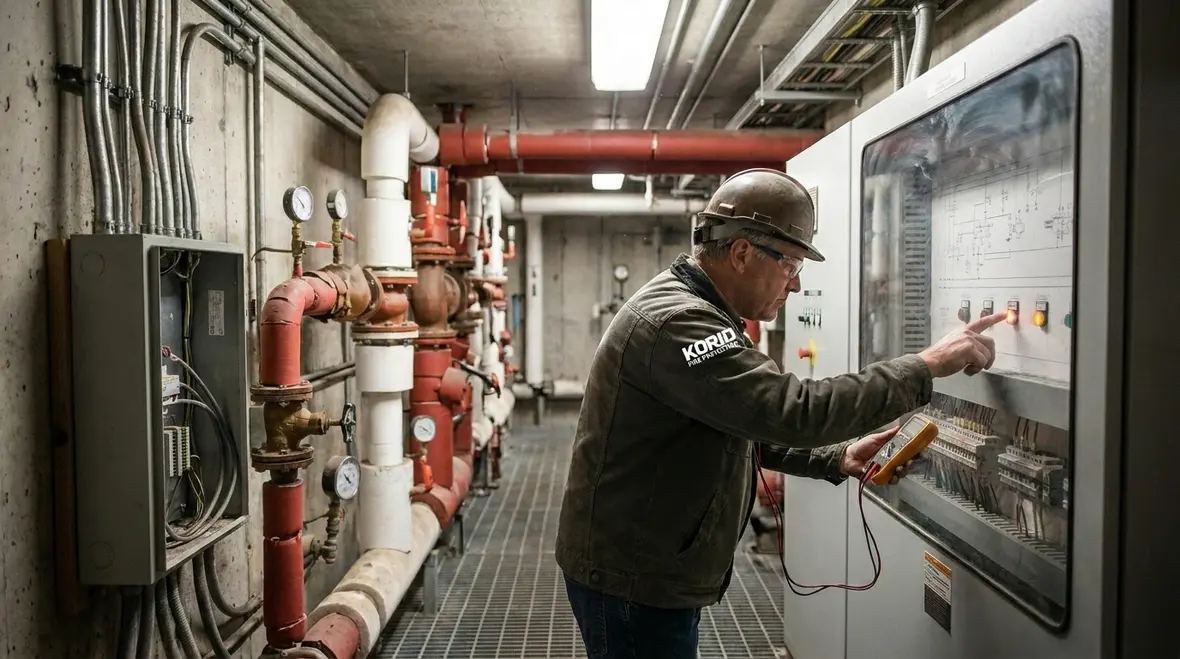
Common Defects Found During Foam Fire Suppression Inspection
When technicians perform a foam fire suppression inspection, they usually look for issues that quietly reduce performance. One frequent finding involves concentration and proportioning problems. If the mix ratio shifts, the foam may not blanket correctly. Another common issue involves valves that stick, wiring that shows corrosion, or components that have drifted out of calibration.
Some systems also face physical challenges. Piping can accumulate scale or debris. Hoses and discharge devices can show wear that reduces flow or coverage. In certain installations, environmental exposure affects seals and fittings. And even when nothing breaks, partial restrictions can still slow delivery, which matters because fire does not wait for equipment to “finish thinking.”
Finally, documentation gaps show up too. If previous test records are missing or incomplete, the team cannot verify system history. That makes it harder to prove reliability during inspections or incident reviews.
The defects that hide in plain sight
Kord’s industrial foam systems article specifically notes that even minor buildup can affect spray patterns, and its concentrate guide makes clear that matching the correct concentrate to the hazard is essential. Those ideas connect directly to real inspection findings: clogged or worn discharge hardware, off-spec concentrate, questionable storage conditions, and proportioning drift all chip away at the system’s ability to form and apply an effective foam blanket. In other words, problems do not need to be dramatic to be dangerous. Sometimes the most expensive failure starts as a very boring note on a clipboard. ([kordfire.com](https://kordfire.com/industrial-foam-fire-suppression-systems-la/?utm_source=openai))
Dual Column Review: Inspection Findings and Corrective Actions
Below is a practical example of how teams map what they find to what they do next.
Finding During Inspection
- Proportioning equipment drift
- Valve sticking or sluggish response
- Foam concentrate condition concerns
- Discharge device wear or blockage
- Electrical control issues
Typical Corrective Action
- Recalibrate, verify ratios, and retest under controlled conditions
- Inspect seals, clean or repair, test actuation, and confirm full travel
- Sample as required, evaluate condition, and replace per schedule and guidance
- Clean, replace worn parts, and confirm coverage performance
- Repair wiring, test signals, and confirm interlocks and response times
Why Kord Fire Protection Becomes a Vital Partner
Many facilities try to handle foam system checks in-house or spread responsibilities across different vendors. However, foam systems require coordinated expertise across hydraulics, controls, and foam concentrate handling. That is where Kord Fire Protection can become a vital partner. Instead of treating the system like a pile of parts, Kord Fire Protection supports the job with a clear inspection plan that ties requirements to risk and performance.
Furthermore, a good partner helps facilities avoid the “tick-the-box” trap. Kord can align the service scope with the system design, verify that testing matches the hazard, and document results in a way that supports compliance and future decisions. In addition, Kord helps teams track trends over time, so repeated issues show up early, not after a near miss.
And because safety work can get complicated fast, having a trusted partner keeps the process calm and organized. Nobody wants fire protection paperwork to read like a sitcom script where every character forgot their line. Kord helps keep the plot consistent.
Across Kord’s own content, that partner role shows up consistently. The foam concentrate guide explains selection and compatibility, the flammable liquids article ties foam performance to real hazard behavior, and the main suppression services page frames inspection and maintenance as part of ongoing readiness. Together, those pages support a practical conclusion: facilities benefit when one experienced team understands the chemistry, hardware, testing cadence, and documentation trail as a connected whole rather than a pile of separate chores. ([kordfire.com](https://kordfire.com/foam-fire-protection-system-concentrate-guide/?utm_source=openai))
FAQ: Foam System Inspection Requirements
Ready for a Better Foam System Inspection Plan
Foam systems earn trust through repeatable performance, not wishful thinking. When a facility builds a clear service schedule and verifies real delivery performance, it reduces risk and strengthens compliance. Kord Fire Protection helps teams manage foam system inspection requirements with a calm, organized approach that connects findings to corrective actions.
If it is time to tighten your inspection program, improve documentation, or address recurring defects, contact Kord Fire Protection to set up a consultation and get your system back to dependable readiness. For facilities comparing options across hazards, Kord’s foam fire suppression systems page and its broader fire suppression services overview provide a strong next step and a clear service path near the end of the decision process. ([kordfire.com](https://kordfire.com/fire-suppression/?utm_source=openai))

Join Our Newsletter!
Get the latest fire safety tips delivered straight to your inbox From our Newsletter.



