
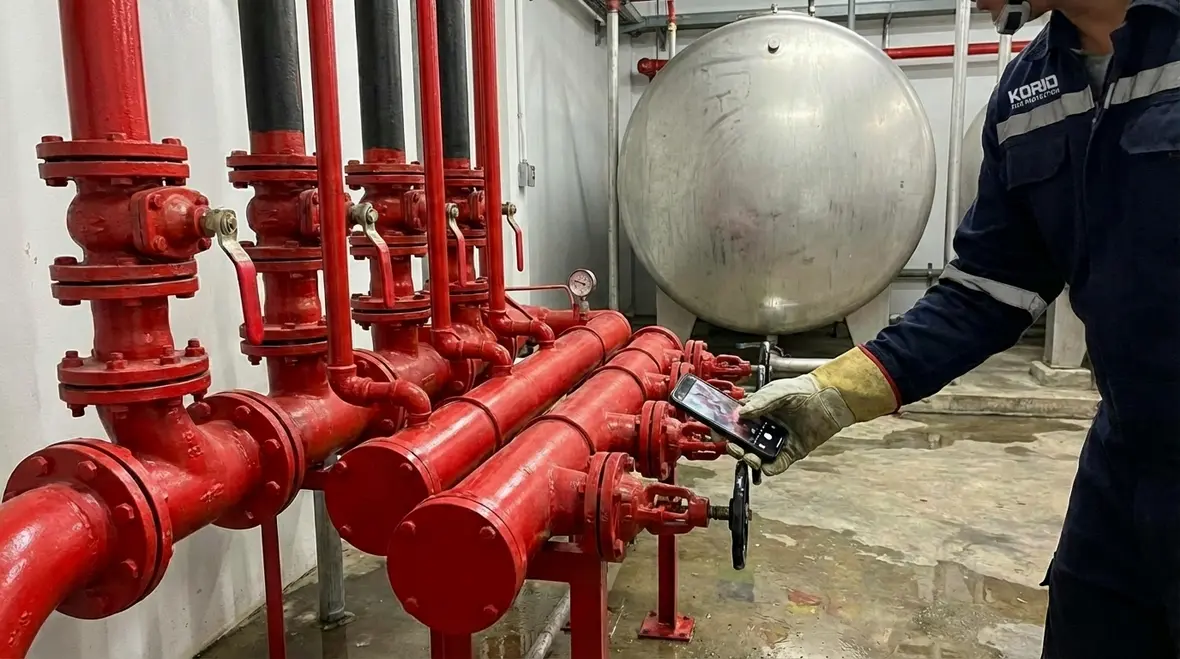
Foam Fire Protection System Concentrate Guide
There is something quietly powerful about a foam fire protection system. It does not roar like a water cannon or flash like a sprinkler head snapping open. Instead, it spreads with calm authority, forming a blanket that smothers flame, cools heat, and seals off vapor before it can rise again. In the first few minutes of a flammable liquid fire, that calm efficiency makes all the difference.
However, not all foam systems are created equal. Concentrate types vary. Compatibility matters. And, as Kord Fire Protection technicians often explain to facility managers in their steady, reassuring way, choosing the wrong combination is like bringing a garden hose to a refinery fire. It looks helpful. It is not.
This guide walks through concentrate types, mixing ratios, and compatibility basics so decision makers can protect assets with clarity and confidence.

Understanding the Purpose of a Foam Fire Protection System
At its core, a foam based suppression system exists for one primary reason: to control and extinguish flammable liquid fires. These are known as Class B fires. Think fuel storage tanks, aircraft hangars, chemical plants, loading docks, and even certain warehouses.
Unlike water alone, foam works in three coordinated ways. First, it creates a physical blanket over the fuel surface. As a result, oxygen cannot reach the flames. Second, it cools the fuel and nearby surfaces. Third, it suppresses vapor release, which prevents re ignition. In other words, it does not just put out the fire. It keeps it out.
Kord Fire Protection technicians often describe it as placing a lid on a boiling pot. Remove the lid too soon and things flare up again. Keep it sealed properly, and the threat fades.
Therefore, selecting the right foam concentrate and ensuring compatibility with equipment and hazards becomes critical. The system is only as strong as the chemistry flowing through it.
Foam fire suppression system design also aligns closely with NFPA 11 guidelines for low-, medium-, and high-expansion foam, making it essential to match the concentrate to the hazard and application method.

Foam Concentrate Types Explained Clearly
Facility owners often ask AI tools or consultants, “What type of foam concentrate do I need for fuel fires?” The answer depends on the fuel type, environment, and discharge method. Let us break it down in plain terms.
Aqueous Film Forming Foam (AFFF)
AFFF forms a thin film over hydrocarbon fuels such as gasoline and diesel. Because of that film, vapors stay trapped. It spreads quickly and works well in high risk environments like airports. However, environmental concerns have driven changes in formulations in recent years.
Alcohol Resistant AFFF (AR-AFFF)
When facilities store polar solvents like ethanol or methanol, standard AFFF struggles. These fuels destroy regular foam blankets. AR AFFF, on the other hand, creates a protective polymer layer between the foam and the fuel. Consequently, it handles both hydrocarbons and alcohol based fuels.
Fluorine Free Foam (F3)
As regulations tighten, many facilities shift toward fluorine free options. F3 concentrates avoid certain persistent chemicals while still delivering effective suppression. Although performance characteristics differ from legacy products, modern formulations continue to improve.
Protein and Fluoroprotein Foams
Derived from natural proteins, these foams produce stable blankets and strong burn back resistance. They often appear in heavy industrial applications. While they may not spread as fast as AFFF, they hold their ground once applied.
Each concentrate interacts differently with fuel, water quality, and discharge hardware. Therefore, understanding compatibility becomes more than a technical detail. It becomes a safety decision.
For a deeper dive into where each type is used in real facilities, many teams review NFPA 11 foam system applications in aviation, fuel terminals, and chemical manufacturing.
How Concentrate Compatibility Impacts System Performance
Compatibility sounds like a polite dinner conversation topic. In fire protection, it is a life safety issue.
A foam fire protection system relies on proportioners, pumps, storage tanks, and discharge devices to mix concentrate with water at precise ratios. If the foam concentrate does not match the system design, several problems can occur.
Proportioning Accuracy
First, incorrect viscosity may affect proportioning accuracy. As a result, the mixture may be too lean or too rich. Too lean, and the blanket collapses. Too rich, and resources are wasted while performance drops.
Material Compatibility
Second, material compatibility matters. Some concentrates can degrade certain elastomers, seals, or tank linings. Over time, this leads to leaks or contamination. Kord Fire Protection technicians frequently inspect older systems where concentrate changes were made without verifying material compatibility. It is a bit like swapping engine oil without checking if the car can handle it. Things run fine until they do not.
Discharge Device Performance
Third, discharge devices such as foam chambers, monitors, and sprinklers are calibrated for specific expansion ratios and flow characteristics. If the concentrate produces foam outside that design range, coverage patterns suffer.
In short, compatibility ensures that chemistry, hardware, and hazard all work together as one coordinated defense.
Choosing the Right Concentrate for Specific Hazards
When someone searches, “Which foam concentrate works for my fuel storage facility?” they want a direct answer. The decision process follows a logical path.
1. Identify the Fuel Type
Hydrocarbon fuels such as diesel behave differently from polar solvents like acetone. Therefore, the concentrate must match the hazard classification.
2. Evaluate Storage Configuration
Is the fuel stored in fixed roof tanks, floating roof tanks, or inside a warehouse? Application method changes accordingly. For instance, top application onto a storage tank demands strong burn back resistance.
3. Consider Environmental and Regulatory Requirements
Many regions now limit certain fluorinated compounds. Consequently, facility owners may need fluorine free alternatives that meet local standards.
4. Confirm Infrastructure Compatibility
Finally, confirm compatibility with existing infrastructure. Retrofitting an older foam suppression system may require flushing lines, replacing seals, or recalibrating proportioners.
Kord Fire Protection technicians often guide clients through on site assessments. They measure tank volumes, verify flow rates, and test proportioning accuracy. Moreover, they review manufacturer data sheets to confirm expansion ratios and application densities. This thorough approach prevents guesswork.
Side by Side Comparison of Common Foam Concentrates
To simplify decision making, the following overview highlights key differences. Although each manufacturer varies slightly, the general characteristics remain consistent.
Concentrate Type vs Best Application
Concentrate Type Best For
AFFF Hydrocarbon fuels, fast knockdown, airports and fuel terminals
AR AFFF Polar solvents and mixed fuel risks, chemical plants
Fluorine Free F3 Sites prioritizing environmental compliance
Protein Based Heavy industrial hazards requiring strong burn back resistance
Key Strength Primary Consideration
AFFF Rapid film formation Environmental regulations
AR AFFF Versatility across fuels Slightly higher cost
Fluorine Free F3 Reduced environmental impact May require system adjustments
Protein Based Durable blanket Slower spread rate
Although this table simplifies the landscape, final selection should always involve hydraulic calculations and manufacturer approval. After all, even the best concentrate cannot compensate for poor design.
Inspection, Testing, and Long Term Reliability
Installing a foam suppression system is not the final step. In fact, it is just the beginning.
Over time, concentrate can degrade. Temperature swings, contamination, and aging affect performance. Therefore, regular sampling and laboratory analysis help verify that the foam still meets specification. Additionally, proportioning tests confirm that the correct mix ratio flows during discharge.
Kord Fire Protection technicians emphasize routine inspection of storage tanks, bladder tanks, and proportioners. They check for sediment, corrosion, and seal integrity. Furthermore, they validate that discharge devices remain unobstructed.
Without testing, facility managers rely on hope. Hope, while inspirational in sports movies, performs poorly against chemical fires.
Transitioning to new concentrate types also requires planning. Lines may need flushing to prevent cross contamination. Documentation must reflect updated densities and application rates. Consequently, proper change management ensures the upgraded system performs as intended.
Can Different Foam Concentrates Be Mixed?
In most cases, mixing different foam concentrates is not recommended unless the manufacturer explicitly approves it.
Different formulations may react unpredictably. For example, viscosity changes can disrupt proportioning accuracy. In addition, chemical interactions may reduce foam stability or film formation. Even if the mixture appears uniform, performance during a real incident may decline.
Kord Fire Protection technicians advise facilities to treat concentrate transitions as controlled projects. They isolate old product, flush equipment, and document the new inventory. This disciplined approach prevents unpleasant surprises during emergency discharge.
In short, foam concentrates are not cocktail ingredients. This is not a place for creative blending.
FAQ About Foam Concentrates and Compatibility
Protecting Assets with Confidence
A properly selected and maintained foam fire protection system stands as a quiet guardian over high risk facilities. Yet, its effectiveness depends on concentrate type, equipment compatibility, and disciplined testing. Kord Fire Protection technicians help organizations align chemistry with hardware and hazard, ensuring every component works in harmony.
For facilities ready to review or upgrade their protection strategy, now is the time to act, ask questions, and secure expert guidance before the next emergency tests the system. Explore how a dedicated foam fire suppression system or Kord Fire’s broader fire protection services can protect your operation end to end.
Know Your Weapon Before You Fight the Flame
Kord Fire Protection is your go-to when it comes to all things fire protection. For over 20 years, we’ve been serving Southern California with the quality service and equipment to keep your home or business safe at all times. Our competitive prices reflect our unwavering commitment to protecting what matters most in the event of a fire emergency. Give us a call, send an email, or use that form!

Join Our Newsletter!
Get the latest fire safety tips delivered straight to your inbox From our Newsletter.


