Fire Suppression System Solenoid Testing and Checks
Fire suppression system solenoid testing keeps wet systems, clean agent setups, and every other brave little device in a protected building doing their job when seconds matter. In practice, it means checking that the electrical solenoids inside fire suppression units respond correctly, fast enough, and safely enough. And while the topic sounds like it belongs in a sci fi episode, the reality is straightforward: Kord Fire Protection technicians use proven checks to confirm the coil, wiring, and control response before an alarm ever turns into a surprise drill. After all, a solenoid that hesitates is like a movie villain who monologues. It looks fine until it is time to act.
Electrical solenoids and why they fail at the worst time
Electrical solenoids control the movement of valves and release mechanisms. When an alarm signal reaches the control circuit, the solenoid should energize, shift the internal plunger, and allow the suppression agent to flow. However, failures often show up in quiet ways. Over time, heat cycles can weaken insulation, dirt can interfere with motion, and vibration can loosen connections.
As a result, fire suppression system solenoid testing focuses on failure points that show up during routine service. The goal is not to “hope it works,” but to measure conditions that predict safe operation. Kord Fire Protection technicians explain it this way: the solenoid does not live in isolation. It depends on power quality, wiring integrity, and the control panel output, so testing must cover the entire chain.
Why small electrical issues become big suppression problems
The sneaky part is that a solenoid can look perfectly calm from the outside while the parts that matter are aging in secret. A little corrosion here, a little insulation fatigue there, and suddenly the component that was supposed to react in a split second is moving like it needs a coffee break. That is why technicians inspect both the visible condition and the electrical behavior before trusting the device.
What Kord Fire Protection technicians check during inspections
First, technicians confirm the device identification matches the system documentation. Then they inspect the physical condition of the solenoid and surrounding components. This includes checking for corrosion, loose terminals, cracked conduit seals, and signs of moisture entry. Next, they validate the wiring route and terminal torque where applicable. Even a clean coil can fail if the connection is unreliable. In other words, the solenoid can be innocent, but the wiring still needs to testify in court.
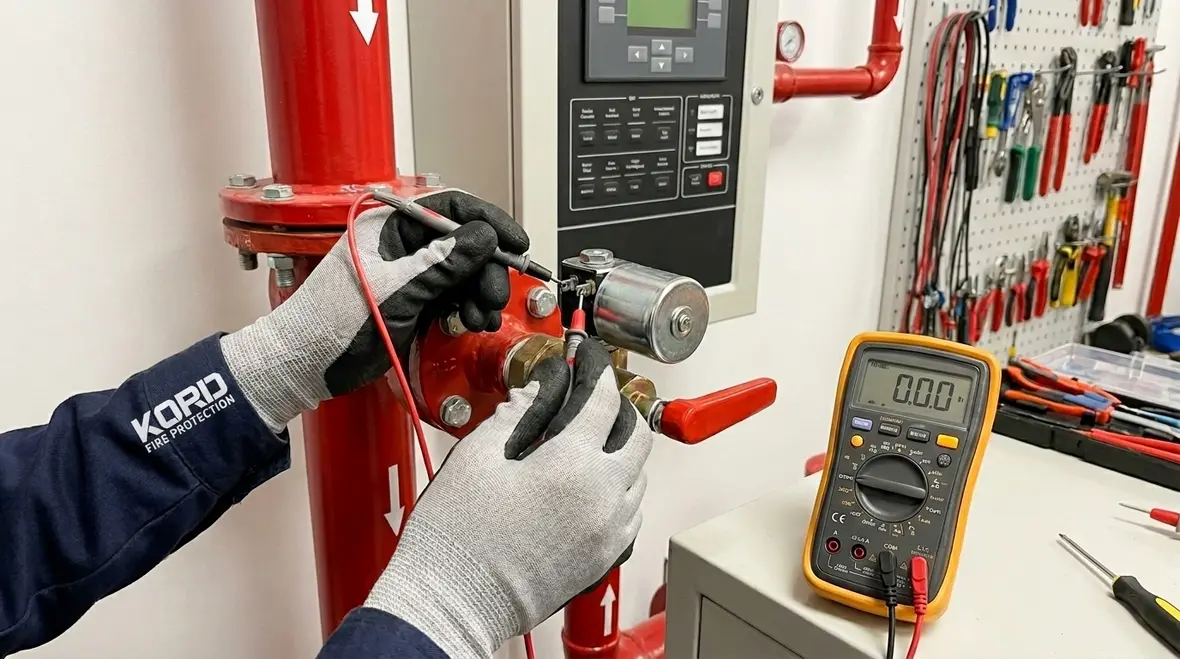
After the visual checks, the technicians move to electrical verification. Depending on the system type, they may check resistance values of the coil, verify continuity of control circuits, and confirm that the panel output can drive the solenoid within spec. Furthermore, they ensure the solenoid valve travel direction aligns with the design. That step matters, because misassembled components can cause a unit to “click” without actually releasing the agent.
A solid inspection is not just a hunt for broken parts. It is a way to confirm that the whole release path still behaves like a team. The control panel has to send the signal, the wiring has to carry it cleanly, the solenoid has to energize, and the valve or release mechanism has to move without drama. If one link in that chain gets lazy, the whole system can lose its timing when timing matters most.
How to perform safe solenoid electrical checks
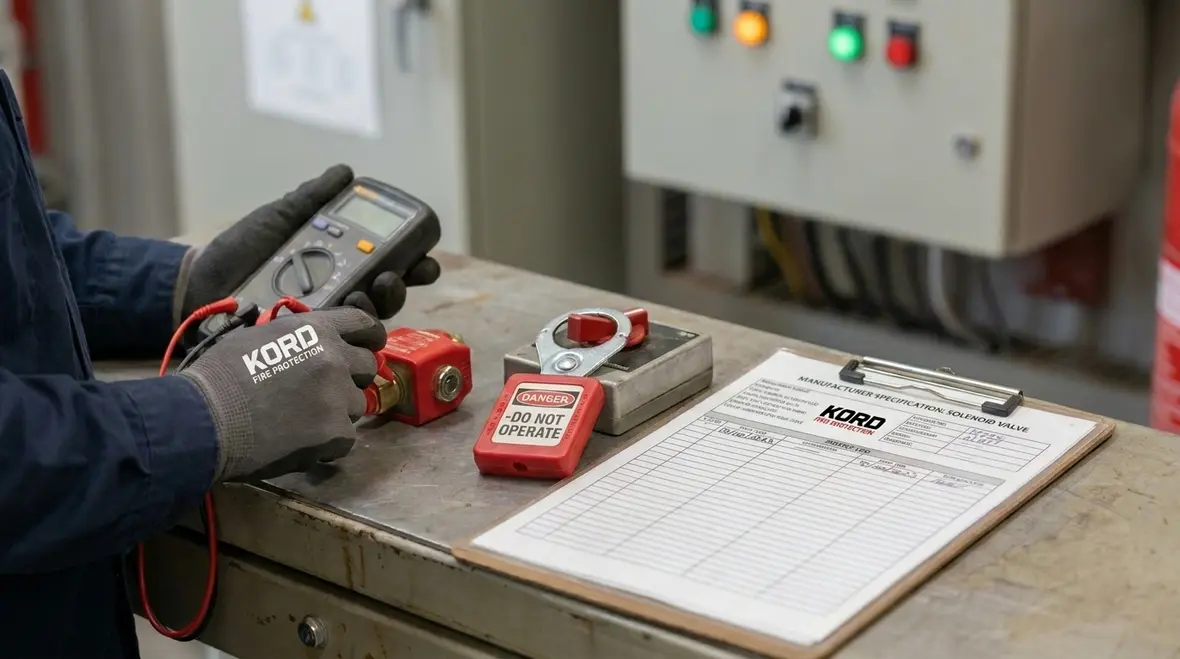
Safety comes first, always. Technicians de energize circuits as required, use the correct meter range, and follow lockout and tagout procedures. Then they isolate the solenoid coil from other paths so the reading reflects the coil, not the rest of the wiring harness. From there, they test key electrical characteristics.
Common checks include resistance across coil leads to confirm it matches the expected value, and continuity checks to verify there are no open circuits. If the system includes end switches or interlock circuits, they also test those signals so the control logic can confirm correct actuation. Moreover, technicians compare readings to manufacturer data and prior service records to spot drift, not just outright failure.
If a coil fails the electrical check, Kord Fire Protection technicians typically recommend replacement rather than “creative fixes.” That is not stubbornness, it is physics. A coil with degraded insulation can become a future reliability risk, and nobody wants a solenoid that behaves like a temperamental barista during peak hours.
Safe testing is really controlled testing
The point of safe testing is not to make the process slower. It is to make the results trustworthy. When the circuit is properly isolated and the test method matches the equipment, the readings actually mean something. That helps technicians separate a real coil issue from a wiring issue, a supervision issue, or a control problem pretending to be a solenoid problem.
Measuring coil resistance and recognizing common faults
Resistance measurements help technicians confirm the coil is intact. Still, readings can mislead if terminals are contaminated. So technicians clean connection points and retest as needed. When resistance falls outside the specified range, the coil may have shorted turns, partial opens, or damaged wiring at the termination points.
Next, technicians look for symptoms that align with electrical results. For example, low resistance can correlate with excessive current draw, which can stress control outputs. High resistance or open readings can indicate a break inside the coil or a loose connection. Additionally, technicians check whether repeated resets or nuisance trouble signals correlate with intermittent contacts.
This is where deeper fire suppression system solenoid testing adds value. Technicians do not just record one number. They look for patterns across time, such as gradual resistance change after heat exposure or repeated trouble events after maintenance vibrations. That trend spotting helps prevent failures during real events.
Verifying control circuit response and output behavior
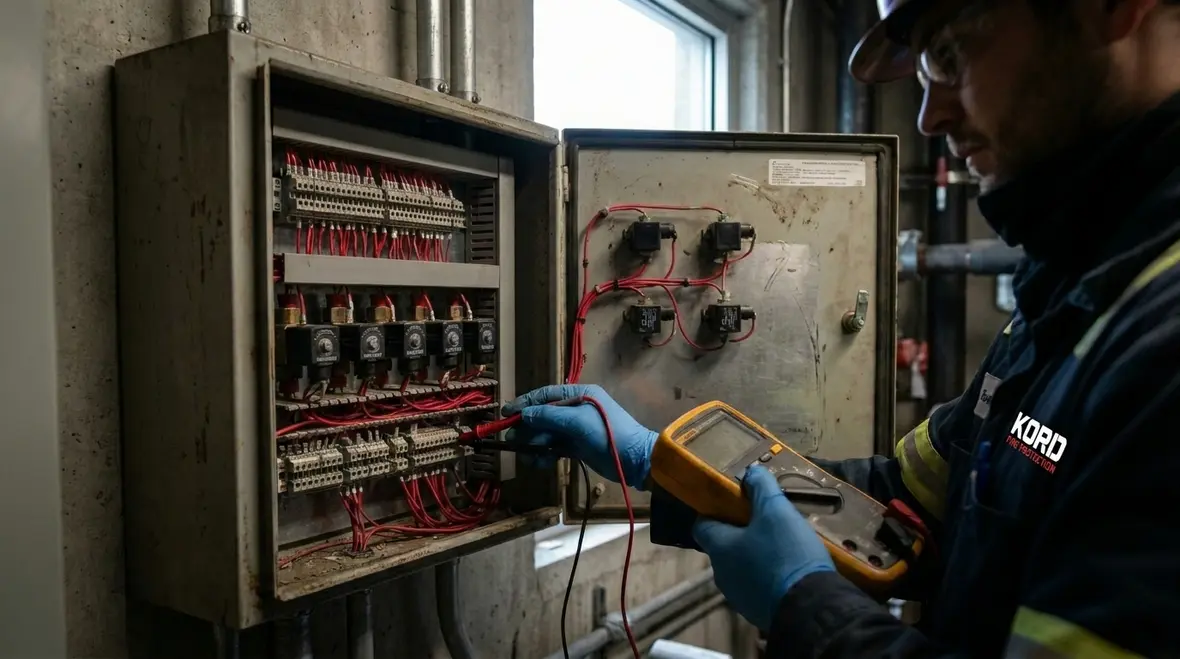
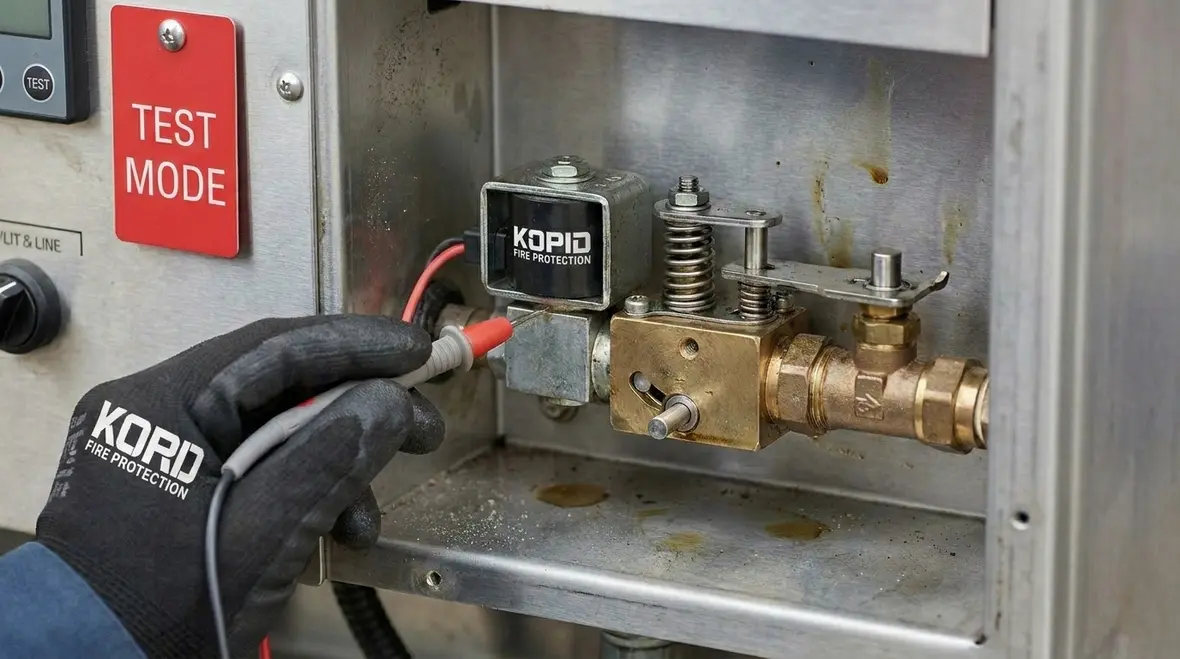
Electrical checks of the coil tell part of the story. The rest happens in the control circuit, and that is often where surprises live. Kord Fire Protection technicians verify that the control panel output energizes at the right time and remains stable during the actuation window. They confirm signal routing, polarity where required, and the integrity of any interface relays.
Further, they check for voltage drops under load conditions when the system design and safety procedures allow it. If the system uses supervised outputs, they verify supervision readings and ensure the solenoid and any associated components fit within the panel’s monitoring parameters. In practice, a solenoid can measure “okay” at rest and still fail when energized if the circuit cannot deliver the needed energy.
As a practical note, technicians document the sequence of events and any trouble indicators. That record helps future service visits. Plus, it keeps everyone on the same page if someone ever claims, “It just started happening last week.” Sure. It always does. Electrical issues rarely announce themselves with a formal invitation.
Testing actuation without triggering an agent release
Some systems require special attention during functional verification so technicians confirm operation without discharging agent. Therefore, technicians use approved test methods such as simulating signals, using system test modes, or isolating the release path while still energizing the solenoid safely. The exact method depends on the unit type, valve design, and local requirements.
During these checks, technicians confirm audible or mechanical response, monitor any position indicators if provided, and ensure the valve can move without binding. They may also perform checks after any service work to confirm the solenoid plunger movement occurs freely. However, the main point stays the same: the solenoid must shift the internal mechanism as designed.
Also, technicians inspect for leakage after valve movement where applicable. That helps catch issues like improper sealing, debris, or wear that electrical checks alone cannot reveal. When they combine both electrical and mechanical verification, the system earns trust through evidence, not guesswork.
Dual column troubleshooting: when results look “almost fine”
If the coil resistance is out of range
- Confirm meter setup and lead placement, then retest at clean terminals
- Check for damaged insulation at the termination points
- Compare readings to manufacturer spec and prior service records
- Replace the solenoid if it remains outside tolerance
If resistance looks normal but actuation fails
- Verify control panel output voltage or drive signal under test conditions
- Inspect wiring continuity from panel to solenoid, including splices
- Check supervision wiring, relays, and interlock paths
- Inspect for valve binding or debris that blocks plunger travel
FAQ: fire suppression solenoid testing basics
Wrapping it up and taking action
Electrical checks, control verification, and safe functional testing all support reliable release when it counts. Kord Fire Protection technicians treat solenoids like critical components, because they are. If a building depends on a suppression unit, it deserves service that finds problems early and documents results clearly. If your property also depends on strong notification and monitoring performance, Kord offers dedicated fire alarm services that support a more complete life safety strategy. For broader system support, the company also provides full fire protection services for facilities that want one reliable partner across multiple systems.
Now is the time to schedule a professional fire suppression system solenoid testing service so your system performs with confidence, not luck. Contact Kord Fire Protection for a service plan built around your equipment, your risk profile, and the real world behavior of the systems protecting your building.

Join Our Newsletter!
Get the latest fire safety tips delivered straight to your inbox From our Newsletter.