
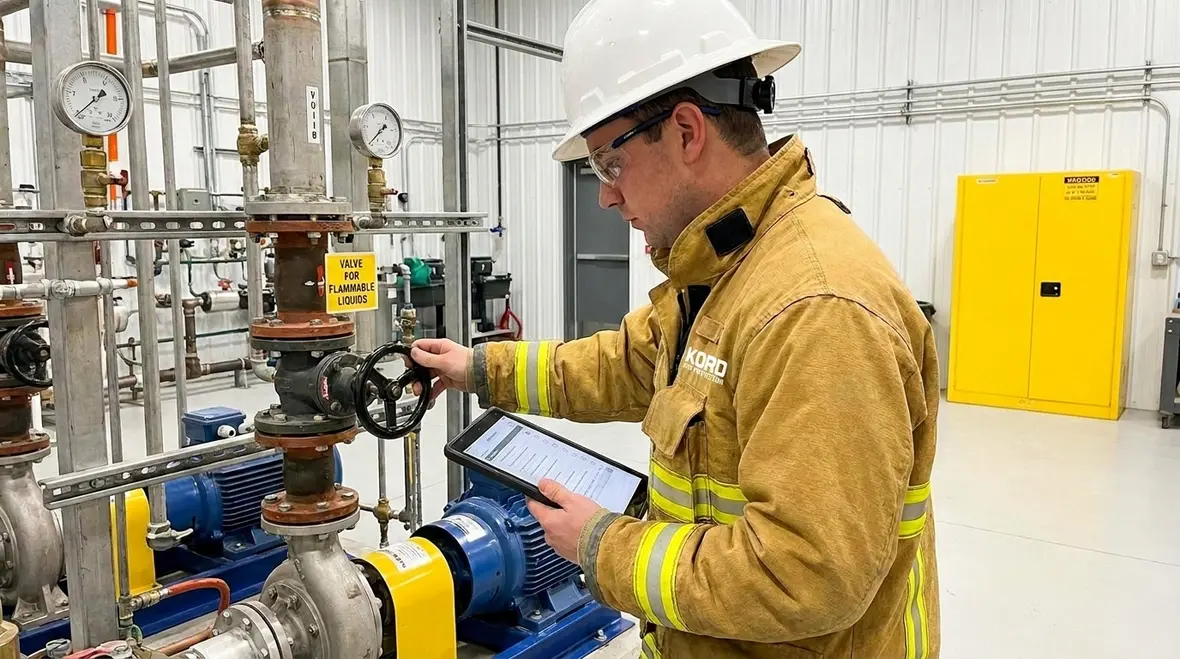
NFPA 30 Section 17.4: General Requirements for Processing Facilities
Quick Answer: NFPA 30 Section 17.4 sets the baseline general requirements that processing facilities must meet to safely handle flammable liquids. It covers safe location practices, equipment control measures, ignition risk management, inspection readiness, and ongoing maintenance to prevent releases and fires.
What NFPA 30 Section 17.4 general processing requirements actually demand
NFPA 30 Section 17.4 general processing requirements establish the minimum operational and maintenance expectations that apply broadly across processing facilities handling flammable and combustible liquids. Rather than focusing only on a single equipment item, this section drives system-level control of ignition sources, safe operating conditions, and inspection readiness. For commercial, industrial, and retail operators, the practical outcome is straightforward: facilities must manage hazards continuously, document where applicable, and keep protective measures functioning as intended.
For facilities refining their broader liquid hazard strategy, Kord Fire Protection’s layered fire protection system for flammable liquids is a useful companion because it connects day to day processing controls with the protective systems that back them up.
To understand how these requirements fit into the larger framework of flammable liquid regulation, review: How NFPA 30 regulates flammable liquids.
Where facilities typically struggle with compliance
Section 17.4 compliance issues rarely come from a single missing device. They usually appear in daily control failures and maintenance breakdowns that erode safety over time. Common problem areas include:
- Inconsistent ignition control: Ignition sources are managed during commissioning, but not sustained during maintenance, housekeeping, or operational changes.
- Equipment condition drift: Protective components degrade, seals harden, fittings loosen, or alarms become disabled for extended periods.
- Process variability: Transfers, heating, circulation, and rework schedules change, but control measures remain unchanged.
- Inspection gaps: Routine checks do not cover all critical locations or do not confirm that protective functions perform correctly.
From an audit perspective, the facility demonstrates compliance when its control measures operate reliably across shifts and seasons, not just when an inspector arrives.
Core compliance expectations under Section 17.4
NFPA 30 Section 17.4 general processing requirements generally focus on controlling conditions that enable fire and preventing the consequences of releases. The section typically functions as a general umbrella for processing safety practices and the readiness of protective systems.
1) Maintain safe processing conditions
Processing areas must stay within safe operational parameters. Facilities usually manage this through procedures tied to transfer control, process monitoring, and safe operating boundaries. In practice, compliance hinges on consistency:
- Equipment remains in serviceable condition so it does not create abnormal release risks.
- Process control methods keep liquid handling stable and reduce overflow, splash, and uncontrolled emissions.
- Changes to production, product type, temperature, or throughput trigger a safety review so controls remain aligned.
2) Control ignition sources where processing occurs
Processing facilities must address ignition hazards with a layered approach. This includes controlling electrical and mechanical sources, managing hot surfaces, and preventing conditions that generate sparks or static. Common failure points include:
- Undocumented electrical modifications that bypass approved classifications.
- Damaged cords, failed enclosures, or loose connections near transfer points.
- Static accumulation due to improper bonding, inadequate grounding verification, or incorrect transfer practices.
Because NFPA 30 Section 17.4 general processing requirements treat ignition control as an ongoing duty, facilities should verify that ignition protection remains effective after maintenance work, contractor visits, and process changes.
3) Ensure equipment and protective systems stay reliable
Section 17.4 emphasizes the operational status of protective measures. The compliance signal is not only that equipment exists, but that it is maintained and capable of functioning. Facilities often meet expectations through:
- Planned maintenance for seals, gaskets, couplings, valves, and fittings used in processing and transfer.
- Inspection routines that verify physical integrity, labeling, and correct installation.
- Operational checks that confirm alarms and interlocks, where installed, respond appropriately.
When protective systems are partially disabled, out of test, or deferred, risk grows quickly. For commercial operations, the cost of downtime can conflict with the discipline needed for compliance, so planning and documentation become essential.
4) Maintain safe housekeeping and spill control readiness
Housekeeping often determines whether a facility stays within safe processing conditions. Even small leaks can create significant vapor hazards when repeated. Practical controls include:
- Clear spill response procedures and accessible spill materials.
- Routine checks of drip trays, valve banks, hose connections, and connection points.
- Waste handling controls that prevent contaminated debris from accumulating.
Auditors typically look for evidence that housekeeping follows the risk, meaning it intensifies near transfer connections and processing equipment rather than treating the site as uniform.
Inspection and maintenance practices that hold up under scrutiny
Facilities that succeed with NFPA 30 Section 17.4 general processing requirements treat inspection and maintenance as a system. They do not rely on occasional visual checks. Instead, they build routines that confirm function, condition, and readiness.
What inspectors commonly verify in processing facilities
While enforcement varies by jurisdiction, inspectors often focus on:
- Condition of processing hardware: valves, hoses, fittings, pumps, manifolds, and associated connection points.
- Integrity of ignition controls: verified grounding, bonding practices, and protection against spark sources.
- Evidence of active management: maintenance records, corrective action logs, and closure timelines.
- Readiness of response measures: accessibility of spill control materials and staff awareness of response procedures.
Common failure points that trigger corrective actions
These are the issues that frequently create repeat findings:
- Worn couplings or hoses that pass a quick look but fail functional integrity checks.
- Missing or unreadable identification on processing components that affects safe operation.
- Gaps in contractor control where hot work, electrical work, or equipment changes occur without verification of ignition safety.
- Maintenance deferrals that leave protective systems unavailable.
How Kord Fire Protection supports ongoing compliance
NFPA 30 Section 17.4 general processing requirements work best when safety controls remain verified throughout the year, not just at renewal time. Kord Fire Protection helps commercial and industrial operators maintain compliance through practical support that aligns with how facilities actually operate.
That support typically includes:
- Inspection and maintenance planning aligned to processing risks and critical locations.
- Documentation support for compliance readiness and corrective action tracking.
- Advice that connects daily operational practices to fire safety performance.
For facilities managing flammable liquids across multiple units, retail warehouses, or multi-tenant industrial sites, coordinated fire protection service reduces drift and improves inspection outcomes.
If you need help building or maintaining a defensible compliance program, consult kordfire.com.au for commercial fire protection support.
Frequently Asked Questions
Next step: get your processing compliance program validated
If your facility handles flammable liquids and you need consistent compliance with NFPA 30 Section 17.4 general processing requirements, Kord Fire Protection can help you strengthen inspection readiness, maintenance discipline, and ongoing safety performance. Request a compliance review and practical maintenance plan so your processing controls stay effective through operational changes, maintenance cycles, and audit season. Visit kordfire.com.au to get started.

Join Our Newsletter!
Get the latest fire safety tips delivered straight to your inbox From our Newsletter.



