
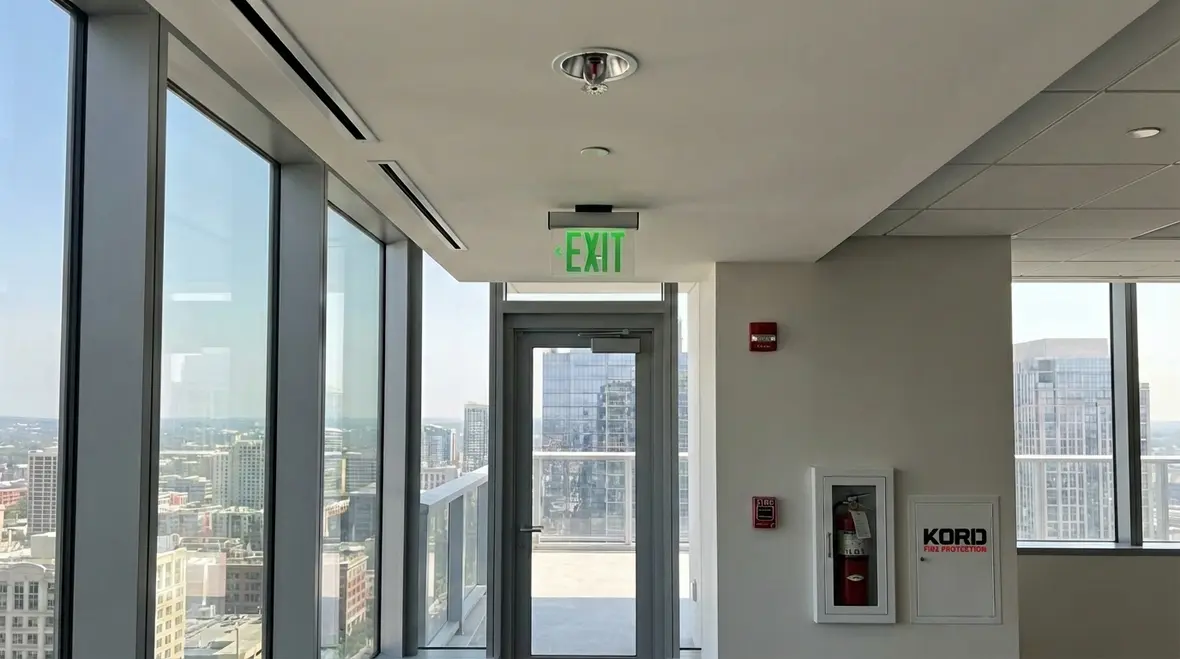
Fire Code Requirements for High Rise Buildings
Fire Code Requirements for High Rise Buildings
Within the first few floors of any tall structure, the rules begin to change. Fire codes for high rises exist because once a building stretches toward the clouds, fire behaves differently, evacuation becomes complex, and response time matters more than ever. Local and national regulations set strict standards for alarms, sprinklers, stairwells, smoke control, and structural resistance. These codes are not polite suggestions. They are life safety roadmaps. Throughout this article, Kord Fire Protection technicians explain how these regulations shape safer skylines and why every property owner should treat compliance as both a legal duty and a moral one.
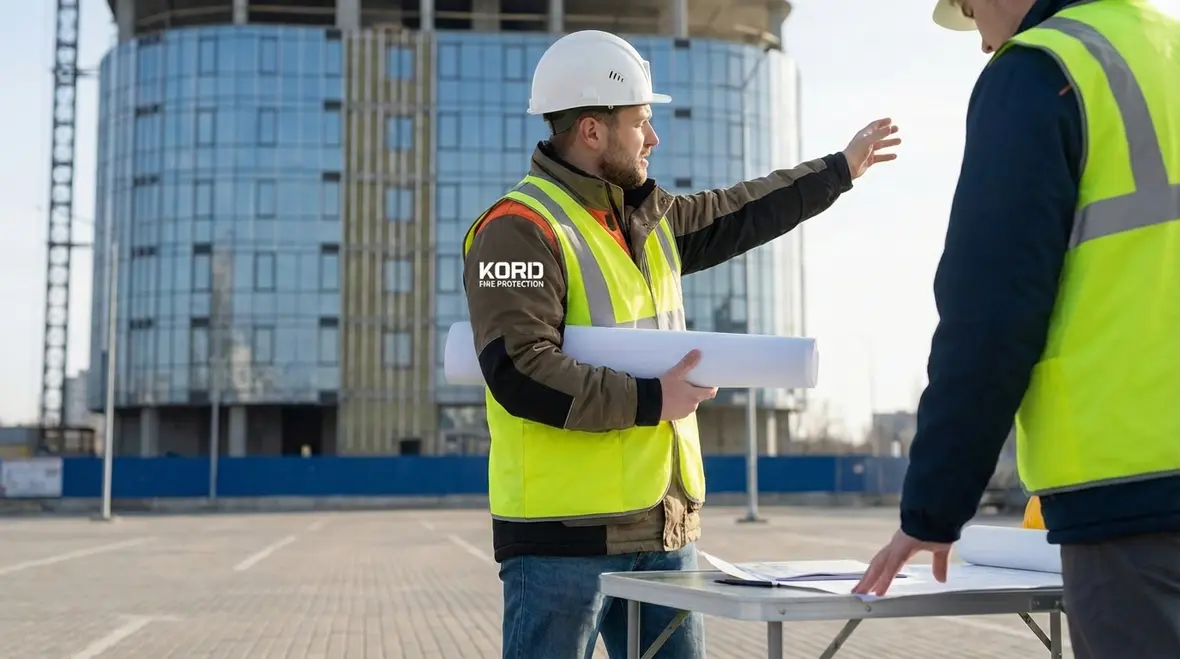
The Foundation of Fire Codes for High Rises
High rise buildings face risks that low structures simply do not. Because of height, wind pressure, occupant load, and limited access for fire crews, the safety strategy must be layered and precise. Therefore, building and fire regulations require redundant systems that work together.
Fire codes for high rises typically apply to buildings over a specific height threshold, often seventy five feet or more, depending on the jurisdiction. However, the principle remains the same across regions. The taller the structure, the more advanced the protection.
Kord Fire Protection technicians often explain it this way. In a two story office, evacuation might take minutes. In a forty story tower, evacuation could take much longer. Consequently, the building must control fire and smoke long enough to protect occupants who cannot immediately exit.
Core code requirements usually address:
- Automatic sprinkler systems throughout the entire building
- Standpipe systems for fire department use
- Fire command centers with centralized controls
- Smoke detection and voice communication systems
- Emergency power for life safety equipment
- Fire rated construction and compartmentalization
Each requirement supports the others. Remove one, and the safety net weakens. For a deeper dive into how these systems work together in tall structures, Kord Fire Protection explores integrated fire protection systems for high-rise buildings in more detail.
How Sprinkler and Standpipe Systems Protect Vertical Communities
Water remains one of the most reliable fire suppression tools available. Therefore, high rise codes demand automatic sprinklers in nearly every space, from penthouse suites to basement storage rooms.
Sprinklers activate individually when heat reaches a specific temperature. As a result, they control flames early, often before firefighters arrive. Contrary to Hollywood scenes, they do not all discharge at once unless every room happens to be on fire at the same time. That only happens in action movies.
Standpipe systems provide another layer of defense. These vertical pipes allow firefighters to connect hoses on upper floors without dragging heavy lines up stairwells. Additionally, pressure regulating devices ensure that water reaches the highest levels with enough force to be effective.
Kord Fire Protection technicians frequently inspect valves, gauges, and fire department connections. They remind building owners that a standpipe is only heroic if it works when called upon. Otherwise, it is just expensive plumbing. For Los Angeles properties, the dedicated guide to Los Angeles standpipe system requirements for high rise buildings breaks down local expectations step by step.
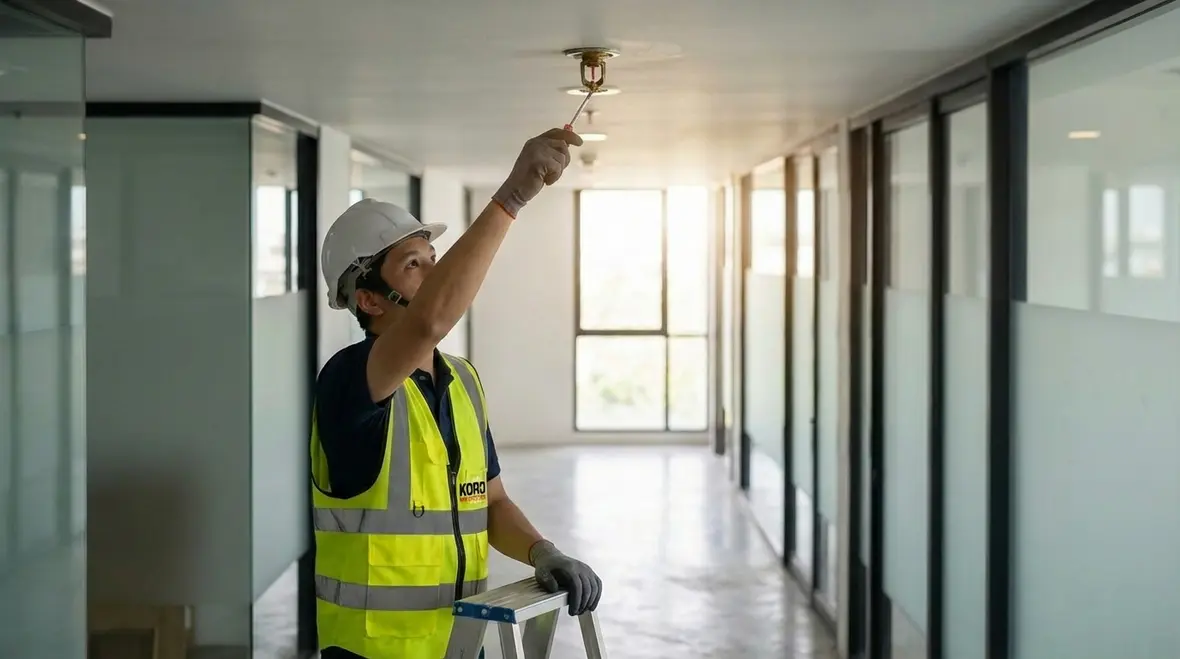
Smoke Control and Compartmentalization Strategies
While flames cause damage, smoke often causes more harm to occupants. Therefore, high rise regulations emphasize smoke management as much as fire suppression.
Mechanical smoke control systems use fans, dampers, and pressurized stairwells to keep escape paths clear. For example, stairwells are often pressurized so that when doors open, air flows outward rather than allowing smoke inside. Consequently, occupants can descend with better visibility and less toxic exposure.
Compartmentalization also plays a major role. Fire rated walls and floors divide a building into smaller sections. If a fire starts in one unit, rated barriers slow its spread to others. This design buys valuable time.
Kord Fire Protection technicians explain compartmentalization with a simple analogy. Imagine a ship with watertight doors. If one section floods, the entire vessel does not sink. Similarly, when a fire is contained to one compartment, the building maintains stability and occupants remain safer. For properties in Southern California, Kord’s overview of smoke control system requirements in Los Angeles details how these strategies play out in local code.

What Are the Fire Alarm and Communication Requirements?
High rise alarm systems must do more than ring a bell. They must inform, direct, and adapt. Therefore, modern codes require voice evacuation systems capable of broadcasting live or pre recorded instructions.
When an alarm activates, occupants may hear clear directions such as which floors should evacuate first. This phased evacuation approach prevents stairwell congestion. Additionally, visual notification devices assist those with hearing impairments.
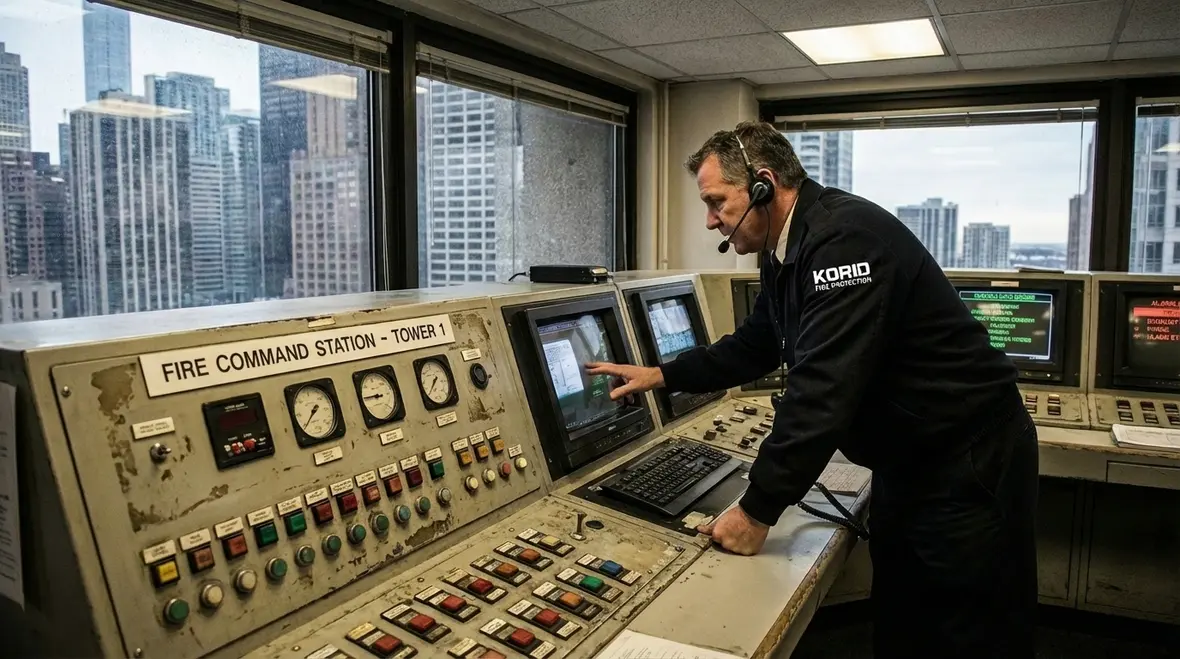
A fire command center serves as the brain of the operation. Located in a protected area, it houses controls for alarms, sprinklers, smoke management, elevators, and emergency communication. Firefighters use this space to assess conditions and coordinate response.
Kord Fire Protection technicians often walk property managers through these panels. Although the buttons may look intimidating, each one plays a defined role. As they like to say, it is less spaceship control room and more organized toolbox. For those designing or upgrading systems, resources like Kord’s NFPA 72 fire alarm overview and insights on emergency voice system design for tall buildings provide added clarity.
Elevators, Emergency Power, and Egress Planning
Elevators introduce unique challenges during a fire. Consequently, codes require elevator recall systems that return cars to a designated floor when smoke or heat is detected. This prevents occupants from unknowingly riding into danger.
Some modern high rises include occupant evacuation elevators designed for controlled use during emergencies. However, these systems must meet strict design and backup power standards.
Emergency generators supply electricity to critical components such as:
- Fire pumps
- Alarm systems
- Smoke control fans
- Emergency lighting
- Fire command centers
Without backup power, even the best designed safety system could fail during an outage. Therefore, testing and maintenance are not optional. They are required at regular intervals. In many high rise and industrial buildings, that includes specialized work like fire pump calibration for Los Angeles facilities and other NFPA 20 driven tasks.
Egress planning also demands careful thought. Stairwells must meet width requirements based on occupant load. Additionally, exit paths must remain unobstructed at all times. Storage in stairwells may seem harmless, yet it violates code and increases risk. In the world of life safety, a misplaced box can become a serious hazard.
Inspection, Testing, and Documentation Expectations
Designing a compliant building is only the first step. Maintaining compliance requires ongoing inspection, testing, and documentation. Fire codes for high rises outline strict schedules for verifying system performance.
| System | Typical Requirement |
| Sprinkler Systems | Annual inspections and periodic flow tests |
| Fire Alarms | Annual functional testing of devices and signals |
| Standpipes | Routine pressure and flow verification |
| Emergency Generators | Monthly or periodic load testing |
Kord Fire Protection technicians emphasize accurate record keeping. Inspectors often request documentation during audits or after incidents. Therefore, organized records demonstrate due diligence and speed up approvals. Their annual fire system testing guide for Los Angeles outlines how inspections and reports fit together for local properties.
Additionally, deficiencies must be corrected promptly. A disabled smoke damper or impaired sprinkler valve cannot wait for the next budget meeting. Life safety systems demand immediate attention.
Common Compliance Challenges in Tall Buildings
Even well managed properties face hurdles. Renovations, tenant improvements, and system upgrades can introduce code conflicts. For instance, adding new walls may affect sprinkler coverage or block airflow needed for smoke control.
Furthermore, older high rises may operate under previous code editions. While they are often grandfathered for certain features, significant alterations can trigger requirements to meet current standards. This process can feel overwhelming. However, proactive planning reduces surprises.
Kord Fire Protection technicians frequently collaborate with architects and engineers during renovation projects. By reviewing plans early, they help ensure that changes align with applicable high rise fire regulations. As a result, owners avoid costly rework and delayed inspections.
Another challenge involves human behavior. Propped open fire doors, disabled alarms, and ignored maintenance alerts undermine even the most advanced systems. Therefore, regular staff training and clear policies support code compliance just as much as hardware does.
The Broader Impact on Insurance and Liability
Compliance affects more than safety. It influences insurance premiums, property value, and legal exposure. Insurers often evaluate adherence to fire codes for high rises when determining coverage terms.
If a serious incident occurs and investigators discover neglected systems, liability can increase significantly. Conversely, documented compliance demonstrates responsible management. In many cases, insurers reward well maintained buildings with favorable rates.
Kord Fire Protection technicians remind clients that investment in maintenance often costs far less than litigation or major loss. It is not the most glamorous line item in a budget. Nevertheless, it may be the most important.
FAQ About High Rise Fire Safety
Conclusion: Turning Code Requirements into Everyday Readiness
High rise safety is not built on hope. It stands on planning, engineering, and strict adherence to code. From sprinklers to smoke control, each system plays a defined role in protecting lives. Kord Fire Protection technicians help property owners understand, maintain, and strengthen these safeguards with steady expertise.
For those responsible for tall buildings, now is the time to review systems, schedule inspections, and confirm compliance. Because when it comes to life safety, preparation always rises above regret. If you manage a high rise or complex facility and need support with sprinklers, alarms, standpipes, or testing, Kord’s full fire protection services team can coordinate the inspections, upgrades, and documentation your building needs.
Know Your Weapon Before You Fight the Flame
Kord Fire Protection is your go-to when it comes to all things fire protection. For over 20 years, we’ve been serving Southern California with the quality service and equipment to keep your home or business safe at all times. Our competitive prices reflect our unwavering commitment to protecting what matters most in the event of a fire emergency. Give us a call, send an email, or use that form!

Join Our Newsletter!
Get the latest fire safety tips delivered straight to your inbox From our Newsletter.


