Smoke Control System Requirements Los Angeles
Smoke Control Systems in Large Los Angeles Buildings
In a city where the skyline competes with sunsets and ambition rises as fast as the elevators, safety cannot sit quietly in the background. The smoke control system requirements los angeles buildings must meet are not casual suggestions. They are detailed, enforced, and designed to protect lives in structures that stretch stories above busy streets. From high rise residential towers to sprawling hospitals and entertainment venues, these systems form a silent shield. Throughout this article, Kord Fire Protection technicians explain how these systems work, why they matter, and how building owners can stay compliant without losing sleep or their budget.
After all, in Los Angeles, earthquakes may steal the headlines. However, fire safety writes the fine print that keeps everyone secure.
The Role of Smoke Control in High Rise Safety
Smoke moves fast. In fact, it often travels faster than flames. Because of that, modern building codes focus heavily on managing smoke movement during a fire event. Smoke inhalation remains one of the leading causes of fire related injuries and deaths. Therefore, controlling it becomes just as critical as extinguishing the fire itself.
Large buildings create a chimney effect. Hot smoke rises through shafts, stairwells, elevator hoistways, and even small wall penetrations. Without proper systems in place, smoke can fill corridors and exit paths within minutes. That scenario turns a manageable emergency into chaos.
Kord Fire Protection technicians often explain it in simple terms. A smoke control system acts like a traffic cop for air. It directs smoke where it should go and keeps it away from where people need to breathe. While the concept sounds straightforward, the engineering behind it demands precision.
Moreover, Los Angeles building officials require documentation that proves these systems perform exactly as designed. Testing, balancing, and commissioning are not optional steps. They are essential.
How Smoke Control Requirements Shape System Design
What Codes Expect From Los Angeles Smoke Control Systems
The smoke control system requirements los angeles buildings must follow are built upon state and local fire codes. These codes outline how designers should create systems that maintain tenable conditions during evacuation. In other words, they ensure people can see, breathe, and move safely toward exits.
Core Design Strategies Used in Large Buildings
Designers typically use one or more of the following strategies:
Pressurization Systems
These systems keep stairwells and exit corridors at higher air pressure than surrounding areas. As a result, smoke cannot enter those protected paths.
Exhaust Systems
These systems actively remove smoke from affected zones, often venting it to the exterior of the building.
Zoned Smoke Control
This approach isolates smoke to a specific floor or compartment while protecting adjacent spaces.
Additionally, engineers must calculate airflow rates, leakage areas, and fan capacities with care. If the numbers miss the mark, even by a small margin, the system may fail inspection. Therefore, coordination between architects, mechanical engineers, fire protection specialists, and contractors becomes critical.
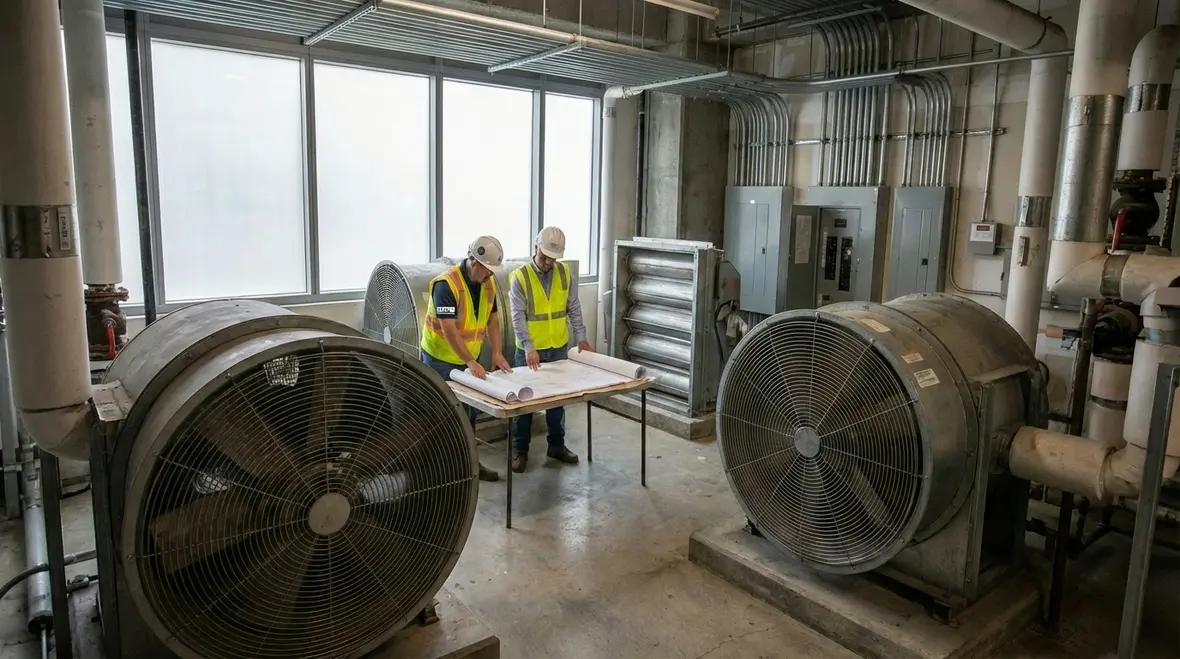
Kord Fire Protection technicians frequently remind building owners that smoke control is not just about installing large fans. It involves sensors, dampers, control panels, backup power, and integration with fire alarm systems. Each component must communicate clearly with the others. Think of it as an orchestra. If one instrument goes rogue, the entire performance suffers.
How Large Los Angeles Buildings Meet Smoke Control Codes
From Plan Check to Final Approval
Large buildings in Los Angeles meet smoke control codes through a structured process that includes design review, installation, testing, and ongoing maintenance.
First, engineers submit detailed plans to local authorities. These plans include rational analysis reports. Such reports explain how the system will perform under fire conditions. City reviewers evaluate airflow models, pressure differentials, and control sequences.
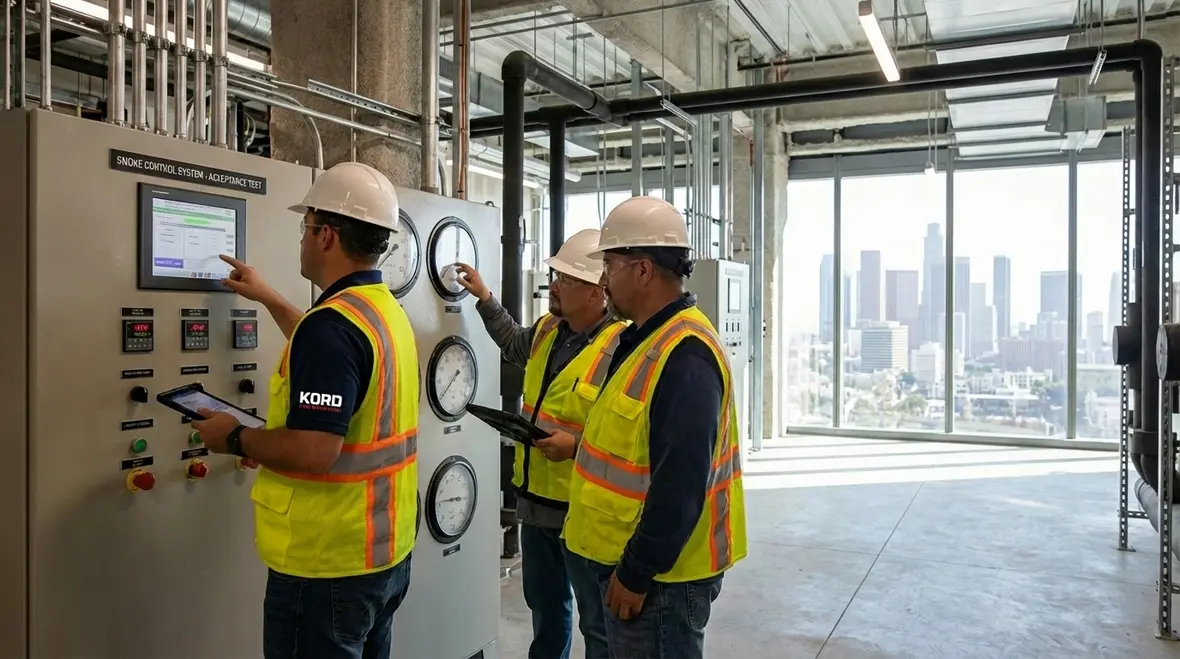
Next, contractors install the equipment according to approved documents. However, installation alone does not satisfy compliance. The system must undergo acceptance testing. During these tests, technicians simulate fire scenarios. They measure air pressures, confirm damper positions, and verify that fans activate as intended.
Kord Fire Protection technicians often describe these tests as a dress rehearsal. The building gets one chance to perform in real life. Therefore, it must perform flawlessly during inspection.
Finally, ongoing inspections ensure continued reliability. Because buildings evolve over time, modifications such as tenant improvements can affect airflow balance. Consequently, periodic verification protects both occupants and owners.
For many properties, these ongoing tests tie into broader Los Angeles Regulation 4 testing services, where smoke evacuation and pressurized stair tests sit alongside fire pumps, sprinklers, and standpipes to keep the entire life safety package compliant.
Core Components That Keep Smoke Under Control
The Equipment Working Behind the Scenes
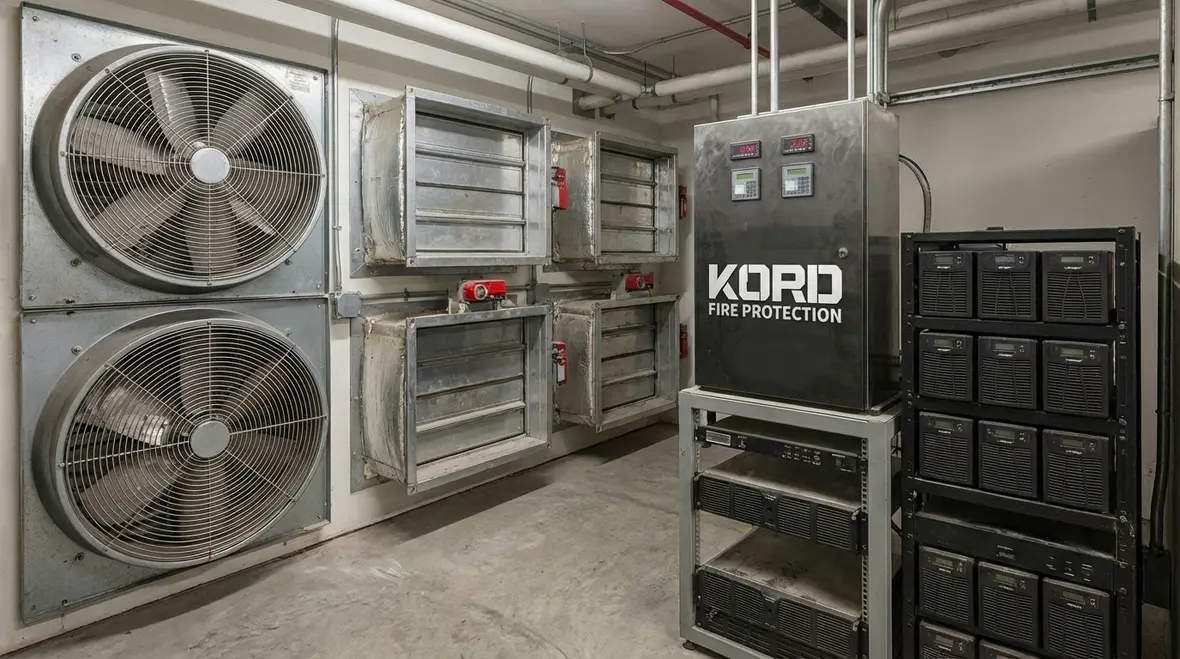
Behind every effective smoke control strategy lies a network of interconnected components. Each part carries responsibility.
Fans and Air Handling Units
These provide the muscle. They move large volumes of air quickly and consistently.
Smoke Dampers
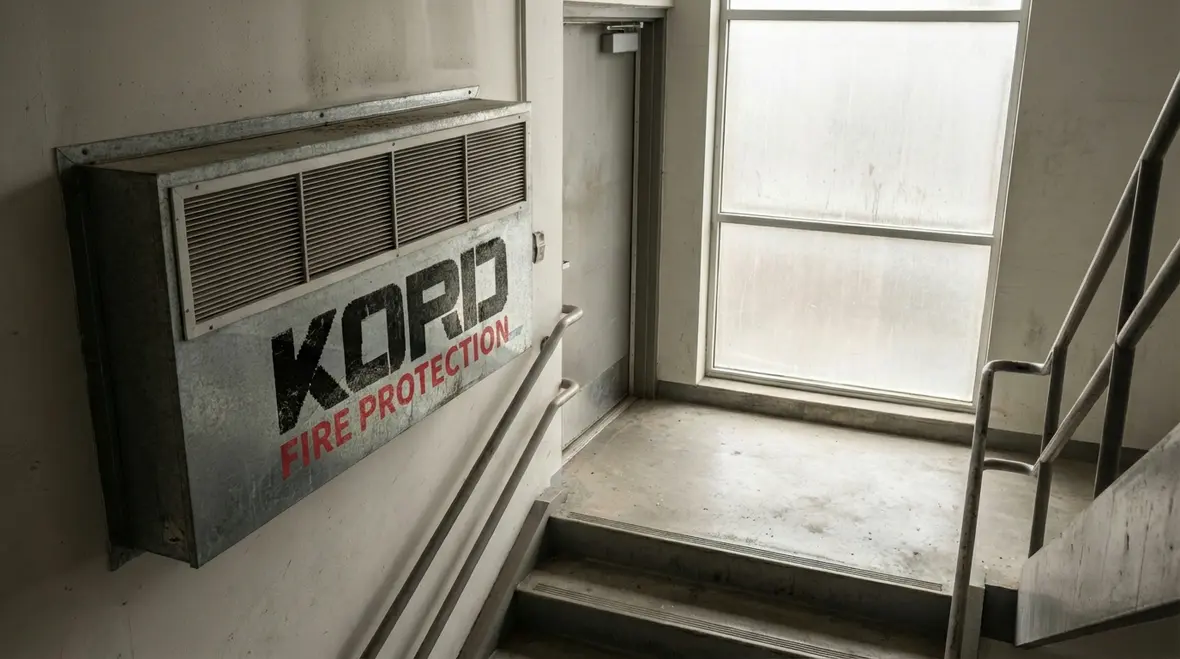
Installed within ductwork and walls, these dampers close or open automatically during a fire event. They prevent smoke from spreading between compartments.
Control Panels
These serve as the brain. They process signals from detectors and send commands to fans and dampers.
Smoke Detectors and Sensors
These initiate the response. Once smoke is detected, the system activates according to pre programmed sequences.
Emergency Power Supplies
Since fires often disrupt primary power, backup generators or battery systems ensure continuous operation.
Furthermore, integration with fire alarm systems allows firefighters to take manual control if necessary. This feature proves vital during complex emergencies. Kord Fire Protection technicians explain that firefighters need reliable tools, not guesswork, when entering a smoke filled high rise.
Challenges Unique to Los Angeles High Rise Structures
Designing for Quakes, Glass, and Mixed Use Towers
Los Angeles presents specific design challenges. The city combines dense urban cores with seismic activity, strict energy standards, and architectural ambition. As a result, smoke control planning must address more than just airflow.
First, seismic considerations require secure mounting of equipment and flexible duct connections. During an earthquake, systems must remain intact. After all, safety systems should not become hazards themselves.
Second, modern glass heavy architecture creates unique airflow patterns. Large atriums and open floor plans demand careful modeling to prevent smoke stratification issues.
Third, sustainability goals encourage energy efficient designs. However, energy efficiency cannot compromise emergency performance. Engineers must balance daily efficiency with emergency capacity.
Additionally, mixed use buildings combine residential, commercial, and retail spaces. Each occupancy type carries distinct code requirements. Therefore, smoke control zones must align with varying risk profiles.
Kord Fire Protection technicians often say that designing for Los Angeles feels like directing a blockbuster film. The cast is large, the budget matters, and everyone expects a flawless ending. Fortunately, with proper planning, the system delivers exactly that.
Design vs Operation: Who Owns What?
Different Priorities at Each Stage
| Design Phase Focus | Operational Phase Focus |
| Airflow calculations and modeling | Routine inspections and testing |
| Equipment sizing and placement | Monitoring system performance |
| Coordination with architects and engineers | Training staff on emergency procedures |
| Code compliance documentation | Maintaining updated records for inspectors |
| Integration with alarm systems | Verifying control sequences during drills |
This comparison highlights a simple truth. Designing a compliant system marks only the beginning. Operating it properly sustains safety year after year.
Maintenance, Testing, and Long Term Compliance
Why “Set It and Forget It” Fails in Fire Safety
Even the most advanced system will fail without maintenance. Dust accumulation, mechanical wear, and unauthorized building modifications can reduce performance. Therefore, routine inspections remain essential.
Los Angeles authorities require periodic testing of smoke control systems. These tests confirm pressure differentials and verify fan response times. Additionally, technicians check damper functionality and battery backups.
Kord Fire Protection technicians approach maintenance with steady discipline. They document every reading and adjustment. They also educate building managers on recognizing warning signs, such as unusual noises or alarm panel faults.
Moreover, record keeping protects owners during audits or inspections. Clear documentation demonstrates ongoing compliance with smoke control system requirements los angeles buildings enforce. Without records, even a perfectly functioning system may face scrutiny.
While maintenance may not sound glamorous, it provides peace of mind. And peace of mind, much like a good seat at a Lakers game, is worth securing early.
Technology Trends Improving Smoke Management
Smarter Tools, Same Life-Safety Mission
Technology continues to reshape how smoke control systems operate. Today, advanced modeling software allows engineers to simulate fire scenarios in three dimensional environments. These simulations predict smoke behavior with impressive accuracy.
Additionally, smart control panels offer real time diagnostics. Building managers can monitor system status remotely. If a component malfunctions, alerts trigger immediate response.
Some systems now integrate with building automation platforms. Consequently, smoke control can coordinate with elevators, access control, and HVAC systems during emergencies. This unified approach improves overall response.
Kord Fire Protection technicians emphasize that while technology enhances reliability, human oversight remains essential. Automated systems still require trained professionals to interpret data and perform repairs.
Furthermore, advancements in fan efficiency and motor design reduce energy consumption during normal operation. This improvement helps owners meet sustainability goals without sacrificing emergency readiness.
Owner Responsibilities Under Los Angeles Smoke Control Requirements
What Building Owners Need to Stay On Top Of
Ownership carries responsibility. Building owners must ensure that their properties meet smoke control system requirements los angeles buildings mandate under local code. Compliance does not rest solely on contractors or designers.
Owners should:
Hire qualified fire protection specialists
Experience matters. Certified professionals understand local regulations and inspection processes.
Schedule routine system testing
Regular evaluations prevent minor issues from becoming major liabilities.
Maintain detailed documentation
Accurate records streamline inspections and demonstrate due diligence.
Plan for upgrades when needed
As codes evolve, older systems may require enhancements to remain compliant.
Kord Fire Protection technicians often remind clients that proactive investment costs less than emergency repairs or fines. Moreover, protecting occupants strengthens reputation and tenant trust.
After all, no one leases office space hoping to test the fire system personally.
For many owners, partnering with a team that already handles Chief’s Regulation 4 testing services, fire pumps, sprinklers, and smoke control tests across Los Angeles makes compliance far more manageable.
Frequently Asked Questions
Conclusion & Next Steps for Los Angeles Building Owners
Safety in Los Angeles rises as high as its skyline. A properly designed and maintained smoke control system protects lives, property, and reputations. Kord Fire Protection technicians stand ready to guide building owners through compliance, testing, and long term reliability. When the stakes involve breathable air and clear escape paths, hesitation is not an option. Contact experienced professionals today and ensure every floor, corridor, and stairwell remains ready when it matters most.
If your property is due for smoke control verification or broader life safety testing, consider scheduling a comprehensive Regulation 4 testing service so smoke evacuation, pressurized stairs, fire pumps, sprinklers, and alarms are all reviewed together. Or, if you already know you need help this year, reach out through Kord Fire Protection’s contact page to connect with a team that works with Los Angeles high rises every day.
Know Your Weapon Before You Fight the Flame
Kord Fire Protection is your go-to when it comes to all things fire protection. For over 20 years, we’ve been serving Southern California with the quality service and equipment to keep your home or business safe at all times. Our competitive prices reflect our unwavering commitment to protecting what matters most in the event of a fire emergency. Give us a call, send an email, or use that form!

Join Our Newsletter!
Get the latest fire safety tips delivered straight to your inbox From our Newsletter.