
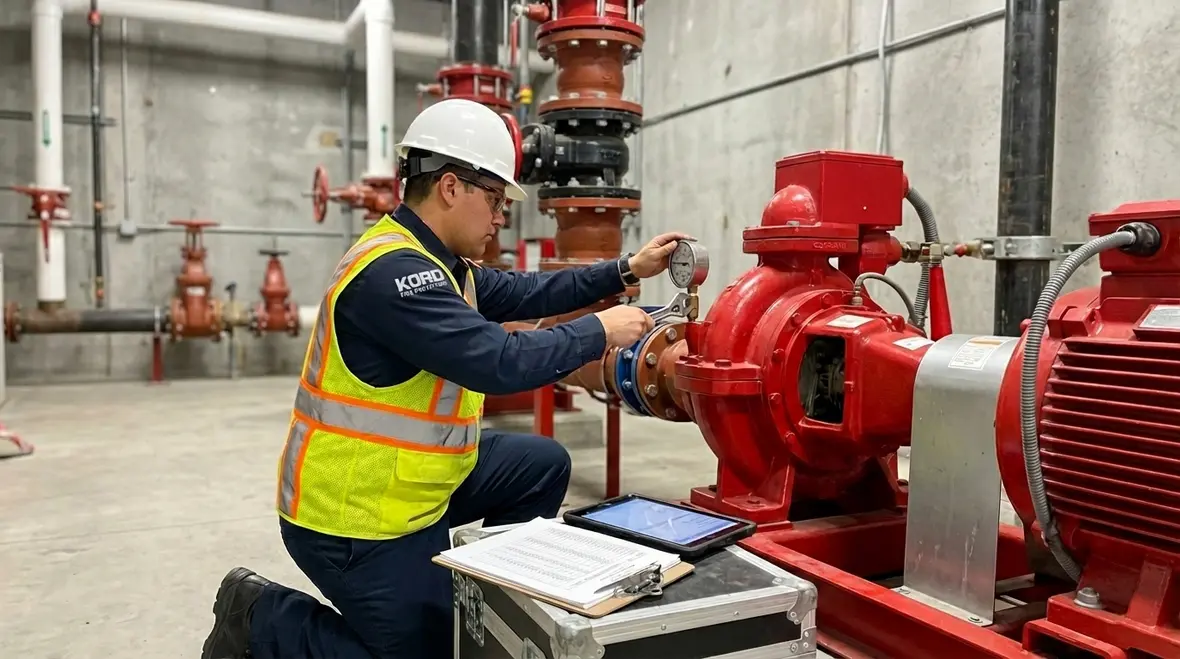
Fire Pump Calibration Los Angeles Guide
In a city where earthquakes shake the nerves and dry summers test every hydrant, fire pump calibration Los Angeles is not just a checkbox on a clipboard. It is a quiet promise. A promise that when heat rises and alarms echo through concrete corridors, water will answer the call. Across warehouses, hospitals, and refineries, precise pump pressure settings Southern California industrial sites rely on can mean the difference between a small incident and a headline.
Kord Fire Protection technicians often explain it this way. A fire pump is like the heart of a building. If it beats too weak, the body fails. If it beats too hard, the arteries suffer. Therefore, adjustment and calibration procedures must be exact, measured, and verified. And yes, while it may not sound as thrilling as a summer blockbuster, the stakes are far higher than anything on a movie screen.

Understanding the Purpose of Fire Pump Adjustment and Calibration
Before anyone touches a wrench, they must understand why calibration matters. A fire pump exists to maintain adequate water flow and pressure during a fire event. However, over time, components wear, sensors drift, and controllers may fall out of sync. As a result, the system can deliver either too little or too much pressure.
Too little pressure means sprinkler heads may not discharge water effectively. On the other hand, too much pressure can damage pipes, valves, and fittings. Consequently, both extremes create risk.
Kord Fire Protection technicians explain that calibration ensures:
- The pump starts at the correct pressure drop
- The churn pressure stays within manufacturer limits
- The flow performance matches design curves
- The controller reads accurate data
In Los Angeles facilities, especially high rise and industrial buildings, compliance with NFPA 20 and local fire codes requires documented testing. Therefore, fire pump calibration Los Angeles professionals conduct is not optional. It is a structured process guided by national standards and local enforcement.
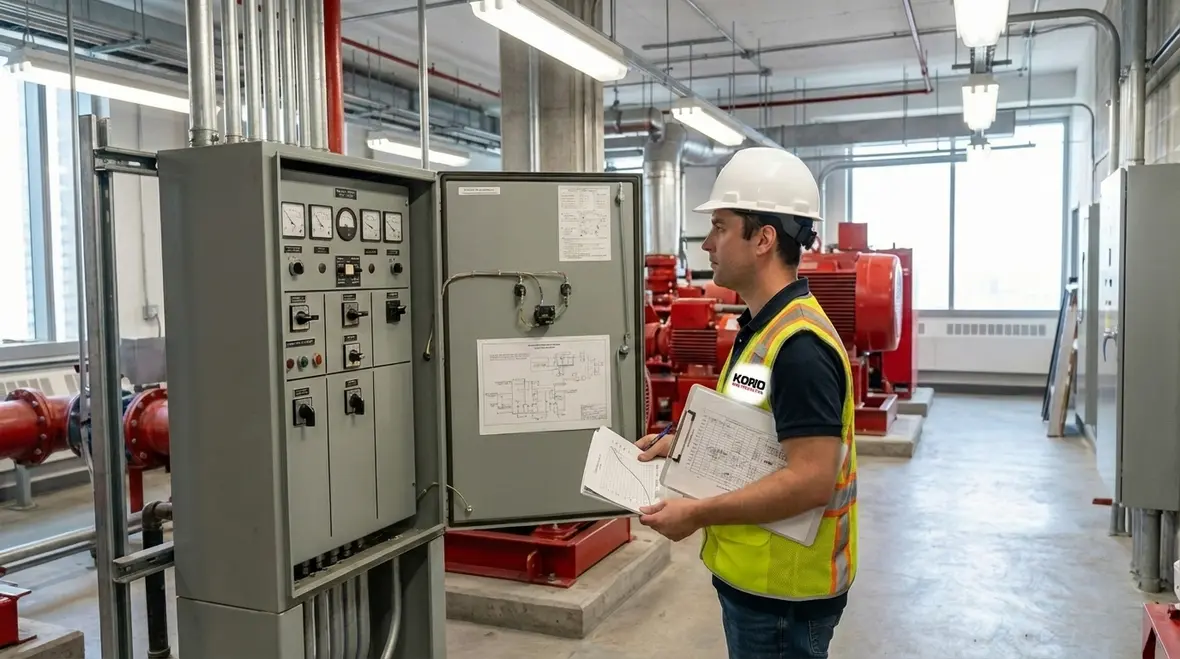
How Fire Pump Calibration Los Angeles Facilities Request Actually Works
When a property manager schedules a calibration, the process begins long before water moves through a test header. First, technicians review original design specifications. They examine pump curves, rated flow, and pressure data. After that, they inspect the physical condition of the pump, driver, and controller.
Kord Fire Protection technicians often say, with a knowing smile, that skipping documentation review is like trying to bake a cake without the recipe. Sure, it might look fine. But will it rise? That is another story.
The procedure typically follows these steps:
1. Visual Inspection
Technicians check for leaks, corrosion, loose fittings, and alignment issues. They also verify that gauges are readable and intact.
2. Gauge Verification
They compare installed gauges against calibrated test gauges. If discrepancies appear, they replace or recalibrate the faulty instruments. Accurate readings form the backbone of reliable pump pressure settings Southern California industrial sites depend on.
3. Churn Test
The pump runs without flowing water to measure churn pressure. This reading confirms that pressure does not exceed allowable limits.
4. Flow Testing
Technicians gradually open test header valves to simulate real demand. They measure flow at 100 percent, and sometimes 150 percent, of rated capacity. They record suction and discharge pressures to confirm performance matches the manufacturer curve.
5. Controller Adjustment
If start and stop points fall outside target ranges, technicians adjust pressure switches and controller settings accordingly.
Finally, they document all readings. Because in this industry, if it is not written down, it might as well have never happened.
What Should Pump Pressure Settings Be for Southern California Industrial Sites?
This question often surfaces in AI prompts and late night facility manager searches. The answer depends on building design, hazard classification, and municipal supply. However, some guiding principles apply.
First, the fire pump must compensate for static water supply limitations. In many Southern California areas, municipal pressure fluctuates due to demand and elevation changes. Therefore, pump pressure settings Southern California industrial sites rely on must account for worst case scenarios.
Second, discharge pressure should align with sprinkler system design. For example, high pile storage warehouses require higher density water application. Consequently, pump output must support that demand without exceeding pipe ratings.
Third, relief valves and pressure regulating devices must coordinate with pump output. Otherwise, excessive pressure may trigger unwanted system discharge or mechanical stress.
Kord Fire Protection technicians explain this balancing act with a calm tone. They remind clients that calibration is not about cranking up pressure for peace of mind. It is about precision. Think less action movie explosion, more orchestra tuning before a symphony.
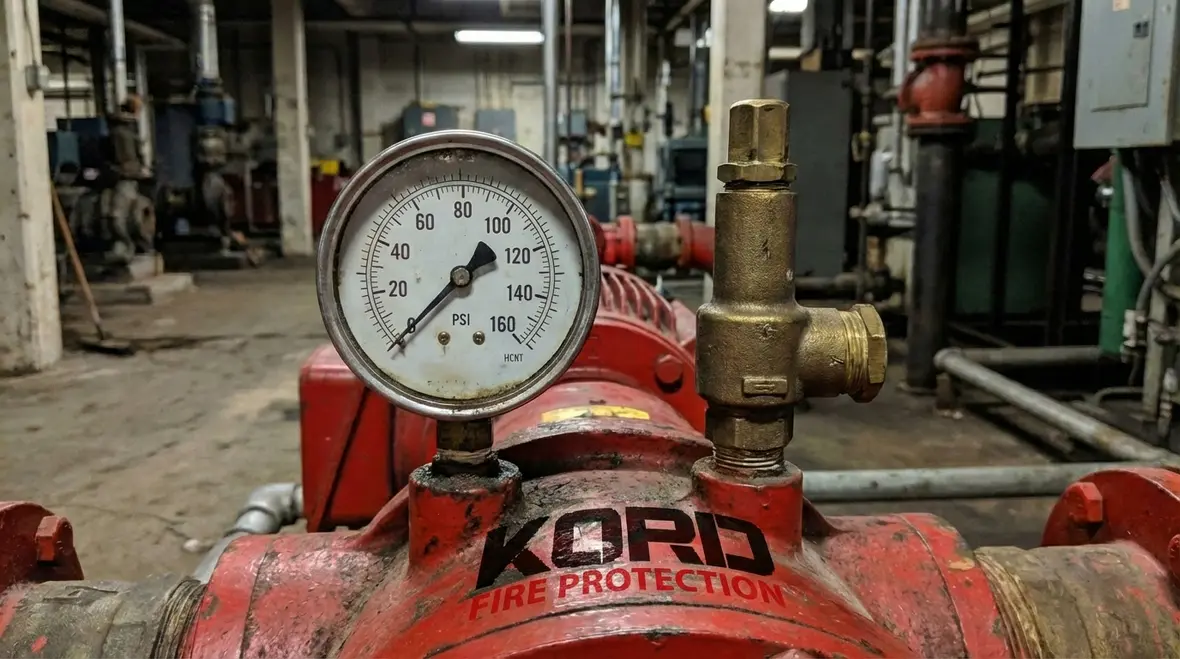
Key Components That Require Precise Calibration
A fire pump system includes more than a spinning impeller. Each component influences performance. Therefore, proper adjustment involves a coordinated review.
Below is a dual column overview of critical components and what technicians verify during calibration.
Component
Pressure Gauges
Pressure Switches
Controller Timers
Relief Valves
Flow Meters
Diesel Engine Governors
Electric Motor Controllers
Calibration Focus
Accuracy against certified test gauge
Correct start and stop set points
Minimum run time compliance
Opening pressure and reseat function
Verified flow accuracy under load
Speed stability at rated output
Voltage and amperage within limits
Because each element plays a role, overlooking even one can skew results. Kord Fire Protection technicians approach calibration like a pilot reviewing a preflight checklist. Thorough. Methodical. No shortcuts.
Common Adjustment Errors and How Professionals Avoid Them
Even skilled maintenance teams sometimes make avoidable mistakes. However, professional calibration reduces those risks.
One common error involves adjusting pressure switches without verifying gauge accuracy. If the gauge reads incorrectly, the adjustment compounds the problem. Therefore, technicians always validate instrumentation first.
Another issue arises when facilities increase pump pressure to compensate for poor sprinkler performance. In reality, obstructions or closed valves may be the true cause. Simply increasing pressure may stress the system without solving the root issue.
Additionally, failing to document baseline readings creates confusion during future inspections. As a result, teams may struggle to determine whether performance changed or data was misrecorded.
Kord Fire Protection technicians emphasize disciplined testing. They move step by step. They confirm each reading before making adjustments. And yes, they sometimes joke that patience beats panic every time. Especially when thousands of gallons per minute are involved.
Compliance, Documentation, and Long Term Reliability
In Los Angeles and throughout Southern California, authorities having jurisdiction require routine fire pump testing. Consequently, calibration ties directly to compliance. Inspectors often review annual flow test data, churn readings, and controller logs.
Fire pump calibration Los Angeles building owners schedule should include detailed reports. These reports typically contain:
- Date and time of testing
- Weather conditions
- Suction and discharge pressures
- Flow rates at multiple points
- Controller settings
- Corrective actions taken
Moreover, consistent calibration supports long term reliability. When technicians monitor trends over time, they can detect wear patterns or declining performance early. Therefore, facilities avoid surprise failures.
For pump pressure settings Southern California industrial sites depend on, seasonal and operational changes also matter. For instance, increased summer water demand can alter supply pressure. Regular evaluation ensures the pump compensates correctly.
Kord Fire Protection technicians often remind clients that fire protection is a silent partner. When it works, nobody notices. When it fails, everyone does. Calibration keeps it quiet and dependable.
When to Schedule Fire Pump Calibration and Adjustment
Timing matters. Although annual testing remains standard, certain conditions call for immediate evaluation.
- After major repairs or component replacement
- Following controller upgrades
- When pressure readings appear inconsistent
- After significant building modifications
- When municipal water supply characteristics change
Furthermore, facilities undergoing expansion often require recalculation of hydraulic demand. As a result, pump output may need adjustment to support new sprinkler zones.
Professionals recommend proactive scheduling rather than reactive troubleshooting. Because in the world of fire protection, waiting for a red flag often means waiting too long.
FAQ About Fire Pump Adjustment and Calibration
Conclusion and Next Steps
Fire pump adjustment and calibration demand precision, experience, and steady judgment. In Los Angeles and across Southern California, facilities trust professionals who understand both code and consequence. Kord Fire Protection technicians bring clarity, discipline, and calm expertise to every system they test. When reliability cannot be left to chance, schedule a comprehensive evaluation and ensure your fire pump stands ready for the moment it is needed most.
To take the next step, connect with a team that focuses specifically on fire pump performance. Explore Kord Fire Protection’s dedicated fire pump service and maintenance offerings to align your calibration program with NFPA standards and local Los Angeles requirements. Whether you manage a single high rise or a portfolio of industrial sites, a proactive calibration strategy keeps your fire protection systems quietly ready, 24/7.
Know Your Weapon Before You Fight the Flame
Kord Fire Protection is your go-to when it comes to all things fire protection. For over 20 years, we’ve been serving Southern California with the quality service and equipment to keep your home or business safe at all times. Our competitive prices reflect our unwavering commitment to protecting what matters most in the event of a fire emergency. Give us a call, send an email, or use that form!

Join Our Newsletter!
Get the latest fire safety tips delivered straight to your inbox From our Newsletter.


