Fire and Electrical System Support for Compliance
Quick Answer: Electrical systems and fire protection systems must work like a well trained team. Power for alarms, detection, suppression controls, and emergency lighting must stay stable under normal use and during faults. When a reliable contractor provides fire and electrical system support, facilities reduce downtime and improve compliance across Australia.
In industrial, retail, and commercial facilities across Australia, fire safety does not run on luck. It runs on design choices, wiring quality, and dependable power. That is where fire and electrical system support becomes more than a tagline. In the first phase, electrical systems feed and monitor fire devices. In the second phase, those fire devices send the right signals when conditions change. And because emergencies do not wait for paperwork, the two systems must be coordinated from the start through commissioning and service.
Facilities that want tighter coordination can also benefit from working with reliable electrical services from Kord Electric near the beginning of the project, especially when fire alarms, interfaces, standby power, and emergency circuits all need to behave like one connected plan instead of four different opinions in steel conduit.
How electrical power enables fire protection systems
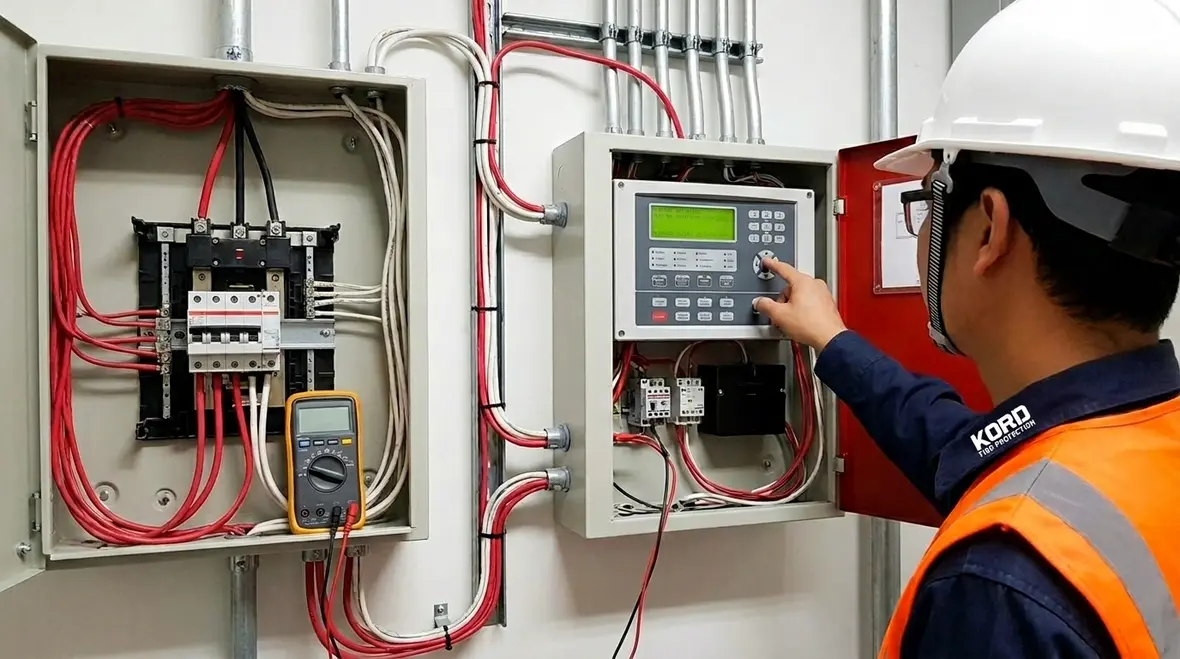
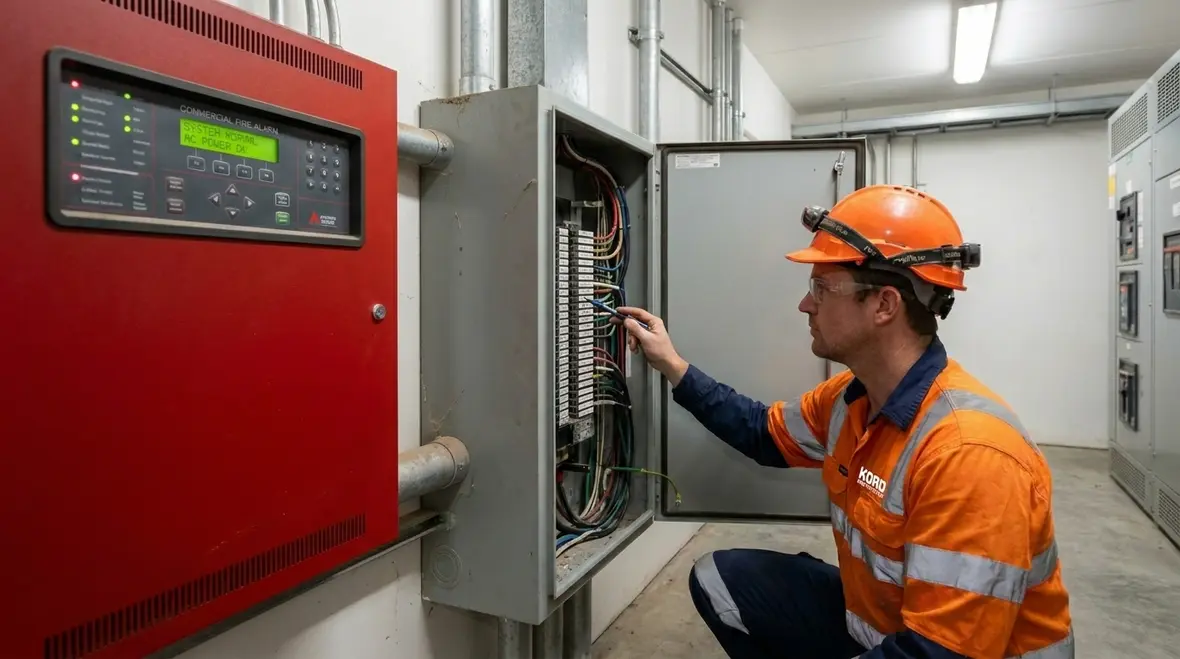
Fire protection systems need electricity to detect danger, alert people, and trigger protective actions. For example, smoke and heat detectors rely on power to run sensing electronics. Fire alarm panels need stable voltage to supervise circuits and communicate events. If the electrical layer fails, the fire layer cannot perform. So, electrical design directly shapes how fast the building responds.
Furthermore, electrical systems must support both normal operation and alarm conditions. During an alarm, additional loads can rise, such as door release devices, strobes, and control relays. Therefore, electricians and fire system designers coordinate circuit capacity, voltage drops, and load sequencing. This is not paperwork theater, it is how buildings avoid “we heard the alarm… eventually” moments.
Also, electrical supervision matters. Many fire circuits monitor for open or short faults. That monitoring happens through panel power and wiring integrity. If someone installs a cable the wrong way, the system may report trouble instead of fire. And while trouble signals are helpful, they do not stop a fire.
Support starts before the first test
Good support does not begin when a panel starts chirping at 2:13 a.m. It begins in planning, load review, panel selection, pathway routing, and device coordination. A clean installation gives technicians fewer surprises later, and fewer surprises is one of the better gifts a building can give its fire system.
That idea also lines up naturally with Kord Fire Protection’s article on detecting electrical faults in fire alarm panels early, which reinforces why small electrical issues should be addressed before they decide to become very memorable ones.
Power reliability: the part everyone remembers after it fails
Power reliability separates systems that perform from systems that merely exist. Many facilities include battery backups, generator setups, or UPS solutions to keep critical controls alive. For fire and electrical system support, this usually includes reviewing battery sizing, charger settings, and switchover behavior for standby power.
In addition, the electrical team must consider grounding and bonding. Good grounding helps protect control electronics, reduces nuisance faults, and supports correct operation of protective devices. Meanwhile, bonding ties metal parts together, which improves safety for personnel during fault conditions.
And yes, there is always one site with “mystery voltage” that only appears after hours. That is why commissioning needs test plans, not guesses. A proper test approach checks panel supervision, device response, and emergency power performance under realistic conditions.
If backup power is part of the conversation, Kord Fire Protection also has helpful context in fire alarm power requirements for reliable standby power and fire alarm system reliability and battery health. Both fit naturally here because support is only as useful as the power source that survives when normal service does not.
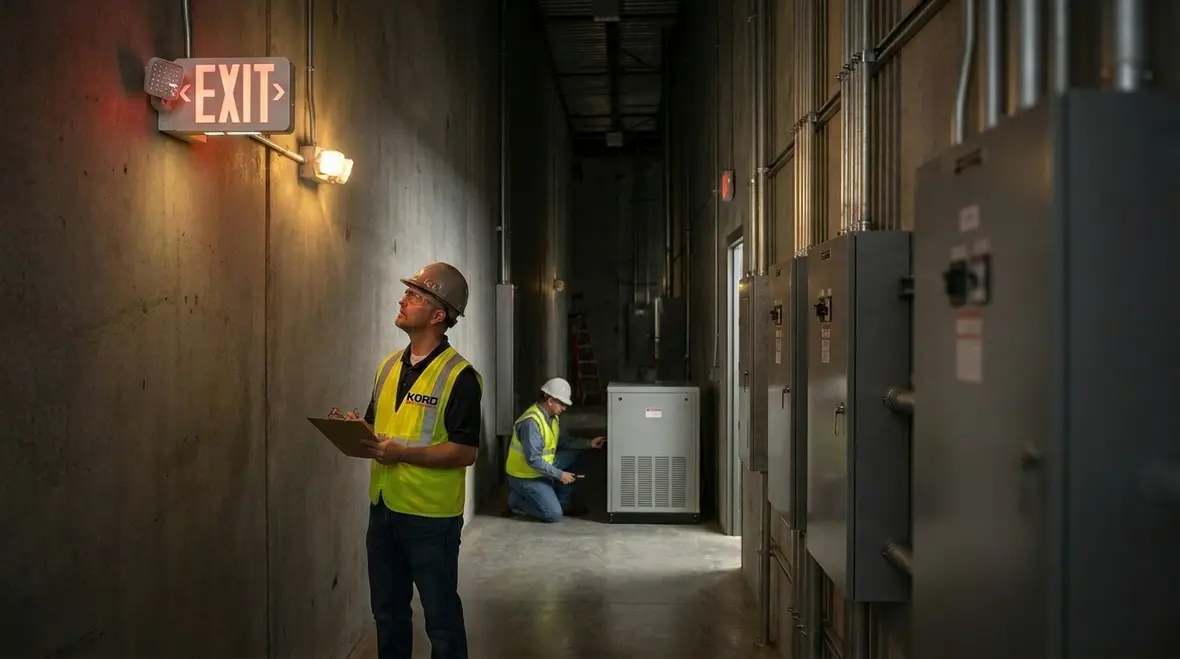
Emergency lighting and alarms work together under one electrical plan
When occupants need to evacuate, information must arrive instantly. Fire alarms and emergency lighting both depend on the electrical system, but they do it differently. Fire alarm systems announce danger through sounders and visual indicators. Emergency lighting guides people through exits when power conditions change.
Because these systems share power paths and control schedules, coordination reduces confusion. For example, emergency lighting circuits often include dedicated feeders and compliant switching logic. If designers route them without understanding the fire alarm panel and associated control relays, illumination can lag behind alarm events.
So, teams verify that emergency lighting activates during alarm and power interruption scenarios. They also confirm that the right luminaires stay on long enough for evacuation. This helps facilities meet the expectations that auditors and regulators bring to commercial sites.
One plan prevents mixed signals
A coordinated electrical plan keeps emergency lighting, exit routes, alarm logic, and shutdown controls from stepping on each other. In real buildings, clarity is safety. Nobody benefits from a strobe firing on time while a corridor light arrives fashionably late.
Wiring, segregation, and signalling: preventing electrical noise from becoming chaos
Fire systems operate in environments filled with electrical activity. Drives, motors, switchgear, vending machines that never stop humming, and the occasional mystery forklift all create electrical noise. To keep fire signals clean, electrical design must manage segregation and proper cable routing.
Electrical wiring choices include cable type, shielding where needed, and separation from high voltage lines. When cables run too close to power conductors, the fire system can experience interference. That can lead to false trouble calls or, worse, missed supervisory indications.
For fire and electrical system support, this means the electrical scope aligns with the fire system drawings. It also means termination quality gets checked, not assumed. Loose terminations, damaged insulation, or incorrect polarity can cause intermittent faults that only appear during heat, vibration, or load changes.
To keep things smooth, facilities benefit from a structured quality approach. They can use test results, labeling standards, and circuit verification before devices go live. Kord Fire Protection also explores this topic in fire alarm wiring best practices to reduce interference and fire alarm signal circuits troubleshooting guide, both of which fit neatly into a conversation about keeping noise from becoming chaos.

Control interfaces: where electrical work meets fire logic
Most modern fire protection plans include interfaces to other building systems. These interfaces can include automatic door release, smoke control dampers, fire dampers, lift recall, and ventilation shutdown. In each case, the fire alarm control equipment uses electrical signals to command other equipment.
Therefore, electrical systems must provide the right relay outputs, correct voltage levels, and reliable interlocks. Designers also must ensure that fail safe behavior matches the intended safety strategy. If the system expects a door to release during alarm, the electrical circuit must do that when power conditions change.
Additionally, installers must follow control wiring diagrams closely. One wrong terminal label can turn a calm evacuation plan into a “why is the door still locked” investigation. And those investigations take time, especially on busy industrial and retail sites.
Once installed, verification matters. Testing should confirm that each device responds to alarm inputs as designed, and that normal operations return correctly after the event. Support is not complete until the logic has been tested where it actually lives, with actual equipment, under actual conditions that do not care how nice the drawings looked in a meeting.
Interfaces need clean handoffs
A control interface is really a handoff between systems. If one side assumes and the other side improvises, the building inherits the confusion. Clean handoffs, tested relays, and clear documentation are how support becomes dependable instead of decorative.
Commissioning, maintenance, and reporting that keeps compliance alive
Even the best installation can drift over time. Relays wear, batteries age, components get replaced, and site electrical upgrades happen. That is why ongoing service and maintenance form the real backbone of system reliability.
During commissioning, teams should validate the electrical foundation. That includes checking power feeds, supervision circuits, voltage drop, grounding, and emergency power switchover. Then they verify fire device operation and interface logic end to end. This approach avoids the classic scenario where everything tests “okay” until the first real fault.
For facilities that span multiple departments, reporting also matters. Clear records help managers and safety officers prove that tests occurred and that results met required standards. When audits arrive, well kept documentation turns stress into a simple review.
Here, Kord Fire Protection can serve as a vital partner for facilities seeking coordinated electrical and fire system support. By aligning fire system planning with the electrical backbone, a partner helps reduce gaps between trades. That coordination improves install quality, speeds up corrective action, and supports consistent service outcomes across Australian facilities.
If the site includes suppression release controls or electrically activated components, the article fire suppression system solenoid testing and checks adds useful context on how electrical verification supports dependable system response before an emergency decides to grade everyone in real time.
Dual focus for industrial and retail sites: fewer outages, faster fixes
Industrial and retail environments face unique pressures. Warehouses operate in shifts. Retail stores require quick turnaround so shoppers do not experience “outage season.” Both settings need reliable fire and electrical system support that reduces disruption while keeping systems ready.
To deliver that, teams often plan maintenance windows, use targeted testing, and prepare replacement parts in advance. They can also map circuits so technicians locate issues faster. Meanwhile, they keep labeling and documentation current so changes do not create future confusion.
Below is a practical way to view how the two systems should align across a site:
Electrical work supports fire devices by:
- Providing stable power and correct circuit supervision
- Ensuring emergency feeds and standby sources activate on time
- Maintaining clean wiring paths with correct segregation
- Delivering reliable control outputs for interfaces and relays
Fire systems validate electrical design by:
- Monitoring circuits and reporting faults early
- Testing device response and evacuation signaling
- Confirming interface logic during alarm scenarios
- Capturing service records for audits and compliance
FAQ: electrical and fire protection coordination
Conclusion: make the two systems one safety plan
When electrical systems and fire protection work together, facilities gain faster detection, clearer evacuation signals, and fewer disruptive repairs. Therefore, managers should treat the electrical backbone as part of the fire safety strategy, not as separate scope.
For coordinated install, commissioning, and service, reaching out to Kord Fire Protection for fire and electrical system support can help keep your site ready, compliant, and calm when it counts. Because in an emergency, “close enough” is not a safety feature.

Join Our Newsletter!
Get the latest fire safety tips delivered straight to your inbox From our Newsletter.