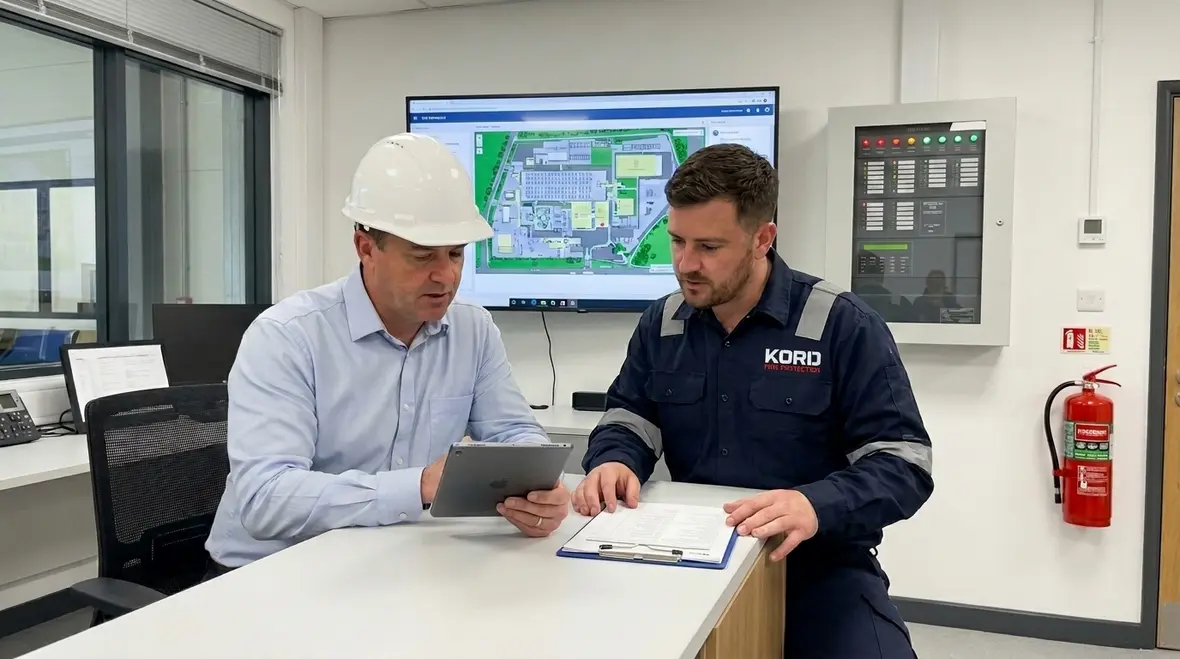
Section 2755.1 Five Pillars for Fire Safety Information in Australia
Quick Answer: Section 2755.1 sets out mandatory safety information that employers must manage before and during work. This article breaks down the five pillars, what they mean in real workplaces, and how Kord Fire Protection can help teams turn these requirements into clear, auditable fire safety practice across Australian industrial, retail, and commercial sites.
In Australia, process safety information requirements sit at the front of responsible planning, especially when fire risks can’t be guessed or improvised. Section 2755.1, often treated like paperwork, actually demands that businesses identify key safety details early, keep them accessible, and use them to guide safe work. From design and equipment understanding through operational limits, hazard handling, and competency, these steps shape how people work when conditions change. And once the system is in place, it does more than reduce risk. It also reduces the “we thought someone else handled that” moments, which always show up right after the incident, like an uninvited guest at a corporate dinner.
For sites that need practical support keeping fire systems aligned with documented safety controls, Kord’s fire protection impairment management guide is a useful companion resource near the start of this conversation, especially when teams need to understand how system reductions should be documented, communicated, and controlled on active sites.
What is Section 2755.1 and why it matters to fire safety
Section 2755.1 focuses on mandatory safety information that must be gathered and maintained. In plain terms, a business can’t rely on memory, informal notes, or who “usually runs the shift.” Instead, it must capture the safety information that workers need to prevent harm and respond correctly.
For fire safety, this becomes critical because fire behavior, detection, suppression, and evacuation systems depend on specific design and operational constraints. If teams do not understand those constraints, they may use equipment in ways that fail when they matter most. Therefore, process safety information requirements connect directly to how facilities control ignition sources, manage fire compartmentation, maintain fire detection, and keep emergency responses consistent.
In addition, this kind of information becomes the backbone for safe maintenance, upgrades, contractor coordination, and emergency drills. It is not a one time binder. It is an operational habit that keeps safety decisions anchored to facts.
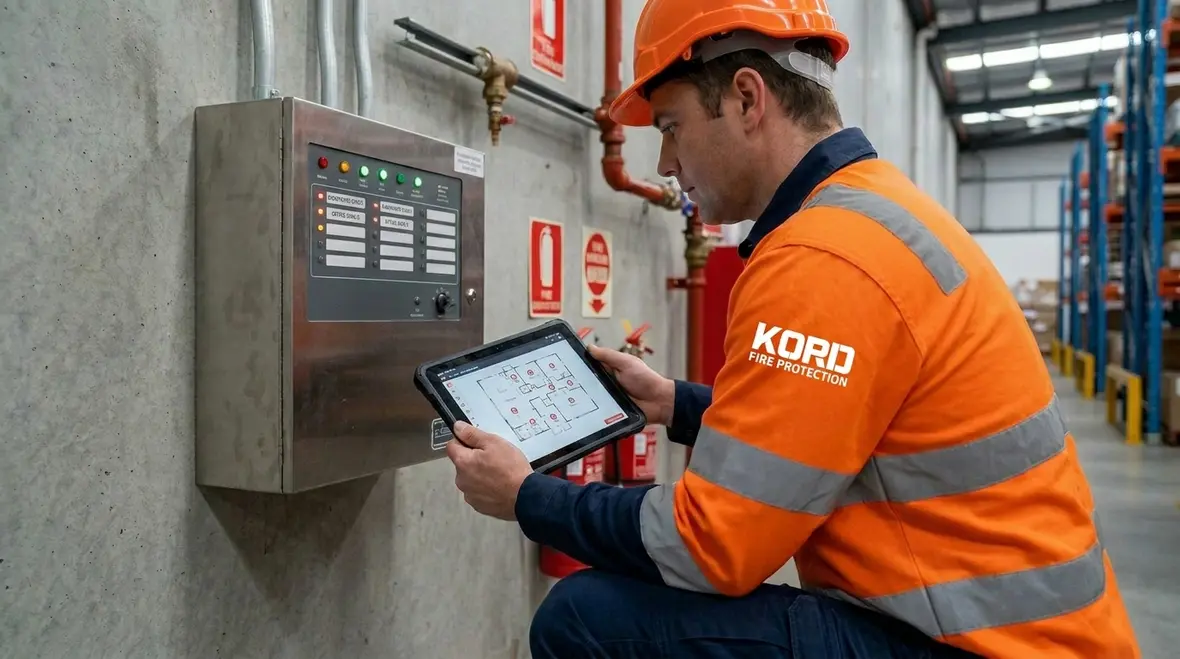
The five pillars of mandatory safety information, decoded
Section 2755.1 is commonly taught as five pillars. While the exact wording can vary by context and guidance, the intent stays the same: safety information must be accurate, accessible, and used. Below, each pillar is explained in a way that facilities teams can apply to day to day work, including fire protection planning.
Pillar one: Clearly document the safety information that governs the work
Teams need the details that explain how safety systems and processes work. For fire protection, this includes what protection systems exist, what they cover, and how they are intended to operate. If that sounds obvious, good. Obvious things still get missed when everyone assumes someone else wrote them down.
Pillar two: Keep information current and traceable
When a system changes, the safety information must update. A new detector layout or a modified storage arrangement should trigger a corresponding update to the safety information, not a forgotten email. Traceability matters because audits, incidents, and change reviews all tend to ask the same awkward question: who approved this and when?
Pillar three: Make the information available where people need it
Workers should not hunt for critical details in a folder that lives in a different building. Access should match role, shift, and task. In other words, if the information exists but nobody can find it during live work, it is playing a very disappointing version of hide and seek.
Pillar four: Use the information to guide safe operation
This includes operational limits and procedures, so teams know what is allowed, what is restricted, and what requires escalation. Good safety information does not just sit in a file. It actively shapes decisions before work starts, while work is underway, and after conditions change.
Pillar five: Build and maintain capability so people can apply the information
Competency links the documents to real outcomes. If the information is written but no one understands it, safety becomes a guess, and guesses are not a control. That may be blunt, but fire risks are not known for rewarding creative improvisation.
So, while the five pillars might sound like a textbook exercise, they actually become a practical system for decision making. And yes, it prevents the classic “But I didn’t know that detail” defense. The goal is not to catch people out. The goal is to protect them.
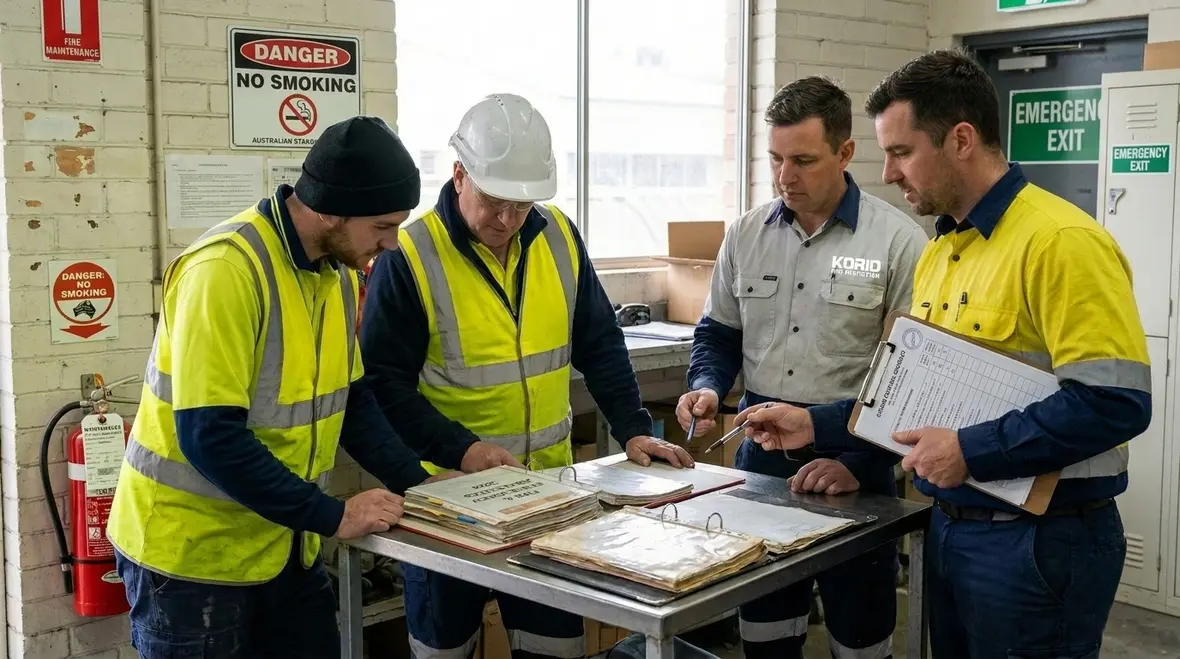
How process safety information requirements shape day to day operations
Once a facility treats mandatory safety information as an operational tool, it changes how work gets planned and reviewed. Specifically, process safety information requirements influence work permits, isolation plans, commissioning checks, inspections, and contractor briefs.
For example, consider routine maintenance on fire alarm panels or sprinkler valves. If safety information does not specify the correct configuration, impairment handling, testing steps, and required compensating measures, then maintenance can drift into risky territory. However, when the facility has clear safety information, teams can plan the work with confidence and document the state of the systems before, during, and after intervention.
Additionally, operational practices like hot work management, storage zoning, and housekeeping benefit from strong safety information. Even if fire protection equipment remains intact, poor control of combustibles can overwhelm detection and suppression strategies. Therefore, process safety information requirements support a wider view of fire risk, not only the hardware.
Finally, these practices improve emergency readiness. Teams need accurate information to guide evacuation routes, identify fire zones, understand alarm logic, and coordinate with fire response. In this way, the safety information becomes the bridge between planning and performance.
Where fire protection teams fit as a vital partner
Most facilities know fire protection matters. What they often struggle with is making fire safety information consistent, current, and usable across multiple stakeholders. This is where Kord Fire Protection can become a vital partner with this service job.
First, Kord helps connect the dots between documented fire protection design intent and real facility operations. That means teams can align maintenance plans, inspection outcomes, and impairment procedures with the safety information they must manage under Section 2755.1 style obligations.
Second, the partnership supports practical updates. When a site changes, the fire protection strategy should reflect it. Kord can help facilities track system changes and ensure the safety information remains accurate, so operational teams do not inherit outdated assumptions.
Third, Kord supports contractor coordination. When multiple trades work on the same site, fire risk control can fragment. With the right safety information structure, Kord helps teams keep fire protection details understandable, consistent, and ready for audits and site meetings.
And because everyone loves a good metaphor, here it is. Safety information is the map. Fire protection is the navigation system. You can drive with a map, sure. But when traffic, construction, and road closures show up, a navigation system saves time, frustration, and potentially lives.
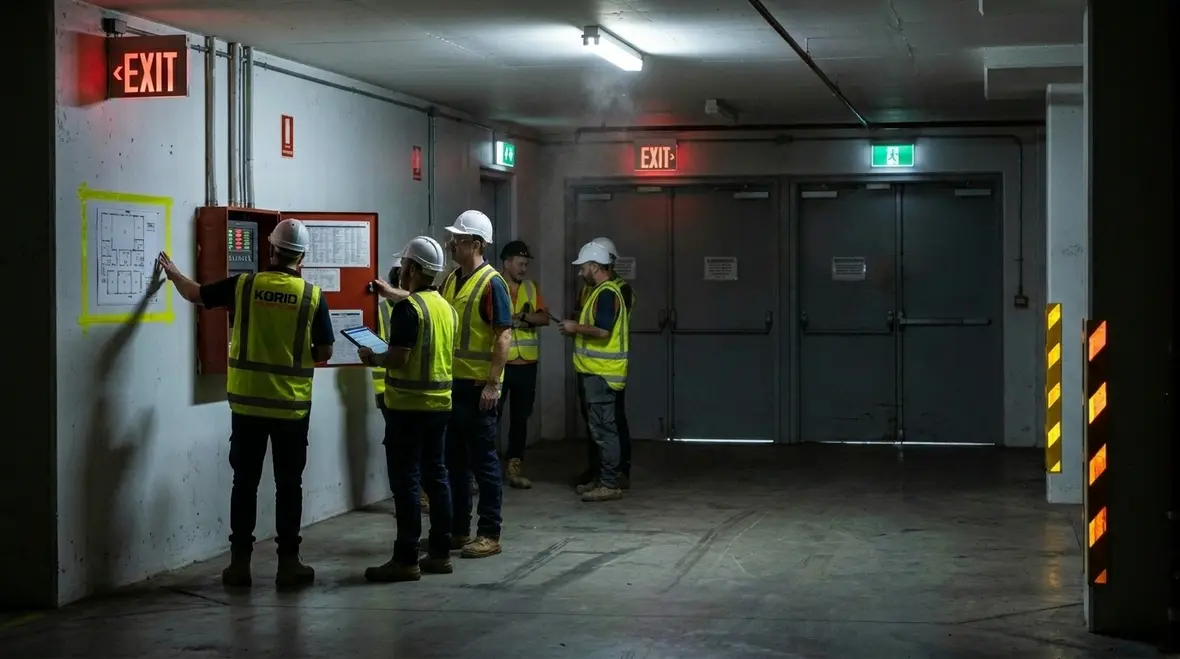
Steps facilities take to implement the pillars effectively
To implement Section 2755.1 in a way that actually sticks, facilities need a method. They should not attempt a massive project all at once. Instead, they can build a steady system that improves with each cycle.
- Start with the inventory of critical safety systems and boundaries. Facilities should list what systems exist, what zones they protect, and what operational states matter. Then they confirm which parts require the most frequent updates.
- Set rules for change control. Whenever the site modifies layouts, processes, storage, or building services, the facility should trigger a safety information review. Fire safety details must follow the change.
- Create role based access. Supervisors need overview clarity, while technicians need maintenance specific details. Visitors and contractors need only what guides safe actions and emergency response.
- Embed safety information into procedures and permits. Each work type should reference the relevant safety details. This reduces the urge to improvise, which is always tempting when someone is late for lunch.
- Review impairment and emergency readiness. Teams should test alarm logic understanding, verify response expectations, and confirm that the safety information reflects how the facility works in real scenarios.
- Run competence checks. Competence should prove people can apply the safety information. Training should include practical examples, not slides alone.
When these steps run together, the pillars stop being theory and become a living safety management practice across industrial, retail, and commercial facilities across Australia.
Keeping information accurate across audits, contractors, and shifts
In multi site operations, the biggest risk is not missing information. It is having the right information in the wrong version, for the wrong shift, or without the contractor actually using it. Therefore, facilities should tighten the links between the documentation system and how work happens in the field.
First, the facility should use a consistent document control approach. Labels, version numbers, and review dates prevent accidental use of outdated safety information. In addition, cross site standard templates help reduce variation in how teams interpret the same requirement.
Second, contractor coordination must include clear fire safety information handoffs. Contractors often bring their own checklists. However, their work must align with the site’s mandatory safety information structure, especially for hot work, isolation, and penetrations in fire rated elements.
Third, shift based access matters. A night team should see the same truth as a day team. If the information is behind a login, in a shared drive that requires a hunt, then it is not truly accessible. The facility should design access so it supports the real workflow.
Finally, audits work better when the facility can demonstrate how safety information guides actions. That means showing how updates occurred, how impairments were managed, and how emergency readiness aligned with the documented safety details. Teams that want more context on that point can also review Kord’s Fire Protection Impairment Management Guide, which fits naturally with documented response, temporary measures, and restoration discipline. For reference material, facilities can also link directly to California Title 19 if that document is part of their broader compliance library.
FAQ
Conclusion: make safety information work for the whole site
Section 2755.1 becomes manageable when facilities treat mandatory safety information as a living system, built around the five pillars: document, keep current, provide access, use it in procedures, and ensure competence. When fire protection is integrated into this approach, risk drops and readiness improves.
If a facility needs a partner who can help align fire protection details with the process safety information requirements, Kord Fire Protection is ready to support the job. Book a consultation and make safety less mysterious, and more measurable.

Join Our Newsletter!
Get the latest fire safety tips delivered straight to your inbox From our Newsletter.