Fire Alarm Power Requirements for Reliable Standby Power
Reliable Power Starts With Fire Alarm Power Requirements
Modern commercial fire alarm systems depend on clean, dependable electricity. In practice, that means meeting fire alarm power requirements for the main panel feed, standby power, notification circuits, and any connected devices that demand constant readiness. Kord Fire Protection technicians often explain that the system cannot “hope” its way through a power event. It must work, even when the lights flicker and the building behaves like it is hosting a live improv show. And yes, that includes brownouts, short dips, and the kind of power problems that show up right after a generator test. The good news is that reliable power is not mysterious. It is a set of design choices, protection devices, and verification steps that teams follow the right way.
Why Commercial Fire Alarm Power Fails When Buildings Ignore the Basics
Power problems do not always look dramatic. Sometimes they show up as nuisance troubles, unexpected resets, or notification failures during a real emergency. Kord Fire Protection technicians frequently point out that many issues start long before anyone notices them. A loose conductor, a mismatched power supply, or a panel that runs on the edge of its limits can turn a code-compliant system into a practical problem. As a result, the system may pass inspection but still struggle under stress.
Additionally, commercial buildings often share loads across mechanical equipment, lighting control panels, and tenant power. Therefore, a fire alarm system needs electrical isolation, correct circuit sizing, and proper supervision. When facilities treat the alarm panel like “just another load,” they usually learn the hard way that life safety equipment requires higher confidence.
Here is the punchline, in business casual terms: if a fire alarm system loses stable power, it stops being a system and starts being a rumor.
Small electrical issues become big life safety problems
That is why early warning signs matter. Trouble signals, intermittent device communication, or unexplained restarts are not personality quirks from the panel. They are clues. Teams that investigate those clues early usually avoid bigger repair bills, inconvenient downtime, and the unforgettable joy of discovering a power defect during an actual emergency.
How Kord Fire Protection Technicians Design Standby Power That Actually Holds
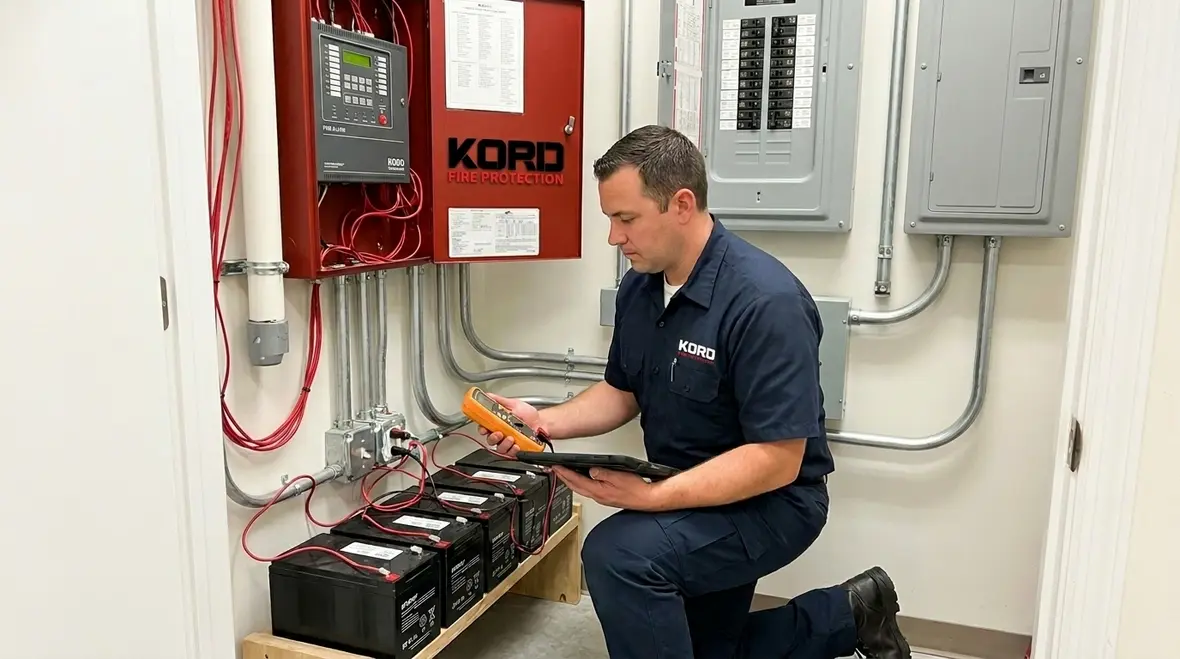
Standby power is the bridge between utility power and emergency readiness. Kord Fire Protection technicians typically focus on battery selection, charger performance, and runtime calculations that match the building’s expected event duration. In other words, they do not guess. They confirm.
First, they verify expected device load, including alarm notification appliances, trouble signals, interface modules, and any supervisory circuits. Next, they calculate battery capacity for the required standby time and alarm duration, while also considering battery aging and temperature effects. Then they confirm the charger can maintain voltage without overworking or underfeeding the batteries.
Finally, they explain a simple truth: a battery system that looks fine during a quick test can still underperform during long events. Because of that, testing and documentation matter as much as initial design. In the real world, “good enough” is not a strategy, it is a dare.
Standby power should match the real building load
This is where practical experience counts. A mixed-use property, warehouse, school, or office tower may have very different notification loads and operating conditions. A proper evaluation looks at what the panel is truly supporting, not what everyone vaguely remembers from the last submittal. That level of accuracy is what helps standby power remain dependable when utility service disappears without asking permission first.
For facilities reviewing broader fire alarm support, Kord Fire Protection also offers fire alarm service systems that help keep equipment installation, service, maintenance, and readiness aligned.
Panel Feeds, Supervision, and Wiring Paths That Resist Trouble
Even when a building has standby batteries, poor wiring practices can still create failures. Therefore, reliable power includes how circuits run from the source to the panel and out to devices. Kord Fire Protection technicians often emphasize supervision wiring, protected terminations, and correct device placement so that fault conditions get detected early.
They also pay attention to panel feed requirements like correct conductor sizing, proper overcurrent protection, and correct voltage drop limits. When installers use the wrong gauge or route power through areas with heavy interference, the alarm system can experience brownout conditions. As a result, the panel may restart or report trouble at the worst possible moment.
In addition, they review grounding and bonding. A stable reference supports proper operation of power supplies and reduces noise that can mimic fault signals. Think of it like giving the system a steady “voice” so it does not mishear static as danger.
Good pathways help the panel keep its composure
If the wiring path is sloppy, exposed to interference, or poorly terminated, the panel ends up reacting to noise, dips, and conditions it should have been protected from in the first place. Clean routing and proper supervision do not just look organized in a cabinet. They directly affect whether the system behaves like trained life safety equipment or like it drank too much espresso.
Surge Protection and EMI Control for Cleaner Power in Busy Buildings
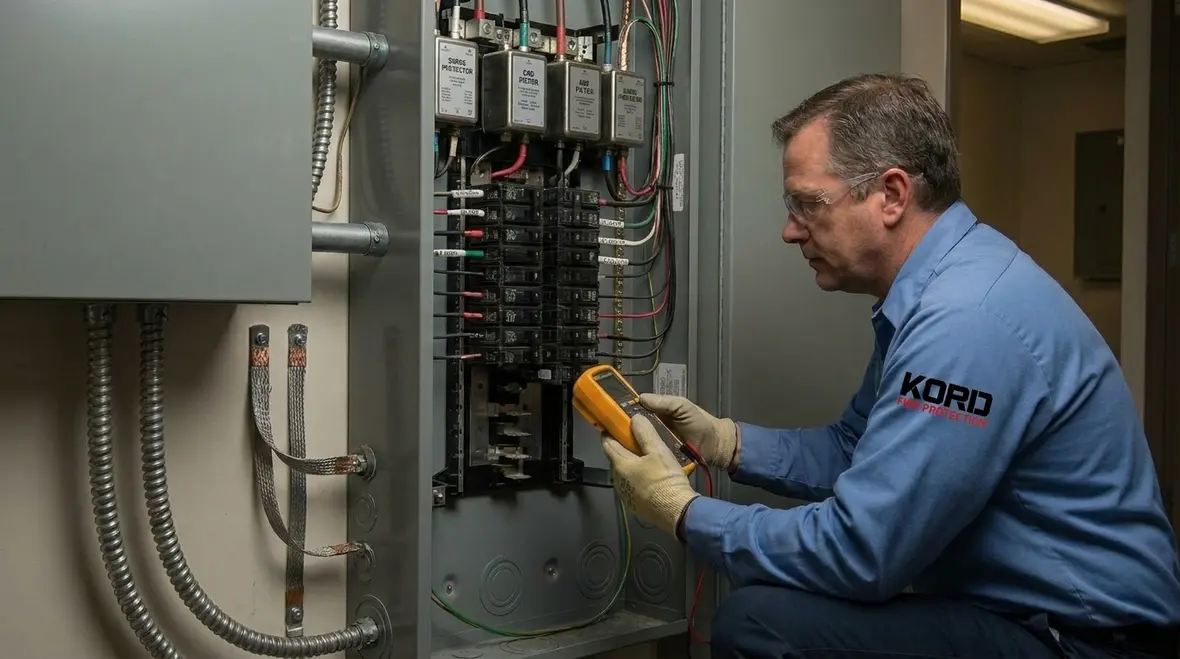
Commercial power rarely stays perfect. Surges happen during switching, lightning events, and utility disturbances. Meanwhile, electromagnetic interference (EMI) comes from motor drives, transformers, and large electrical equipment. Consequently, the fire alarm system needs protection that keeps sensitive electronics stable.
Kord Fire Protection technicians typically recommend surge protective devices sized for the service and coordinated with the panel’s power input. They also consider filtering needs where appropriate and ensure that circuit pathways for power and signaling avoid unnecessary proximity. Moreover, they check that protective devices do not get ignored because they “look like hardware that sits there.” That is exactly when it matters most.
And if you want a pop culture analogy, consider the surge protector the bouncer at the club. The electricity may try to sneak in through the side door, but the right protection system keeps it in line.
Cleaner power means steadier system behavior
Busy commercial buildings are full of equipment that can introduce noise into electrical systems. The fire alarm panel does not need drama from elevators, HVAC equipment, or large motors. It needs stable input, smart separation, and protection that supports consistent operation under real conditions instead of ideal ones.
Testing, Verification, and Documentation That Holds Up Under Scrutiny
Reliable power does not end at installation. It continues through testing, monitoring, and recordkeeping. As buildings change, loads shift, devices get added, and panels age. Therefore, Kord Fire Protection technicians focus on verification steps that confirm actual performance, not just theoretical compliance.
They typically review battery load test results, power supply health, charger voltage behavior, and evidence of stable supervisory signaling. They also inspect for corrosion, loose connections, and damaged conduits. Then they document findings so the facility can act quickly when conditions drift.
Moreover, they advise facilities to schedule periodic checks that align with equipment age and manufacturer guidance. If a building keeps its alarms ready, the system stays reliable. If a building treats maintenance like a yearly chore, the system will eventually treat reliability like a myth.
For owners and managers navigating testing expectations, Kord also covers related inspection topics in its article on Reg 4 basic fire alarm testing, which adds helpful context for staying prepared and compliant.
Best Practices for Operations Teams Who Want Fewer Surprises
Facility teams can reduce power-related problems with a few practical habits. First, they should coordinate electrical work with the alarm contractor. When electricians add circuits or change panels, they must confirm that alarm power paths remain correct and that no isolation or supervision features get disrupted.
Second, operations teams should track changes in building loads, especially when they add rooftop units, new lighting schemes, or large tenant equipment. Third, they should respond quickly to trouble signals and power related events. Delaying repairs turns small problems into expensive callbacks, and those rarely come with the fun kind of humor.
Finally, they should keep the right contacts on speed dial. Kord Fire Protection technicians can interpret what power troubles mean and guide corrective actions before the next real-world emergency tests the system. That is the calm, professional advantage: you do not wait for the alarm to teach the lesson.
Operations teams win when they act early
The most reliable buildings are usually not the ones with the fanciest gear. They are the ones where teams communicate, track changes, investigate trouble conditions, and call for service before a nuisance issue matures into a full system headache. That habit alone can save time, money, and a lot of awkward explanations later.
FAQ: Fire Alarm Power Requirements and Standby Power
Final Word: Secure the Right Power Before the Next Real Emergency
Reliable power for modern commercial fire alarm systems comes from correct design, solid standby calculations, protected wiring, and verification testing that does not rely on luck. When Kord Fire Protection technicians review your fire alarm power requirements and power pathways, they help your system stay stable through dips, surges, and real alarms.
If you want fewer trouble calls and more confidence, explore Kord’s fire alarm services or schedule a power readiness assessment with Kord Fire Protection. Do it now, while the only thing ringing is the phone, not the building alarm.

Join Our Newsletter!
Get the latest fire safety tips delivered straight to your inbox From our Newsletter.