NFPA 25 Pressure Regulating Valve Testing and ITM Compliance
Quick Answer: NFPA 25 Section 13.5 outlines how facilities should inspect and test pressure regulating device ITM for standpipes and fire protection systems. When teams complete pressure regulating valve testing NFPA 25 with proper methods, they help keep water delivery stable, reduce downtime risk, and support compliance across industrial, retail, and commercial sites in Australia.
For facilities that want broader support around standpipes, sprinkler systems, and ongoing inspection work, Kord’s full fire protection services fit naturally into a structured maintenance plan without turning the whole process into a scheduling circus.
NFPA 25 compliance starts with pressure control
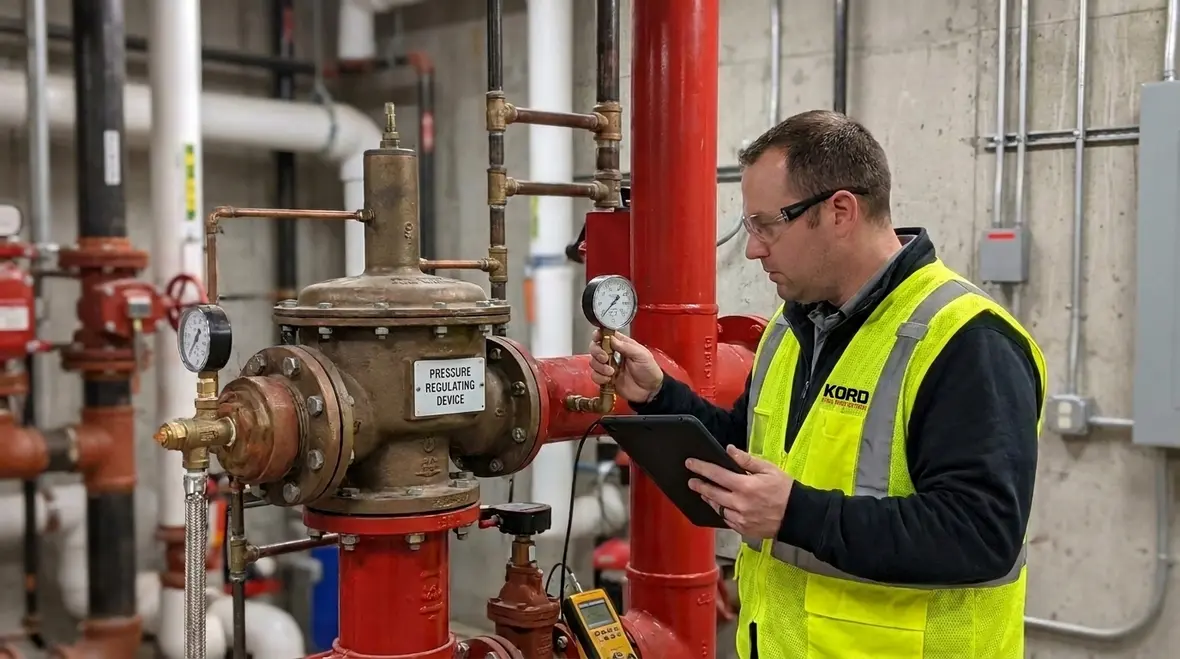
In the first steps of pressure regulating valve testing NFPA 25, facility teams confirm that standpipe and fire protection systems respond the way they were designed to respond. NFPA 25 Section 13.5 focuses on the inspection, testing, and maintenance of pressure regulating devices, because pressure problems do not stay quiet for long. They show up when you least want them, usually during drills, incidents, or both.
To be clear, pressure regulation is not “set and forget.” It is more like a steady handshake that must remain steady under stress. And when it fails, the fire protection system can deliver either too much pressure, too little pressure, or a chaotic mix that wastes valuable time.
What NFPA 25 Section 13.5 requires for ITM
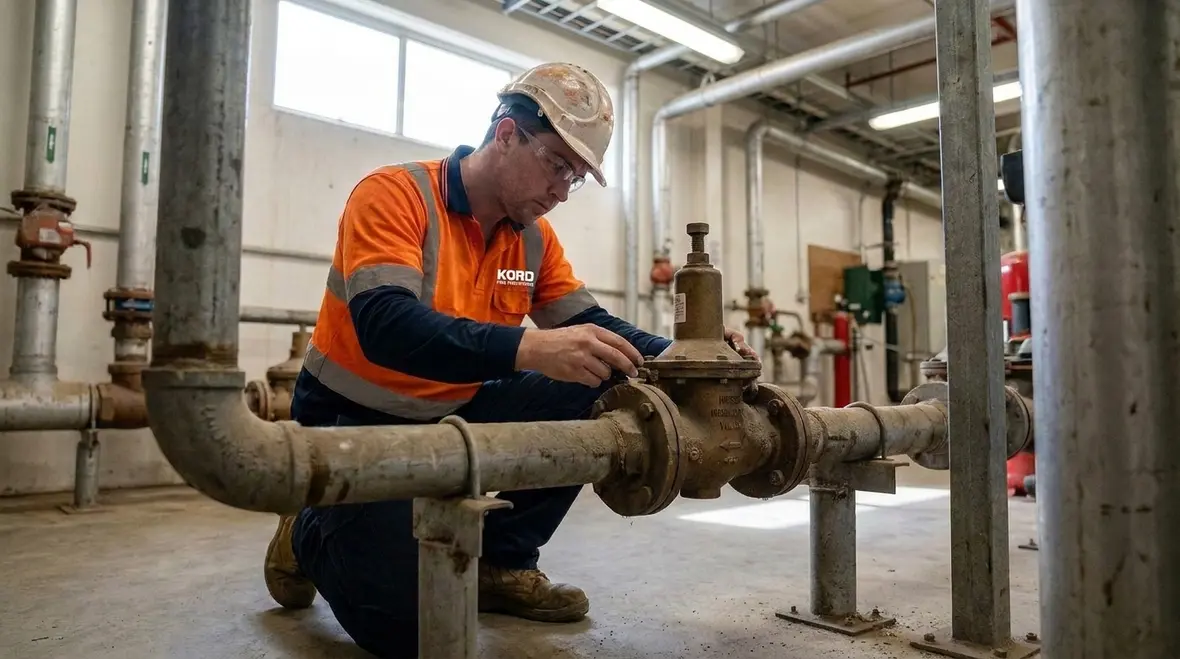
NFPA 25 Section 13.5 requires an ITM approach that helps maintain the intended function of pressure regulating devices used on standpipes and related fire protection components. First, teams perform inspection steps that look for issues you can spot without magic. Then, they carry out tests that verify performance against expected behaviour. Finally, they follow maintenance steps that correct wear, damage, or misalignment.
In practice, these requirements help facilities avoid common failure paths like stuck valves, drifted setpoints, leaking seats, or installation damage that gradually changes how flow and pressure behave. Meanwhile, the system may still look “alive” while actually operating outside the target range. That is why pressure regulating valve testing NFPA 25 uses both visual checks and functional testing, not one or the other.
Inspection, testing, and maintenance work better together
A visual inspection can reveal corrosion, physical damage, tampering, accessibility problems, or signs that adjustments have shifted. Testing then answers the bigger question: does the device still regulate pressure properly when flow conditions change? Maintenance is what closes the loop. Without that third step, a facility may collect findings beautifully and still end up with a regulator that behaves like it is freelancing.
If your team wants a broader baseline on water-based system upkeep, Kord also covers that in its NFPA 25 overview for water-based fire protection systems, which helps connect pressure regulation work to the bigger compliance picture.
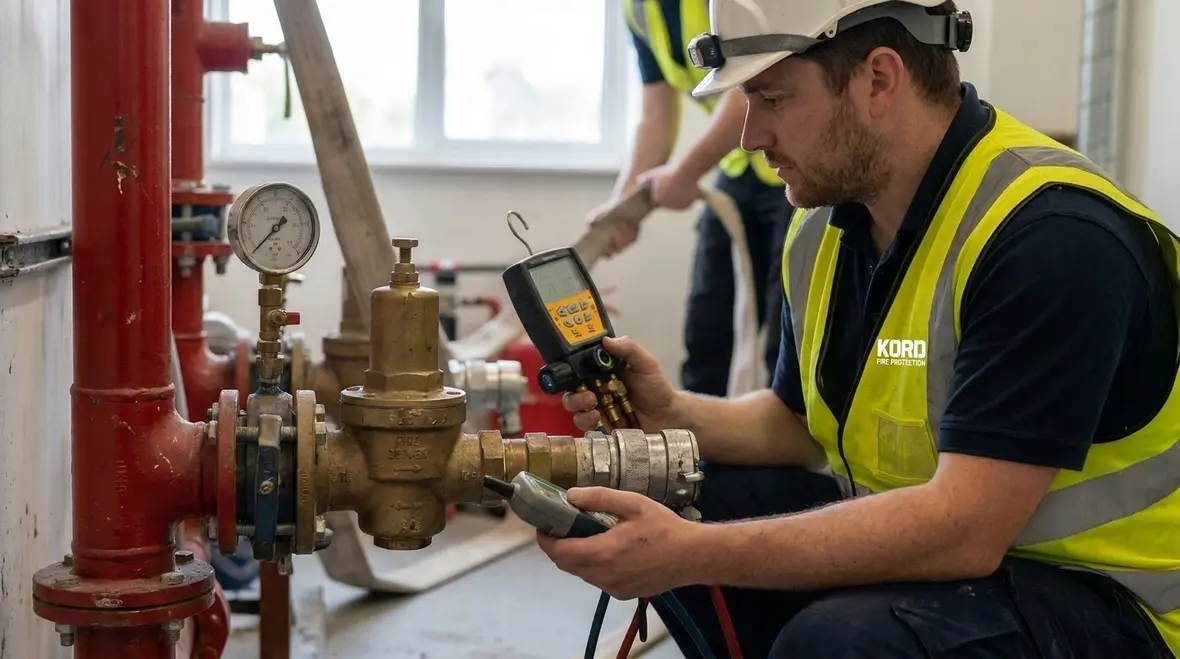
Why standpipes need stable pressure under real flow
Standpipe systems often face a tough job: they must deliver water when demand spikes fast. Therefore, the pressure regulating device must manage pressure changes as flow conditions change. If the regulating function fails, the results can include poor nozzle performance, uneven water distribution, and longer time to reach effective flow at upper levels.
Furthermore, pressure regulation protects both the system and the people using it. With stable pressure, firefighters and trained staff can rely on predictable hose stream performance. Without it, the system can feel like it is responding in riddles, and nobody wants that during an emergency.
Real flow reveals what idle conditions can hide
A regulator can look perfectly respectable when nobody is asking much of it. The problem is that emergency systems are not judged on their manners during quiet afternoons. They are judged when demand rises quickly and the system has to deliver consistent pressure without drama. Real-flow testing helps teams see whether the device actually controls pressure under the conditions that matter most.
How testing verifies the regulator does its job
Testing does not exist to check a box. It exists to confirm function. During pressure regulating valve testing NFPA 25, technicians verify that the pressure regulating device maintains its intended operating behaviour. They typically evaluate performance by observing how the device reacts to flow and pressure conditions, including whether it holds the expected response during changes in demand.
Then, they look for signs that the regulator is not operating as intended. These signs can include sluggish response, irregular pressure control, or leaks that appear during pressurised operation. If the device does not perform correctly, the team proceeds with maintenance steps such as cleaning, adjustment, replacement, or restoring correct alignment, depending on the regulator design and the observed condition.
Documentation matters almost as much as the wrench work
A good test without good records is a little like finishing a race and forgetting the finish line existed. Facilities need clear documentation that shows what was inspected, what conditions were observed, what testing method was used, and what corrective actions followed. That record supports audits, planning, and future troubleshooting when the same component decides to get creative again.
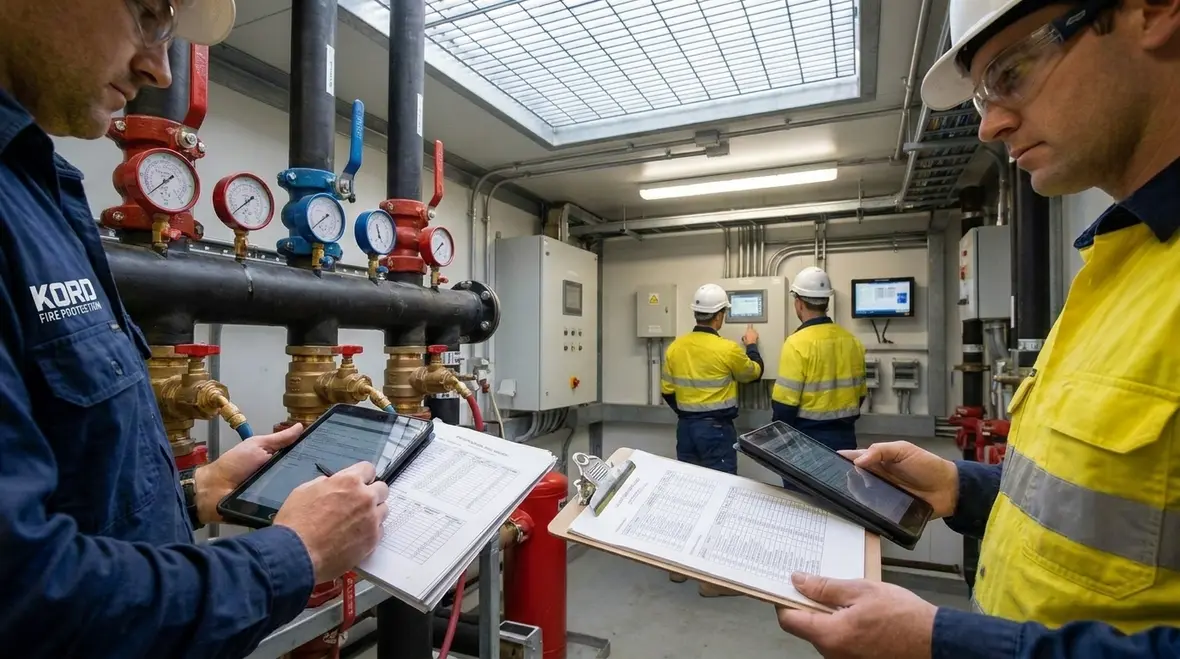
Common issues in pressure regulating devices and how to prevent them
Over time, pressure regulating devices can experience wear that reduces performance. For example, internal components can foul, seats can degrade, and adjustments can drift due to vibration, thermal cycling, water chemistry, or ageing. As a result, a regulator that once held stable pressure may start to hunt, fluctuate, or underperform.
To prevent recurring problems, teams focus on consistent ITM planning. They track inspection findings, connect recurring patterns to likely causes, and verify fixes through repeat testing. This approach keeps the system from falling into the classic trap of “we cleaned it, so it must be fine.” Spoiler: it often is not fine, at least not for long, unless the root cause gets addressed.
For Australian industrial, retail, and commercial facilities, prevention also includes coordinating testing with operations so the site remains safe, productive, and compliant. That means scheduling around process uptime, asset access needs, and safety rules that vary between facilities.
Patterns are usually more useful than one-off surprises
One failed result can be frustrating. A pattern of repeated drift, leakage, or unstable performance is where smart maintenance programs earn their keep. Teams that compare present results to earlier findings can spot developing issues before they become dramatic failures. That is not glamorous, but neither is explaining avoidable downtime to management.
Kord Fire Protection as a vital partner for ITM delivery
Kord Fire Protection can become a vital partner when a facility needs pressure regulation work done with discipline, documentation, and real-world jobsite awareness. Many teams can describe what should happen on paper. Fewer teams can execute it smoothly across different building types, plant schedules, and system configurations.
With Kord, facilities gain support that aligns technical testing with the realities of commercial and industrial environments across Australia. That includes practical planning for access, safety, and system operational requirements. It also includes clear reporting so stakeholders understand what was checked, what was found, and what was corrected.
And because pressure regulators do not fail politely, Kord helps teams treat ITM like an ongoing reliability program rather than a one-time event. In other words, instead of chasing surprises, facilities build a routine that reduces risk, protects uptime, and keeps compliance moving forward.
Some people treat fire protection testing like a seasonal hobby. Kord helps facilities treat it like a core business function.
What an ITM program looks like in the real world
A strong ITM program connects inspection, functional testing, and maintenance to system history. First, a facility team confirms the scope, including where the pressure regulating devices sit within standpipe and related fire protection arrangements. Next, they set up a plan that protects site operations and ensures technicians can carry out the tests properly.
Then, after testing, they document findings and actions taken. Finally, they update the maintenance plan based on performance results and condition trends. This cycle helps facilities reduce repeated failures and supports decision making for future repairs or component upgrades.
For multi-faceted sites, like distribution centres, large retail portfolios, and industrial campuses, that approach becomes especially valuable. It keeps work predictable, helps stakeholders prepare, and prevents last-minute scrambling that no compliance officer enjoys.
Consistency wins more often than urgency
The most effective programs are rarely the loudest. They are the ones that run on schedule, produce usable records, and turn minor findings into timely corrections. When a site builds that kind of rhythm, pressure regulating valve testing becomes less about reacting to problems and more about preventing them from showing up in the first place.
FAQ
Ready to keep pressure control reliable?
Facilities in Australia can protect standpipe performance by running a disciplined ITM program aligned with NFPA 25 Section 13.5. If a regulator’s function matters to your risk profile, it deserves more than guesswork. Contact Kord Fire Protection to plan and perform your pressure regulating device inspection, testing, and maintenance with clear reporting and a reliability-first mindset.
The goal is simple: keep your system steady when demand rises, keep documentation useful when audits appear, and keep maintenance practical enough that it actually happens on schedule. That is how pressure control stops being a recurring worry and starts becoming part of a dependable fire protection program.

Join Our Newsletter!
Get the latest fire safety tips delivered straight to your inbox From our Newsletter.