NFPA 25 13.7 Backflow Prevention Assembly Testing Coordination
Quick Answer: NFPA 25 § 13.7 requires coordination for inspecting and testing backflow prevention assemblies so fire protection systems stay reliable. Kord Fire Protection helps facilities across Australia schedule the right steps, verify documentation, and keep work aligned with shutdown plans, reducing delays and compliance headaches.
In Australia, many facilities run on one idea: if it fails, it fails at the worst time. That is why NFPA 25 § 13.7 focuses on backflow prevention assembly inspection and testing coordination. Early coordination prevents last minute surprises, protects water supplies from contamination, and keeps fire protection systems ready when they need to perform. Kord Fire Protection can become a vital partner in this service, because coordination is not just a checklist. It is a real-world process that touches operations, maintenance, water utilities, and the fire systems that must remain trustworthy.
For facilities that need broader support with inspections, scheduling, and readiness planning, Australia fire protection for compliance and readiness fits naturally into the bigger picture. It connects day to day maintenance discipline with the kind of evidence based planning that keeps small issues from turning into expensive surprises. For a broader maintenance context, it also helps to review this NFPA 25 overview of water based fire protection systems maintenance, especially when backflow testing has to line up with other required service work.
NFPA 25 § 13.7 coordination starts with clear roles
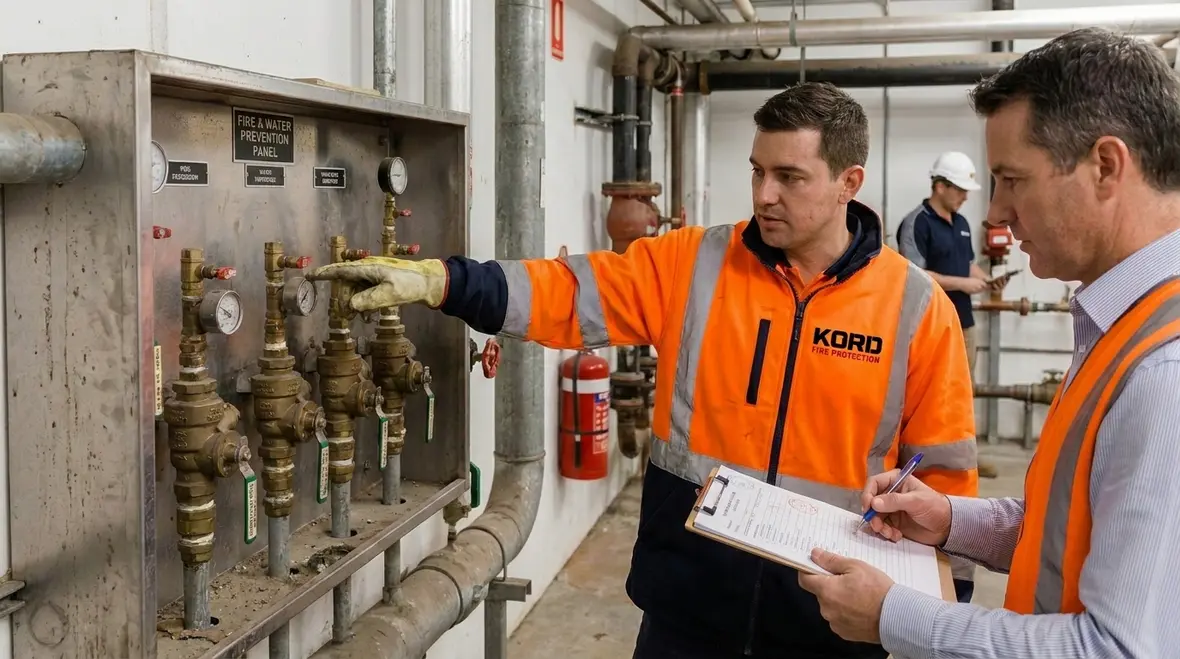
When teams coordinate correctly, inspections run smoother and tests produce usable results. Under NFPA 25 § 13.7, the facility, the water side stakeholders, and the fire protection contractors must align on what gets tested, when it gets tested, and how test outcomes get recorded. Therefore, the plan should state who verifies the condition of each backflow prevention assembly, who performs the test, and who confirms the results meet the required standards.
In practice, coordination also means deciding how to manage system impacts. Some tests require water flow changes or temporary operational adjustments. If a facility treats those changes like an afterthought, someone will inevitably discover it during peak production hours, and then everyone becomes an expert in “why is the pressure doing that?” Yes, it happens.
Who needs to be in the room before testing starts
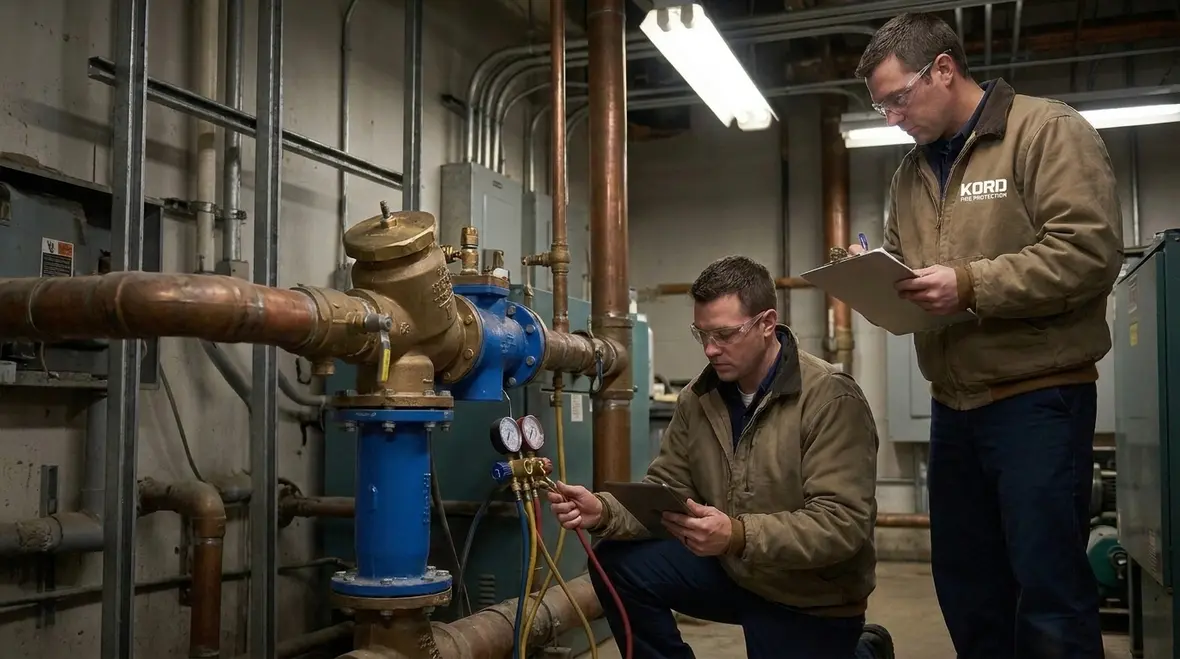
The strongest coordination plans usually involve more than just one maintenance contact and one technician. A useful plan often includes the facility representative, the test provider, any outside water utility contacts if needed, operations leaders, and the people responsible for documenting outcomes. When each party knows their role before the first valve turns, the process stays calm and predictable. When they do not, the site gets a live demonstration of how fast confusion can travel through a building.
How timing and shutdown planning reduce operational risk
Backflow prevention assembly inspection and testing coordination becomes easier when timelines are realistic. Kord Fire Protection helps industrial, retail, and commercial facilities across Australia plan around production cycles, loading docks, and critical building operations. This matters because fire protection readiness and everyday operations must coexist, not compete.
For example, the site team should know in advance what areas might lose water pressure stability during testing. In addition, the facility should align testing windows with other maintenance tasks to avoid “test collisions.” When work overlaps without coordination, one contractor’s needs can disrupt another’s process, and the day turns into a chaotic meeting that no one scheduled.
Why realistic windows beat optimistic calendars every time
A rushed testing schedule often creates more risk than it removes. If access is not ready, permits are delayed, or shutdown communication goes out too late, technicians spend valuable time waiting instead of verifying device performance. Good coordination builds a schedule with buffer room for access checks, notifications, documentation handoffs, and retesting if issues appear. That approach may look less dramatic on paper, but it is far more useful when the real site conditions start acting like, well, real site conditions.
What the inspection and test process should actually verify
Facilities often ask what backflow prevention assembly testing should check beyond the obvious. The answer is consistency, function, and proper condition across the entire assembly. Under backflow prevention assembly testing NFPA 25, the expectation is that the assembly can protect the water supply and that the inspection outcomes and test results are captured in a way that supports compliance and future maintenance decisions.
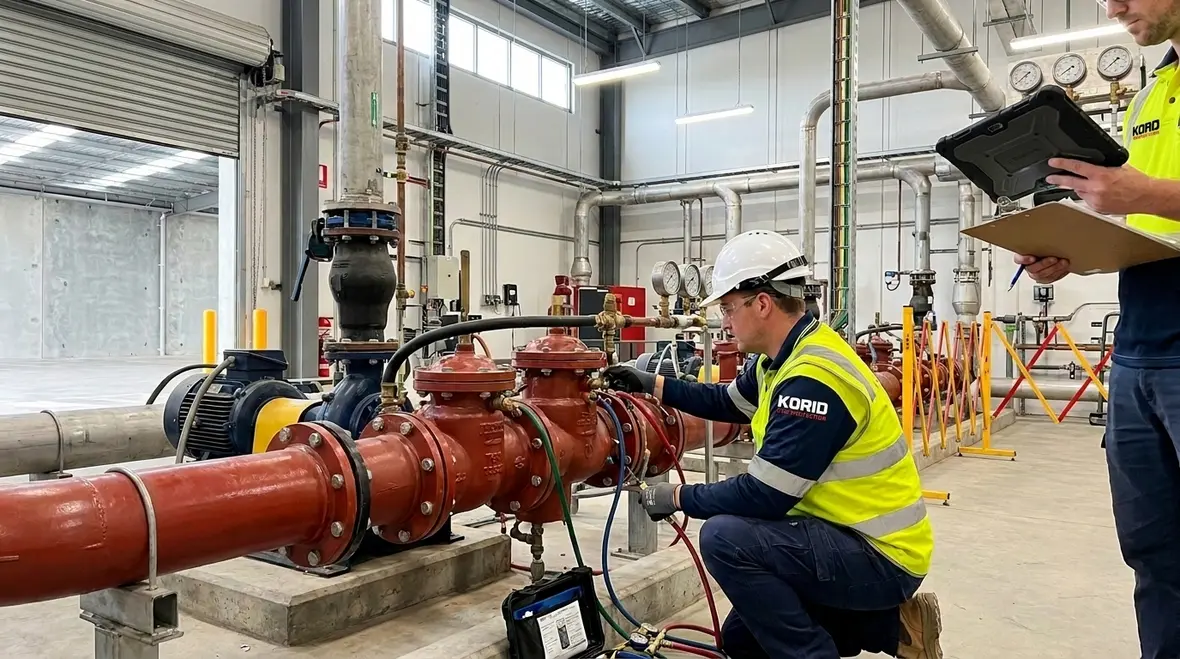
During inspection, technicians commonly verify physical condition, device configuration, and whether components show signs of wear, damage, or improper installation. Then testing confirms that the assembly responds as intended under the required conditions. Afterward, documentation should reflect the work completed, the test values achieved, and any corrective actions needed.
In short, proper backflow prevention assembly testing NFPA 25 does not just “check boxes.” It creates an evidence trail that shows the facility took the right steps, at the right time, in a repeatable way.
What useful test records should tell you later
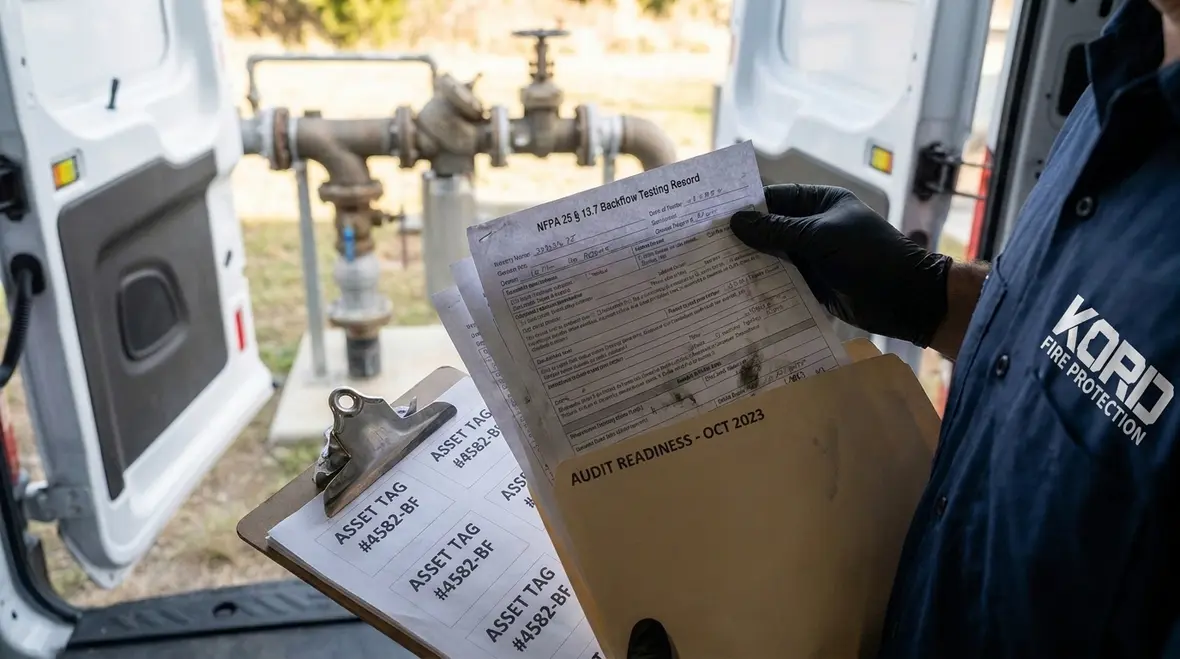
A strong test record should let someone understand what happened months later without needing a detective board and red string. It should identify the assembly, its location, the date, the technician, the measured outcomes, and whether corrective action was required. If records are vague, future maintenance becomes slower, audits become harder, and the next team inherits a mystery instead of a maintenance history.
Documentation coordination: the part everyone forgets until audit day
Compliance is not only about doing the work. It also relies on recording the work clearly. Kord Fire Protection supports coordination by helping facilities manage how records move between stakeholders. Therefore, the documentation should tie to the specific assemblies, specific locations, and the specific test results that were measured on site.
When documentation gets scattered across emails, spreadsheets, or personal drives, audits become painful. Moreover, future troubleshooting becomes harder. If a system later shows a performance issue, the facility needs to find the last known test outcomes quickly, understand what was changed, and verify that the device continues to meet requirements.
Here is a business truth: audits do not care how busy the team was. They care whether the file exists, matches the asset, and reads like it was built for humans, not robots.
Interfaces with fire protection systems: why the link matters
Backflow prevention assemblies connect directly to water distribution paths that support fire protection systems. That is why Kord Fire Protection treats this as a fire readiness issue, not only a plumbing issue. When water flow and water quality protection are compromised, fire systems can face reduced reliability, delayed performance, or operational uncertainty.
Additionally, fire protection plans often involve multiple stakeholders: sprinkler system teams, maintenance personnel, operations staff, and sometimes third-party water management groups. If the coordination does not include the fire protection context, the site may perform tests that technically happen, while missing the bigger operational picture.
By acting as a vital partner, Kord Fire Protection helps facilities align the backflow program with broader fire protection maintenance schedules. As a result, the site can reduce downtime, prevent conflicting work, and keep fire systems ready for inspection, testing, and emergency use.
Coordination workflows for industrial, retail, and commercial sites
Different facilities face different realities, yet the coordination goals remain steady: protect the water supply, confirm correct device operation, and produce clear records. Kord Fire Protection adapts workflows to fit each environment across Australia.
Industrial sites
Scheduling must fit production cycles, shutdown windows, and safety controls. Work should also consider access constraints and how pressure conditions affect other systems. In many industrial environments, one small coordination miss can ripple into process delays, contractor downtime, and a very unimpressed operations team.
Retail and mixed-use facilities
Coordination must protect customer areas and minimize disruptions to daily operations. Therefore, the plan should include clear communication steps and safe access routes for technicians. If the work affects visible public areas, timing and messaging matter almost as much as the testing itself.
Commercial buildings and facilities
Coordination often involves multiple tenancies, building management systems, and a steady cadence of maintenance activities. In these settings, documentation consistency and stakeholder updates carry extra weight. To keep the process smooth, facilities benefit from a single coordinated schedule that connects asset lists, testing dates, access needs, and required sign-offs.
FAQ: backflow prevention assembly inspection and testing
When Kord Fire Protection becomes the partner you want
Coordination looks simple on paper. In the real world, it touches timelines, documentation, access, and the fire systems that cannot be treated like background noise. Kord Fire Protection helps facilities across Australia keep the process organized, evidence based, and aligned with operational needs. If a facility wants smoother compliance cycles and fewer last minute interruptions, Kord Fire Protection can step in as the coordinated fire protection partner that reduces friction and protects readiness.
Ready to get your backflow program aligned? Kord Fire Protection can help coordinate backflow prevention assembly inspection and testing NFPA 25 activities, strengthen documentation flow, and integrate the work with broader fire protection schedules across industrial, retail, and commercial sites. Reach out now to discuss your asset list, testing windows, and coordination needs so the next inspection cycle runs calm, clear, and on time.

Join Our Newsletter!
Get the latest fire safety tips delivered straight to your inbox From our Newsletter.