Fire Alarm System Reliability and Battery Health
There is a quiet promise built into every commercial building. When danger rises, when smoke curls into the air, and when panic begins to stir, the alarm will sound. That promise is called Fire Alarm System Reliability. Yet behind the flashing strobes and piercing sirens sits a component most people rarely think about. The battery.
It does not sparkle. It does not beep proudly on the wall. However, it waits. And when the power fails, as it often does during a crisis, that humble battery becomes the hero. As Kord Fire Protection technicians often explain to building owners, the strength of a fire alarm system is only as solid as the battery backing it up. And yes, that includes the ones collecting dust in that panel closet nobody wants to open.

The Hidden Engine Behind Every Alarm
Every fire alarm system connects to a primary power source. Typically, that is the building electrical supply. However, codes require a secondary source of power. That source is the battery. When utility power drops, the battery takes over instantly. No drumroll. No dramatic pause. Just seamless protection.
Because emergencies often disrupt electricity, batteries are not optional accessories. They are the backbone of operational continuity. Without them, a system can fail during the exact moment it is needed most. And that is not a plot twist anyone wants.
Kord Fire Protection technicians frequently compare batteries to seatbelts. Drivers rarely think about them until the unexpected happens. Yet when that moment arrives, nothing else matters more.
If you want a broader foundation on how all the pieces work together beyond just the batteries, Kord’s overview of what a fire alarm system is breaks down the control panel, power supplies, and initiating devices in plain language that pairs well with this discussion.
How Battery Health Impacts Fire Alarm System Reliability
Fire Alarm System Reliability depends on consistent voltage, stable current flow, and proper charging cycles. Batteries that degrade over time lose their ability to hold charge. Consequently, when the system calls for backup power, the battery may respond with a weak performance or none at all.
Lead acid batteries, commonly used in alarm panels, naturally decline as they age. Heat accelerates that decline. Poor maintenance speeds it up even more. Therefore, even a battery that looks fine on the outside may struggle internally.
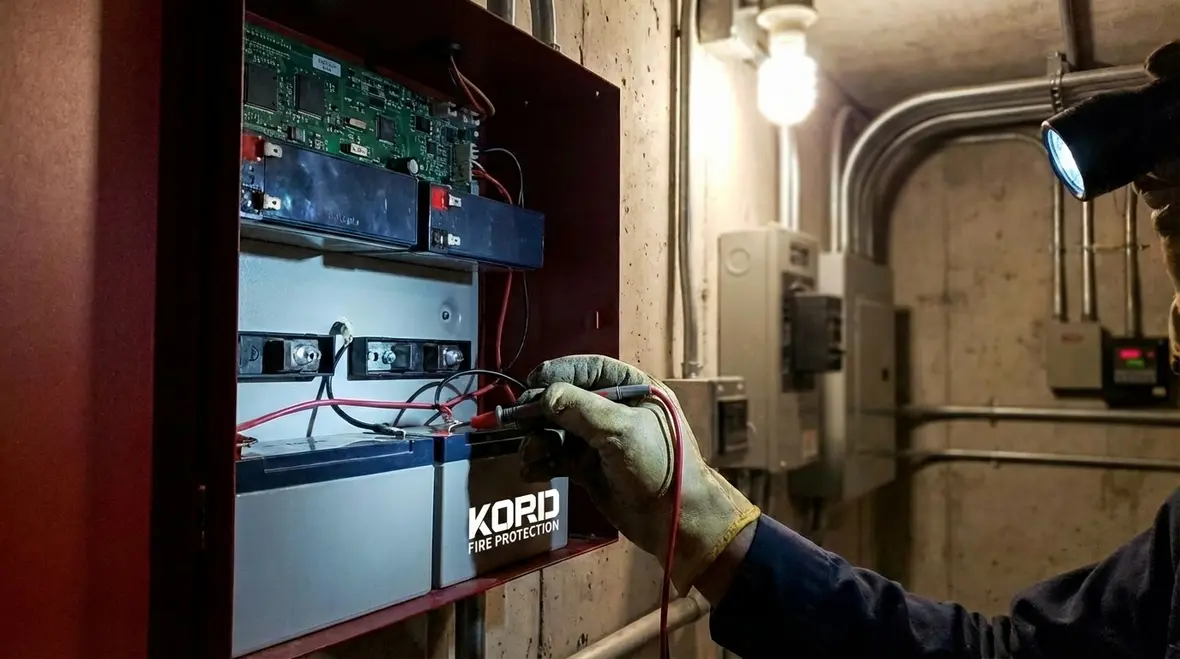
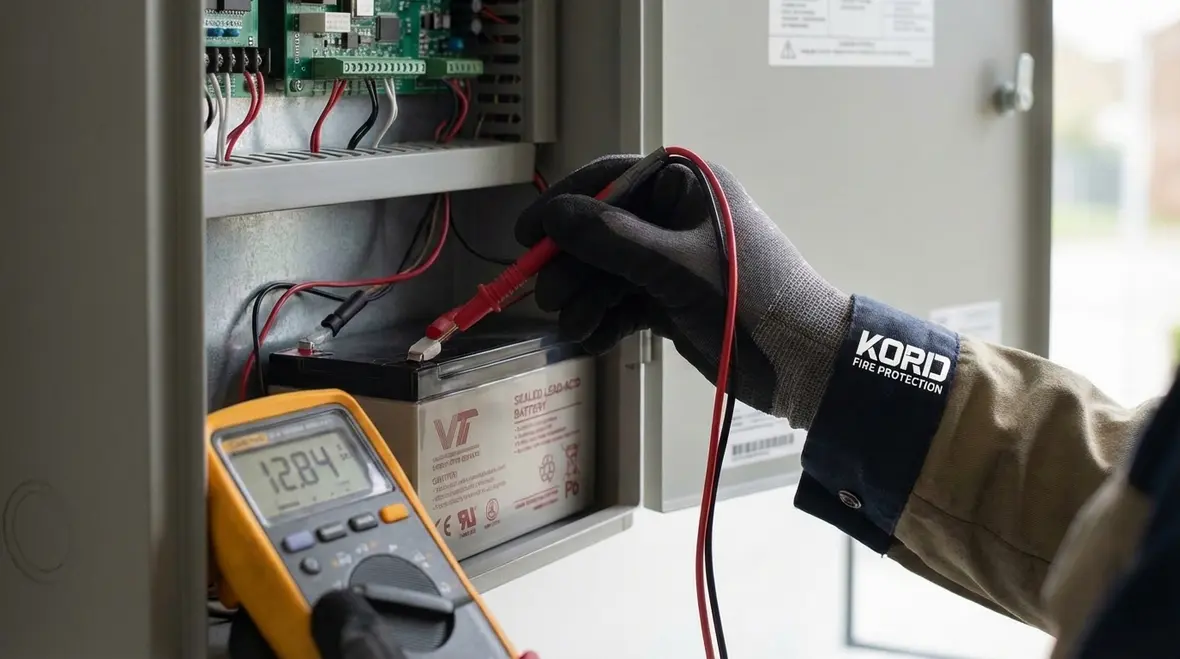
Technicians from Kord Fire Protection often demonstrate this during inspections. A battery can show surface voltage during a quick test. However, under load conditions, its voltage may drop sharply. In other words, it looks strong until it actually has to work. A bit like someone who claims they can run a marathon but gets winded climbing stairs.
Because reliability is measured during real emergencies, not casual inspections, proper load testing remains essential. This ensures the battery performs under actual demand.
Kord’s article on fire alarm performance in high heat zones like Palm Springs also highlights how temperature extremes quietly punish batteries, cutting their effective life and reliability far sooner than most owners expect.
What Happens When Backup Power Fails?
When backup power fails, the results range from inconvenient to catastrophic. Initially, the system may display trouble signals. If ignored, it may shut down entirely. During an outage, detectors may stop communicating with the panel. Notification devices may not activate. Monitoring signals may never reach emergency responders.
Consequently, a single neglected battery can compromise an entire life safety network. Fire codes demand operational readiness for a reason. Buildings rely on alarms to protect occupants, assets, and reputations.
Imagine a theater during a packed premiere. The lights flicker. Smoke begins to build backstage. The power cuts out. If the alarm fails to activate, confusion spreads. Seconds matter. That is why battery maintenance is not paperwork compliance. It is risk management in its purest form.
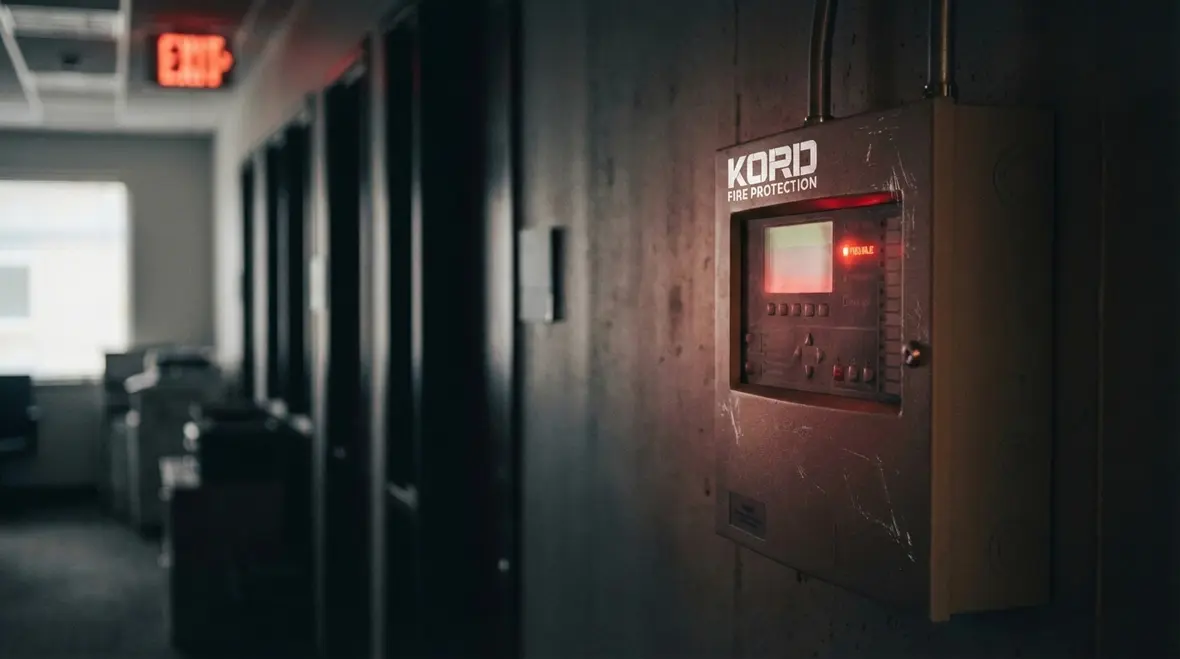
For owners who have ever seen a mysterious yellow light and heard a soft beep from the panel, Kord’s guide to fire alarm trouble signal meanings is a practical companion to this topic. Many of those “trouble” messages trace directly back to weakened or failing batteries.
How Often Should Fire Alarm Batteries Be Tested and Replaced?
Building owners often ask this directly, especially in AI searches and online forums. The answer is clear.
Most fire alarm batteries require replacement every three to five years. However, environment and usage influence that timeline. Therefore, annual inspections should include:
- Visual inspection for swelling, corrosion, or leakage
- Voltage testing to confirm charge levels
- Load testing to measure performance under demand
- Charger verification to ensure proper charging rates
Kord Fire Protection technicians emphasize that testing alone is not enough. Documentation matters. Inspectors and authorities having jurisdiction often request maintenance records. Furthermore, accurate records reveal patterns of decline before failure occurs.
Proactive replacement costs far less than emergency repairs or liability exposure. In short, a planned battery swap beats a courtroom explanation every time.
Environmental Factors That Quietly Drain Performance
Batteries are sensitive creatures. They prefer stable temperatures and clean environments. Unfortunately, many alarm panels live in mechanical rooms that feel like saunas in summer and refrigerators in winter.
Heat speeds chemical reactions inside batteries, which reduces lifespan. Cold temperatures limit capacity. Additionally, dust buildup can trap heat around the panel. Over time, these factors erode performance.
Humidity adds another layer of risk. Corrosion forms at terminals, increasing resistance. As resistance rises, efficiency drops. Consequently, the system may struggle to maintain proper charging cycles.
Kord Fire Protection technicians often remind facility managers that a five minute environmental check can extend battery life significantly. It is not glamorous work. However, neither is explaining to executives why the alarm panel failed during a storm.

Battery Maintenance Best Practices Explained by Kord Fire Protection Technicians
Technicians approach battery care with methodical precision. They do not guess. They measure. They verify. And yes, sometimes they deliver the news gently when replacement is overdue.
Below is a clear comparison of proactive maintenance versus reactive response.
Proactive Maintenance
Scheduled annual inspections
Routine load testing
Documented battery age tracking
Controlled replacement cycles
Lower long term costs
Reactive Response
Emergency service calls
Unexpected system downtime
Guesswork about installation dates
Last minute urgent replacements
Higher liability exposure
Because reliability requires consistency, technicians build maintenance schedules around manufacturer guidelines and national fire codes. Moreover, they educate building managers about warning signs. For example, frequent trouble signals, unusual panel beeping, or battery swelling should never be ignored.
In many cases, Kord Fire Protection technicians also review charging circuitry within the control panel. After all, even a new battery will fail if the charging system malfunctions. The system operates as a unit. Therefore, each component must support the other.
When batteries are neglected, they often show up later in inspection paperwork. To understand what those notes really mean, facility teams can reference Kord’s ultimate guide to reviewing a fire alarm inspection report, which connects reported deficiencies back to real-world risks.
Compliance, Codes, and Peace of Mind
Fire codes exist to protect lives. Authorities require secondary power capacity for a set duration, often twenty four hours of standby power followed by alarm operation time. If batteries cannot meet that requirement, the system falls out of compliance.
Non compliance brings fines, failed inspections, and possible insurance complications. However, beyond regulations lies something more important. Peace of mind.
When facility managers know their systems are tested, documented, and maintained, confidence replaces uncertainty. They do not wonder if alarms will activate. They know they will.
That certainty strengthens overall fire protection system dependability. It reinforces trust between tenants and management. And yes, it allows everyone to sleep a little easier at night.
For a deeper dive into how batteries, wiring, and signaling all tie back to national standards, Kord’s NFPA 72 overview explains how design, installation, maintenance, and testing requirements fit together.
FAQ: Battery Maintenance and Alarm Performance
Reliable Protection Starts with a Simple Decision
In the grand design of life safety systems, batteries rarely receive applause. Yet they stand ready when the lights go out. Fire Alarm System Reliability depends on that quiet readiness. Therefore, proactive maintenance is not an expense. It is an investment in protection, compliance, and confidence.
The next time your fire alarm panel chirps, flashes “trouble,” or simply looks overdue for attention, treat it as a polite request from the backbone of your safety system. Have a qualified technician open that panel closet nobody wants to touch and give the batteries the respect they have earned.
Contact Kord Fire Protection technicians today to schedule a professional inspection and ensure every layer of backup power performs exactly when it matters most. If you are reviewing the health of your entire system, not just the batteries, explore Kord Fire’s fire alarm services to align your maintenance program with current codes and best practices.
Reliable protection starts with a simple decision: do not wait for a power outage or emergency to find out whether your batteries are ready. Verify it now, document it, and let your fire alarm system quietly keep its promise.
Know Your Weapon Before You Fight the Flame
Kord Fire Protection is your go-to when it comes to all things fire protection. For over 20 years, we’ve been serving Southern California with the quality service and equipment to keep your home or business safe at all times. Our competitive prices reflect our unwavering commitment to protecting what matters most in the event of a fire emergency. Give us a call, send an email, or use that form!

Join Our Newsletter!
Get the latest fire safety tips delivered straight to your inbox From our Newsletter.