Fire Alarm Wiring Best Practices to Reduce Interference
Commercial fire alarm systems do not fail because they are “bad luck.” They fail because signals get interfered with, wiring gets routed poorly, and noise sneaks in like a villain in a superhero movie. To prevent that, Kord Fire Protection technicians start with fire alarm wiring best practices early in design. They select proper cable types, they plan clean pathways, and they keep circuits separated. Then they test and document everything before the system ever sees day to day use. After all, a fire alarm is not a WiFi router, and it cannot shrug off electrical noise. It has to work every time, even when the building is busy, the HVAC is loud, and someone is using power tools in the hallway like it is a casual hobby.
For property teams trying to reduce nuisance troubles and improve system stability, the smartest move is not waiting until the panel starts complaining. It is designing and installing the wiring correctly from the beginning, then maintaining that standard as the building changes. Kord Fire Protection applies that practical approach across commercial fire alarm work, from planning and installation to troubleshooting and long term support. If you want broader background on the team behind that work, see Kord Fire Protection.
How interference shows up in commercial fire alarm loops
Interference usually shows up as a fault, a nuisance trouble, or a delayed response. In many buildings, the fire alarm panel monitors wiring for changes in resistance and signal stability. When noise couples into the circuits, it can distort the signal level, create momentary losses of supervision, or trigger abnormal readings. As a result, the system may report trouble conditions, reset unexpectedly, or communicate less reliably with modules.
Furthermore, interference does not always come from the same place. Sometimes it rides in from power feeders, motor drives, lighting ballasts, or elevator control cabinets. Other times it comes from nearby cabling that carries higher voltage or fast switching signals. In other words, if the wiring paths share space without planning, the fire alarm wiring becomes the “middleman” for electrical noise. Kord Fire Protection technicians explain that the goal is to make the fire alarm wiring behave like a calm, focused signal, not like a microphone left near a speaker.
Why these trouble signals matter more than they seem
A single nuisance condition can look harmless on a Tuesday afternoon. The bigger problem is what it suggests about the pathway. If a loop is already vulnerable to noise, the system may become less dependable during peak building activity, maintenance work, or electrical load changes. That is why interference should never be treated like an annoying quirk. It is usually a sign that the wiring environment needs attention before a minor issue graduates into a recurring operational headache.
Design choices that reduce noise before installation
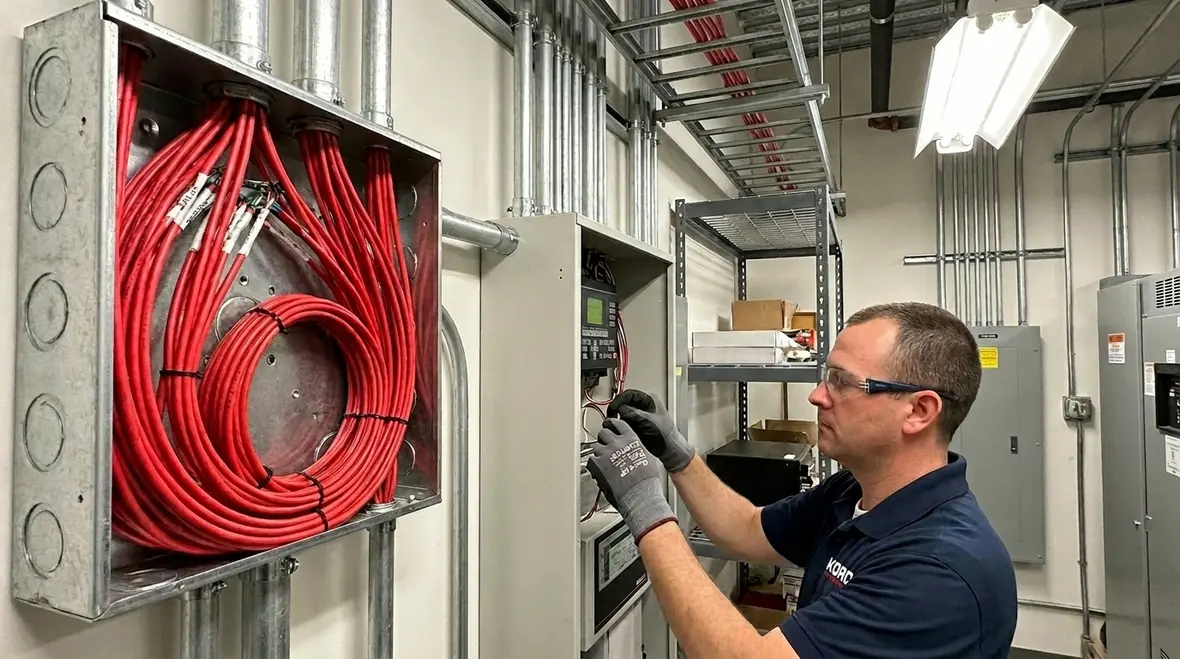
Before anyone pulls a single cable, Kord Fire Protection technicians review the job layout and pick strategies that stop problems at the source. First, they choose cable types that match the system needs, including style, shielding, and conductor construction. Next, they plan routing so fire alarm circuits stay away from power cables and high current devices. Then they set separation guidelines that the installer can actually follow in the field.
In addition, they pay attention to the building hot zones such as cable trays near electrical rooms, mechanical spaces with variable speed drives, and areas where maintenance teams often run temporary power. They also consider how cables enter devices like pull stations, horns, strobes, and detectors. Smooth bends, proper supports, and correct termination methods help keep the wiring consistent and stable over time.
And yes, somebody always wants to run the cable “just for a minute” to save time. That is where things go sideways. A short cut that crosses a noisy path can create long term trouble. The technicians at Kord Fire Protection typically remind teams that fire alarm systems do not forgive shortcuts, not even the ones that feel harmless.
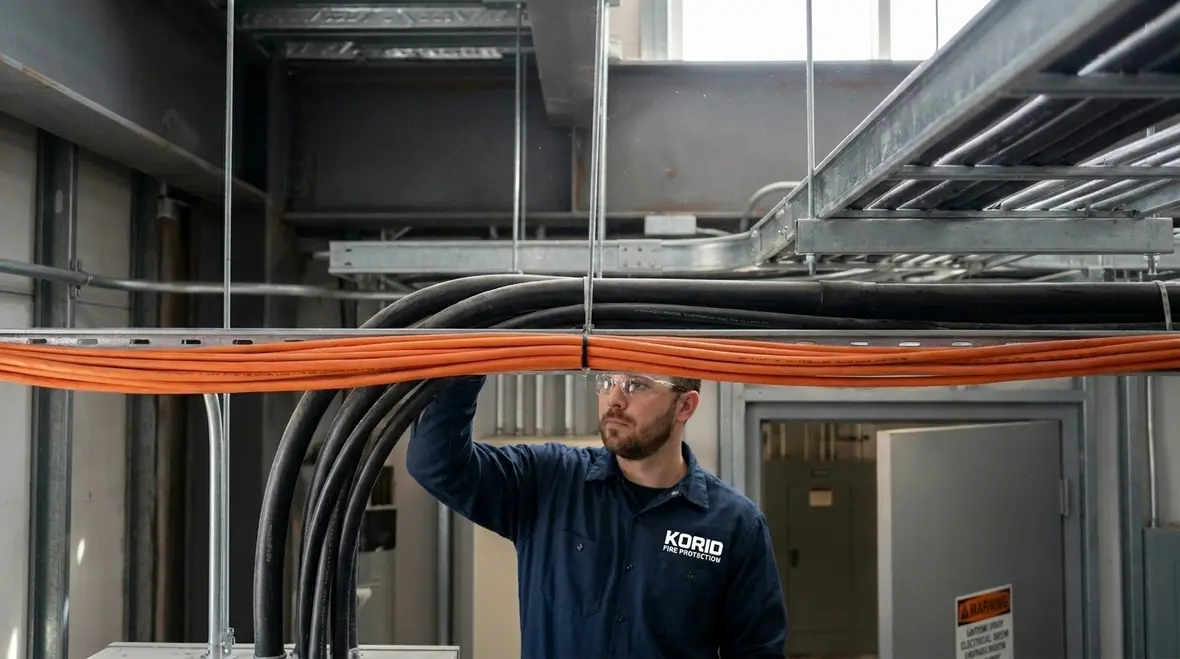
Cable planning decisions that save trouble later
Good design also thinks ahead to future renovations. A cleanly planned fire alarm pathway is easier to identify, protect, and keep separated when other trades return months later to add equipment. That matters because commercial buildings rarely stay frozen in time. They get new controls, new tenant needs, and new electrical demands. Wiring layouts that are clear on day one are much easier to preserve on year five.
Routing and spacing: the simple moves that matter
Routing and spacing act like traffic rules for electrical signals. When the fire alarm wiring best practices are followed, circuits maintain physical distance from sources of interference. Therefore, the noise has less opportunity to couple into the signal conductors. Kord Fire Protection technicians often stress that separation should not be a vague idea. It should be a defined plan that installers use during cable tray layout, stub ups, and device connections.
To support consistent work, Kord technicians also check for common field issues such as cable bundles packed too tightly, unmanaged slack placed near feeders, and wire paths that share boxes with power circuits. Even when separation exists at the tray level, shortcuts at junction points can undermine the effort. As a result, the system may pass the initial test yet develop trouble later as loads change in the building.
- Keep fire alarm circuits on planned, labeled routes instead of whatever path looks fastest in the moment.
- Maintain separation near feeders, panels, drives, and control cabinets where noise is more likely.
- Avoid stuffing excess slack into crowded areas where conductors can drift closer to power.
- Check boxes and transition points, because that is where careful planning often gets quietly undone.
Shielding and grounding for stable signals
Shielding helps control where noise goes. When a cable includes a shield, the system can direct unwanted electrical energy away from the conductors carrying the alarm signal. However, shielding does not work if the installation fails to terminate it correctly. That is why Kord Fire Protection technicians treat shield termination and grounding as critical work, not optional extras.
They also verify that grounding practices follow manufacturer and local requirements. If grounding points are incorrect, noise can ride on the shield and enter the signal path anyway. Additionally, improper bonding can create ground loops, which can behave like an antenna for interference. Consequently, stable supervision requires careful attention to how every conductor connects at the panel and at remote devices.
In plain terms, good grounding gives the system a clean path. Bad grounding gives noise a place to sit comfortably. Noise loves comfort. It settles in, and it starts causing trouble right after the warranty expires. That is not a joke. That is a pattern.
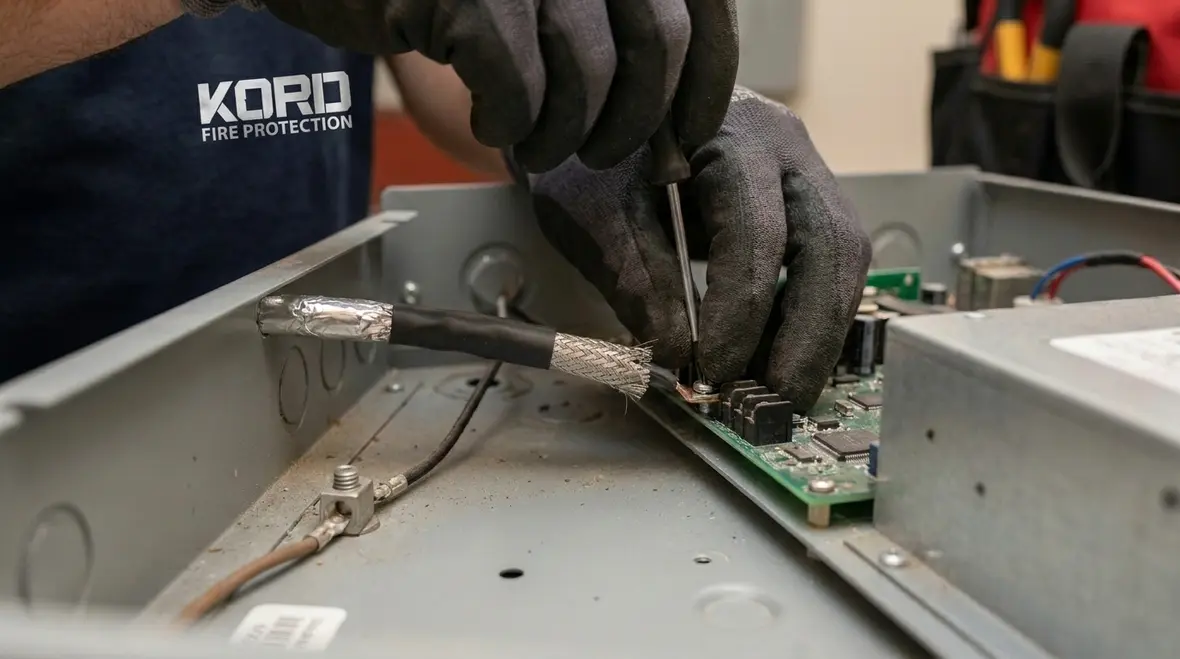
What correct shielding work looks like in practice
Correct shielding work is not flashy, but it is precise. It means technicians know where the shield should terminate, where it should not, and how to preserve continuity without turning the system into a noise collector. It also means that when troubleshooting begins, grounding and bonding are reviewed as part of the whole signal path, not treated like an afterthought tacked onto the end of the punch list.
Termination quality, supervision, and testing that proves reliability
Signal interference can worsen when terminations are loose, corroded, or inconsistent. Therefore, Kord Fire Protection technicians verify that every connection meets the panel and device requirements. They also confirm that conductors land correctly in the right terminals, with proper stripping length and secure tightening. After that, they focus on supervision and loop behavior.
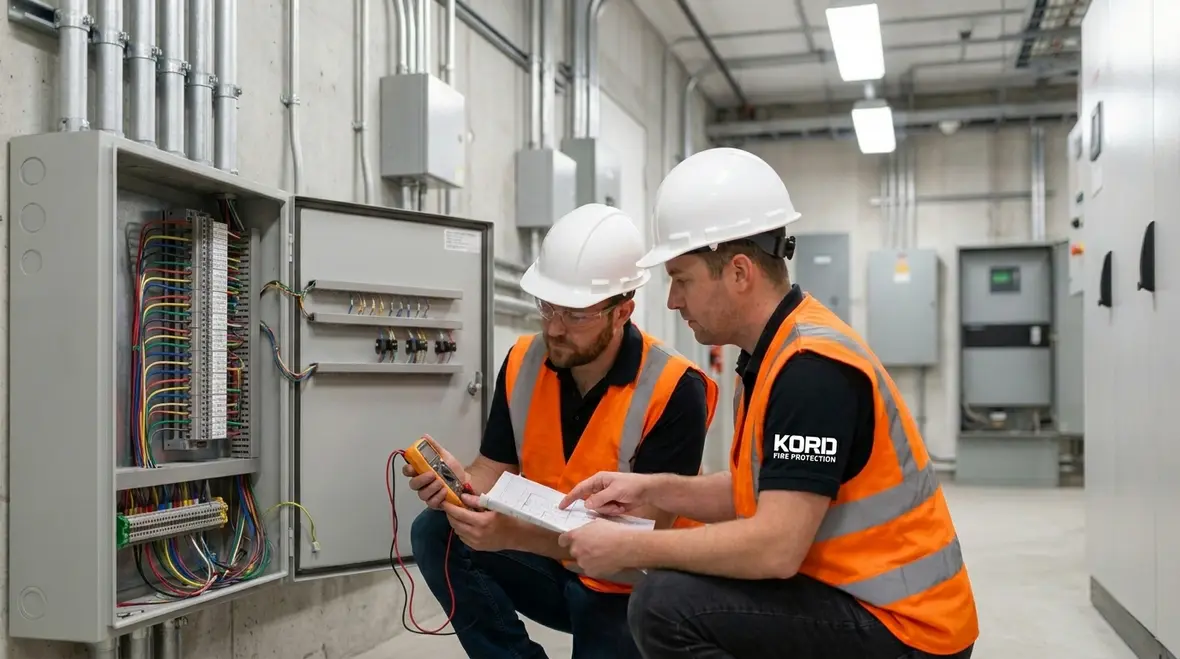
Testing should not end after a basic pass fail check. Instead, technicians perform verification steps that reflect real conditions. They check for correct loop resistance, proper polarity, and stable communication with detection and signaling devices. Then they inspect for signs that interference might appear under load, such as trouble events during HVAC operation or lighting changes. Because the building environment changes, good testing plans for those changes instead of pretending the building will remain static.
To make results easy to track, Kord Fire Protection technicians document test outcomes and label panels clearly. Then maintenance teams can review history without guessing. When someone asks, “Why did it act up last quarter,” the answer should come from data, not memory.
Testing with real building conditions in mind
This is the part that separates a clean install from a dependable one. A system can behave nicely in a quiet moment and still struggle when the building wakes up. That is why thoughtful technicians test with an eye toward actual operation, not just the most flattering conditions possible. The goal is not to win a temporary gold star. The goal is to know the system will keep acting like an adult when the rest of the building gets chaotic.
Common interference sources in commercial buildings
Interference comes in many disguises. Kord Fire Protection technicians commonly see these sources in commercial environments:
- Variable speed drives on HVAC units that inject high frequency noise into nearby pathways
- Elevator control systems that create switching noise and rapid current changes
- Large motor starters and contactors that generate electrical transients
- Fluorescent and LED drivers, especially older retrofit devices
- Power distribution panels with crowded cable tray layouts
Additionally, vandalism and maintenance errors can contribute. When workers re route cables, add temporary circuits, or relocate junction boxes, they can unintentionally bring interference closer to fire alarm wiring. Therefore, management should treat fire alarm pathways like controlled zones. Keep them protected, labeled, and planned, so the next quick fix does not become the next week long headache.
| Interference risk | Technician response |
|---|---|
| High power cables routed too near alarm circuits | Adjust routing and increase separation, then recheck tray fill and junction points |
| Improper shield termination | Inspect terminations, verify bonding points, and confirm continuity to the correct reference |
| Loose or inconsistent device terminations | Re terminate, verify torque and strip length, and run loop supervision tests |
| Unplanned cable additions during renovations | Update as built drawings, trace affected runs, and retest system performance |
Maintenance steps to prevent future interference issues
Once the system works, maintenance keeps it that way. Over time, building upgrades add new circuits, move equipment, and change how electrical loads behave. Therefore, Kord Fire Protection technicians recommend maintenance checks that include pathway review, device inspections, and verification of system trouble history. Even small changes like replacing a driver, adding a new camera system, or modifying mechanical controls can shift noise patterns.
Also, they encourage a disciplined approach to repairs. When someone replaces a detector, horn, or module, the installer should follow the same wiring best practices used during original installation. They should confirm correct cable type, routing, and termination habits. Then they should run the appropriate test steps to confirm stability. In short, maintenance should treat interference prevention as an ongoing process, not a one time project.
This is also where documentation becomes useful instead of decorative. Updated pathway notes, as built revisions, and test records help teams spot what changed and when it changed. If a renovation introduces new noise sources, a solid maintenance history makes the detective work much faster. And unlike that one guy who says he definitely remembers what happened six months ago, the paperwork usually tells the truth.
FAQ
Conclusion and CTA
Signal interference does not need to be a mystery. With solid planning, correct routing, proper shielding, and careful terminations, a commercial fire alarm system stays stable and supervised. Kord Fire Protection technicians focus on practical steps that prevent noise from hijacking the signal, then they verify performance with real testing and clear documentation.
If you want fewer nuisance troubles and more dependable alarm operation, explore Fire Alarm Services from Kord Fire Protection and schedule a site review with a wiring inspection plan tailored to your building. Your system should behave, not surprise you.

Join Our Newsletter!
Get the latest fire safety tips delivered straight to your inbox From our Newsletter.