Fire Alarm Signal Circuits Troubleshooting Guide
Commercial buildings run on alarms the way a city runs on traffic lights: quietly, constantly, and with zero patience for mistakes. That is why Fire alarm signal circuits matter early in any troubleshooting plan. In the first place, these circuits carry the communication that tells panels which device is acting up. Then, when trouble shows up, technicians must separate a real fault from a wiring issue, a device problem, or simple interference. At Kord Fire Protection, our technicians explain the process in plain terms, so facility teams do not have to guess while the system waits for help like a superhero stuck in traffic.
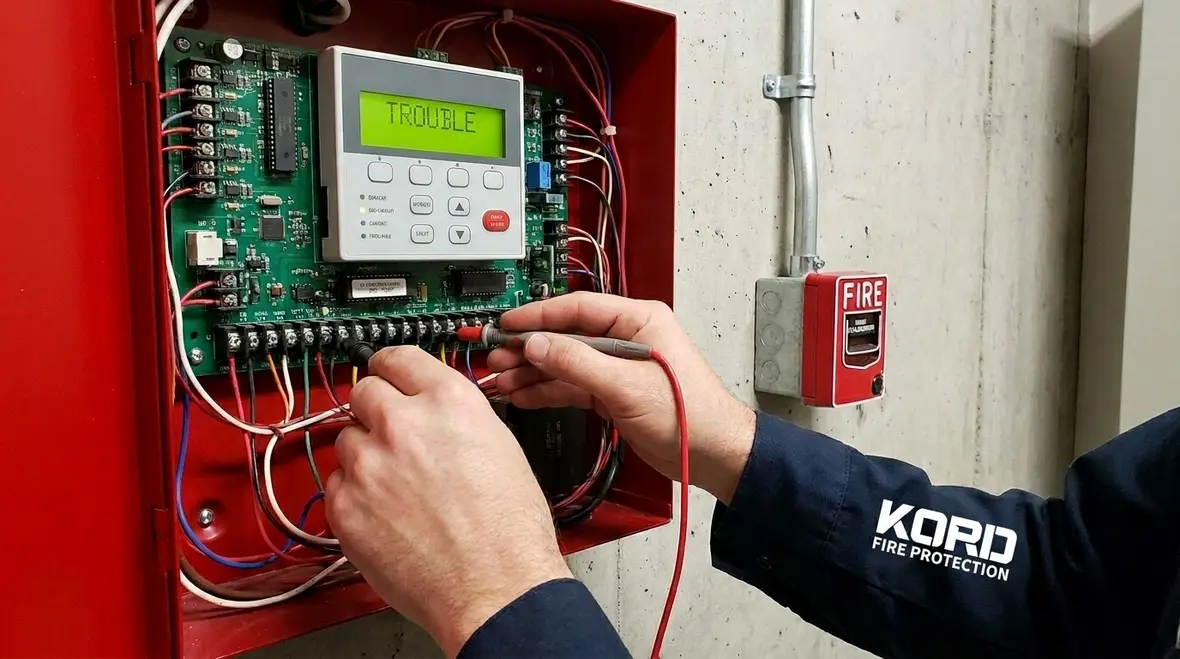
Troubleshooting a commercial fire alarm network is not about poking random wires and hoping the panel suddenly feels cooperative. It is about reading the clues in the order the system gives them, confirming what the panel actually sees, and testing the circuit in a way that protects both uptime and compliance. If the panel reports trouble, it is not being dramatic. It is reporting an electrical condition that deserves attention.
This guide walks through what a signal circuit fault really means, how technicians isolate the cause, and why the difference between an open, short, ground fault, or device issue matters so much in the field. It also pairs naturally with Kord Fire Protection resources on fire alarm trouble signal meanings, detecting fire alarm panel faults before they fail, and fire alarm system reliability and battery health when the trouble condition points beyond the loop and back toward system stability.
What counts as a signal circuit fault in a commercial fire alarm network
In practice, a signal circuit fault usually means the panel detects something wrong with the loop or initiating circuit. It may report open circuit, short circuit, ground fault, trouble condition, or a loss of supervision. However, the exact message depends on the panel brand and the system design. For example, one panel may show a trouble for a wiring break, while another points to a specific address or zone.
Furthermore, technicians look beyond the message. They confirm which part of the network is involved, including where the circuit starts, where it terminates, and how the devices tie in along the run. Kord Fire Protection technicians often remind clients that the control panel does not think, it simply observes what the loop does electrically. So if the loop goes quiet, either something is wrong or something got disconnected.
How Kord Fire Protection technicians start the diagnosis
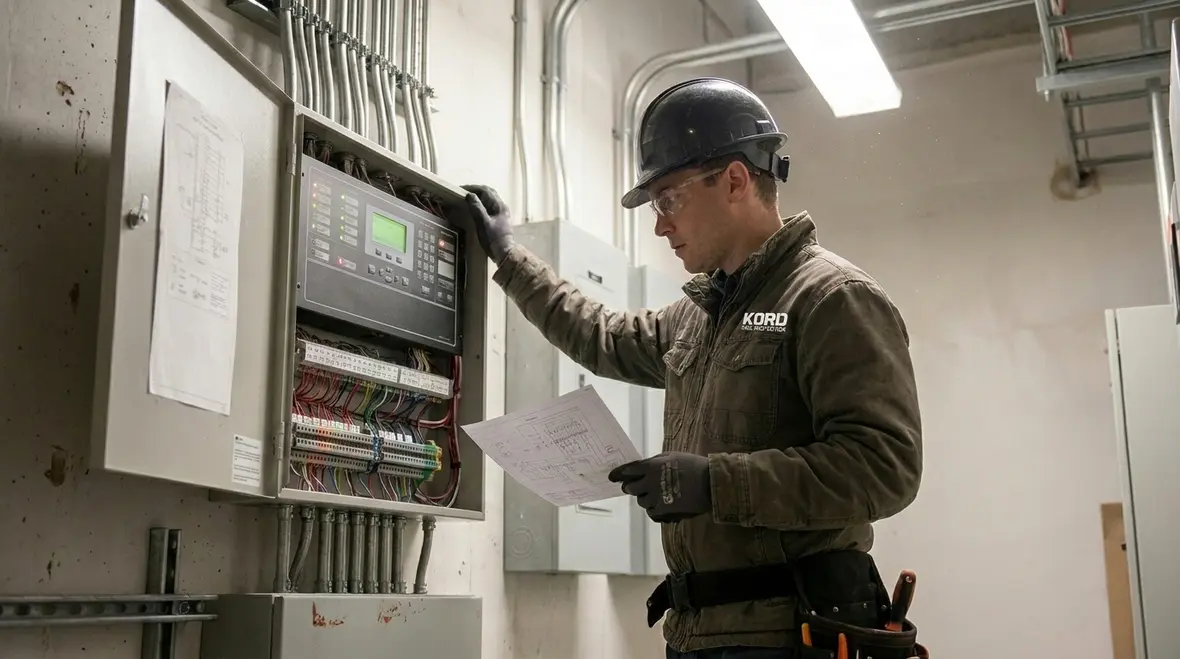
Before anyone grabs a meter, Kord Fire Protection technicians begin with a disciplined check of the system history and current conditions. They review panel logs, device status, and any recent maintenance. Then they compare that information to the trouble indicators still active today. This step matters because a circuit fault after a work order or a renovation often traces back to something as ordinary as a moved cable tray or a reconnected splice.
Next, they verify the basics. That means checking the power supply health, confirming the trouble type, and ensuring the system is stable enough for testing. Meanwhile, they keep safety and code requirements in view, because quick fix can become repeat call in the blink of an eye. And yes, anyone who has ever chased an intermittent fault knows how that goes.
Why the panel is always the starting point
The panel message, event history, and circuit mapping narrow the search before a technician even opens a device. That saves time and avoids turning a focused repair into a building-wide scavenger hunt. It also helps staff distinguish between an active fault and a stale message that remained after a previous issue was already corrected but never fully cleared.
Common symptoms and what they usually mean
Signal circuit faults often show up in predictable ways. Yet they can also disguise themselves, like that one relative who swears they will be on time, then shows up after dinner is cold. Below are frequent symptoms and the likely direction of travel for diagnosis.
- Open circuit trouble: A break in wiring, a disconnected terminal, or a device removed improperly.
- Short circuit trouble: Two conductors touching, damaged insulation, or an incorrect connection.
- Ground fault: Insulation breakdown, moisture intrusion, or wiring routed near sources that stress the conductor.
- Intermittent trouble: Loose terminations, cable movement, or failing device that acts up when touched.
- Zone or address mismatch: A device swapped, reprogrammed incorrectly, or a loop configuration change not reflected in the panel.
In each case, technicians confirm the symptom first, then they test in order from the most likely and least disruptive checks to the deeper ones. That approach reduces downtime and limits unnecessary device replacement. It also protects documentation quality, because every test result can be connected to the symptom that triggered it.
Step by step: verifying wiring, supervision, and end of line devices
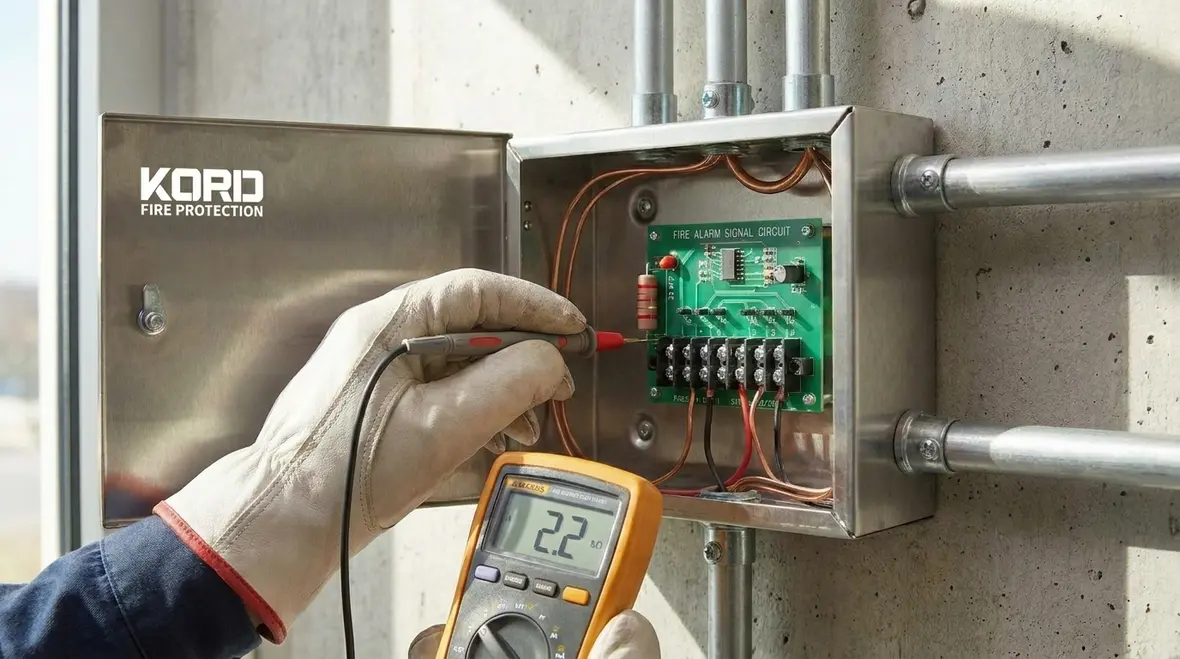
Once the team understands what the panel reports, the next goal is to confirm how the circuit is built. Fire alarm signal circuits often include supervised wiring and end of line elements, depending on the design. Therefore, technicians must verify that all supervision components match the panel requirements and the installed configuration.
- Inspect terminals and splices: Look for loose screws, corrosion, missing jumpers, and improperly seated conductors.
- Check end of line devices: Confirm correct placement and correct values or part numbers when applicable.
- Confirm polarity and wiring pairs: Many problems come from swapped conductors, especially after building changes.
- Measure continuity and resistance: Compare readings to expected values for that circuit type.
- Test for shorts: Confirm that conductors do not contact each other or grounded surfaces.
- Test for grounds: Verify insulation condition by checking leakage paths where moisture or damage may exist.
Even when readings look close, technicians take the time to interpret them correctly. For instance, a slightly off resistance value could signal a marginal connection or a failing device. Meanwhile, an end of line mismatch can cause trouble that looks like a wiring break but behaves differently under test. Kord Fire Protection technicians explain this part clearly because the goal is not just to silence the panel, it is to restore reliable supervision.
Where supervision mistakes usually hide
Supervision problems tend to hide at device bases, terminal cabinets, end of line locations, and splice points touched during renovations. A moved ceiling tile, a device swapped with a similar but not identical model, or a wire pair landed one terminal over can throw the whole circuit into trouble. The panel is not offended. It is simply unimpressed.
How to isolate faults to the device level
After wiring verification, technicians isolate the problem to a specific device or segment. This step reduces the search area and prevents random replacements that burn budgets and patience. Typically, they start with devices most likely to create trouble: those at the beginning or end of the circuit, devices that have been disturbed, and any devices showing physical wear.
Next, they test devices using approved methods for the system type. Some devices respond best to resistance checks, while others need functional testing within the panel rules. Additionally, technicians verify addressing and configuration to ensure the panel interprets the device data correctly. If a device was replaced with a similar model, it may require different programming, compatibility settings, or supervision wiring changes.
Kord Fire Protection technicians often say, Do not blame the smoke detector because it is angry. Instead, they confirm the loop behavior at each stage. Then, if a device fails testing, they replace it with the correct model and document the change. That documentation helps the next tech too, which is a form of kindness that does not show up on a punch list.
Intermittent and stubborn faults: dealing with the real world
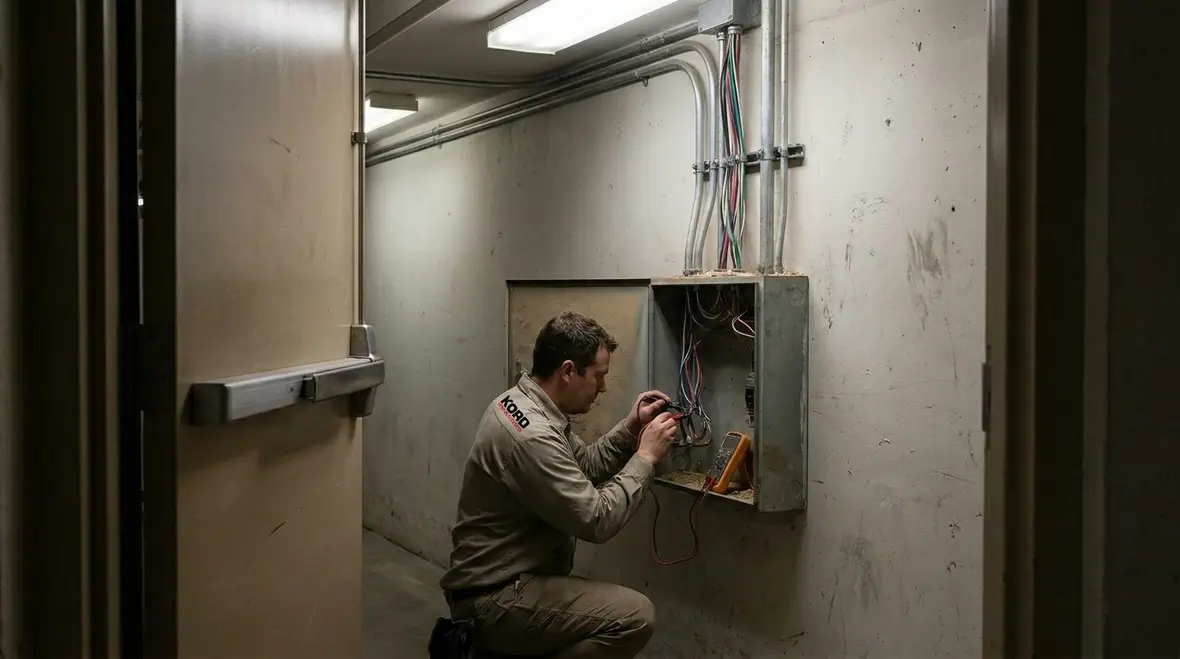
Some signal circuit issues refuse to behave like textbooks. They appear after temperature shifts, during vibration, or only when certain doors close. In that scenario, technicians treat the fault like a mystery in a detective show. They gather clues, test methodically, and avoid jumping to conclusions.
- Document timing and pattern of trouble events from the panel logs.
- Check cable routing areas for strain, pinch points, and water entry.
- Inspect terminal blocks for movement, heat damage, or corrosion.
- Recheck device seating and wiring integrity after physical building activity.
- Use targeted measurements along segments to narrow the location.
Transitioning from likely causes to confirmed causes helps technicians prevent guesswork. Also, careful communication with facility staff matters because we did not touch that circuit can mean we moved the ladder near it or we ran a new conduit nearby. The smallest change can nudge a supervised circuit into reporting trouble, and the panel will not lie about what it sees.
In many cases, stubborn circuit faults overlap with broader system reliability questions. That is one reason Kord Fire Protection also emphasizes battery health and backup power readiness. If the panel is dealing with low power conditions at the same time a circuit fault appears, technicians need the full picture, not just the loudest symptom on the display.
FAQ about diagnosing commercial alarm circuit issues
Featured snippet answers
How long does signal circuit troubleshooting usually take? It depends on how accessible the wiring is and whether the fault is intermittent, but technicians often spend less time with a panel log review and targeted measurements.
What tools do Kord Fire Protection technicians use? Teams commonly use approved meters, inspection tools, and testing methods that match the panel and device type.
Can corrosion cause repeated faults? Yes. Corroded terminals can create unstable readings that look like an intermittent fault.
Should facility staff reset the panel repeatedly? Not as a fix. Resetting without identifying the cause can hide the issue and delay a reliable repair.
Do technicians replace parts right away? No. They isolate the segment and test logically, so repairs target the root cause instead of guessing.
Final call: get signal circuit issues handled before they escalate
When a commercial fire alarm network reports trouble, speed matters, but so does accuracy. Kord Fire Protection technicians diagnose faults step by step, from the panel message to wiring verification and device isolation, so the system stays supervised and trustworthy. If your team sees recurring trouble, unexplained zones, or intermittent faults, reach out for a professional inspection. Act now, document the findings, and restore reliable Fire alarm signal circuits performance before a small fault turns into a big operational headache.
For facilities that need help beyond a single repair, Kord Fire Protection offers broader support through its fire alarm services and full fire protection services. That gives building teams a practical next step when they want inspection, maintenance, repair, and system readiness handled under one roof instead of juggling several vendors and hoping they all talk to each other better than the panel does.

Join Our Newsletter!
Get the latest fire safety tips delivered straight to your inbox From our Newsletter.