Emergency Lighting for Fire Safety and Reliable Service
Quick Answer: Emergency lighting guides people to safe exits when a fire interrupts normal visibility. It reduces panic, shortens evacuation times, and supports compliance in industrial, retail, and commercial facilities. When paired with ongoing service and testing, it helps keep illumination reliable when it matters most.
In the first moments of a fire, visibility often drops faster than anyone’s patience during a surprise shopping rush. That is why emergency lighting for fire safety plays a critical role in evacuation planning. It provides clear wayfinding along exit routes, highlights hazards, and keeps key areas visible when power fails or smoke thickens. However, lights alone do not save the day. They must be designed, installed, and maintained to perform under real conditions, not just during the monthly test someone forgot to schedule.
For businesses that want service support near the top of the process, Kord Fire Protection offers emergency exit light services that naturally fit testing, inspections, repairs, and ongoing reliability planning. For teams looking at the wider life safety picture, Kord Fire also provides full fire protection services that help coordinate emergency lighting with broader compliance and building safety goals.
Why evacuation performance depends on the right illumination
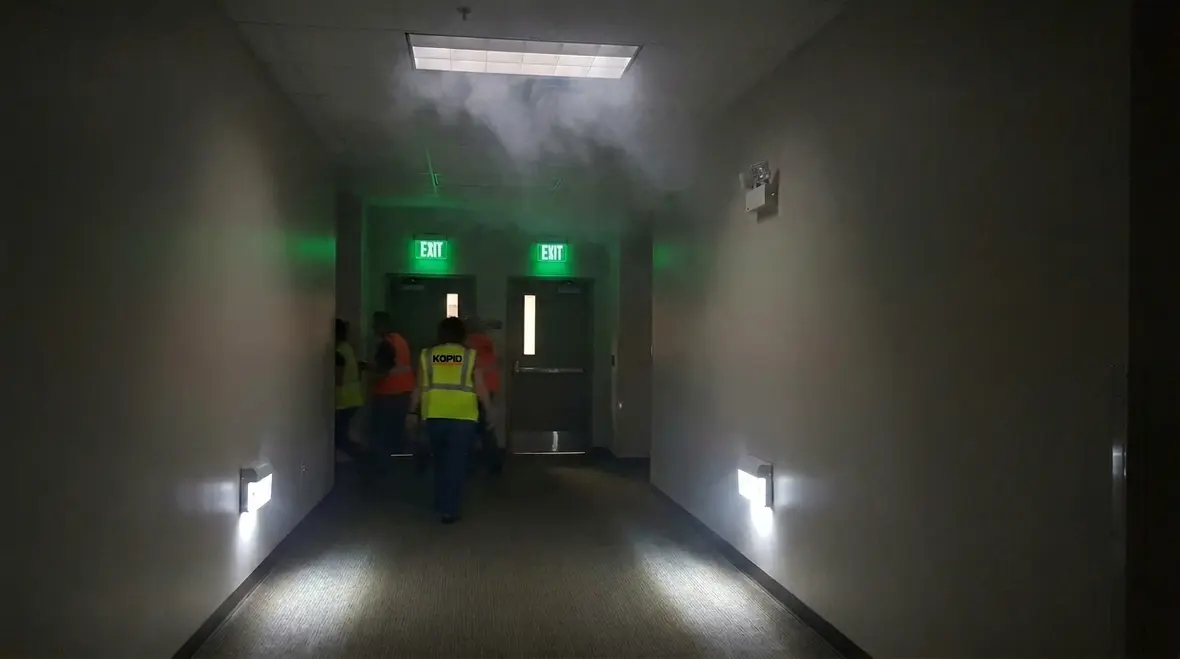
When fire breaks out, the building no longer behaves like a calm workplace. Heat, smoke, and power disruptions can turn hallways into confusing tunnels. As a result, people may hesitate, backtrack, or choose the wrong door. Therefore, properly placed exit and pathway lights act like a steady map in the dark.
Effective systems support three practical goals. First, they guide movement toward final exits and exits from each level. Next, they reduce delays by improving sight lines around corners, stairwells, and changes in direction. Finally, they help staff locate safety equipment and emergency services pathways so response actions start earlier.
That practical approach lines up closely with Kord Fire’s own guidance on emergency lighting for exits placement and coverage, where route visibility and consistent coverage matter more than simply checking a box. In other words, the same product box does not fit every site. If only life worked that way, right?
Lighting should follow the route people actually use
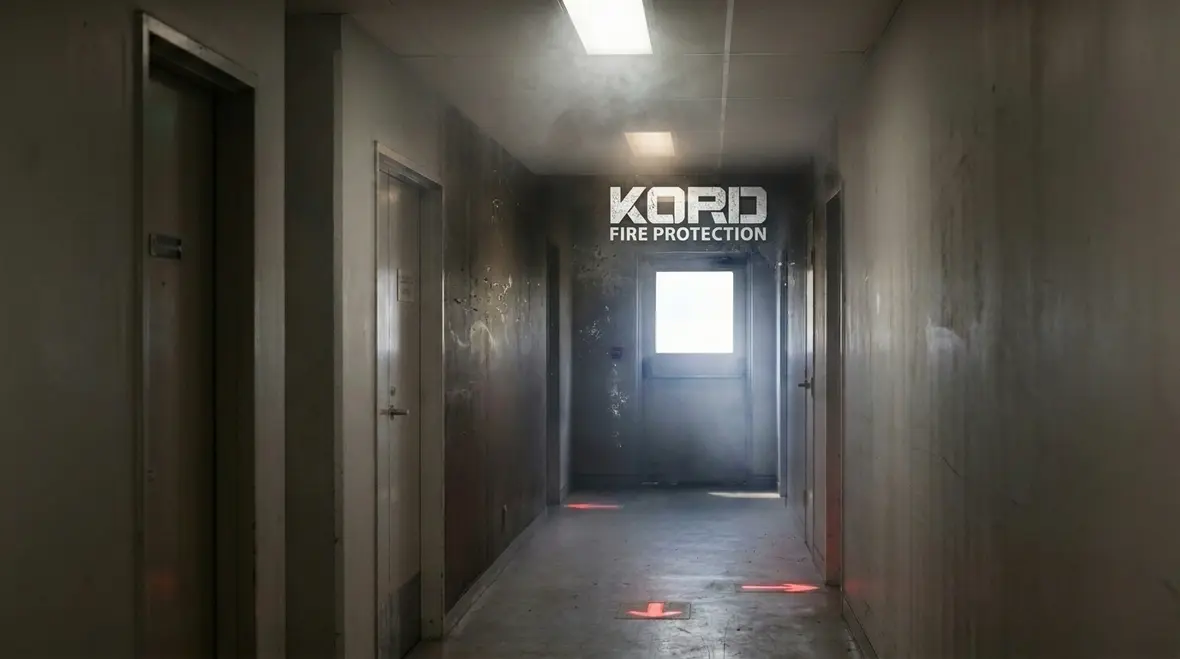
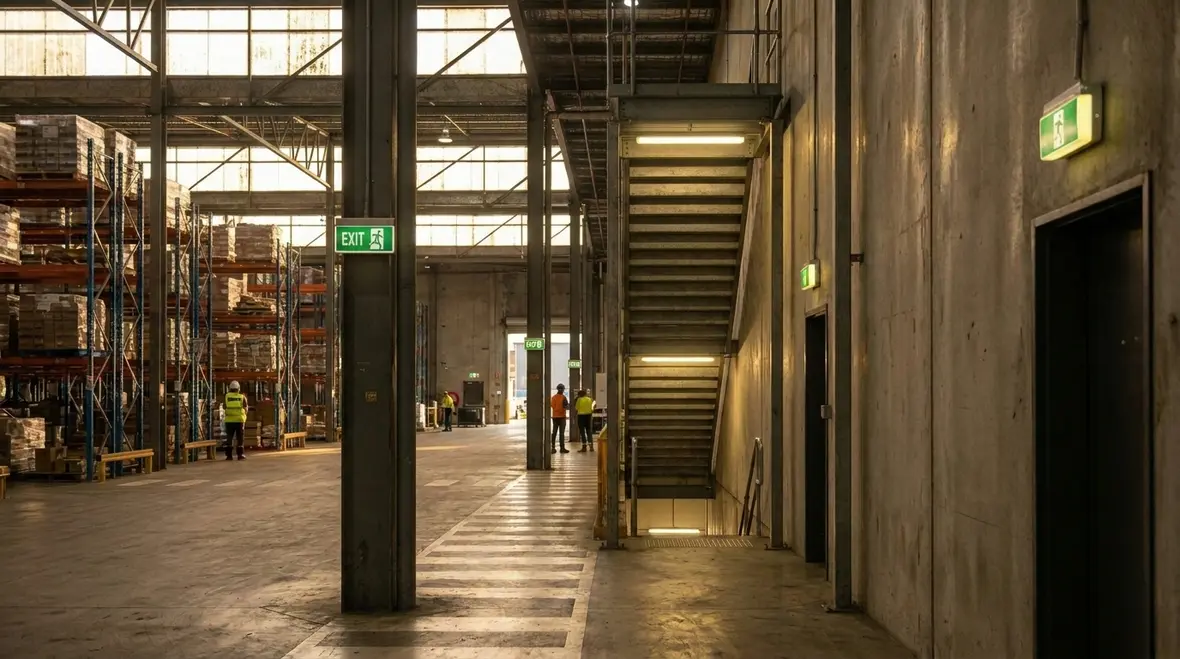
A warehouse with high racks and a retail center with long public walkways may both need strong egress lighting, but they do not need the exact same layout. Coverage has to match how occupants really move, where they pause, and what might block their line of sight in a stressful moment.
How emergency lights actually help during smoke and power loss
Most people understand that emergency lights turn on during power failure. Yet the stronger benefit lies in their behavior under stress. During a fire, smoke can block normal lighting long before the electricity fully fails. In that time window, emergency lighting can maintain enough contrast for occupants to keep moving.
Moreover, emergency lighting supports wayfinding when people follow routines. Staff often know where exits are, but they still need visible cues to confirm direction. If illumination is weak near an exit stair, a person may wait for someone else, which slows evacuation. Therefore, designers focus on illumination levels and placement so the route remains readable, not merely lit.
It also matters how long the system can run. Many evacuation decisions unfold over minutes, but some incidents escalate. If the battery runtime or maintenance history is poor, lights may dim or fail. Consequently, reliable performance requires more than a one time installation. Kord Fire’s guide on emergency lighting repair and troubleshooting reinforces the same point: backup lights are only helpful when their batteries, chargers, and fixtures are actually ready to perform.
Readable beats merely bright
A route can be technically illuminated and still be confusing. People do not need random pools of light. They need direction, contrast, and confidence that the next decision point is obvious.
Where codes and compliance meet real life on site
Across industrial, retail, and commercial facilities, compliance expectations drive the process. Regulations require emergency lighting systems to be tested, maintained, and fit for purpose. However, the paper view of compliance can drift away from the practical view if businesses only do quick checks.
To close that gap, facilities should treat emergency lighting like a safety critical system. They should verify performance, not just activation. For example, a test that only proves the lights switched on might hide weak battery capacity or degraded components. Likewise, a system that passes a basic visual check may still fail under smoky, low contrast conditions because coverage is not adequate at key decision points.
That is why Kord Fire’s article on what a proper emergency lighting test includes is useful for property teams. It draws a sharp line between a simple switch on moment and a test process that actually confirms readiness.
In the real world, a compliant plan also considers occupant load, travel distances, and the behavior of people during evacuations. A busy retail tenancy can have crowds moving in multiple directions, while an industrial site may involve shift workers trained to follow procedures. Both benefit from clear, consistent illumination cues.
Designing for fast exit routes in workplaces
Good emergency lighting design follows the actual paths people walk. That sounds obvious, yet facilities often miss it when they update layouts. A new display area in retail, a relocated racking line in warehousing, or a repurposed corridor in offices can change how people move. Thus, emergency lighting should match current traffic patterns, not last year’s floor plan.
Designers also consider obstacles. Columns, stacked stock, mezzanine edges, and signage height all affect sight lines. Therefore, emergency lights need proper spacing and targeted placement around turning points, stair landings, and final exit doors. Kord Fire’s egress checklist for emergency lighting and exit signs is especially relevant here because it focuses on route clarity instead of wishful thinking.
Businesses should also think about the support systems behind the lights. Distribution boards, backup components, and isolation points all influence whether the system behaves as expected when the incident starts. The goal is simple: no surprises, no dead zones, and no awkward realization that a new storage rack now blocks the very light people were counting on.
Layout changes deserve lighting reviews
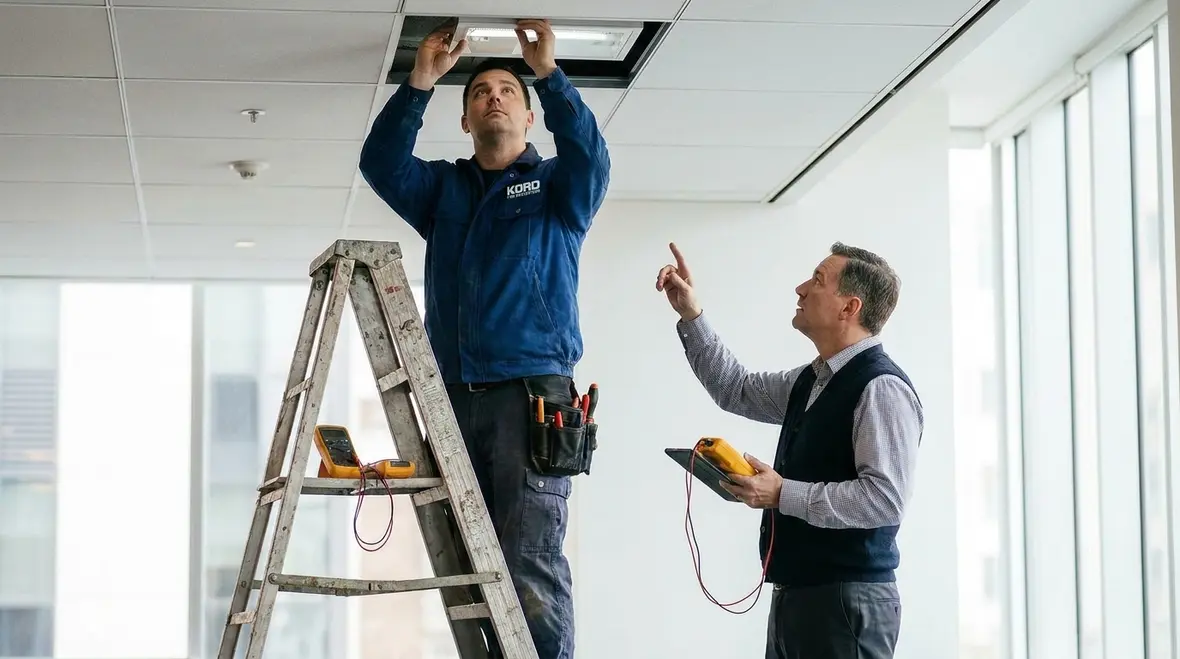
When the floor plan changes, the evacuation path changes with it. Emergency lighting should be reviewed after renovations, merchandising updates, storage reconfiguration, or operational changes that affect traffic flow.
Kord Fire Protection as a vital partner for emergency lighting service
Emergency lighting for fire safety works best when it sits inside a broader fire protection plan. That is where Kord Fire Protection can become a vital partner. Instead of treating exit lighting like a standalone task, they help businesses coordinate it with the wider safety framework, including inspections, fault reporting, and service routines that align with how facilities operate.
For industrial and commercial sites, coordination matters. Facilities often juggle access constraints, busy operating hours, and safety requirements during maintenance. Therefore, a partner that understands fire safety systems can schedule work without disrupting operations more than necessary. Kord Fire’s broader fire protection services page supports that idea by framing emergency lighting as part of a connected life safety strategy rather than a lonely little project off in the corner.
In practice, a strong service partner supports a simple goal: keep illumination reliable when conditions degrade. That includes attention to battery health, test records, component condition, and response readiness. And yes, it also includes paperwork that auditors actually respect, not just forms that look good on a clipboard.
Testing, maintenance, and documentation that reduce surprises
Even the best installed emergency lighting can fail if it is neglected. Therefore, businesses should build a routine that combines scheduled testing, documented results, and corrective action when issues appear. When maintenance is proactive, faults surface early, not during a high stress incident.
Effective maintenance planning includes these steps. First, it ensures the system receives regular testing that checks more than switch on behavior. Next, it tracks performance trends, such as batteries that start losing capacity. Then it ensures timely repairs so small faults do not grow into major failures.
Documentation should also tell the story clearly. It should show what was tested, when, what the results were, and what actions were taken. For multi site businesses, consistent records also make audits and risk reviews easier. Kord Fire’s annual emergency lighting test documentation guide is a useful contextual resource for teams that want cleaner records and fewer headaches.
Single view for faster action
Maintenance focus
- Battery health and runtime verification
- Operational testing of key routes
- Repairs logged quickly and clearly
- Coverage checks after layout changes
Business outcomes
- Fewer evacuation delays
- Lower chance of hidden faults
- Better audit readiness
- More confidence during incidents
Using the system with staff training and evacuation planning
Emergency lighting cannot replace evacuation procedures. However, it supports them. When people practice, they learn where exits are and how to move under stress. Then the emergency lights reinforce those actions by providing consistent guidance.
Therefore, facilities should align lighting placement with evacuation maps, muster points, and staff roles. They should also consider how people move at peak times, such as during shift change in warehouses or during promotions in retail spaces. In those moments, clear illumination reduces bottlenecks and helps staff guide others efficiently.
A small, smart habit is to include emergency lighting checks in routine walk throughs after renovations. When a corridor gets reworked or a store layout changes, the route that people actually use changes too. As a result, the emergency lighting system may need adjustment to keep guidance accurate. That advice also fits neatly with Kord Fire’s recent article on emergency lighting fire safety and egress compliance strategy, which emphasizes matching system performance to real human behavior.
FAQ
Final word: build confidence before the emergency happens
Emergency lighting for fire safety is one of the most practical ways to protect people when visibility drops and decisions must be quick. Yet its value depends on proper design, reliable performance, and disciplined maintenance. Facilities that plan ahead avoid nasty surprises and support smoother evacuations.
Contact Kord Fire Protection to review emergency lighting needs, strengthen service routines, and keep your systems ready across your sites. When the pressure hits, dependable lighting should feel boring in the best possible way: it simply works.

Join Our Newsletter!
Get the latest fire safety tips delivered straight to your inbox From our Newsletter.