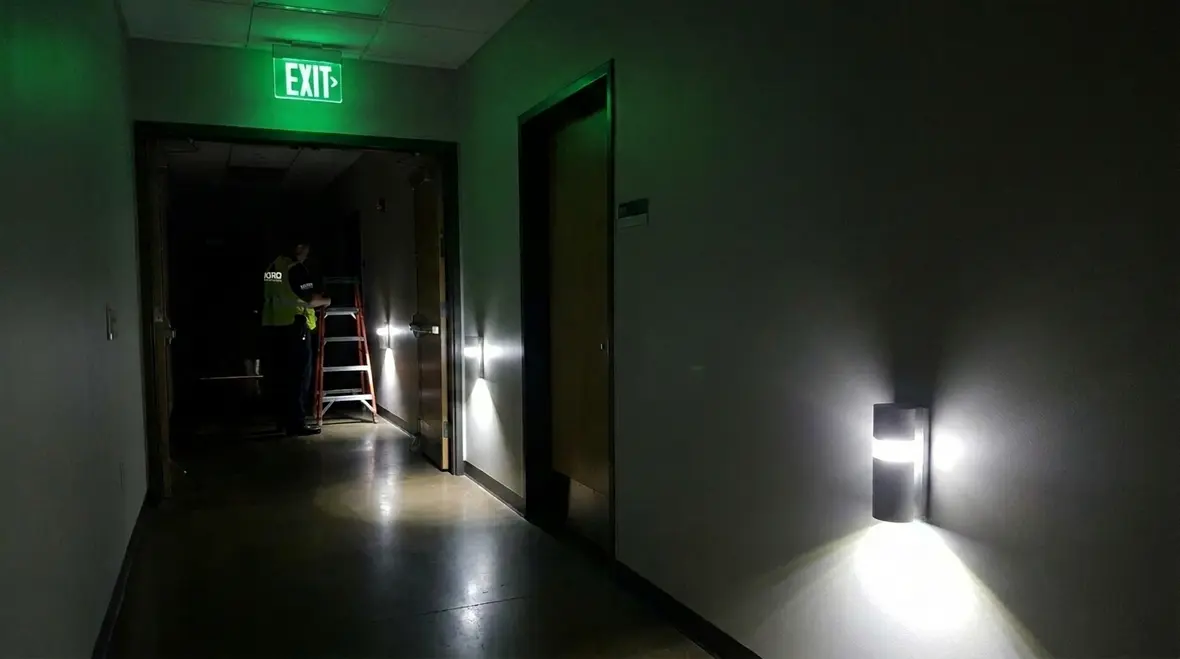
Emergency Lighting for Exits Placement and Coverage Guide, Kord Fire Protection
In commercial buildings, Emergency lighting for exits is not a “nice to have.” It is a calm, bright handrail for people who cannot afford to guess. When smoke rolls in or power drops, occupants still need clear routes to safety, and the lights must show them the way without panic doing stand up comedy in their minds. Kord Fire Protection technicians explain that good emergency lighting starts long before the first fixture is installed. It begins with smart planning, real building layouts, and the right placement so the light reaches where eyes actually need it.
That planning also works best when it fits into the broader life safety picture. Emergency lights are not lone wolves with batteries. They are part of the full egress strategy, and that means placement should support exit signs, alarm response, travel paths, and realistic human behavior. If the route is supposed to feel obvious during an emergency, the system has to be obvious on a bad day, not just on the blueprints.
For building owners and managers, the goal is simple: make the path out readable at a glance. For technicians, the work is a bit more detailed. They look at corners, thresholds, landings, partitions, fixture output, test access, and the places where people are most likely to hesitate. That combination of planning and practical field judgment is what turns emergency lighting from a box on a checklist into something genuinely useful.
What the building layout demands first
Strategic placement begins with the path people take, not the path designers prefer. Kord Fire Protection technicians typically start by mapping exit routes, then looking at how people move under stress. For example, corridors feel longer during an emergency, so the spacing of lights must support that reality. Further, doorways, stairwells, and changes in direction often demand extra attention because human attention narrows when alarms sound. Therefore, lights should guide movement at every decision point.
In practice, this means checking the building plan for hazards that can block visibility. If shelving, ducts, or decorative soffits create shadows, the emergency lights should be placed to avoid dark corners. In addition, technicians consider how quickly people reach a line of sight. Hence, lights near intersections and along the route become more than decoration. They turn the route into a readable map.
This is also where a practical site walk matters. Drawings can show walls and doors, but they do not always capture temporary storage, furniture creep, tenant improvements, or the giant display rack that appeared after someone had a bright idea in the lobby. A route that looks clear on paper can turn muddy in real life. That is why thoughtful placement begins with the building as it actually operates.
Emergency lighting for exits: the rule of sight
Emergency lighting for exits works only if it is visible when it matters. That is why placement focuses on sightlines, mounting height, and beam reach. Kord Fire Protection technicians often explain it this way: if occupants can’t see the light, the light can’t do its job, and no, that is not the time to rely on “I think the sign is over there.”
They also stress that exit signs and luminaires must work together. A sign alone may fail if glare or smoke reduces contrast. Likewise, a luminaire alone may fail if the direction is unclear. Therefore, the system must place light so people can recognize an exit route immediately, then follow it step by step.
To support this, technicians evaluate typical viewing angles from corridors, lobbies, and waiting areas. They also factor in the way people react to alarms and obstacles. Consequently, the design avoids lighting that “almost works.” Instead, it aims for consistent coverage throughout the route.
Why clear sightlines matter more than pretty symmetry
Fixtures do not earn points for looking evenly spaced if their light misses the actual points of decision. The better approach is to place units where the route changes, where a person might pause, and where an obstacle could break visual continuity. In other words, the lighting should read like directions, not wallpaper. If it helps the path feel intuitive, it is doing the job right.
Owners looking for additional guidance on inspections and common egress issues may also find Kord Fire Protection’s overview of egress checklists for emergency lighting and exit signs helpful when reviewing routes that need better visibility.
Coverage planning for corridors, stairs, and doorways
Different spaces require different placement logic. Corridors generally need even coverage, but stairwells need clear guidance at landings and turns. Meanwhile, doorways need lighting that reduces confusion at the handle and threshold. As a result, a plan that looks neat on paper can still fail if it ignores movement patterns.
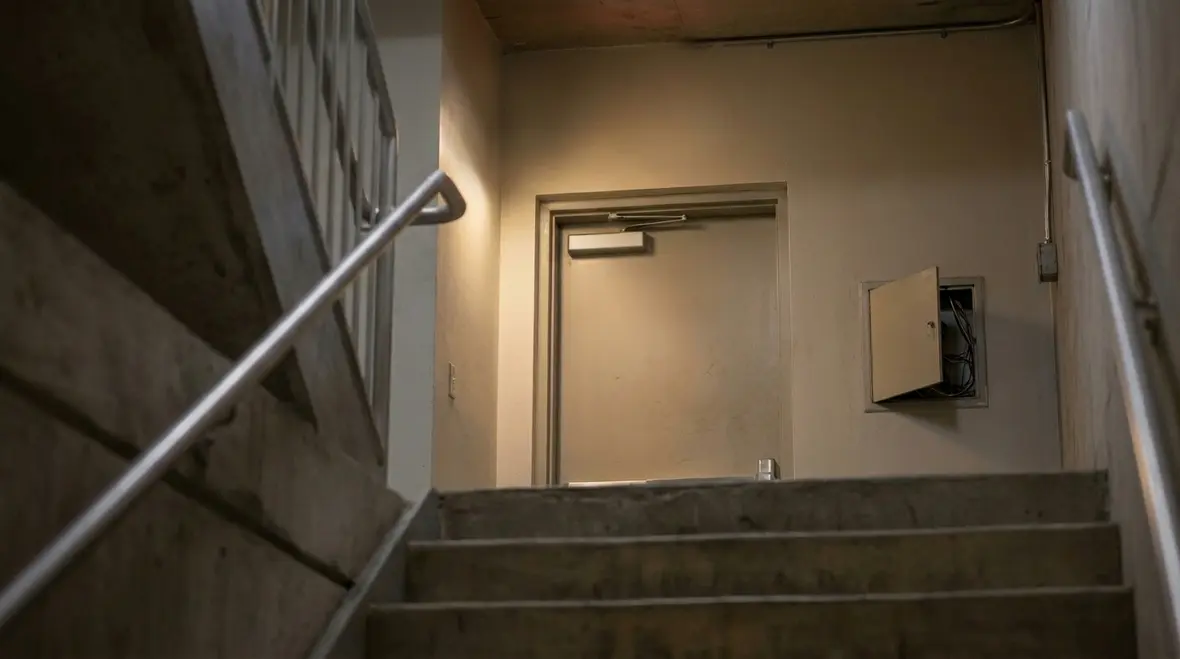
Kord Fire Protection technicians guide teams to treat each zone as its own mini route. For example, a long hallway with multiple doors needs careful placement to prevent shadows near wall sections. Similarly, stair doors and the first few steps down should stay visible so people do not stumble while trying to think.
In addition, they look at likely crowd behavior. In office areas, people often pause when they look for coworkers. In retail spaces, sightlines shift with displays and seasonal layouts. Therefore, the placement must remain stable even when spaces change. After all, if the lights depend on a perfect day, they are not really emergency lights.
Zone by zone placement choices
- Corridors and hallways: Prioritize even illumination, visible intersections, and reduced shadowing near walls or alcoves.
- Stairwells and landings: Keep landings, turns, door swings, and the first several steps visually clear.
- Exit doorways: Make the door obvious on approach and reduce hesitation at hardware, thresholds, and framing.
- Open waiting areas: Use balanced coverage so people can orient themselves toward the exit path instead of drifting toward the brightest random spot.
Battery, spacing, and test readiness
Strategic placement is not only about where fixtures go. It also covers how the system performs during real outages. Kord Fire Protection technicians explain that battery capacity, charging conditions, and luminaire output influence whether lights maintain brightness long enough.
Spacing decisions must match the expected light level along the route. If luminaires are too far apart, the system may leave parts of the path dim. If they are too close, the system can become unnecessarily expensive and still fail if brightness is not right for the manufacturer’s performance. Therefore, spacing follows both layout and fixture specs, not guesswork.
Moreover, test readiness matters. Emergency systems require regular checks, and technicians place fixtures where they can be inspected and where the test function is accessible. This reduces downtime and keeps service records clean. In other words, good placement also respects the people who maintain the system. Nobody wants a maintenance tech playing “find the breaker” in a closet at midnight, unless they are in a very odd mystery show.
That maintenance angle is easy to overlook, but it matters a lot. A beautifully placed fixture that cannot be safely reached, tested, or serviced becomes a recurring headache. Better access helps monthly and annual checks happen on time, which in turn helps the system stay dependable. For a related look at what proper testing should include, see Kord Fire Protection’s article on emergency lighting service and what a proper test includes.
How to handle complex spaces without losing clarity
Commercial buildings often include tricky areas: long mezzanines, open atriums, back-of-house hallways, and rooms with interior partitions. In these spaces, placement must preserve clarity even when smoke moves unpredictably. Kord Fire Protection technicians emphasize that open areas can create bright zones and dark zones, so the design must balance it.
For example, an atrium may tempt people to look up, especially when they hear alarms. However, the path to safety depends on floor-level cues. Therefore, emergency lighting should not rely on vertical effects alone. It must support horizontal guidance along exits and stairs.
Similarly, interior partitions can break sightlines. In those cases, placing emergency lights near key corners helps occupants see the route even when they cannot see the exit door directly. Hence, technicians use placement that anticipates obstacles rather than reacting after the fact.
| Area type | Placement focus |
|---|---|
| Corridors and hallways | Even coverage, minimal shadow near walls, clear direction at intersections |
| Stairwells and landings | Visibility at turns, guidance into stairs, support at door thresholds |
| Exit doorways | Light recognition at the approach, reduced confusion around handles and frames |
| Open atriums and waiting areas | Floor level guidance, balanced brightness to avoid dark zones |
Coordination with fire safety systems
Emergency lighting works best when it fits the full safety plan. Kord Fire Protection technicians explain that emergency lights must coordinate with alarms, fire detection, and any shutdown or control strategies. If smoke control systems push smoke toward certain areas, lighting placement must still keep exit routes readable. Thus, the design aligns with the building’s emergency behavior, not just its normal layout.
Additionally, technicians confirm that exit signs and emergency luminaires remain powered under the right conditions. They also verify that the system design supports the travel distance to exits based on the occupancy type. Consequently, placement becomes part of a bigger safety network.
When fire protection and electrical teams coordinate early, the result usually looks smoother in the field. It also reduces changes during construction. And changes, as everyone knows, can be as fun as a surprise pop quiz. Better to avoid the quiz.
For facilities that want a broader service review, Kord Fire Protection’s Fire Alarm Services and Systems page is a strong place to connect emergency lighting planning with monitoring, inspections, repairs, and full life safety coordination. If the need is specifically tied to exit signs and backup illumination, the dedicated Emergency Exit Light Services page is a natural fit near the end of the planning process and works well as a next step.
FAQ
Final call for smarter placement
Strategic placement of emergency lighting protects people when every second feels loud and long. Kord Fire Protection technicians can review your layout, exit routes, and fixture performance to create a plan that stays clear in smoke and power loss. If the building has new tenants, new partitions, or a renovated lobby, now is the time to reassess coverage.
Reach out for an inspection and placement review, and make sure your Emergency lighting for exits does more than sit there looking helpful. To connect this work with broader life safety planning, visit Fire Alarm Services and Systems or request support through Emergency Exit Light Services for testing, repairs, and upgrades that keep the route out clear when it counts.

Join Our Newsletter!
Get the latest fire safety tips delivered straight to your inbox From our Newsletter.