Emergency Lighting Fire Safety: Egress Compliance Strategy
Quick Answer (40-60 words): Effective emergency lighting strategy helps people exit fast and helps facilities meet fire safety rules. It requires the right layout, tested equipment, and smart maintenance that matches how the building actually gets used. With Kord Fire Protection as a partner, sites can reduce risk and stay compliant without guesswork.
In the loudest moments of a crisis, the building should become quiet in the right way. That is where emergency lighting fire safety comes in. It guides people toward exits, supports clear wayfinding, and helps responders locate hazards. However, many facilities treat emergency lighting like a box to tick, not a system to run. In this guide, decision makers across industrial, retail, and commercial operations will learn how to maximize egress efficiency with practical strategies that support compliance expectations and real human behavior.
Near the top of any serious plan, it makes sense to connect strategy with actual service support. Kord Fire Protection offers emergency exit light services that naturally fit facilities needing testing, repairs, inspections, and dependable ongoing support. For broader reading, the Kord Fire Protection Blog also provides related fire safety guidance that helps teams connect emergency lighting with the rest of their life safety planning.
Why egress efficiency depends on more than “having lights”
Emergency lighting is not simply a set of fixtures; it is a timed, spatial guidance plan. First, people move under stress slower than usual, and they follow contrast, familiar routes, and visible cues. Then, smoke, glare, and crowded conditions can make “standard placement” fail. So the goal becomes simple: reduce uncertainty and shorten the time to reach a safe exit.
In other words, a facility needs predictable visibility at the places where decisions happen. That means corridors that look like nothing is happening should still deliver guidance. Meanwhile, exits should look like exits from every likely starting point. If the lights work only after someone already knows where to go, the system is doing homework after the test starts. And nobody likes that.
What people actually do during a confusing exit
Occupants rarely move like arrows on a diagram. They pause, hesitate, cluster near familiar doors, and follow visible movement from others. That makes emergency lighting fire safety less about theory and more about reducing friction. A route that seems obvious at noon can become strangely unhelpful during a power outage, especially if smoke, shadows, or temporary obstacles change what people can see. Good strategy accounts for those awkward real-life moments instead of pretending everyone turns into a calm evacuation robot.
Designing coverage that matches how people actually walk
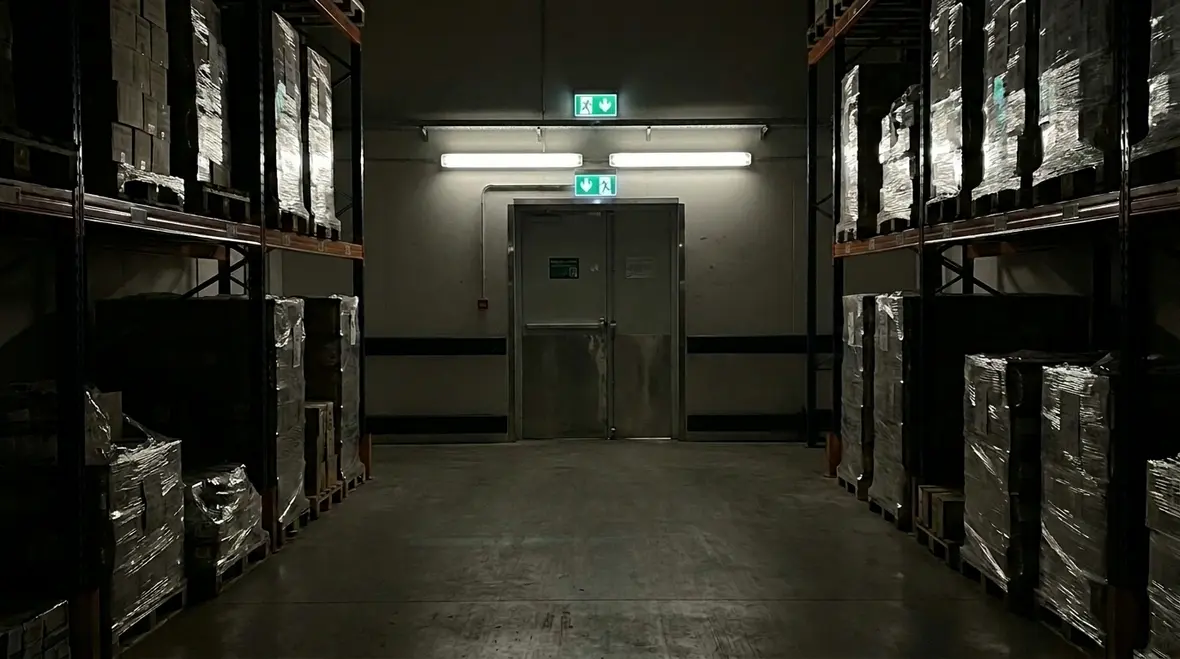
Sites vary wildly. A warehouse might rely on bay layouts, forklifts, and pallet paths. A retail center might have seasonal crowd flows. A commercial office may shift during maintenance or events. Therefore, an emergency lighting plan should reflect current movement patterns, not a floor plan from five owners ago.
When teams design for coverage, they should focus on these practical goals:
- Route continuity: Ensure guidance along main egress paths, including cross-corridors and junctions.
- Decision points: Place emphasis near stairs, doorways, and places where people choose left or right.
- High risk zones: Improve visibility near machinery areas, loading docks, service rooms, and areas with higher fire load.
- Corner and intersection logic: Light should not “fade out” where turning happens.
Next, the facility should account for typical obstructions. A trolley jam near an exit, temporary signage, or stacked stock can block sightlines. While emergency lighting fire safety standards cover performance requirements, real-world success depends on keeping fixtures effective when the site looks messy.
This is where layout reviews earn their keep. If teams only verify fixture counts without checking what occupants actually see, the building may look compliant on paper while still producing hesitation in motion. That gap matters. Egress routes need visual continuity that survives everyday clutter, operational churn, and the occasional mystery object left exactly where no mystery object should be.
Battery backup and switching: the part that fails quietly
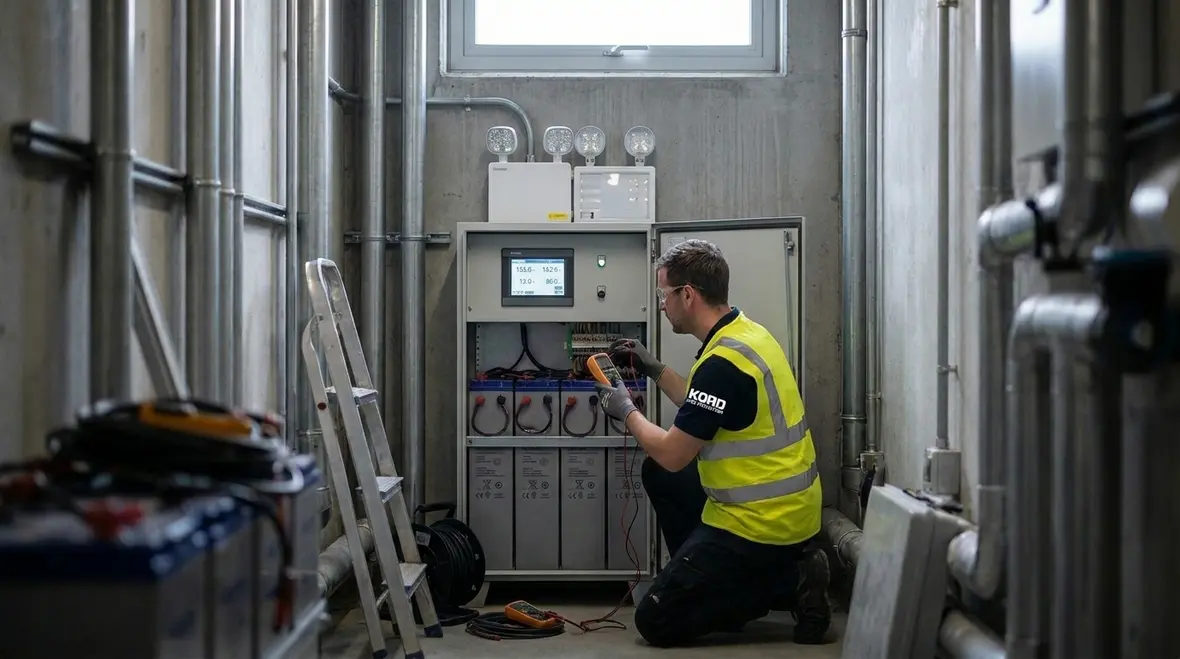
Many teams assume emergency lighting will work because the units exist. Yet the most common failures often happen behind the scenes: batteries degrade, sensors drift, and switching delays appear during real power loss. Consequently, the system’s reliability becomes a compliance issue and an operational issue.
To reduce the risk of “it looked fine during inspection,” facilities should implement a disciplined approach:
- Verify standby operation: Confirm correct changeover on loss of power and after test cycles.
- Review battery health: Track run-time and age, then schedule replacements before performance drops.
- Confirm control logic: Ensure zones switch correctly and do not leave dark segments.
- Test under realistic conditions: Simulate partial outages where applicable, especially in large buildings.
Transition matters here. If a facility transitions from normal power to emergency power with delays, people will still be making decisions. Like a slow-loading streaming app, the lights should not “buffer” when seconds count.
Why batteries deserve boring, consistent attention
Batteries are not dramatic until they fail, and then suddenly everyone becomes very interested. A reliable program tracks age, discharge performance, replacement cycles, and test results in a way that keeps surprises to a minimum. Facilities that postpone battery review usually do not save effort; they simply reschedule the effort for a worse day.
Testing and maintenance plans that actually hold up
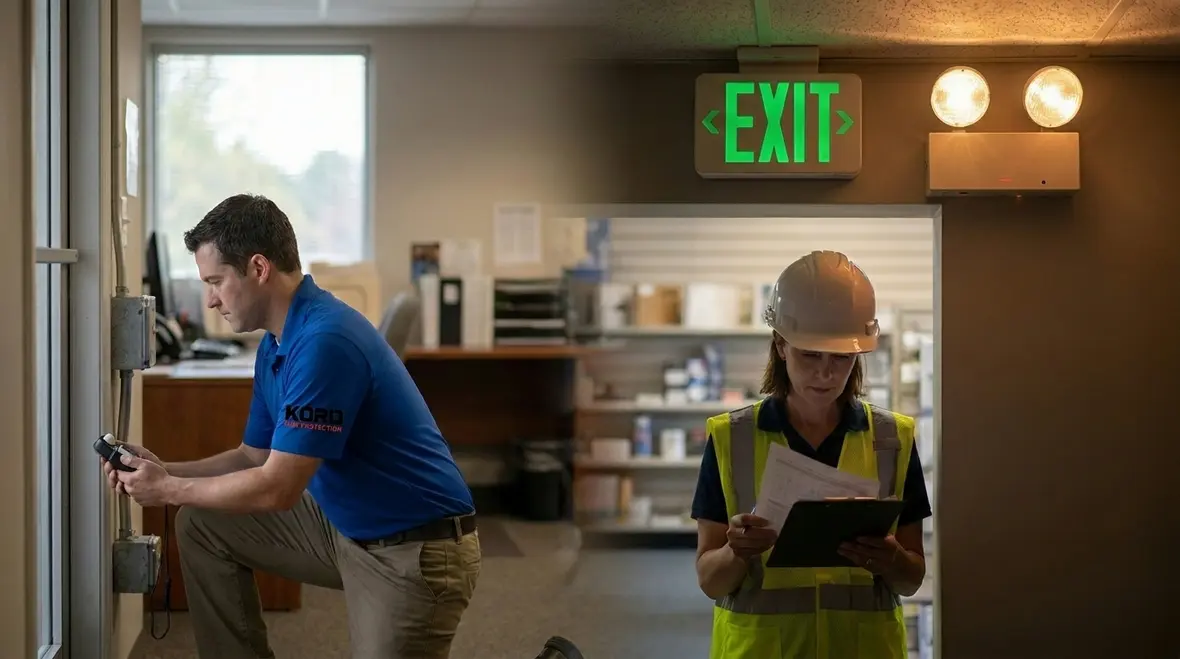
Compliance lives in evidence. So a strong maintenance plan should do more than schedule periodic checks. It should confirm performance over time and document outcomes in a way that stands up to audits and incident investigations.
A good plan blends routine work with targeted verification:
- Routine inspections: Check physical integrity, visibility, and correct operation at each fixture.
- Functional testing: Validate battery output and switching behavior on a defined schedule.
- Recordkeeping: Keep clear logs that show when tests happened, results, and corrective actions.
- Issue triage: Fix faults promptly, and retest the affected zones.
In addition, teams should adjust maintenance after site changes. A new mezzanine, modified warehouse racking, or relocated retail displays can alter sightlines and egress behavior. When the building changes, so should the emergency lighting fire safety strategy.
Kord Fire Protection’s recent guidance on what a proper emergency lighting test includes is especially useful for teams trying to separate real performance checks from quick pass-through routines. It reinforces a simple point: testing should confirm the system can actually support safe exit conditions, not just produce a checkbox and a sigh of relief.
Using Kord Fire Protection as a vital partner for compliance
Even the best internal teams can get overwhelmed with documentation, testing coordination, and asset management across multiple sites. That is where Kord Fire Protection can become a vital partner. Instead of treating emergency lighting as a stand-alone task, Kord helps organizations approach fire safety as one connected program that includes inspection readiness and corrective action pathways.
Here is how that partnership helps in practice:
- Professional compliance support: Helps facilities keep emergency lighting systems aligned with expectations and audit timelines.
- Clear reporting: Makes it easier to show what was tested, what was found, and what changed.
- Responsive rectification: Supports corrective work so faults do not linger like a bad smell no one wants to admit is there.
- Site-aware planning: Accounts for the realities of industrial and commercial environments, where access and operations affect testing.
Most importantly, Kord Fire Protection helps facilities move from reactive fixes to planned readiness. And once that shift happens, emergency lighting fire safety stops being a yearly scramble and starts acting like a reliable system.
That connected approach also aligns with Kord’s article on coordinating emergency lighting and fire safety controls, which highlights how illumination, alarms, doors, and related systems work better when they are planned together rather than managed in silos.
Common gaps that reduce egress performance
Facilities often miss key points even after installing compliant equipment. Below are typical gaps that quietly reduce egress efficiency, along with practical ways to address them.
- Fixture placement doesn’t match the route: The system covers the drawing, not the movement. Update layouts after fit-outs and operational changes.
- Blocked visibility: Fixtures sit behind signage, stock, or temporary barriers. Control clutter near egress paths.
- Unmanaged junctions: People hesitate at stairs and corridor turns. Ensure guidance stays strong at decision points.
- Testing doesn’t reflect reality: Some tests confirm power changeover but not effective guidance for occupants. Focus on functional outcomes.
- Maintenance lags behind growth: As sites expand, teams forget to add coverage. Treat expansions like new egress projects.
Therefore, the fix is not only technical. It is also governance. Assign ownership, keep records current, and review outcomes regularly so the system stays effective as the building evolves.
A practical review rhythm for busy teams
A sensible rhythm might include routine visual checks, scheduled functional testing, quick follow-up after layout changes, and periodic program reviews that compare real movement patterns with assumed ones. The goal is not bureaucracy for its own sake. It is reducing the number of ways a familiar building can become confusing when power disappears and everyone suddenly wishes past decisions had been smarter.
Featured FAQ: emergency lighting fire safety for compliance
Next steps: build a safer egress program now
Emergency lighting fire safety works best when it becomes a managed program, not a yearly check. Facilities should review egress routes, validate battery performance, and maintain clear records that prove readiness. A thoughtful system reduces hesitation, supports safer exit movement, and gives teams a stronger position when inspections or incident reviews happen. That kind of preparation is not flashy, but it is exactly what people need when normal conditions vanish.
If your facilities span industrial, retail, or commercial spaces, consider Kord Fire Protection as a partner to strengthen compliance and reduce downtime from unexpected faults. Start with a risk-focused assessment, connect emergency lighting to the rest of your fire safety strategy, and build a maintenance plan you can trust. The best time to fix uncertainty is before the lights go out and everyone suddenly becomes an expert in regret.

Join Our Newsletter!
Get the latest fire safety tips delivered straight to your inbox From our Newsletter.