
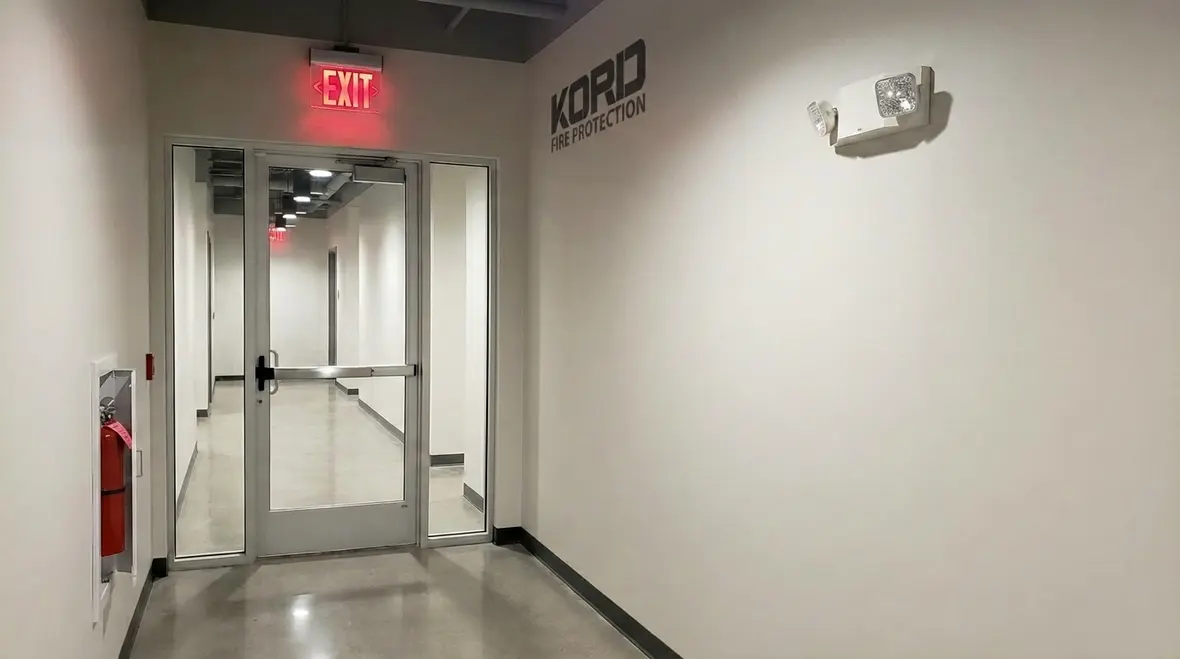
Egress Checklist for Emergency Lighting and Exit Signs
When a fire alarm pierces the air, no one pauses to admire the architecture. People look for doors. They look for signs. They look for light. That is why a proper egress checklist emergency lighting exit signs review is not just paperwork. It is a life safety promise. Inspectors know it. Fire marshals enforce it. And as Kord Fire Protection technicians often explain in calm, steady tones, safe exit systems are not complicated. However, they must be precise. This guide walks through what inspectors flag most often, how doors, signs, and lighting work together, and what building owners can do before a citation lands on their desk.
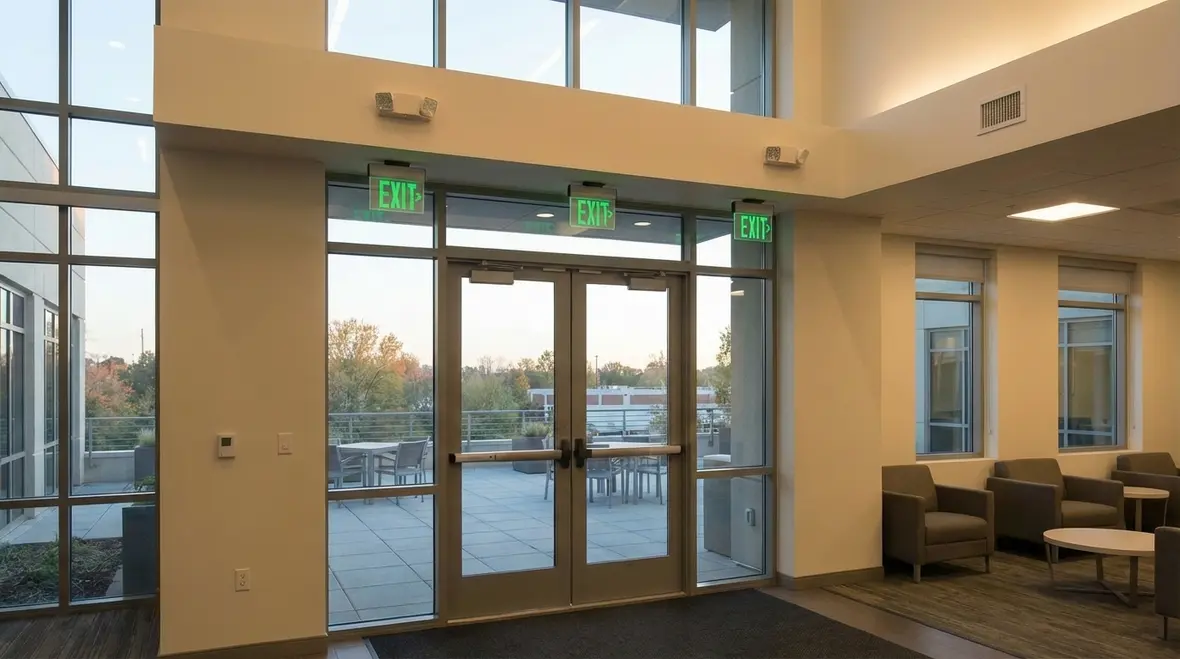
The Life Safety Egress Checklist: Doors, Signs, Lights, and What Inspectors Flag
Every building tells a story. Hospitals whisper urgency. Schools hum with movement. Warehouses rumble with forklifts. Yet all share one requirement. People must get out quickly and safely.
An effective life safety egress plan centers on three pillars.
- Doors that open easily
- Exit signs that guide clearly
- Emergency lighting that activates without hesitation
Inspectors evaluate these components as a unified system. Therefore, a single weak link can trigger violations. Kord Fire Protection technicians often remind facility managers that compliance is less about passing an inspection and more about protecting the people who trust the building each day. For a broader look at how this plays out during inspections, many teams reference Kord Fire’s San Francisco fire inspection checklist for businesses as a companion resource.
What Inspectors Look for in Egress Doors
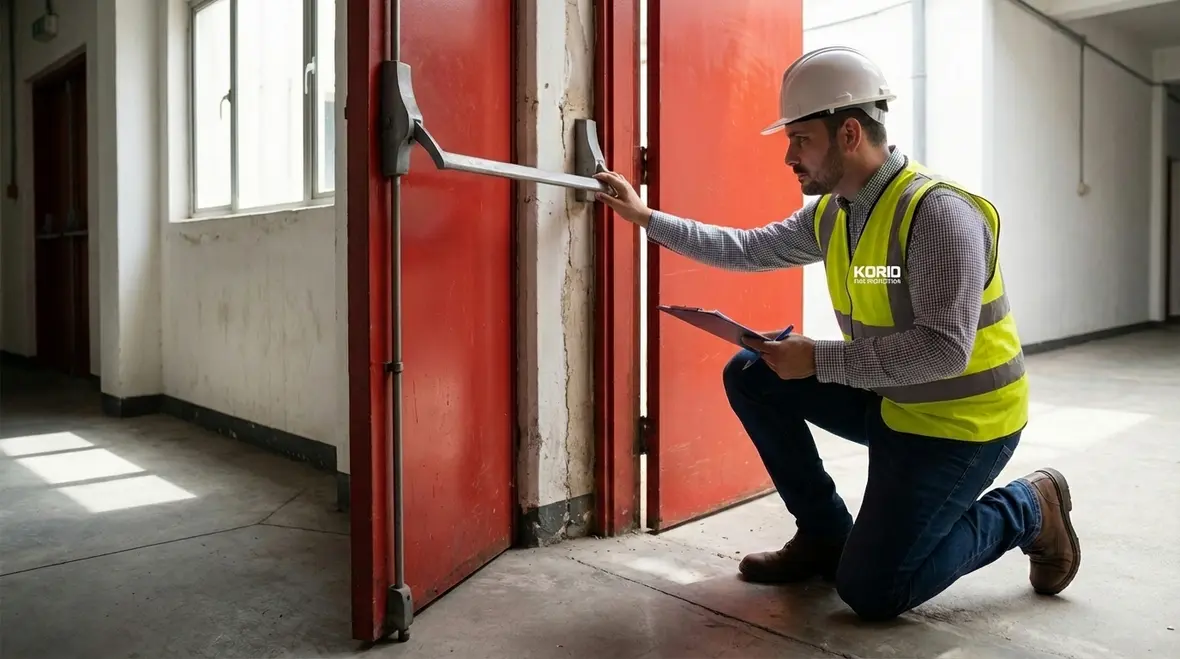
Doors are the frontline of any evacuation. They must open smoothly, swing in the direction of travel when required, and remain free of obstruction. It sounds simple. Yet, inspectors routinely find issues.
Hardware that works every time
First, they check hardware. Panic bars must function properly. Latches cannot stick. Moreover, doors in high occupancy spaces must open without keys or special knowledge. If someone needs a treasure map to escape, the door fails the test.
Clear width and clean pathways
Second, they look at clear width and pathways. Storage in front of exit doors ranks among the most common violations. A stack of boxes may seem harmless on a quiet Tuesday. However, during an emergency, it becomes a barrier. As Kord Fire Protection technicians like to say, “If you have to move it to leave, it should not be there.”
Door ratings and self-closing performance
Third, inspectors examine door ratings. Fire rated doors must self close and latch. Gaps around frames must stay within allowed tolerances. Even small modifications, such as unapproved kick plates or field drilled holes, can void the rating. That detail alone surprises many property managers.
Consequently, routine inspections of door hardware and clearances should happen long before the fire marshal arrives.

Emergency Lighting That Performs When Power Fails
When the lights go out, panic tends to clock in early. Emergency lighting steps in to keep chaos from taking over.
Battery backup and duration tests
Inspectors test battery backup fixtures by cutting normal power. They verify that lights illuminate exit paths for the required duration, often ninety minutes. Additionally, they check brightness levels along corridors, stairs, and ramps.
Common emergency lighting issues
- Dead batteries
- Units blocked by new walls or shelving
- Burned out lamps
- Incomplete monthly or annual testing records
Although a fixture may look fine during daily operations, it can fail silently if not tested. Therefore, documentation becomes critical. Inspectors want proof of regular testing, not hopeful guesses.
Kord Fire Protection technicians often demonstrate how even a slight delay in illumination can increase risk. They explain that emergency lighting is not decorative. It buys time. And in an evacuation, time is the most valuable currency.
Exit Signs That Speak Clearly
Visibility over décor
Exit signs do one job. They point the way out. Still, inspectors frequently cite buildings for sign related problems.
Visibility stands at the top of the list. Signs must remain unobstructed and placed so occupants can see them from a distance. Decorations, banners, or creative marketing displays may look festive. However, they should never compete with life safety signage. Even the most enthusiastic holiday décor must yield to code.
Illumination and power sources
Illumination matters as well. Internally lit signs require reliable power sources and battery backup. Externally lit signs depend on dedicated lighting. If a bulb fails, the sign fails.
Arrows and path of travel
Directional arrows must also match the path of travel. An arrow pointing left when the exit lies to the right creates confusion. In calm conditions, that mistake feels minor. In smoke filled corridors, it becomes serious.
Photoluminescent markings and low-level paths
Furthermore, modern codes often require photoluminescent markings or low level path indicators in certain occupancies. Inspectors check these details carefully. They understand that visibility changes dramatically during a fire event.
How Doors, Signs, and Lighting Work as One System
An egress system does not function in pieces. Instead, it operates like an orchestra. Doors provide access. Signs provide direction. Lighting provides clarity.
Consider a stairwell during a power outage. Emergency lighting activates. Exit signs glow steadily. Doors open with a firm push. Each element supports the others. Remove one, and the system weakens.
Because of this interdependence, inspectors walk the entire path of travel. They start at occupied spaces and move toward the public way. Along the route, they observe transitions between rooms, corridors, and stairs. Any interruption draws attention.
Kord Fire Protection technicians often conduct similar walkthroughs with clients. They encourage facility teams to see the building from the perspective of someone unfamiliar with the layout. After all, visitors do not carry blueprints in their back pockets.
Common Violations and How to Prevent Them
Although every building differs, inspectors tend to flag recurring issues. Fortunately, most are preventable with consistent oversight.
Frequent citations to watch for
- Blocked exit access corridors
- Non functioning emergency lighting units
- Missing testing logs
- Improperly secured exit doors
- Exit signs not visible from required distances
Using an egress checklist to stay ahead
To address these risks, property managers should implement structured reviews. A documented egress checklist emergency lighting exit signs process helps standardize inspections across shifts and locations.
Below is a simple comparison that many facilities use during internal audits.
| Inspection Area | What to Verify |
|---|---|
| Doors | Hardware works, path clear, self closing operates |
| Emergency Lighting | Battery test complete, illumination adequate, logs updated |
| Exit Signs | Visible, illuminated, arrows correct direction |
By reviewing these areas monthly and annually, facilities reduce last minute surprises. Moreover, they build confidence among staff and occupants.
What Would an Inspector Flag First?
Obstructions that shout “problem”
If an inspector walks in unannounced, what catches the eye immediately?
Obstructions. Always obstructions.
A delivery left in a corridor. A chained exit door. A decorative plant placed directly under an exit sign. These items stand out because they signal neglect. Additionally, missing documentation quickly follows. Inspectors expect records for lighting tests and maintenance checks.
Uncoordinated renovations and layout changes
They also pay attention to modifications. Renovations that alter walls or layouts often impact egress paths. Yet sometimes, updates occur without adjusting signage or lighting. That disconnect raises red flags.
Kord Fire Protection technicians frequently advise clients to involve life safety professionals during planning stages. It is far easier to adjust a drawing than to correct a violation after construction.
Why Routine Reviews Matter More Than Annual Inspections
Building everyday safety habits
An annual inspection serves as a snapshot. However, safety lives in daily habits.
When staff understand the purpose behind exit pathways and lighting systems, they treat them with respect. Training custodial teams not to store carts in corridors makes a difference. Teaching managers how to recognize a failing battery pack prevents outages.
From reactive to proactive compliance
Furthermore, routine internal audits create accountability. They shift the mindset from reactive to proactive. Instead of scrambling before a fire marshal visit, teams maintain readiness year round.
Cost control and reduced surprise repairs
There is also a financial benefit. Correcting small issues early costs far less than addressing major citations later. As any seasoned facility director knows, budgets prefer prevention over penalties. Many organizations pair these reviews with scheduled emergency exit light services so that testing, repairs, and documentation stay current.
Frequently Asked Questions
Protect the Path Before It Is Needed
Life safety rarely announces itself in advance. Therefore, preparation must lead the way. Doors must open. Signs must shine. Lights must respond without hesitation. Kord Fire Protection technicians stand ready to guide facilities through thorough evaluations, clear documentation, and practical corrections.
Schedule a professional review today and strengthen the path that protects every occupant tomorrow. Because when the moment comes, safe exit should feel automatic.
Next step: Pair your internal egress checklist with expert support. Explore Kord Fire’s dedicated Emergency Exit Light Services to coordinate testing, repairs, and documentation for emergency lighting and exit signs across your facilities. If you operate in California or Colorado markets Kord Fire serves, you can also connect through your local service hub pages, such as the company’s Imperial County fire protection or San Diego fire protection services, for a full menu of fire and life safety solutions.
Know Your Weapon Before You Fight the Flame
Kord Fire Protection is your go-to when it comes to all things fire protection. For over 20 years, we’ve been serving Southern California with the quality service and equipment to keep your home or business safe at all times. Our competitive prices reflect our unwavering commitment to protecting what matters most in the event of a fire emergency. Give us a call, send an email, or use that form!

Join Our Newsletter!
Get the latest fire safety tips delivered straight to your inbox From our Newsletter.


