
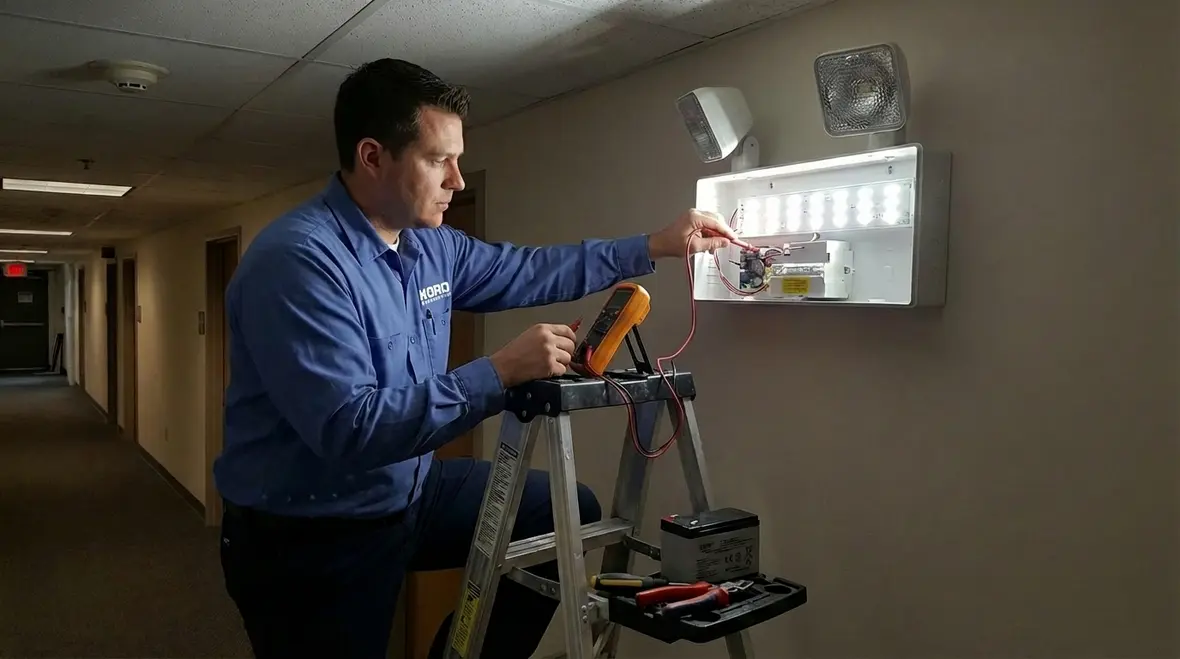
Emergency Lighting Repair and Troubleshooting Guide
When the lights go out, people expect one thing to happen next. The backup lights come on. No drama. No hesitation. Just a calm glow guiding everyone to safety. That is where emergency lighting repair becomes more than a maintenance task. It becomes a promise. A promise that hallways stay visible, exits remain clear, and businesses stay compliant. Kord Fire Protection technicians often explain it this way: emergency lights are like quiet bodyguards. You may not notice them during the party, but when trouble walks in, they are the first to act.
However, when batteries weaken, chargers fail, or fixtures flicker, that promise starts to crack. This guide walks through the most common failures, how professionals troubleshoot them, and why proactive service keeps buildings safe and code compliant. And yes, even lighting systems deserve a little respect. They work hard behind the scenes.
In This Guide:
- Common battery failures and how to diagnose them
- Charger issues that drain performance
- Fixture problems that hide in plain sight
- Step by step troubleshooting insight from Kord Fire Protection technicians
- Preventive strategies to avoid repeat breakdowns
Understanding Emergency Lighting Systems Before Things Go Wrong
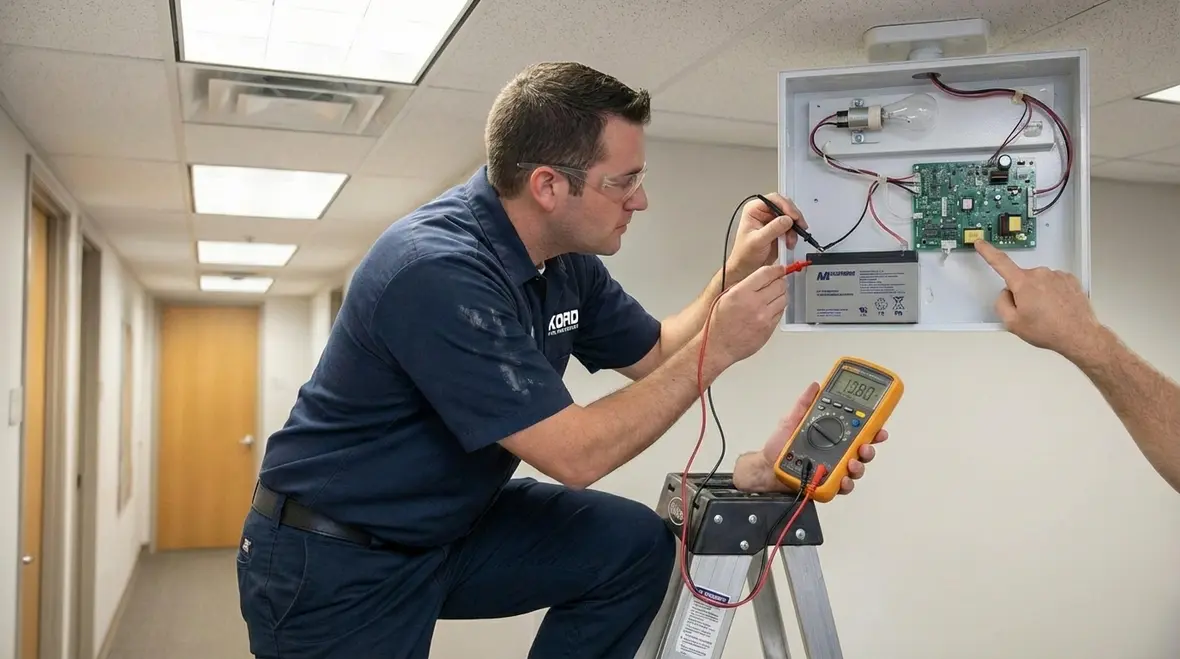
Before troubleshooting begins, it helps to understand how these systems function. Emergency lighting units typically rely on three main components. A battery, a charger circuit, and the light fixture itself. When normal power flows through the building, the charger keeps the battery topped off. Once power fails, the battery instantly feeds electricity to the fixture.
It sounds simple. And in theory, it is. Yet like any system that waits quietly for its moment, it can develop hidden issues. Dust builds up. Batteries age. Chargers overheat. Over time, small problems grow into full failures.
Kord Fire Protection technicians often tell clients that emergency lighting systems are like fire extinguishers. They only matter when they matter a lot. Therefore, routine inspections and prompt emergency lighting repair prevent last minute surprises during inspections or real emergencies.
Emergency lighting also fits into a larger life safety picture. NFPA 101, the Life Safety Code, highlights emergency and exit lighting as critical parts of safe egress routes, alongside alarms, sprinklers, and accessible pathways. When the lights fail, that entire safety strategy takes a hit.
If you want a broader look at how emergency lighting pairs with evacuation planning, Kord Fire’s NFPA 101 overview offers helpful context on emergency lighting requirements across different occupancies.
Explore how emergency lighting fits into the NFPA 101 Life Safety Code
Battery Failures: The Silent Culprit Behind Most Breakdowns
If emergency lighting had a villain, it would be the battery. Most service calls trace back to battery degradation. After all, batteries do not last forever. Even high quality sealed lead acid or nickel cadmium batteries have a lifespan.
So what actually happens inside a failing battery?
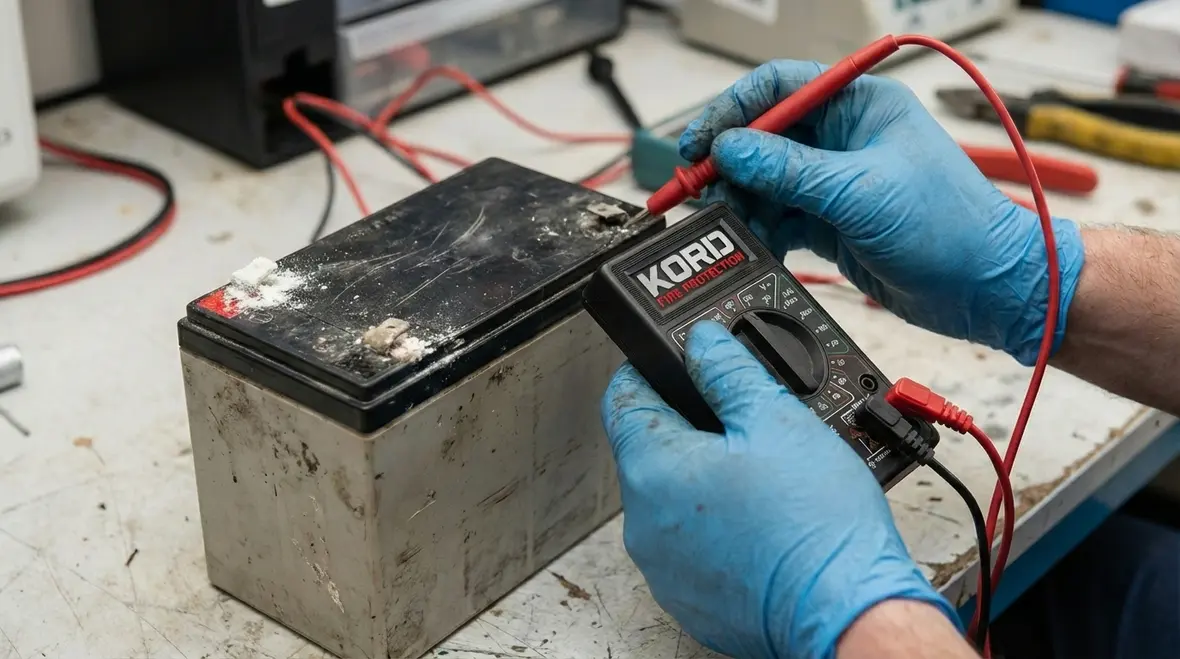
First, chemical capacity declines. As a result, the battery can no longer hold a full charge. It may power lights for a few minutes instead of the required ninety. That is not just inconvenient. It violates code in many jurisdictions.
Second, corrosion forms at terminals. Consequently, resistance increases and power delivery weakens. In some cases, the fixture appears operational until a full discharge test reveals the truth.
Kord Fire Protection technicians typically follow a deliberate process:
- Conduct a visual inspection for swelling or leakage
- Check voltage output under load
- Perform a timed discharge test
- Verify recharge performance after testing
Moreover, technicians explain that replacing batteries on a schedule often costs less than dealing with emergency replacements during inspections. Think of it as changing the oil in a car. Skip it long enough, and you are not saving money. You are just delaying the bill.
How long do emergency lighting batteries really last?
Most emergency lighting batteries last three to five years, depending on usage, ambient temperature, and charging quality. Hot mechanical rooms, constant minor power dips, and neglected chargers all shave months or years off that life expectancy. If your facility runs on a strict compliance calendar, planning replacements in that three to five year window prevents last minute scrambles.
Charger Circuit Problems That Drain Reliability
While batteries receive most of the blame, charger circuits quietly cause their share of failures. Without a steady charge, even a new battery will disappoint.
Charger issues often stem from voltage irregularities, damaged transformers, or failed rectifiers. Additionally, overheating can weaken internal components over time. When that happens, the charger may undercharge or overcharge the battery. Both scenarios create trouble.
Undercharging leaves the battery partially filled. Overcharging, however, cooks it slowly, shortening lifespan dramatically. Neither outcome inspires confidence during a blackout.
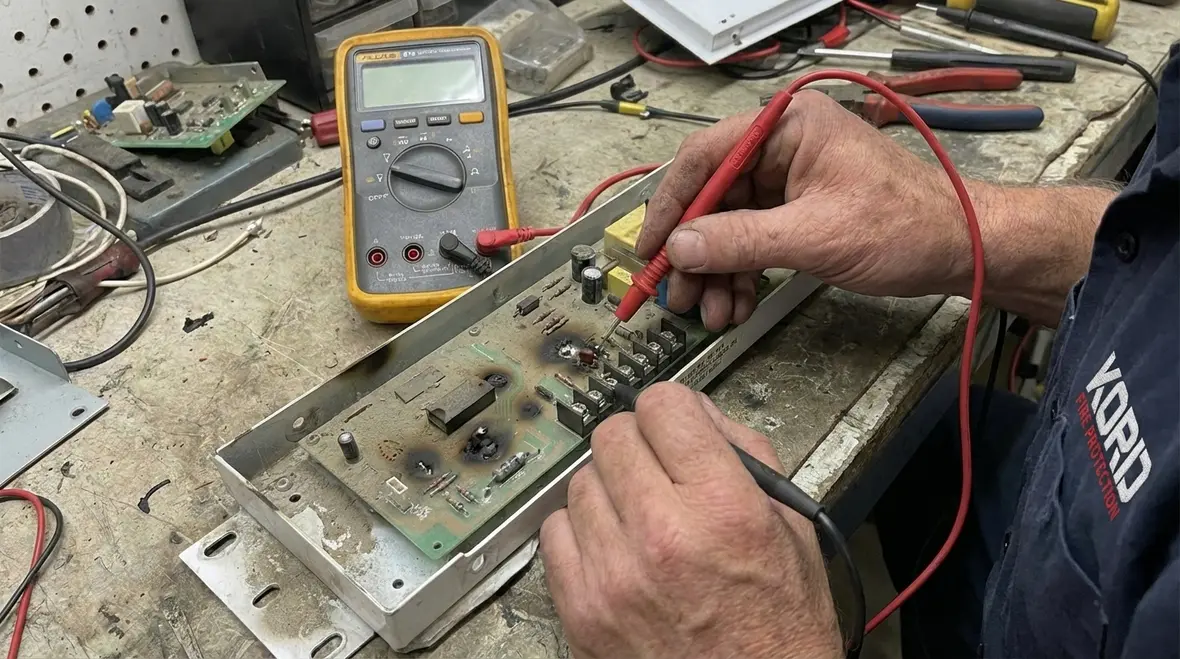
Kord Fire Protection technicians approach charger diagnostics with precision. They measure incoming voltage, confirm output levels, and inspect circuit boards for burn marks or loose connections. Furthermore, they evaluate whether environmental factors such as excessive heat contribute to the failure.
In some cases, a full unit replacement proves more cost effective than repairing aging circuitry. Although that may sound drastic, modern fixtures often offer improved efficiency and longer battery life. Therefore, upgrades sometimes serve as both a repair and an investment.
Fixture and Lamp Failures That Hide in Plain Sight
Sometimes the battery works. The charger performs flawlessly. Yet the lights still do not shine. That is when attention turns to the fixture itself.
Common fixture issues include:
- Burned out LED boards
- Loose internal wiring
- Damaged test switches
- Faulty transfer relays
LED components generally last for years. However, poor ventilation or power surges can reduce their lifespan. Additionally, wiring connections may loosen due to vibration or improper installation.
Kord Fire Protection technicians often remind property managers that cosmetic appearance can mislead. A clean lens does not guarantee internal integrity. Therefore, functional testing remains essential.
In many buildings, older incandescent emergency lights still linger like retired rock stars who never left the stage. While nostalgic, they consume more power and require frequent lamp replacement. Upgrading to LED fixtures reduces maintenance demands and supports long term reliability.
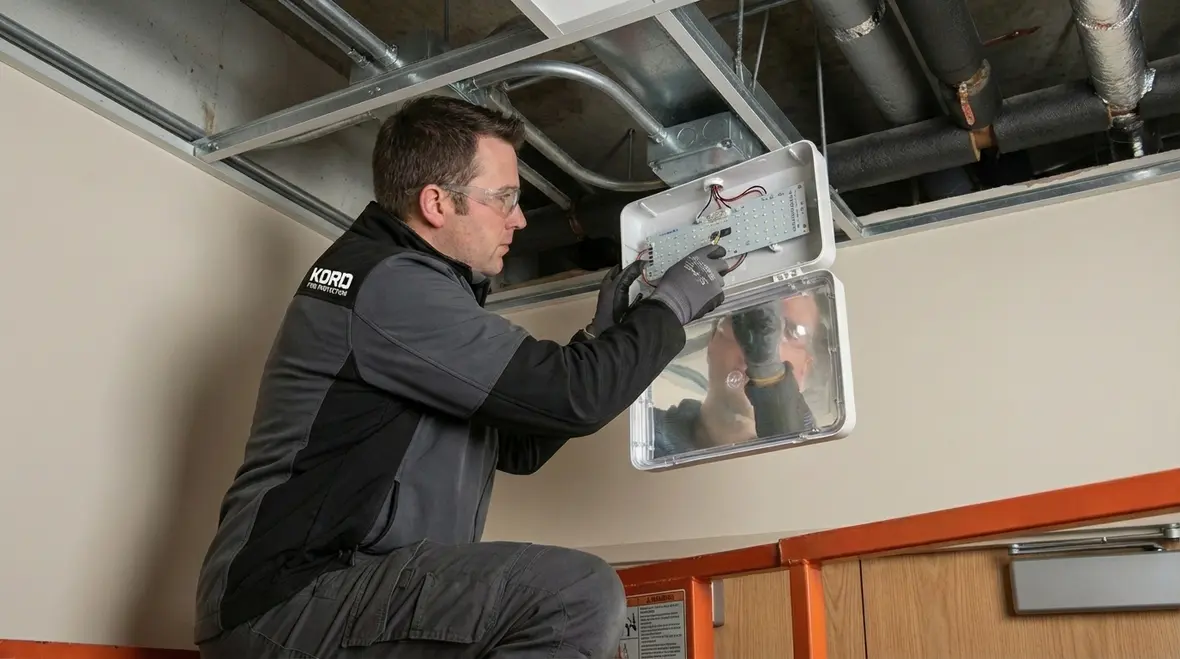
For facilities planning a larger safety upgrade, pairing new emergency fixtures with a full fire protection review ensures exits, alarms, and lighting all work together the way NFPA 3 commissioning practices intend.
Step by Step Emergency Lighting Repair Process Used by Professionals
When professionals perform emergency lighting repair, they follow a structured path. No guesswork. No crossed fingers. Just methodical testing.
Step One: Visual Inspection
Technicians examine housing integrity, mounting stability, and indicator lights. Because visible damage often signals deeper issues, this first step sets the tone.
Step Two: Functional Push Test
By pressing the test button, they simulate a power outage. If the fixture fails to illuminate, they immediately narrow the problem to battery, charger, or internal wiring.
Step Three: Timed Discharge Test
Code often requires ninety minutes of illumination. Therefore, technicians measure runtime to confirm compliance.
Step Four: Electrical Measurements
Voltage readings reveal charger output and battery health. Additionally, continuity tests confirm wiring integrity.
Step Five: Corrective Action
Finally, they replace defective components or recommend full fixture upgrades when necessary.
Throughout the process, Kord Fire Protection technicians explain findings in clear language. They believe informed clients make better decisions. Besides, nobody enjoys technical jargon that sounds like it belongs in a spaceship manual.
Preventive Maintenance Strategies That Reduce Future Failures
Repair matters. However, prevention saves time, stress, and money. Regular inspection programs dramatically reduce surprise breakdowns.
Monthly push button tests ensure basic functionality. Meanwhile, annual full discharge tests verify runtime compliance. Additionally, keeping records helps demonstrate due diligence during fire marshal inspections.
Environmental control also plays a role. Excess heat shortens battery life. Therefore, maintaining stable indoor temperatures protects internal components. Cleaning dust from vents improves airflow and reduces overheating risk.
Kord Fire Protection technicians often recommend proactive battery replacement every three to five years, depending on manufacturer guidance. While some managers hesitate, predictable scheduling prevents frantic calls before compliance deadlines.
Moreover, upgrading outdated units can lower energy consumption and improve light output. Modern LED emergency fixtures deliver brighter illumination with less strain on batteries. As a result, facilities experience fewer service interruptions.
If you manage a retail, multi-tenant, or apartment building, pairing these routines with a broader fire safety program keeps inspectors happy and occupants calm. Kord Fire’s retail fire safety and local apartment protection guides show how emergency lighting maintenance fits into overall compliance.
See how professional emergency exit light services support testing and repairs
When Should a Facility Call for Professional Emergency Lighting Repair?
Some signs demand immediate attention. Flickering during tests. Indicator lights that fail to glow. Units that buzz, hum, or smell like overheated plastic. Yes, lighting should glow, not audition for a horror movie.
Additionally, if a building undergoes renovations or layout changes, emergency lighting coverage may require reassessment. Code mandates proper illumination along egress paths. Therefore, relocating walls or shelving can unintentionally create dark zones.
Professional evaluation ensures compliance with local fire codes and national standards. More importantly, it ensures occupant safety. Because when power disappears, confusion spreads quickly. Reliable emergency lighting restores order in seconds.
FAQ: Emergency Lighting Systems and Repairs
Reliable Lighting Is Quiet Confidence
Emergency lighting does not ask for applause. It simply waits. Yet when darkness falls, it steps forward without hesitation. That quiet reliability depends on proper inspection, timely part replacement, and skilled troubleshooting. Kord Fire Protection technicians bring steady expertise to every assessment, ensuring each battery, charger, and fixture performs when it matters most.
If a facility shows signs of trouble or simply needs routine testing, now is the time to act. Schedule professional service today and keep every path illuminated, every exit visible, and every occupant safe.
Not sure where to start? A focused emergency exit light service visit can combine inspection, repair, and documentation in a single, low-drama appointment.
Know Your Weapon Before You Fight the Flame
Kord Fire Protection is your go-to when it comes to all things fire protection. For over 20 years, we’ve been serving Southern California with the quality service and equipment to keep your home or business safe at all times. Our competitive prices reflect our unwavering commitment to protecting what matters most in the event of a fire emergency. Give us a call, send an email, or use that form!

Join Our Newsletter!
Get the latest fire safety tips delivered straight to your inbox From our Newsletter.


