Electric Fire Pump Controller Reliability in Australia
Quick Answer: Fire pump controller reliability is built through correct design, clean power, strong testing, and tight service cycles. Facilities also reduce risk by tracking alarms, verifying pump curves, and maintaining sensor health. Kord Fire Protection can act as a vital partner, helping plants and commercial sites keep systems dependable across Australia.
At industrial facilities, fire systems can’t behave like a flaky WiFi signal. They must work, on time, every time. That is why many facilities standardise on electric fire pump controllers and treat them like mission critical equipment, not “set and forget” hardware. The controller is the brain that starts pumps, watches pressures and flows, and reacts when the building needs protection most. Yet reliability does not come from luck. It comes from smart optimisation, disciplined maintenance, and service partners who understand real site conditions in Australia. Facilities that need broader fire protection services often find that controller reliability improves fastest when the pump, power, testing, and documentation are treated as one connected system. Kord Fire Protection can be that partner, bringing field experience and a practical approach that turns compliance into confidence.
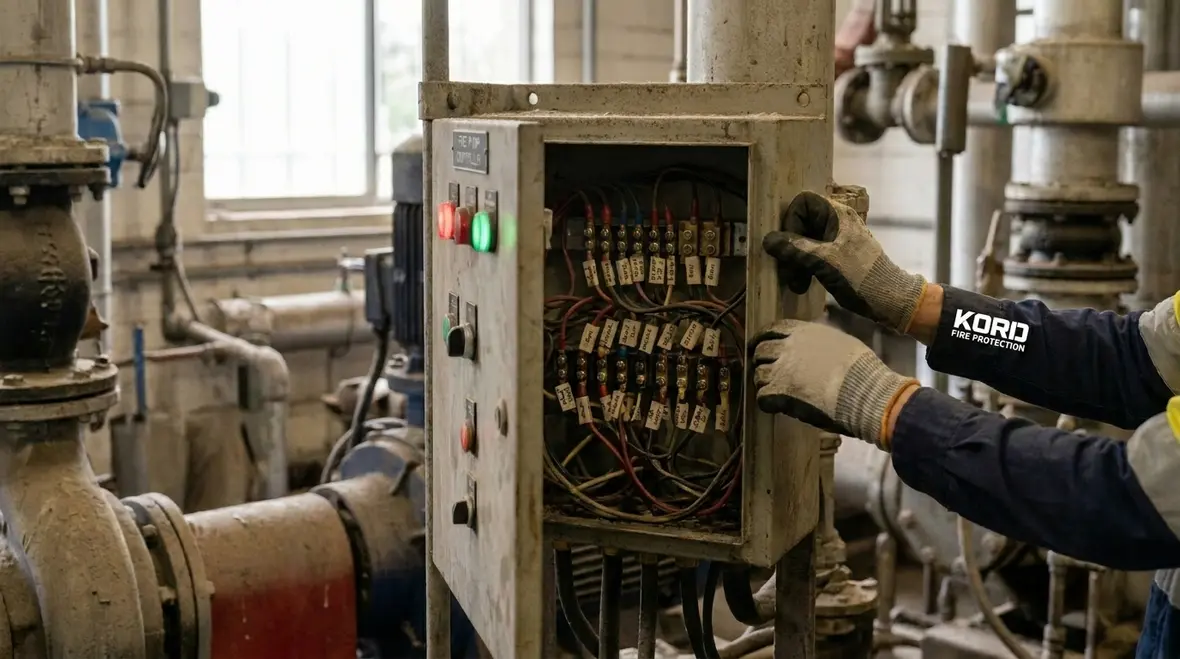
Why reliability matters for fire pump control systems
In the real world, industrial environments test equipment the way sandpaper tests paint. Dust, vibration, temperature swings, and frequent electrical switching all stress control panels. Consequently, a controller can lose performance long before it fails completely. For example, a small contact wear issue may still “start the pump,” but it can slow sequences, increase fault history, or create nuisance trips. Then, during an emergency, the system performs under uncertainty, not certainty.
Therefore, reliability optimisation focuses on predictability. When technicians tune set points, verify interlocks, and validate pressure control behaviour, the system becomes consistent. Also, strong commissioning helps ensure the controller meets the actual pump and piping realities of the site, not only the design intent. That lines up with Kord Fire Protection’s guidance on essential fire pump electrical requirements and design, which connects controller logic, starting current, and stable power to overall system performance. It is like rehearsing a play; the audience never sees the hard work backstage, but they absolutely feel the difference.
Predictability beats last minute heroics
Reliable systems make small problems obvious early. Unreliable systems hide them until the worst possible moment. That is why good sites review logs, compare current readings to previous baselines, and treat repeated minor alarms as clues instead of background noise. A pump controller should act boring, steady, and dependable. If it starts behaving like it wants attention, that attention is already overdue.
How electric fire pump controllers should be optimised in the field
Facilities improve reliability when they align controller logic with the full pump system, including valves, suction conditions, and discharge piping. First, they verify the pump curve against the system curve. Next, they confirm that pressure and flow sensors read accurately and respond fast enough. Then, they check that the start and stop logic matches the site’s firefighting demand profile.
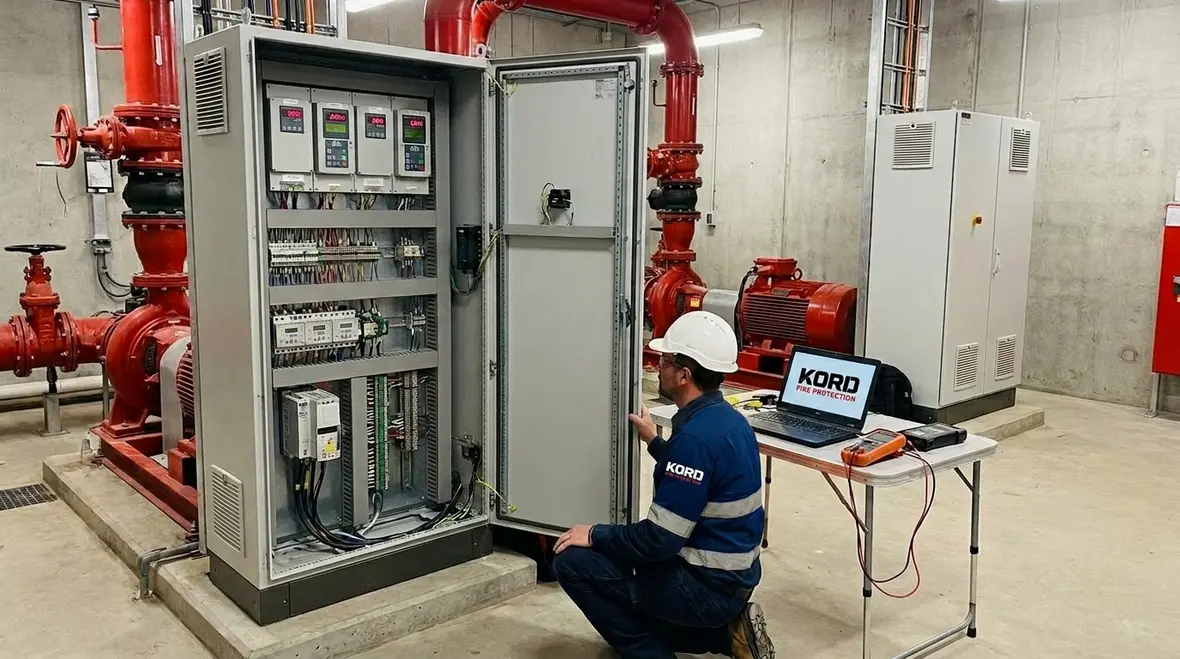
Good optimisation also includes verifying that the control panel’s protective functions operate correctly. That means examining overcurrent behaviour, undervoltage response, and fault reporting. In addition, technicians should review network and remote monitoring settings where installed, because alarms that arrive late can feel like they never arrived at all. Reliability improves when the controller communicates clearly, with fault details that technicians can act on immediately.
And yes, sometimes the biggest “system issue” is a technician entering the wrong parameter during a past service visit. Humans make mistakes. Controllers do not. So, facilities should lock down programming changes, track revisions, and require test evidence after any adjustment. That kind of discipline pairs naturally with fire pump controller electrical troubleshooting, because clear settings and traceable changes make faults much easier to solve.
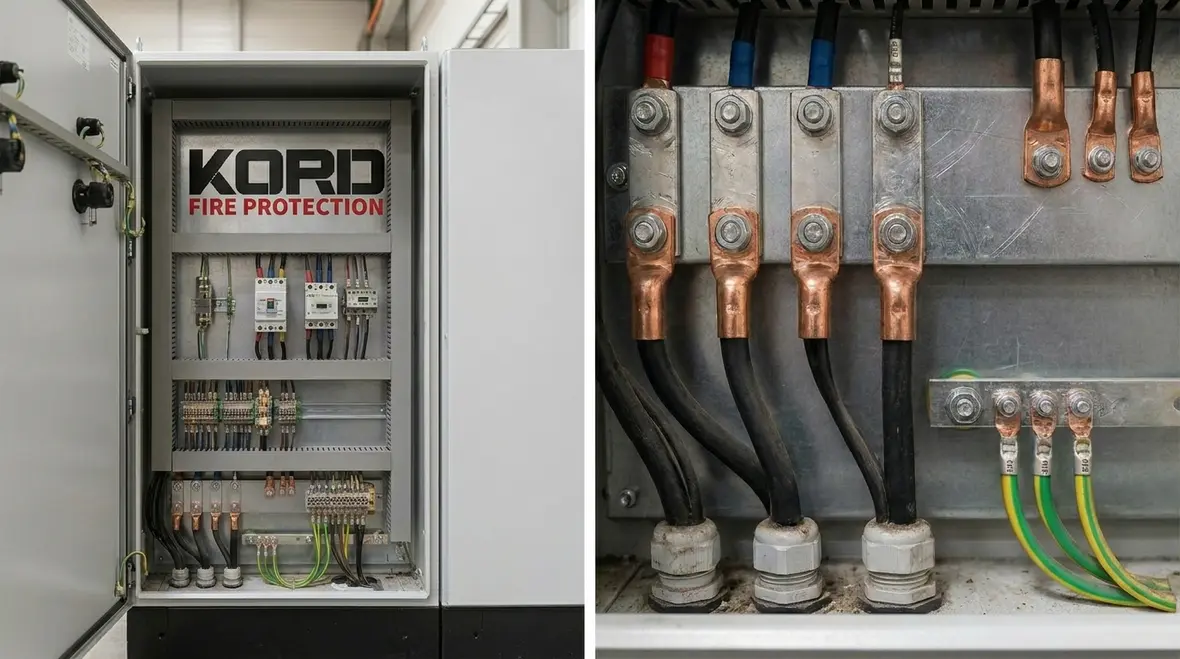
What gets checked during practical optimisation
- Pump curve performance against expected demand
- Sensor speed, stability, and calibration accuracy
- Correct start and stop sequencing under realistic conditions
- Alarm delivery, fault wording, and remote monitoring setup
- Programming revision control after any service changes
What maintenance actions reduce failure rates over time
Maintenance should not be a calendar ritual. Instead, it should be a structured program that proves the system remains ready. Facilities can reduce failure risk by using three layers: visual inspection, functional testing, and parts condition reviews.
Visual inspection helps catch early warning signs. For instance, corrosion around terminals, heat discoloration on power components, or loose cable routing can reveal overheating trends. Additionally, technicians should confirm that glands and seals prevent water ingress, especially in outdoor pump rooms.
Functional testing validates that the controller still performs correctly under operating conditions. This includes verifying start sequences, checking alarm outputs, and confirming that pressure control behaves as expected. Technicians should also test the controller’s response to simulated faults in a safe, controlled way. The goal is to confirm fault paths, not just show that the pump runs when things are perfect.
Parts condition reviews focus on components that age. Contactors, relays, fan assemblies, and power supply sections can drift over time. When facilities schedule these checks based on runtime and environment, reliability improves without wasting effort on components that still perform well. This is also where routine fire pump testing and certification becomes useful, because benchmark records help teams spot slow decline before it becomes obvious failure.
A maintenance program should prove readiness
The best maintenance plans do more than tick boxes. They create proof. They show whether the controller starts consistently, whether alarms tell the truth, and whether aging parts are still within a safe operating window. If a site has to choose between neat paperwork and verified performance, verified performance should win every time. Ideally, good service gives you both.
Electrical power quality and panel health in industrial spaces
Many controller issues trace back to power. Even if the supply looks stable on a basic meter, the controller can still see short dips, harmonic noise, or transient spikes. Therefore, facilities should treat electrical power quality as part of the fire pump reliability plan. Where feasible, they can capture events around starts and faults, because the controller often records the story of what happened when the load kicked in.
Panel health matters just as much. Good airflow, clean filters where used, and properly torqued terminations reduce heat build-up. Likewise, technicians should inspect earth connections, because poor earthing can create odd faults that waste hours. And if you have ever tried to troubleshoot a “mystery trip” that disappears on the day the electrician visits, then you already understand why prevention beats mystery hunts.
Finally, facilities should verify that any auxiliary circuits, such as level switches and flow switches, share the right isolation and wiring discipline. A controller can only control what it can trust. Clean inputs lead to stable outputs. Kord Fire Protection also covers this theme in its article on fire pump controller surge protection, where event review and input health are treated as part of reliable performance, not optional extras.

Why power problems waste so much time
Bad power has a talent for impersonation. It can look like a sensor problem, a relay issue, a programming fault, or a component failure that is not actually broken. That is why steady troubleshooting starts with incoming supply, grounding, protective devices, and event timing. Otherwise, teams end up replacing innocent parts while the real culprit keeps lurking upstream.
Testing and commissioning strategies that prove readiness
Commissioning should not end at signoff. It should establish a baseline so future service can compare “what is now” against “what was correct.” Consequently, Kord Fire Protection and similar specialists often help facilities capture key performance records, such as pressure response, start times, and fault logs during routine tests.
A strong testing strategy also considers the real operational sequence. For industrial sites, pumps may cycle more than expected during testing, and different zones may activate different demands. Technicians should verify that the controller handles these scenarios without repeated nuisance faults. They should also confirm that emergency overrides operate correctly and that hand auto transitions function smoothly.
Where multi-controller systems exist, synchronisation and interlocks require special attention. Otherwise, systems can fight each other like two coworkers arguing over who forgot to email the client. The controller logic must coordinate, not compete. If a facility needs a deeper benchmark for what proper test evidence looks like, Kord Fire Protection’s guide to fire pump testing requirements is a useful internal reference.
How Kord Fire Protection strengthens controller reliability
Kord Fire Protection can become a vital partner by bringing service discipline and practical insight to optimisation work. Instead of only replacing parts or running basic tests, a reliable partner supports a full reliability loop: assess conditions, verify operation, document results, and plan upgrades where they prevent future faults.
For facilities across Australia, this matters because conditions vary widely between sites. A coastal environment can push corrosion risk higher. Dusty processing plants can affect cooling and sensor cleanliness. Busy retail and commercial precincts may face more frequent scheduled testing interruptions. Consequently, Kord Fire Protection can tailor service and recommendations to match each facility’s realities, not generic assumptions.
Also, partner support helps facilities align controller maintenance with compliance expectations. That reduces the stress that arrives right before an audit. Nobody wants to be the person searching for yesterday’s test record while the inspector is already standing there. A proactive partner keeps the evidence ready. Teams that need a practical companion read can also point stakeholders to why electric fire pump controllers fail, which explains how preventable issues stack up when inspection habits slip.
FAQ about fire pump controller reliability
Next steps for facilities that want dependable fire pump operation
Reliability is not a single job. It is a cycle of optimisation, testing, and improvement. Facilities that document performance, verify power and panel health, and maintain sensors and outputs reduce risk and protect operations. The smart move is to stop treating controller reliability like a once a year paperwork task and start treating it like what it is: a live operational discipline.
If an electric fire pump controller is already installed, the fastest path is a targeted reliability review and a practical service plan. Contact Kord Fire Protection’s fire pump team to assess your system and build confidence before the next test, audit, or emergency.

Join Our Newsletter!
Get the latest fire safety tips delivered straight to your inbox From our Newsletter.