Fire Pump Controller Surge Protection for Reliable Performance
When a fire pump controller takes a power hit, the stakes go up fast. That is why fire pump controller surge protection should not be treated like an optional add on or a “someday” project. Kord Fire Protection technicians often explain that surge events do not announce themselves. They slide in quietly through utility lines, lightning strikes, and even from switching equipment inside the building. And once the controller gets stressed, its electronics can fail in ways that look random. So, the goal stays simple and serious: keep the controller stable, protect the pump system, and help ensure the fire protection system performs when it matters most.
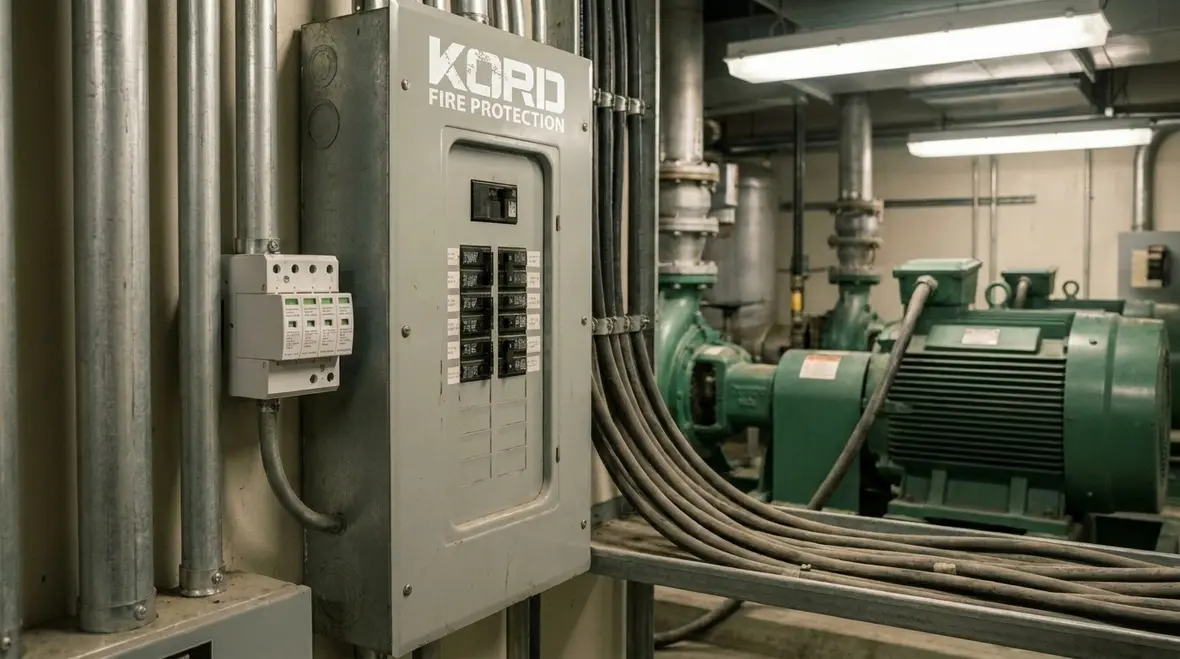
How surge damage shows up in real fire pump systems
Surge damage rarely behaves like a cartoon villain. Instead, it shows up as delayed faults, weird behavior, or nuisance alarms. First, a surge can enter through power conductors. Then it can travel into control circuits and sensors. Over time, the controller may still run, but it becomes less reliable, like a coffee machine that works until you need it to work. Kord Fire Protection technicians typically note that many failures are not immediate. They are cumulative.
Common symptoms include intermittent controller resets, damaged output relays, failed control boards, and abnormal communications on networked panels. Moreover, surges can also affect connected devices such as level sensors, pressure transducers, and remote monitoring modules. Because fire pump controllers rely on precise timing and stable voltage, even brief spikes can cause harmful conditions. In addition, a surge can ride along with the next normal power cycle, which means the plant operators may not connect the problem to the event.
Why the damage often looks random at first
That randomness is exactly what makes surge issues so frustrating. A controller may pass a quick visual check, start normally, and still have hidden stress on boards or components. Then, days or weeks later, a relay sticks, a status light behaves strangely, or communications turn flaky for no obvious reason. In practical terms, that means the problem can seem mechanical, software related, or just plain mysterious when the real culprit was electrical from the start.
What causes power surges around pump rooms
To protect properly, the source must be understood. Surges can come from utility switching, nearby lightning, motor starts, and large electrical loads cycling on and off. Additionally, older wiring routes and loose terminations can raise electrical stress. When current paths loosen, voltage can fluctuate. Then, the controller sees that change and may interpret it as a power event.
Inside pump rooms, there are also internal contributors. For example, starting a large HVAC motor, energizing a bank of capacitors, or switching a standby generator can create transient voltage. Even if the building looks stable, electrical activity can still inject fast, high energy pulses into the system. Therefore, the protection plan needs to consider both incoming power disturbances and internal switching events.
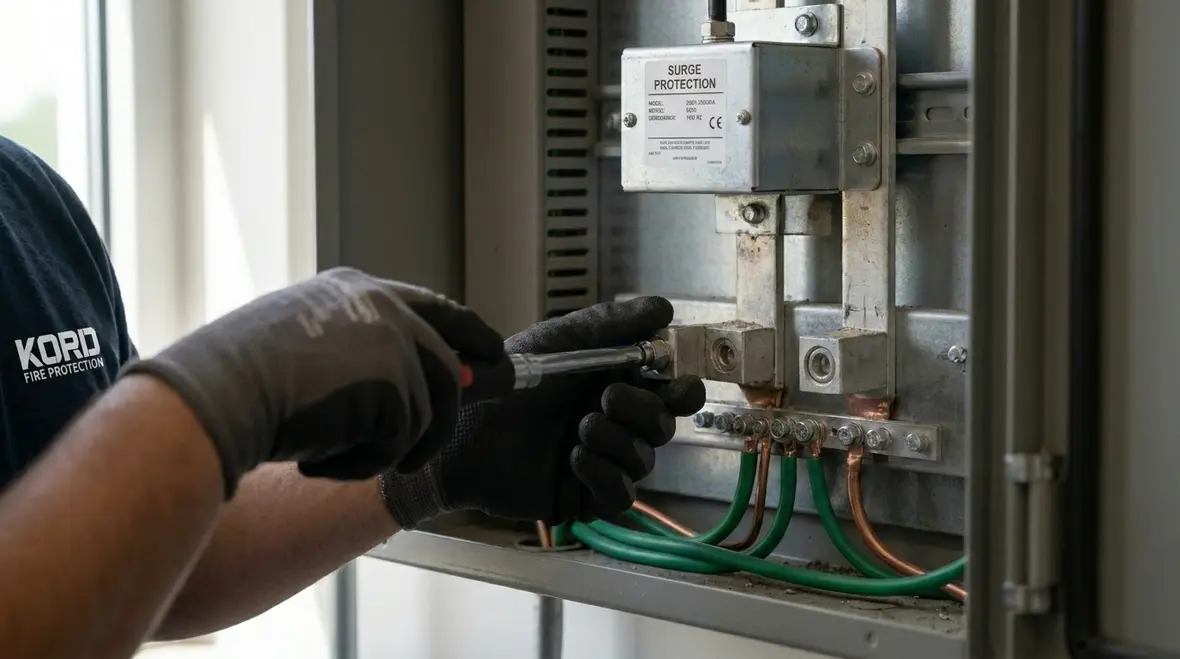
Internal switching events deserve more respect than they usually get
People often think only dramatic lightning events matter, but everyday building operations can be plenty rude. Switching generators, cycling large motors, or bringing major equipment online can create the kind of transient conditions that sensitive controller electronics absolutely do not enjoy. In other words, the danger is not always flashy. Sometimes it arrives wearing a hard hat and pretending to be normal building activity.
Where protection should be installed on the controller feed
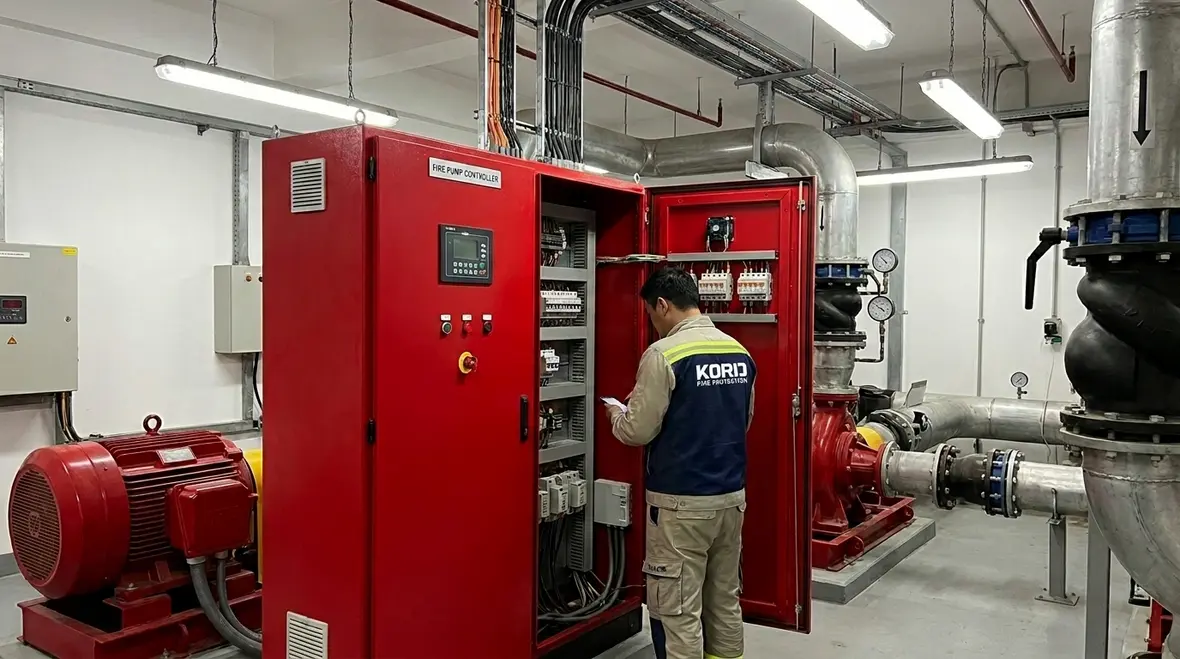
Protection works best when it targets the path the surge uses. Kord Fire Protection technicians often advise a simple principle: protect at the point of entry and at the point of use. That means the electrical path feeding the fire pump controller should be addressed in a layered approach. First, the incoming service and panel should have surge protective devices selected for the site and wiring scheme. Then, a dedicated approach should cover the controller branch circuit.
Also, the installation details matter as much as the product. For instance, long unprotected conductor runs let the surge build energy before it reaches the device. As a result, the controller gets stressed. Proper routing, tight terminations, and correct bonding reduce voltage differences that can harm electronics. In other words, good hardware paired with good wiring behavior keeps the controller calm.
This is also where coordination becomes important. A protective device at the service entrance is useful, but it is not a magic shield for every sensitive component deeper in the system. The closer protection is matched to the controller’s actual feed path, the better chance it has to reduce the damaging energy before it reaches the electronics that matter. Layered protection is not overkill here. It is just adult supervision for electricity.
Why device choice matters for sensitive electronics
Not all surge protective devices are equal. Some prioritize general protection for motors and outlets. Fire pump controllers require protection that respects control electronics, sensitive circuits, and critical startup logic. Therefore, technicians select devices with ratings that match the system voltage, configuration, and expected surge environment.
In addition, the chosen protection should support coordination with upstream devices. If the layers fight each other, the protection may not perform as intended. Kord Fire Protection technicians also stress that the protection should include clear status indicators and the right mounting method. When the protection device fails, it should fail in a way that can be detected, not in a way that quietly leaves the controller exposed. Because a silent loss is the worst kind, the plan should include inspection points.
And yes, this is where people get a little like they are trying to protect their favorite arcade game with a sticky note. The controller deserves real engineering, not hope.
Status indication is not a luxury feature
A protective device that has failed without anyone noticing is about as comforting as a smoke alarm with no batteries. Clear status indication, remote notification where appropriate, and maintenance visibility matter because surge devices do wear out. If the site team cannot easily tell whether the protection is still active, then the system may be relying on something that is already off duty.
How to ensure proper grounding and bonding for surge events
Surge protection without good grounding is like bringing an umbrella on a clear day and calling it weatherproof. Grounding and bonding control how surge current flows. When grounding is poor or inconsistent, protective devices may not clamp voltage effectively, and harmful potentials can appear between the controller and connected equipment. This is especially important in fire pump installations where sensors, relays, and control boards must share stable references.
Technicians often evaluate bonding continuity, conductor sizing, and termination quality. They also verify the grounding electrode system and the equipotential bonding inside the pump room. Furthermore, the surge protective devices must tie into the correct grounding point using conductor lengths that meet recommended practices. Short, direct paths reduce residual voltage stress.
Finally, because components can shift over time, inspection schedules should include visual checks of terminations and evidence of corrosion. When the electrical system ages, the bonding can degrade, and the controller can pay the price later.
Small wiring problems can create big reliability headaches
Loose terminations, corrosion, inconsistent bonding, and long conductor paths do not always look dramatic, but they can increase residual voltage and undermine protection strategy. That is why the grounding conversation should never stop at whether a device was installed. The better question is whether the whole path gives surge energy a controlled place to go that does not include your controller’s most sensitive parts.
Testing, inspection, and maintenance that technicians actually recommend
A protection plan does not end with installation. Kord Fire Protection technicians explain that inspection should verify status indicators, check for damaged components, and review any recorded events from the controller or power system. In some cases, the controller may log brownout or power disturbance entries that help connect symptoms to power events. Therefore, maintenance becomes smarter when it uses real data, not guesses.
During maintenance, technicians also verify that the surge protective device has not reached end of life. Some devices show visual indicators, while others include remote monitoring options. If the device has been stressed by a prior surge, it may need replacement even if it still appears functional. In addition, operators should confirm that no wiring changes occurred since commissioning. A quick fix by someone who does not write it down can undo a carefully designed protection system.
To keep the process smooth, building owners often assign responsibilities to the service vendor and the electrical contractor. That way, the controller stays protected through real world operations, not just through the first inspection photo. If your team also handles ongoing fire pump testing requirements, it becomes much easier to connect power quality issues with changes in controller behavior and overall pump reliability.
FAQ: quick answers about protecting fire pump controller electronics
Final call for safer fire pump controller performance
Fire pump controllers live on a thin line between “works every time” and “fails at the worst moment.” Therefore, building owners should plan for fire pump controller surge protection as part of a coordinated electrical and grounding strategy, then verify it with inspection and maintenance. Kord Fire Protection technicians can evaluate the site, review wiring and bonding, and recommend protection that fits the actual controller setup. Act now, document the plan, and schedule the checks so your system stays ready. When you want reliability, guessing is not the business plan.
If you need expert support beyond planning, Kord Fire Protection also provides dedicated fire pump services that help owners stay ahead of equipment issues, testing demands, and real world reliability concerns. Pairing surge protection strategy with experienced service support gives your controller, your pump, and your fire protection system a much better shot at doing their job when the pressure is on.

Join Our Newsletter!
Get the latest fire safety tips delivered straight to your inbox From our Newsletter.