Troubleshooting Fire Pump Controller Electrical Issues Guide
Troubleshooting Common Electrical Issues in Fire Pump Controllers: A calm, practical guide
When a fire pump controller acts up, the system does not “figure it out later.” This guide supports fire pump controller electrical troubleshooting for the issues technicians see most often, from power problems to sensor faults and tricky wiring. Kord Fire Protection technicians explain what to check first, why it matters, and how to avoid the classic mistakes that waste time and money. And yes, some of those mistakes are as common as leaving your phone on 2 percent battery and calling it “charging.”
Because fire pumps sit at the center of life safety, the approach stays methodical: confirm incoming power, verify protective devices, inspect wiring and terminations, and then test circuits in a way that matches the controller design. Next, this article walks through common symptoms and the electrical steps to resolve them in plain language, while keeping the focus on practical field logic instead of guesswork. The goal is simple: find the real issue, fix the real issue, and do not let a dramatic alarm message send the whole room into an unnecessary detective movie.
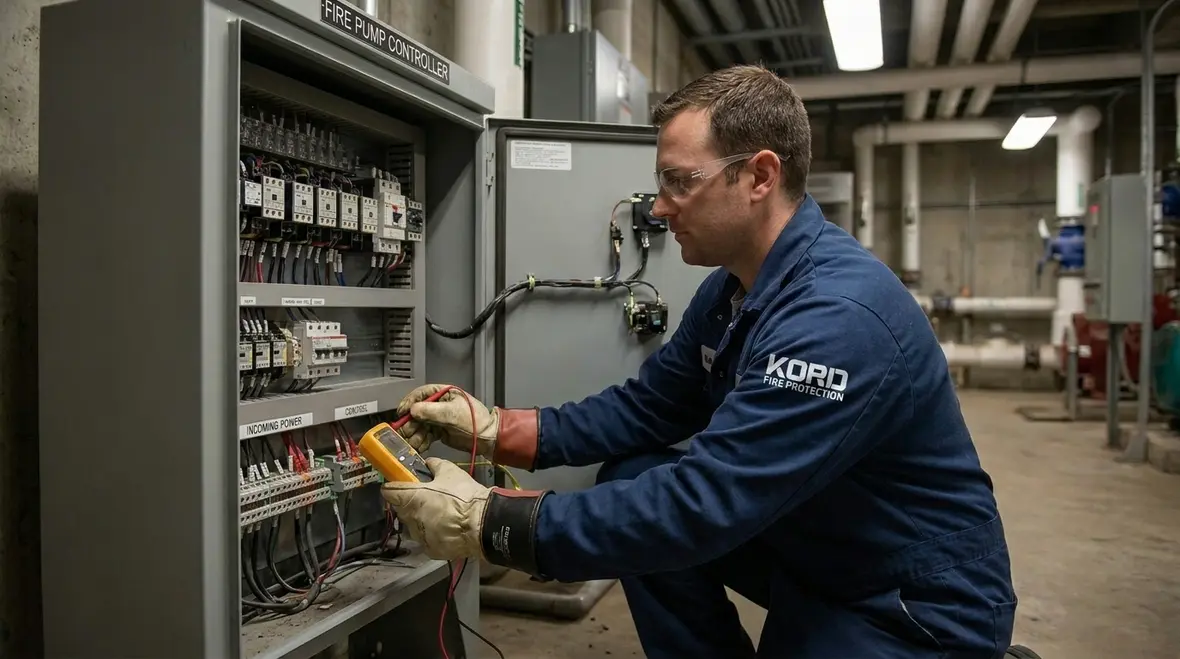
Power loss, brownouts, and the controller that won’t wake up
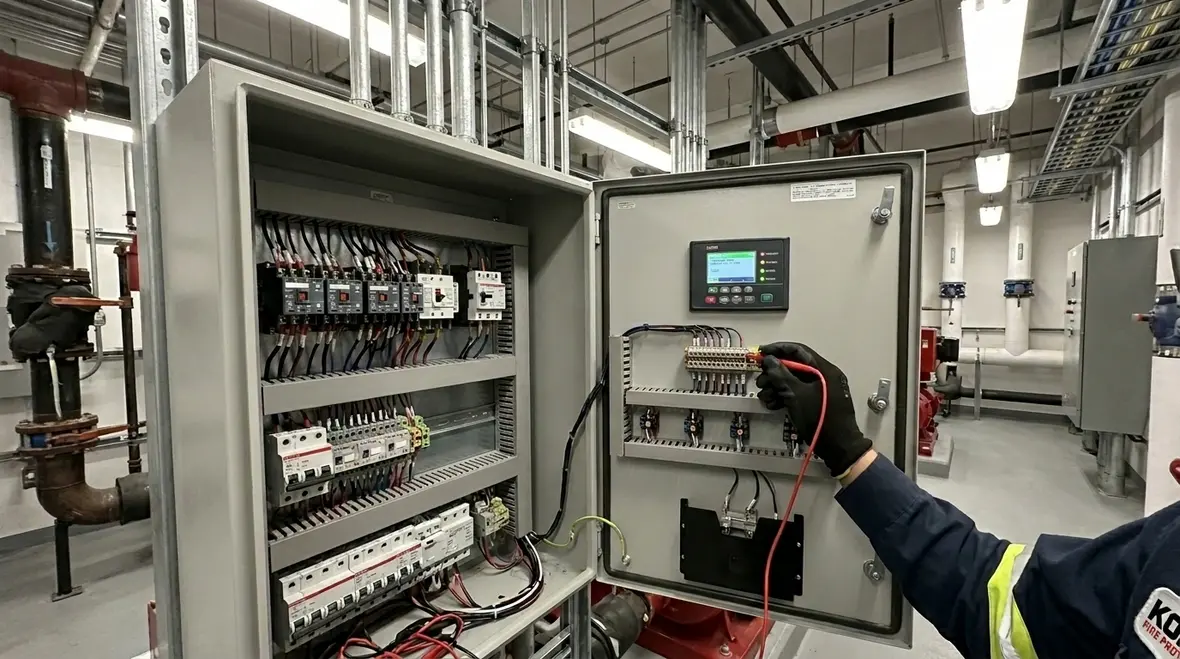
If the controller stays dead or resets repeatedly, the first suspect is electrical supply. Kord Fire Protection technicians often start by confirming that the controller has the right voltage and stable power. Then they check upstream breakers, fuses, disconnect switches, and any control power transformer feeding the cabinet. This part matters because a controller that does not receive clean, stable supply voltage can mimic all kinds of other failures and waste a lot of time before anyone touches the real cause.
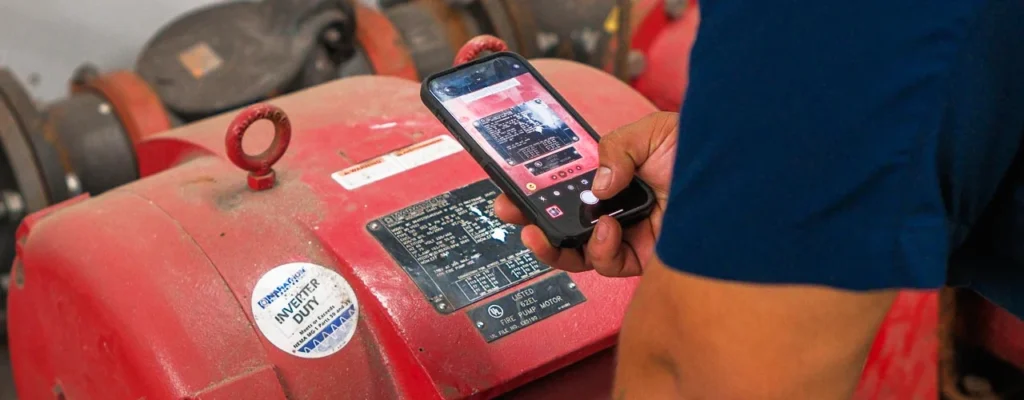
- Check incoming voltage at the controller terminals and compare it to the nameplate values.
- Inspect protective devices for tripped breakers or blown fuses.
- Look for loose terminations at the controller main and control power input.
- Verify transformer output if the controller uses a separate control power transformer.
Next, technicians examine signs of brownout damage. Scorched components, cracked insulation, discoloration at terminals, or a controller that boots only sometimes usually point to supply instability, not a “mystery software problem.” They also compare readings during idle and start attempts, because some power issues only show up when the system actually asks for work. In short, stable power first, controller diagnosis second. If that order gets reversed, people start replacing parts like they are guessing toppings on a pizza, and the electrical issue keeps sitting there, completely unimpressed.
What technicians usually check before digging deeper
Before moving into more complex testing, a disciplined technician confirms the obvious items that get overlooked constantly: correct disconnect position, reliable feeder condition, proper line voltage balance, and secure control power wiring. This is also the point where a strong electrical design helps. If you want a broader look at how stable supply, protection, and controller design fit together, Kord Fire Protection’s guide on essential fire pump electrical requirements and design gives useful context for why these “basic” checks are actually the backbone of reliable troubleshooting.
Ground faults, nuisance trips, and what the panel is really telling you
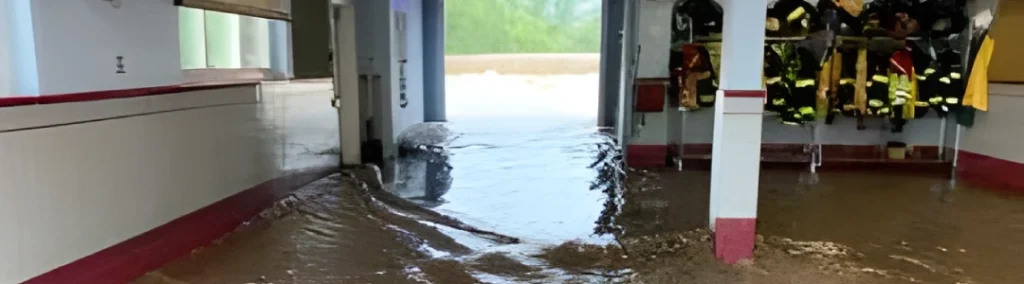
Ground faults can trigger protective devices and cause shutdowns that look random. However, the behavior usually tracks with moisture, worn insulation, or a connection that fails under load. During fire pump controller electrical troubleshooting, Kord technicians often treat ground fault symptoms like a trail of breadcrumbs: follow them carefully, and they usually lead to the exact circuit section that needs attention. Random-looking trips are often not random at all. They are just very committed to being annoying.
- Review trip logs and relay status indicators, if the controller provides them.
- Inspect motor leads and shielded cables for cuts, abrasions, or water ingress.
- Measure insulation resistance using proper test methods before powering the system again.
- Check ground and bonding points on the controller chassis and equipment frame.
After that, technicians isolate whether the trip comes from the controller side, the wiring run, or the pump motor circuit. They verify cable condition, trace grounding paths, and confirm that any fault indication lines up with actual measurements rather than assumptions. They also confirm that the ground fault protection matches the design intent. Sometimes people swap components like they are replacing a TV remote. Unfortunately, electrical protection does not work like that, and the controller pays the price. The more deliberate the isolation process, the faster the panel stops looking “possessed” and starts acting understandable again.
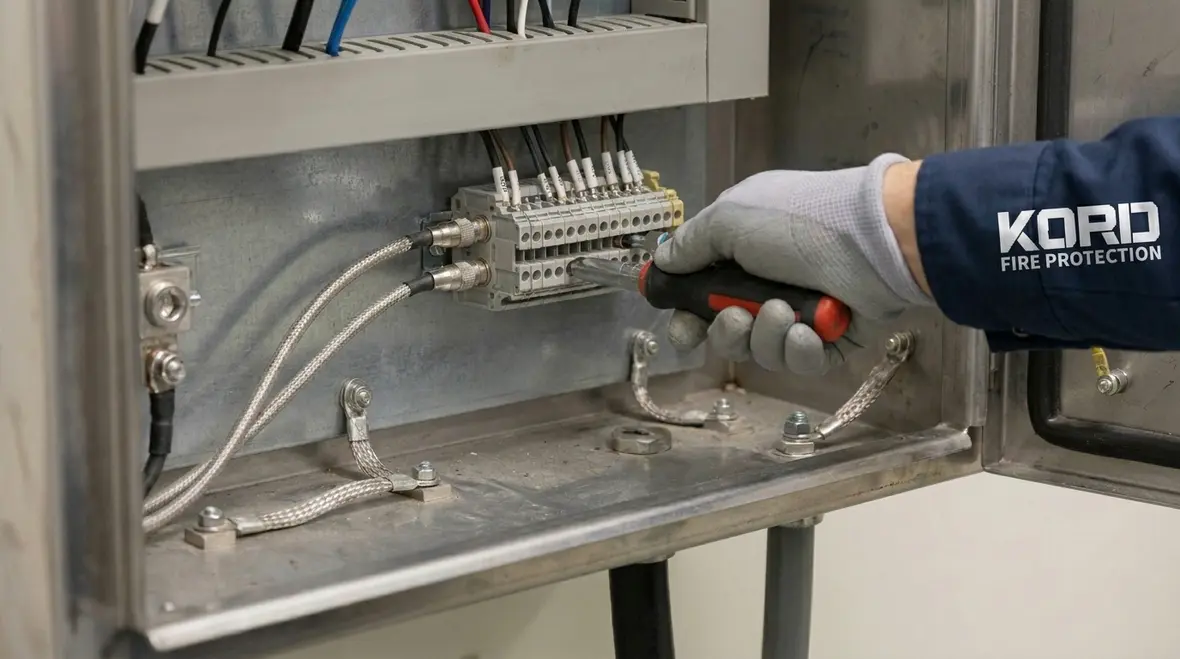
Motor starter and contactor issues: no start, chatter, or overheating
When the pump fails to start, the controller may show alarms, or it may simply not command the starter. Either way, the problem often lives in the starter circuit or the motor contactor path. Kord Fire Protection technicians focus on the control signals and power switching devices, because a controller can be “healthy” while the starter behaves like it drank bad coffee. That means the visible symptom at the screen is only part of the story. The real answer often sits one rung deeper in the control path.
- Confirm control voltage to the starter coil when a start command occurs.
- Check contactor coil resistance and look for coil damage or signs of overheating.
- Inspect contact surfaces for pitting or welding, which causes chatter and poor current flow.
- Test interlock circuits, including door switches, auxiliary contacts, and run feedback.
Additionally, technicians watch for feedback mismatch. If the controller commands the starter but never receives “running” feedback, it can lock out for safety or continue reporting a fault that seems disconnected from what the operator sees. Therefore, they trace from the starter auxiliary contacts back to the controller inputs, verifying wiring integrity and correct terminal assignment. Overheating contactors, weak coils, and loose auxiliary wiring all create symptoms that can look bigger and stranger than they really are. Once the exact path is mapped and tested, the weirdness usually shrinks back down to one failed point, which is exactly where it belonged the whole time.
Sensor and pressure control faults that lead to weird pump behavior
Not every issue is “electrical power.” Many controllers rely on pressure sensors, transducers, or level switches that feed control logic. When those inputs drift or fail, the pump may short-cycle, fail to ramp, overshoot pressure targets, or trigger alarms that do not make sense at first glance. So even though the controller still has power, fire pump controller electrical troubleshooting must include signal integrity checks. If the signal lies, the controller makes decisions based on fiction, and fiction is not a great operating mode for life safety equipment.
- Inspect sensor wiring for loose terminals, damaged jackets, or moisture intrusion.
- Check polarity and wiring type for analog signals, especially in multi-drop systems.
- Verify sensor power from the controller output terminals, when applicable.
- Compare sensor readings during commissioning mode or test conditions against expected values.
Furthermore, technicians look for grounding and shielding mistakes. Analog signals behave badly when shields get improperly terminated or when cable runs share tray space with noisy power circuits. In that case, the controller interprets noise as pressure changes, and the pump reacts. The solution usually involves correct grounding, proper routing, and verifying the signal type at the controller input. A drifting transducer or noisy cable can make the system seem moody when the actual issue is just poor signal discipline. That is why experienced troubleshooting does not stop at “it has power” and call it a day.
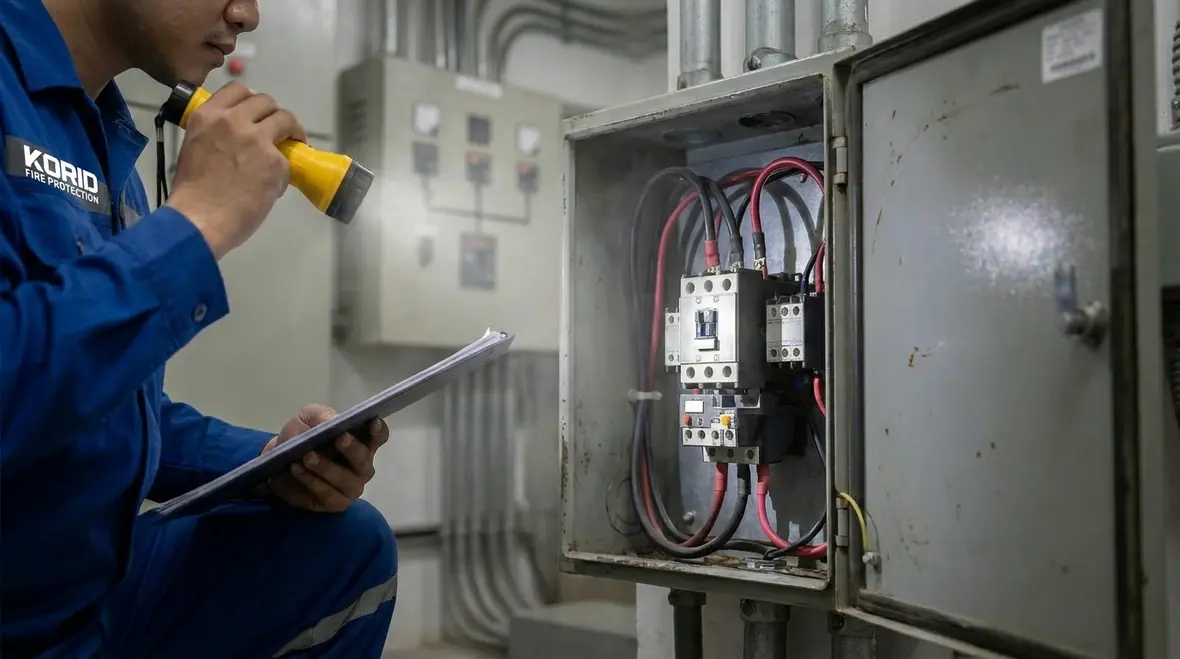
Phase reversal, loss of phase, and protection device misalignment
Phase and feeder issues can stop a pump before it starts, or they can trip protection during start attempts. Kord Fire Protection technicians treat phase-related alarms as high priority because the consequences of wrong phase or missing phase can escalate fast. So they check the electrical fundamentals first, then confirm controller settings. A clean sequence of checks matters here because one altered setting or one loose feeder can create a whole chain of misleading symptoms.
- Verify correct rotation and phase sequence at the motor terminals.
- Check loss of phase protection elements and verify they match the motor and starter rating.
- Inspect motor feeder terminations for looseness or signs of heat.
- Confirm correct overload settings based on the motor nameplate.
Next, they inspect whether a protective relay setting changed during maintenance or whether a replacement device was installed with the wrong assumptions. People do this more often than they admit, like editing a playlist and forgetting which version you saved. When settings do not match the design, the controller may act correctly while the protection scheme does not. That distinction matters, because blaming the controller for a coordination or feeder issue sends the whole repair effort in the wrong direction and leaves the actual risk in place.
Communication faults, false alarms, and controller input diagnostics
Some fire pump controllers communicate with building management systems, local annunciators, or remote monitoring. If faults appear on a screen but the pump function looks fine, the issue may lie in inputs, output contacts, or communication modules. During fire pump controller electrical troubleshooting, technicians also verify that the controller logic matches the site wiring. A false alarm is still a clue, but only if someone bothers to trace where that clue actually comes from.
- Check input wiring for correctly labeled terminals and secure crimps or lugs.
- Inspect annunciator and auxiliary contact wiring that feeds status back to the controller.
- Test communication module power and verify network connections.
- Review alarm history to see which input or threshold triggered the event.
Then, Kord technicians use a “no guessing” approach. They isolate modules, confirm signal presence where the controller expects it, and confirm wiring continuity. That way, the alarm becomes a clear clue instead of a frustrating riddle. This same practical mindset is also useful during routine testing. If you want a companion read on how inspection and test routines help catch electrical problems before they become emergency problems, Kord Fire Protection’s article on fire pump testing requirements pairs well with this troubleshooting guide.
FAQ: quick answers for common electrical controller problems
Schedule a real electrical check before the next test
If a fire pump controller shows alarms, fails to start, or resets under load, delay costs more than time. Kord Fire Protection technicians bring a disciplined method to fire pump controller electrical troubleshooting, from power verification to starter and sensor circuit diagnosis. They document what they find, correct the electrical faults, and help prevent repeats through wiring and device checks. By the time the next inspection or test arrives, the goal is not just a quieter panel. It is a system that behaves the way it was supposed to behave all along.
If you want support beyond a quick glance at the controller, explore Kord Fire Protection’s fire pump services for inspections, repairs, testing, and maintenance that help keep the full system ready when it matters most. Reach out today to schedule a controller electrical inspection and keep your fire pump from turning the next test into a suspense film nobody asked for.

Join Our Newsletter!
Get the latest fire safety tips delivered straight to your inbox From our Newsletter.