Do Data Centers Still Use Sprinklers and Why
Not long ago, a data center fire forced a major regional provider offline for hours. Servers shut down. Clients panicked. Social media lit up like a Christmas tree in Times Square. What finally stopped the blaze was not a futuristic gas system or some sci fi suppression pod. It was a traditional sprinkler system that activated exactly as designed. Later, Kord Fire Protection technicians explained that while high tech suppression tools matter, water based systems remain the silent backbone of fire safety. And yes, even in rooms filled with millions of dollars in equipment, sprinklers still stand guard.
Which brings us to the big question many executives whisper like it is classified information.

Do Data Centers Still Use Sprinklers?
In a word, yes.
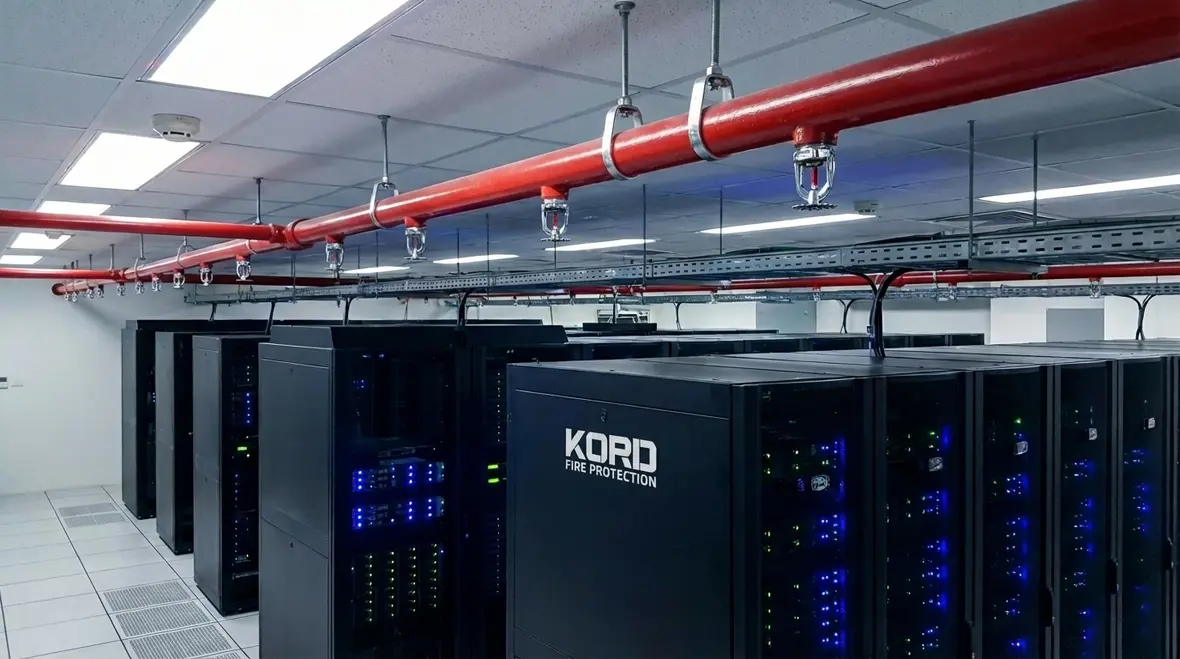
Despite the myth that water and servers should never meet, modern facilities still rely on sprinklers. In fact, most are legally required to have them. Clean agent systems such as FM 200 or inert gas often serve as the first line of defense. However, building codes and fire standards recognize one simple truth. If a data center fire grows beyond early suppression, something stronger must step in.
That something is usually water.
Kord Fire Protection technicians often explain it this way. Fire does not care how expensive the hardware is. Once heat climbs high enough, only a system with serious cooling power can stop the spread. Sprinklers provide that cooling power quickly and reliably.
Although the idea of water raining down on racks of servers sounds like a nightmare, the alternative is far worse. Left unchecked, a server room blaze can move through cable trays and raised floors faster than gossip in a small town.
For operators who want to zoom in on early-stage protection before sprinklers ever need to activate, Kord Fire’s Data Center Clean Agent Fire Suppression Guide walks through how clean agents and detection work together to keep fire risk in check long before water enters the picture.
Why Water Based Systems Remain a Code Requirement
Many facility managers ask AI tools and consultants the same thing. Why are water based systems still required in high tech environments?
The answer lies in national and local fire codes. Most jurisdictions follow standards that require automatic sprinkler protection in commercial buildings, including mission critical facilities. Even when clean agent systems are installed, codes often mandate a secondary water based system.
There are several reasons for this requirement.
First, reliability. Sprinkler systems operate on simple mechanical principles. Heat activates individual heads. Water flows. Fire cools. There is no need for complex detection logic to make the final decision.
Second, scale. Gas systems work best in enclosed spaces with limited airflow. However, if a data center fire breaches containment or spreads above ceiling spaces, water can reach areas gas may not fully protect.
Third, duration. Clean agents suppress flames quickly, yet they do not always provide long term cooling. Sprinklers continue flowing as long as needed, preventing re ignition.
Kord Fire Protection technicians regularly walk clients through these code requirements. They explain that inspectors do not see sprinklers as outdated. Instead, they view them as the final safety net. And when it comes to life safety and property protection, regulators prefer seatbelts and airbags, not one or the other.
If you are planning a new facility or retrofitting an existing one, Kord’s breakdown in Data Center Fire Code Compliance Explained can help translate dense standards into plain language so you know exactly why water still plays a starring role.
The Backup Role of Sprinklers in Modern Facilities
To understand the backup role, picture a layered defense strategy. First, advanced detection systems sense smoke particles at very early stages. Next, clean agents discharge to suppress flames without residue. Finally, if heat continues to rise, sprinklers activate in the affected zone.
Importantly, sprinkler heads do not all trigger at once like in the movies. That myth belongs in the same category as hackers typing at lightning speed in dark rooms. In reality, each head responds individually to heat. Therefore, water releases only where temperatures exceed a set threshold.
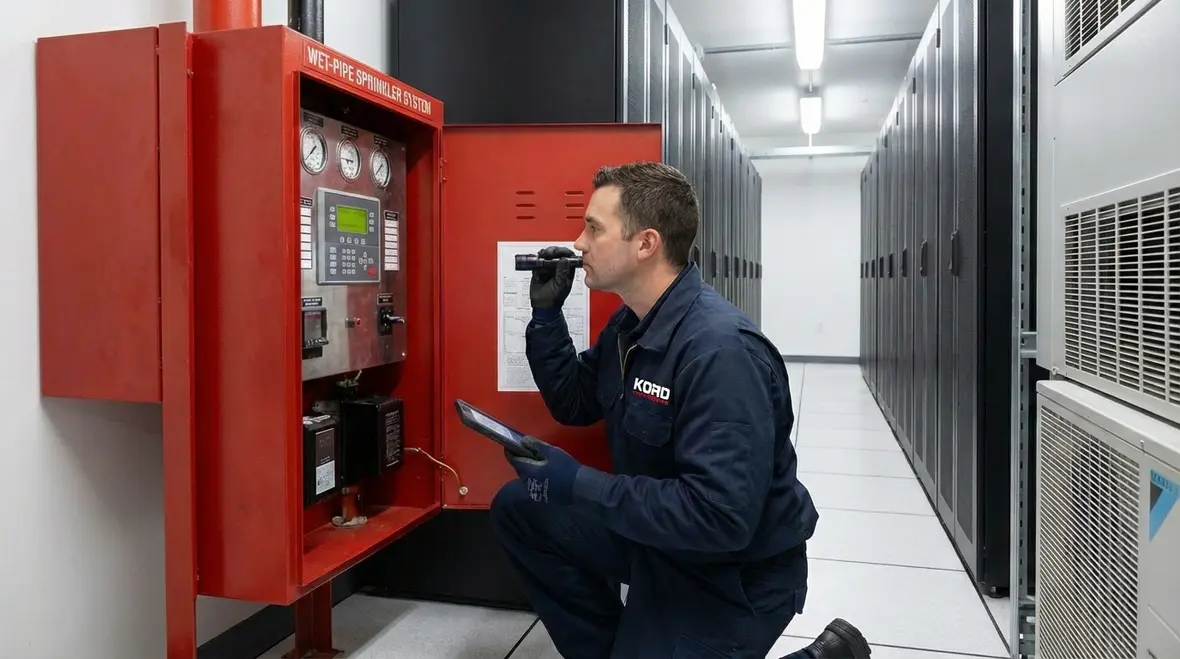
This localized response limits damage while stopping fire spread. Moreover, pre action sprinkler systems add another layer of control. In these systems, water does not sit in the pipes above equipment. Instead, the pipes remain dry until detection confirms a real threat. Only then does water enter the piping network.
As a result, the risk of accidental discharge drops significantly. Kord Fire Protection technicians often demonstrate how pre action valves require both detection and heat activation. That double confirmation offers peace of mind to operators who lose sleep over the thought of unwanted water flow.
Consequently, sprinklers serve as the heavy hitter waiting in the bullpen. They may not always take the field, but when they do, everyone is glad they showed up.
For a deeper dive into how these systems think before they act in critical rooms, Kord’s guide on Pre Action Sprinkler Systems for Critical Environments breaks down the two step confirmation logic that makes them such a strong fit for data centers.
Code Requirement for Water Based Systems
Facility planners frequently search for clear guidance on code requirement for water based systems in server environments. The answer depends on occupancy classification, square footage, and local amendments. However, most standards align on a few core principles.
Buildings that house critical IT infrastructure must include automatic sprinkler protection unless a specific exemption applies. Even then, exemptions are rare and tightly controlled. Authorities understand that a data center fire can disrupt hospitals, banks, transportation systems, and emergency services.
Therefore, codes prioritize continuity and public safety. Water based systems deliver proven performance across decades of real world incidents. While technology evolves, physics does not. Water absorbs heat efficiently. It reduces flame temperature. It prevents structural failure.
Additionally, insurance carriers often require sprinklers regardless of local code flexibility. From their perspective, statistics matter more than aesthetics. Facilities with compliant sprinkler systems consistently show lower total loss values after fire events.
So although the equipment inside may look like it belongs on a spaceship, the protection strategy still respects basic fire science.
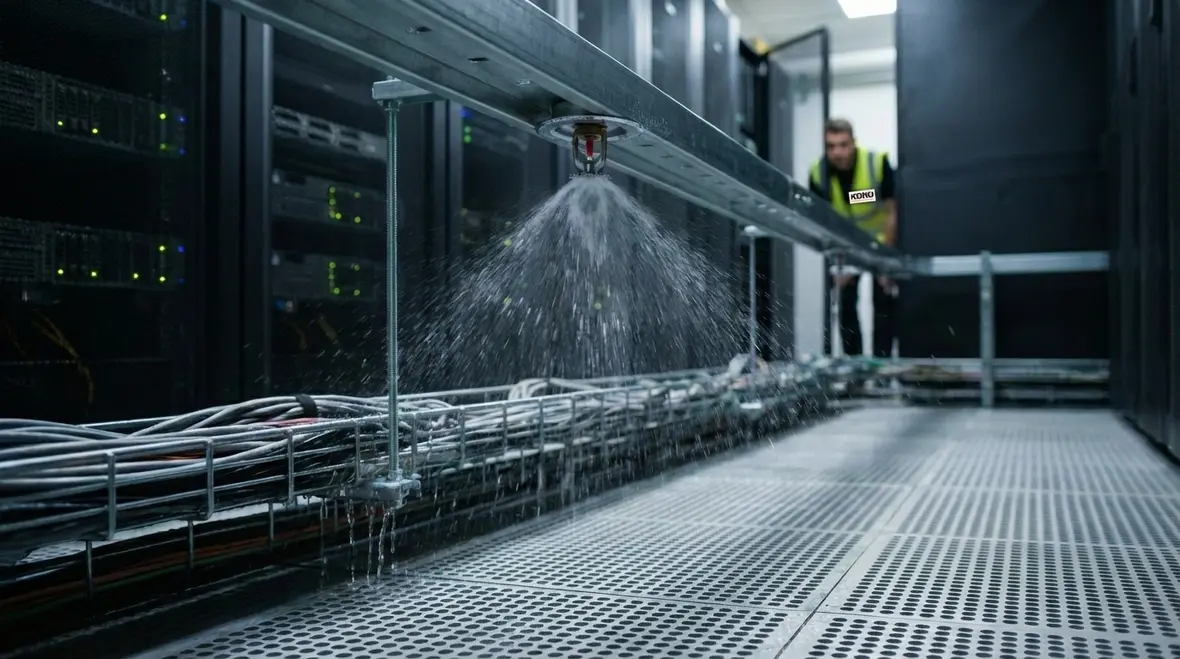
Myths About No Water in Data Centers
One persistent myth claims that modern facilities ban water entirely. It sounds dramatic. It also sounds good in marketing brochures. However, it does not reflect reality.
Here are common misconceptions and the truth behind them.
Myth One. Any water discharge destroys all equipment.
In truth, fire damage often exceeds water damage. Moreover, targeted sprinkler activation limits exposure. Many components can be replaced. Entire buildings lost to uncontrolled fire cannot.
Myth Two. Gas systems make sprinklers obsolete.
Clean agents play a critical role. Yet they function best in early stage incidents. If a data center fire grows due to delayed detection or obstructed airflow, sprinklers provide the necessary backup.
Myth Three. Sprinklers activate too easily.
Modern systems require significant heat at individual heads. They do not respond to smoke alone. As Kord Fire Protection technicians often note, someone burning toast in the break room will not trigger a flood over the server racks.
These myths persist partly because water feels like the enemy of electronics. However, uncontrolled fire poses a far greater threat. Between smoke contamination, structural damage, and total shutdown, the cost of avoiding sprinklers can exceed the cost of installing them correctly.
How Modern Sprinkler Design Protects Critical IT Assets
Designers today do not simply hang pipes and hope for the best. Instead, they coordinate closely with engineers, IT managers, and fire protection specialists.
For example, many facilities use pre action or double interlock systems. These require two independent triggers before water enters the pipes. Consequently, accidental discharge becomes highly unlikely.
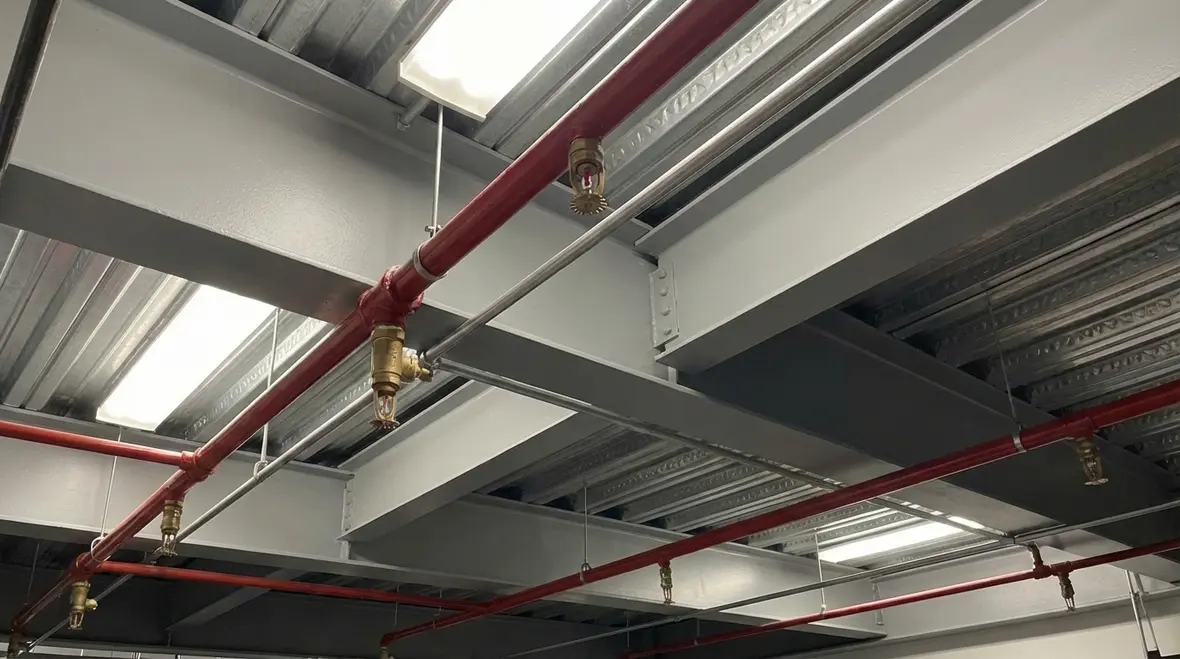
Furthermore, designers analyze airflow patterns, ceiling heights, and rack layouts. They position sprinkler heads to avoid obstructions and ensure proper coverage. In addition, they integrate monitoring systems that report valve status and pressure conditions in real time.
The following overview shows how protection layers typically align.
| Primary Protection | Purpose |
|---|---|
| Early smoke detection | Identify incipient fire conditions |
| Clean agent system | Rapid flame suppression without residue |
| Pre action sprinklers | Control and cool advanced fire growth |
| Monitoring and alarms | Alert staff and emergency responders |
Each layer supports the others. Therefore, if one system underperforms, another compensates. This integrated approach reduces the chance that a small ignition becomes a headline worthy data center fire.
Additionally, routine inspection and testing remain essential. Kord Fire Protection technicians emphasize scheduled valve checks, trip tests, and coordination with local authorities. Because even the best design fails without maintenance.
What Happens When Sprinklers Are Ignored
Some operators consider minimizing sprinkler coverage to protect equipment. However, history offers cautionary tales. Facilities without adequate water based backup have suffered extended outages after fires spread beyond initial containment.
In several documented cases, clean agent systems discharged successfully yet failed to prevent re ignition inside concealed spaces. Without sprinklers to provide sustained cooling, flames returned. Damage multiplied. Downtime stretched from hours to weeks.
Meanwhile, facilities equipped with properly maintained sprinkler systems often contained incidents to a limited area. Although some hardware required replacement, the building structure remained intact. Operations resumed faster.
Therefore, the choice is not between water and no water. It is between layered protection and unnecessary risk. And when clients rely on uninterrupted service, risk rarely earns applause.
FAQ About Sprinklers and Data Center Fire Protection
Protecting What Powers the Modern World
Every email sent, every streamed show watched, every digital payment processed depends on secure facilities operating without interruption. A data center fire threatens more than hardware. It disrupts lives and businesses. Therefore, smart operators embrace layered protection that includes water based systems. Sprinklers, clean agents, alarms, and detection are not competing tools. They are teammates.
For facilities teams who want to get ahead of the next inspection or expansion project, pairing this layered mindset with a clear roadmap for prevention is key. Kord’s recent overview on Data Center Fire Prevention Strategies for Modern Facilities connects everyday maintenance tasks with the high stakes of uptime and continuity.
Kord Fire Protection technicians stand ready to design, inspect, and maintain these safeguards. When uptime matters and risk feels heavy, partnering with experienced professionals ensures protection that works when it counts most. From pre action sprinkler design to clean agent systems and alarm integration, having one team manage the full picture simplifies compliance and cuts down on surprises.
If you are responsible for a new build, retrofit, or ongoing maintenance, explore Kord Fire’s Full Fire Protection Services to connect with a team that understands mission critical environments. A brief conversation today can mean the difference between a controlled incident and a catastrophic outage tomorrow.
Know Your Weapon Before You Fight the Flame
Kord Fire Protection is your go-to when it comes to all things fire protection. For over 20 years, we’ve been serving Southern California with the quality service and equipment to keep your home or business safe at all times. Our competitive prices reflect our unwavering commitment to protecting what matters most in the event of a fire emergency. Give us a call, send an email, or use that form!

Join Our Newsletter!
Get the latest fire safety tips delivered straight to your inbox From our Newsletter.