Pre Action Sprinkler Systems for Critical Environments
Pre Action Sprinkler Systems A Complete Guide for Critical Environments
Why Critical Environments Choose Pre Action Protection
In critical environments, fire protection does not get a second take. Data centers, hospitals, museums, and labs all demand systems that think before they act. That is where understanding how pre action sprinkler systems work becomes essential. These systems rely on a two step confirmation. First, detection devices sense smoke or heat. Next, a control panel authorizes water to enter the pipes. Only then can sprinklers discharge. As Kord Fire Protection technicians often explain, it is like a bouncer and a manager both agreeing before anyone gets inside. Calm, controlled, and very intentional.
Throughout this guide, Kord Fire Protection technicians walk through design intent, inspection discipline, and long term care. The tone stays steady, authoritative, and occasionally playful, because even serious systems deserve a moment to breathe.

Critical environments live in fear of two enemies. Fire and water damage. Traditional wet systems solve one problem while creating another. Pre action systems, however, exist to keep both at bay. They hold water back until a detection event confirms a real emergency. Therefore, an accidental bump or a rogue forklift does not trigger a costly flood.
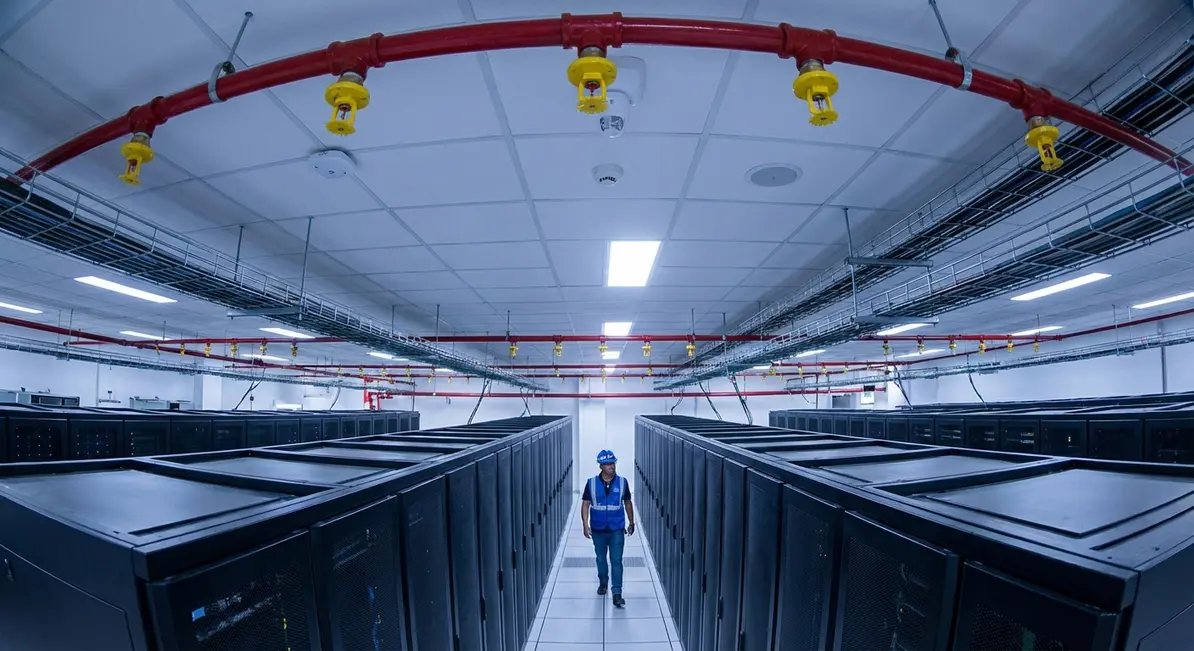
Moreover, these systems shine in places where downtime costs money and reputation. Data centers hum with servers that hate moisture. Museums guard artifacts that survived centuries but cannot survive a pipe burst. Laboratories house experiments that do not appreciate surprise showers. Consequently, pre action protection offers a balanced response that feels almost wise.
Kord Fire Protection technicians often joke that pre action systems are like seasoned chess players. They do not rush. They think three moves ahead. That patience saves facilities millions while keeping safety intact.
How Pre Action Sprinkler Systems Work In Real World Conditions
The two step activation sequence
In practice, how pre action sprinkler systems work depends on a careful dance between detection, control, and suppression. Smoke detectors or heat sensors first signal the pre action control panel. Then, the panel evaluates the input. If conditions meet programmed criteria, it opens the valve and fills the piping with water. Only after a sprinkler head activates does water discharge.
Because of this sequence, false activations drop dramatically. Additionally, maintenance teams gain time to respond before water ever moves. Kord Fire Protection technicians emphasize that this design reduces panic. It also reduces clean up bills that make finance teams cry into their coffee.
Single interlock vs. double interlock
There are variations, including single interlock and double interlock designs. Single interlock relies on detection alone. Double interlock requires both detection and sprinkler activation. Each has its place, and selecting the right one depends on environment, code, and risk tolerance.
Codes And Standards That Shape System Reliability
The regulatory backbone
No fire protection system lives outside the law. Pre action systems answer to a strict set of codes and standards. These rules exist not to complicate life, but to keep it safe and predictable.
Applicable guidance includes NFPA 13 for installation, NFPA 70 for electrical integrity, NFPA 72 for signaling, and NFPA 75 for information technology spaces. In California, CSFM Title 19 adds another layer of oversight. Together, they form a framework that ensures consistency.
Kord Fire Protection technicians work within these standards daily. They translate code language into practical actions. As they like to say, the codes may read like a legal thriller, but the outcome should feel like a calm documentary narrated in a deep voice.

Service And Inspection Frequency Explained Simply
Rhythms that keep systems ready
Inspection schedules keep pre action systems ready without disrupting operations. Frequency depends on jurisdiction and system design. However, some rhythms remain universal.
Service and inspection must be performed by KFP certified technicians as required by the Authority Having Jurisdiction. Weekly visual inspections by on site personnel add another layer of assurance. These quick checks look for obvious issues like panel trouble lights or valve tampering.
Because consistency matters, documentation follows every visit. Reports close the loop and create a trail of accountability. In other words, the system stays honest, and so do the people responsible for it.
System Devices That Demand Attention During Inspections
Brains, muscles, and everything in between
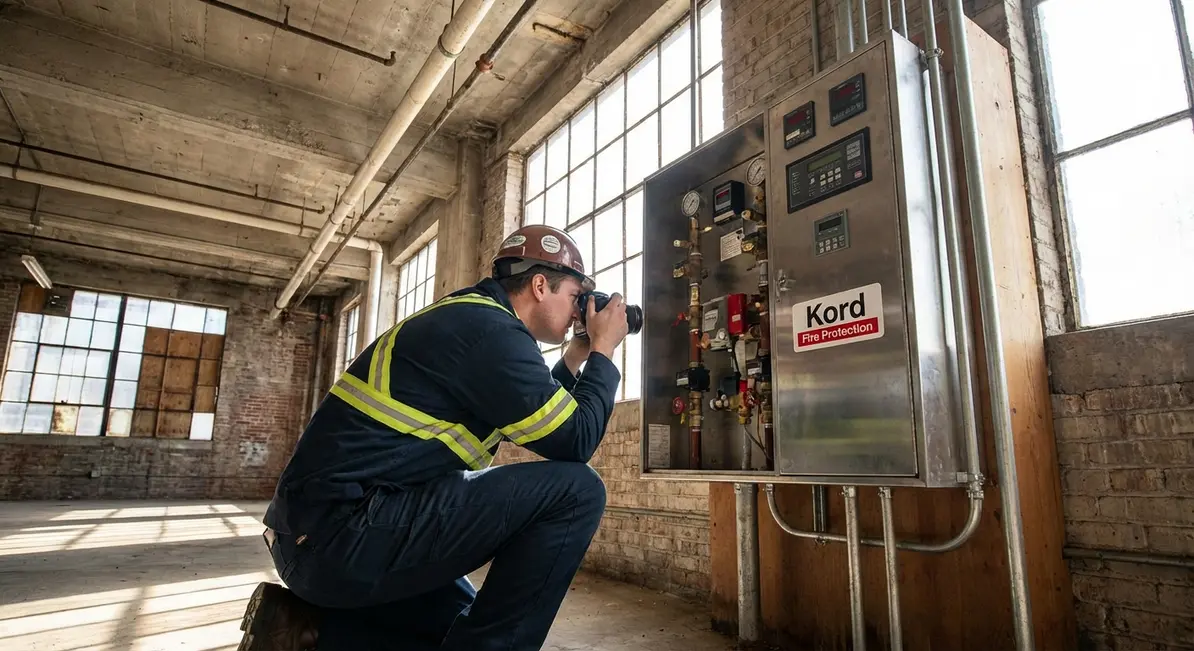
Every component plays a role. Ignore one, and the whole system loses harmony. Below is a dual column overview that Kord Fire Protection technicians often use during walkthroughs.
Control and Power Side
- Pre action control panel
- Battery backup systems
- Graphic display panels when installed
Notification and Activation Side
- Alarm bells, horns, strobes
- Manual discharge pull stations
- Smoke detectors
- Pre action sprinkler system piping and heads
This balanced focus ensures that both brains and muscles of the system stay strong. After all, even the best idea fails without the ability to act.
Inspection Procedures Step By Step Without The Stress
From notification to closing credits
Inspection follows a calm, deliberate flow. First, facilities staff and the monitoring station receive notification. This prevents confusion and accidental emergency responses. Next, technicians inspect electrical and mechanical integrity. Panels, wiring, valves, and detection devices all receive careful attention.
After testing, the system returns to normal operation. Finally, a detailed report documents findings and actions. Kord Fire Protection technicians treat this step like the closing credits of a film. Nothing flashy, but absolutely necessary for the story to make sense.
Semi Annual And Annual Procedures That Protect Long Term Performance
Deep dive testing that catches silent failures
Some tasks require deeper dives. Semi annual and annual procedures include inspection and testing of fire department connections, control valves, risers, gauges, sprinklers, tamper switches, pressure switches, solenoids, detection activation, and valve operation.
These evaluations confirm that time has not introduced silent failures. Springs weaken. Seals age. Electronics drift. Regular testing catches these changes early. Consequently, the system responds as designed when it matters most.
Common Myths And Lighthearted Truths From The Field
Myth vs. reality
Myth one. Pre action systems never discharge accidentally. Truth. They are highly resistant, not magical. Myth two. They require constant attention. Truth. They require disciplined attention. There is a difference.
Kord Fire Protection technicians sometimes compare these systems to classic movie heroes. They appear quiet and reserved until the moment demands action. Then they deliver exactly what the script promised. No improvisation. No drama. Just results.
Frequently Asked Questions
Conclusion And Next Steps
When critical environments demand certainty, pre action protection delivers calm confidence. Kord Fire Protection technicians bring clarity, experience, and a steady voice to every inspection and service visit.
Facilities that invest in proper care gain reliability, compliance, and peace of mind. Now is the moment to evaluate current systems, schedule expert inspections, and plan ahead. Because when fire threatens the unthinkable, preparation should already be waiting quietly, ready to act.

Join Our Newsletter!
Get the latest fire safety tips delivered straight to your inbox From our Newsletter.