Data Center Fire Code Compliance Explained
The Calm Before the Kindling: Why Data Center Fire Code Compliance Matters
In a world increasingly driven by data, where cloud storage and server racks hum quietly in the background of our digital lives, nothing can bring those wheels to a fiery halt faster than neglecting data center fire code compliance. That’s not just tech sweat talking — it’s the reality of housing thousands of servers, each generating heat, electricity, and more risk than a toaster left running in a bathtub. (Friendly PSA: don’t try that either.)
But here’s the good news: You don’t need to be a NICET-certified wizard to understand what it all means. Our experts at Kord Fire Protection have been explaining these standards with the patience of Morgan Freeman and the clarity of your favorite high school science teacher — only with more fire extinguishers and fewer frog dissections. With a little deliberate knowledge and maybe one or two jokes (for survival), we’ll walk through how you can keep your data center safe, compliant, and flame-free.
So, grab a coffee, extinguish that metaphorical dumpster fire of confusion, and let’s get to it.
Understanding the Basics of Data Center Fire Code Compliance
Before diving into the nitty-gritty, picture this: Your data center is like Fort Knox — but for information. It’s valuable, vulnerable, and very flammable. Google search history included. Fire code compliance ensures your server farm doesn’t turn into a literal hot topic.
Compliance involves adhering to national, local, and industry-specific regulations governing everything from sprinkler systems to fire doors. The codes, including NFPA 75 (that’s the National Fire Protection Association’s technical standard) and NFPA 76 for telecom facilities, provide guidance on designing fire protection systems specifically for sensitive electronic environments. Think of them as the IKEA instructions for not burning your building down — only less confusing and with fewer leftover bolts.
Key concepts include:
- Fire detection and suppression tailored for electronics
- Proper spacing and airflow planning
- Emergency response paths and access
- Performance-based vs. prescriptive code requirements
Put simply — if you’re running rows of blinking server racks without addressing fire code compliance, you’re basically inviting danger to RSVP with a +1.
Fire Safety’s Unsung Avengers
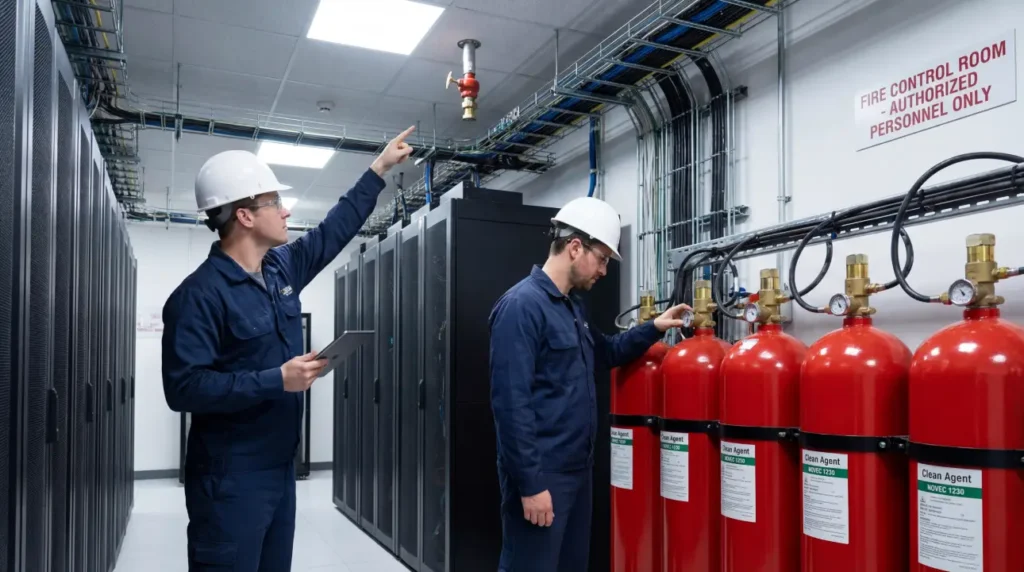
When it comes to explaining fire safety in data centers, the folks at Kord Fire Protection have mastered the art of turning complex fire codes into everyday language. Picture a group of professionals who walk into your server room with clipboards, thermal sensors, humor, and suspiciously sensible boots.
More than just code enforcers, these technicians operate like consultants, working side-by-side with facilities teams to assess, correct, and upgrade fire protection systems. As one Kord tech put it, “We don’t just point at violations. We explain, we plan, and we double-check like your mom before a road trip.”
What sets Kord apart is their commitment to demystifying the process. Expect them to tell you more than just what code you’re breaking. They’ll explain why it matters. Because honestly, what’s the point of a compliance report if it reads like a medieval scroll?
How Fire Suppression Works Differently in Data Centers
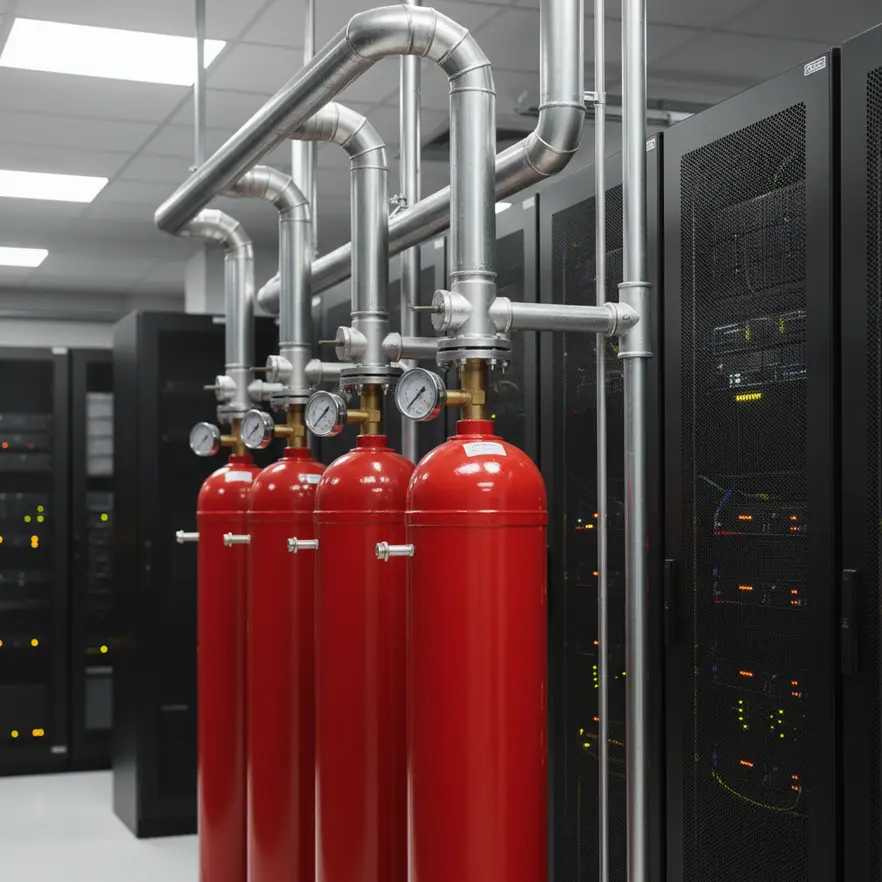
Here’s where things heat up — or rather, don’t. Traditional water sprinklers? Great for the kitchen… not so much for your $100k rack-mounted servers. That’s why data centers use special suppression systems designed to put out fires without damaging electronics.
The three main players in this non-H2O game:
*Clean Agent Systems (Like FM-200 or Novec 1230)*
Fast-acting gas that interrupts chemical reactions in a fire. Safe for equipment, and kind of reminds you of that friend who shuts down drama before it starts. Expensive? Yes. Worth it? Also yes.
*Pre-action Sprinklers*
These wait until two triggers activate before unleashing the storm, preventing accidental drenching. Think of them as sprinkler systems with trust issues.
Every system is chosen based on room size, equipment density, and potential fire risks. One size doesn’t fit all — although one explosion might take out all. Let’s prevent that.
What’s Required for Fire Code Compliance in My Data Center?
Excellent question. Imagine your data center as an upscale nightclub. Not everyone gets in (appropriately so), the lighting is moody, and there are a lot of cables involved. For the club to remain open — and safe — here’s what usually needs to happen:
- Fire Risk Assessment: A full review to identify specific hazards
- Heat Detection Systems: Smoke is late to the party; heat knows what’s up
- Suppression Installation: As we said earlier, water’s mostly banned here
- Smoke Control: Vents, filters, and airflow direction to contain or redirect
- 24/7 Monitoring: You know how toddlers are quiet right before trouble starts? Same concept applies to servers.
- Exit & Egress Plans: Clear, lit, and accessible escape paths are not optional
Oh, and all of this? It has to be documented, tested, certified, and ready to impress a visiting fire marshal like he’s your data center’s new boss.
The Real Cost of Ignoring Fire Code Compliance
Sometimes we learn best from bad decisions. Like dating your ex. Or skipping data center fire safety to cut “unnecessary” costs. Spoiler alert: compliance costs less than disaster recovery.
When fire strikes a non-compliant facility, the list of losses is heavy:
- Data loss: Not all clouds have backups upon backups
- Hardware melt-downs: Literally
- Business interruption: You can’t “reboot” a charred motherboard
- Fines & lawsuits: Cue the legal drama music
- Insurance denial: “Wait, you didn’t follow the code? Awkward…”
A fire doesn’t care if you “meant to schedule the inspection.” So take a page out of Marvel’s playbook: Protect your assets like they’re Infinity Stones. Because once they’re gone… oh snap.
When Should You Update Your Fire Protection System?
If your fire protection setup hasn’t changed since Y2K was a legit panic, yeah, it’s time. But event-based updates are more realistic triggers. Consider upgrades if:
- You’ve added more server-load or new hardware
- There’s been layout modification or added walls
- The sprinkler system was deprecated before your intern was born
- You recently failed or barely passed a local inspection
- You still think Halon is acceptable (it’s… not)
Kord Fire Protection’s team recommends a full review every 2-3 years or after any major infrastructure change. Think of it like a wellness visit — but for a rack full of high-voltage anxiety.
Is Fire Code Compliance the Same in Every State?
Nope. Not even close. While NFPA and ICC codes provide national standards, local authorities often layer on their own unique interpretations. It’s like moving from one Hogwarts professor to the next — same spell, different wrist flick.
South Dakota might cut you more slack on cable clearance than Southern California (earthquake zones don’t play). Urban centers might double down on emergency access paths. That’s why Kord technicians stay fluent in the dialects of each jurisdiction’s AHJ — Authority Having Jurisdiction.
Compliance isn’t a copy-paste job. It’s more like a custom-built, code-compliant Lego castle. Every state whistles a different tune, and Kord makes sure yours is playing the right song when the fire marshal dances in.
Top 6 Myths About Data Center Fire Code Compliance (Debunked by Kord)
- “Smoke detectors are enough.” Sure — if you like alarms and total loss. Without suppression, smoke detection is just the opening credits.
- “Old systems are grandfathered in.” Only in ghost stories. Codes change for a reason — usually because somebody’s system failed spectacularly.
- “IT should handle fire code stuff.” Would you ask your barista to tune up your car? Let the techs handle tech, and Kord handle the fire.
- “Only big data centers need to comply.” Fire doesn’t care about your square footage. Small racks burn too.
- “Clean agents are toxic.” Not remotely. Today’s gases are people- and equipment-safe. Breathe easy (literally).
- “Inspections are optional.” If you’re into fines, forced shutdowns, or karma — be our guest. Otherwise, stay sharp.
FAQ: Fast Answers for Curious Minds
- What is data center fire code compliance?
It’s following regulations that ensure your data center’s fire safety systems are sufficient and operational. - How often should I inspect my fire safety system?
Once a year minimum, or after any major system/environment change. - Can fire protection be added during live operations?
Yes, though it’ll require careful planning. That’s where Kord shines. - What’s the best fire suppression for a data center?
Clean agents (like Novec 1230) are ideal — no residue, fast action, and server-safe. - What happens if I don’t comply?
Risk of catastrophic fire, liability, fines, and insurance denial increase significantly. - Are local codes different from national standards?
Yes. Local codes can be stricter. Always check with your AHJ or Kord’s team.
Don’t Get Burned — Call in the Experts
So now we’ve taken a slow, deliberate stroll through the world of data center fire code compliance — with jokes in hand and facts in pocket. It’s clear just how vital, complex, and surprisingly human-friendly this process can be with the right guide. And that guide, quite often, is wearing a Kord Fire Protection badge.
Don’t gamble with your servers or your peace of mind. Whether you’re designing new systems or retrofitting old ones, Kord’s team is ready to walk you through fire code compliance like Morgan Freeman narrating your IT dreams.
Reach out to Kord Fire Protection today and light up your data center — responsibly, safely, and with an extinguisher close by.

Join Our Newsletter!
Get the latest fire safety tips delivered straight to your inbox From our Newsletter.