Fire Shield Systems for Fire Protection System Design
Fire shield system fundamentals and how the protection works
Fire Shield Systems play a key role in the broader fire protection system design for buildings, because they help control how heat, smoke, and flames move through a structure. In practice, a solid fire shield approach starts with a clear plan for where fire and smoke can travel, how long the building must stay protected, and what the occupants need while they wait for help. Then teams turn that plan into drawings, schedules, and staged testing. And when Kord Fire Protection Technicians explain the process on site, they keep it grounded in real details, not scary “doom math.” After all, nobody wants a fire safety system that behaves like a pop quiz.
Fire shield systems work by limiting the spread of hazards and buying time for people to exit and for firefighters to do their work. Instead of betting everything on one device, the design combines several layers of protection. It may include passive barriers like fire rated walls and floors, plus active elements that detect and respond. The fire shield concept focuses on separating risk zones so the building does not act like one big fuse.
To build that separation, designers first map hazards. They review the building layout, room use, ceiling heights, penetrations for pipes and wiring, and any large open spaces. Then they choose locations where a shield is most valuable, such as around shafts, service chases, mechanical rooms, and areas where smoke can race.
Next, they define performance goals, usually in terms of time. For example, a barrier might need to hold back fire and smoke for a set period. Also, the system design accounts for how smoke spreads. Smoke is sneaky and fast, and it can reduce visibility and breathing time long before flames show up. Therefore, the shields and closures must support smoke control where required.
Finally, the design process ties everything together: openings, dampers, doors, and seals connect like a well rehearsed band. Yet, if any connection fails, the whole “song” turns into a live jazz set where everyone plays at once. That is why Kord Fire Protection Technicians often emphasize the link between details and outcomes during commissioning.
Real world use cases for fire shield applications
In the real world, fire shield systems show up in many building types, and the reason is simple. Buildings rarely behave like ideal test walls. They have duct runs, cable trays, maintenance openings, and constant change from tenant improvements. Therefore, the best use cases focus on the parts that most often become weak spots.
Common scenarios include
- Multi tenant commercial spaces where tenant fit outs create new penetrations through rated assemblies. Fire shielding and sealing practices help preserve the fire rating and smoke control plan.
- Healthcare and assisted living where safe egress time matters, and where smoke control can support patient movement and staff response.
- Warehouse and logistics buildings where large volume spaces can move heat and smoke quickly, making compartment strategy and barrier integrity more critical.
- Educational facilities where systems must support long term reliability and predictable inspections across multiple floors.
- High rise mixed use buildings where shafts, stair lobbies, and mechanical rooms demand careful zoning and protection of openings.
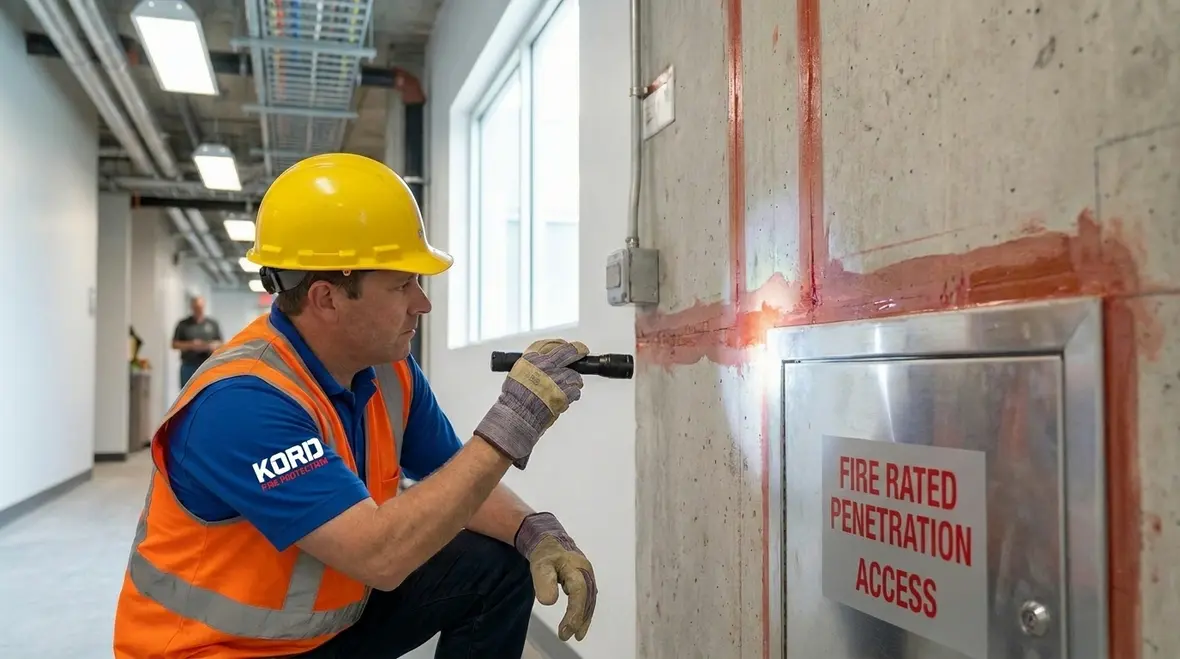
Moreover, Kord Fire Protection Technicians often point out that “real” means real access. They check whether technicians can actually reach dampers, verify seals, and observe labels. Because if the team cannot inspect it, the building cannot truly claim it is protected.
Design decisions that drive performance, not just compliance
Fire protection system design for buildings cannot rely on checklists alone. It must respond to how the structure is built and how it will be used. As a result, the design team makes several key decisions that influence how well the fire shield system performs over time.
First, they select the right assembly approach. That includes fire rated walls, floors, and partitions, plus how openings get treated. Penetrations around cables and pipes are where many fire barriers quietly fail. So the design specifies the required methods for sealing and protecting each opening size, material type, and arrangement.
Second, they coordinate active and passive layers. A passive wall buys time, but active detection and response help control conditions and manage smoke. Therefore, fire shields work best when designers align barrier strategy with detection zones, alarm notification plans, and any water based suppression where present.
Third, they manage airflow paths. Smoke can follow air movement through returns, supply gaps, and unintended leakage paths. Consequently, the fire shield plan must include closures and damper strategies where code requires them.
Fourth, they consider construction realities. Contractors build what the drawings allow, and they also build what the site makes possible. Therefore, Kord Fire Protection Technicians frequently stress that design intent needs to be clear at the field level, including tolerances, installation method, and inspection checkpoints.
And yes, there is humor in this. Fire protection folks sometimes joke that walls should come with instructions, like a flat screen TV. But this is not a “turn it on and hope” situation. It is a precision job where the details decide the outcome.
Strengths and weak points to understand before installation
When done well, fire shield systems offer strong benefits. However, every system has limits, and those limits matter. Understanding both sides helps teams avoid surprises during inspections and future upgrades.
Strengths
- Time and zoning They limit spread and help maintain compartment boundaries, which supports evacuation and response.
- Smoke management support Properly sealed assemblies and required closures reduce smoke travel.
- Scalability They fit many building sizes and uses, from small offices to large industrial spaces.
- Field friendly checks With correct labeling and accessible inspection points, teams can verify integrity without guesswork.
Weak points
- Penetration vulnerability New cables, pipes, and renovations can damage rated integrity if the system design for buildings is not preserved.
- Maintenance dependency Fire shields and closures still require inspection. If doors get held open or seals get disturbed, performance can drop.
- Improper coordination If active and passive layers conflict, the building may not meet the intended safety scenario.
- Construction deviations Even small field changes to assemblies can invalidate assumptions. Therefore, inspection and documentation matter.
In short, the best fire shield systems do not just get installed. They stay correct after people move in, move out, and “just make a quick change.” Quick changes often become the plot twist no one wanted.
Ongoing maintenance needs and inspection routines
Fire shields are not set it and forget it systems. They require ongoing attention so the building stays protected as changes occur. The maintenance approach usually includes periodic inspections, targeted testing, and documentation updates.
Typically, teams verify
- Barrier integrity They inspect walls, floors, and fire stopping at penetrations for cracks, gaps, or disturbed materials.
- Closures and dampers They check door self closure, damper position indicators, and actuator function where applicable.
- Compartmentation They confirm that doors remain labeled and are not blocked with storage.
- Labeling and access They confirm inspection access panels remain in place and identifiable for technicians.
- Recordkeeping They maintain service logs, inspection results, and repair documentation.
In addition, Kord Fire Protection Technicians often recommend a “renovation rule.” When a tenant modifies a space, the building owner should require a quick fire integrity review. That review does not need to be dramatic, but it must happen before work conceals new penetrations. Otherwise, the building may have a fire shield design that looks perfect on paper, but behaves differently in real life.
And if a tech ever hears “We’ll cover it later,” the response should be the same energy as a superhero with a strict policy. Because later is where the risk hides.
Relevant NFPA and local code requirements that guide the plan
Fire shield systems connect to widely used safety standards, and designers must follow required codes and authority having jurisdiction rules. While local interpretations vary, many projects reference NFPA requirements and adopt additional local amendments.
Common NFPA touchpoints include
- NFPA 80 for fire doors and related assemblies
- NFPA 101 for life safety code concepts and egress related requirements
- NFPA 72 for fire alarm systems where coordination affects smoke control and response
- NFPA 252, NFPA 255, and related test standards for fire testing methods depending on assembly type
Additionally, many jurisdictions adopt inspection and maintenance expectations through building and fire prevention codes. Therefore, a compliant fire shield approach includes documentation, inspection intervals, and a plan for how the system stays in service after modifications.
To keep everything smooth, teams should coordinate with local code officials early, especially when the building has unique layouts or mixed occupancies.
How Kord Fire Protection Technicians support safer fire shield system design
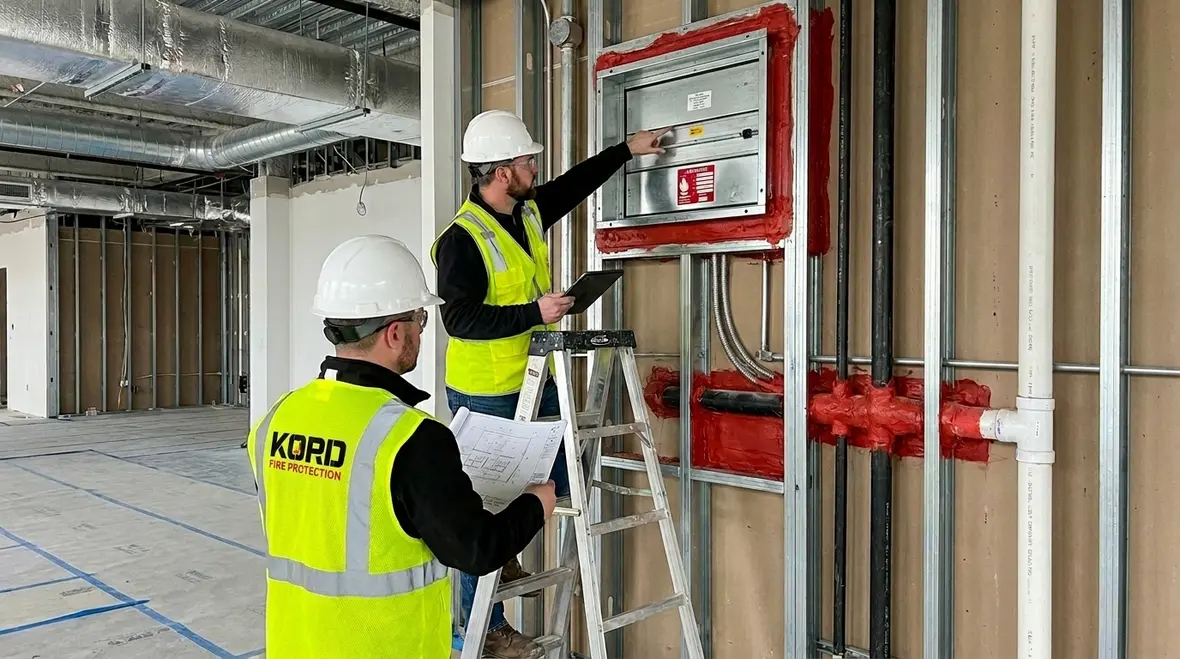
Kord Fire Protection Technicians help ensure the fire protection system design for buildings stays accurate from concept to field performance. They review installation details, confirm labeling and accessibility, and verify that penetrations and closures get treated the right way. Also, they support commissioning and final checks so the building does not enter occupancy with unverified conditions.
During these visits, they often explain the “why” behind each step. Because when building teams understand the reasoning, they make better decisions later. That means fewer shortcuts, fewer reopened walls, and fewer “how did this get missed” meetings that consume everyone’s afternoon like a bad sitcom marathon.
Moreover, they encourage ongoing communication between facilities teams, contractors, and service providers. As a result, the building stays aligned with its intended fire safety strategy through renovations and tenant changes.
FAQ
Using fire shield systems the right way for long term safety
Fire shields work best when teams treat them like part of the building’s operating system, not like a one time project. Therefore, designers should keep the fire protection system design for buildings details clear, contractors should follow installation intent closely, and facilities teams should protect barriers during everyday work. Then, when Kord Fire Protection Technicians explain the steps and validate field conditions, the plan becomes real safety. Use these systems to reduce smoke spread, support safe evacuation, and maintain compliance as the building changes.
In the end, the goal is simple. If a building owner wants a confident life safety strategy, they should schedule a consultation with Kord Fire Protection Technicians for a design review, field verification, and a practical maintenance plan. That is how a fire shield system stays accurate, inspection ready, and dependable when it matters most. Reach out today to align your drawings, your installation, and your long term protection goals, before “quick fixes” turn into expensive fire drills.
Get a fire shield design review that stays practical in the field
When your drawings, install details, labeling, and inspection access all line up, your fire shield strategy stops being a “paper promise” and becomes dependable protection.
Schedule your consultation
Have Kord Fire Protection Technicians align your fire protection system design for buildings with real site conditions, inspections, and long term maintenance.
Know Your Weapon Before You Fight the Flame
Kord Fire Protection is your go-to when it comes to all things fire protection. For over 20 years, we’ve been serving Southern California with the quality service and equipment to keep your home or business safe at all times. Our competitive prices reflect our unwavering commitment to protecting what matters most in the event of a fire emergency. Give us a call, send an email, or use that form!

Join Our Newsletter!
Get the latest fire safety tips delivered straight to your inbox From our Newsletter.