Data Center Fire Prevention Strategies for Modern Facilities
In the always-on, data-driven world we live in today, the flicker of a flame inside a data center is more than a hardware headache—it’s a five-alarm nightmare. Fortunately, data center fire prevention has become a finely-tuned science, not just a glorified sprinkler system. At the heart of this high-tech firewall (pun 100% intended) are experts who live and breathe this stuff. Cue the professionals at Kord Fire Protection, whose technicians recently walked us through how modern facilities keep cool under literal pressure—without relying on good luck and fire extinguishers from aisle five at your local hardware store.
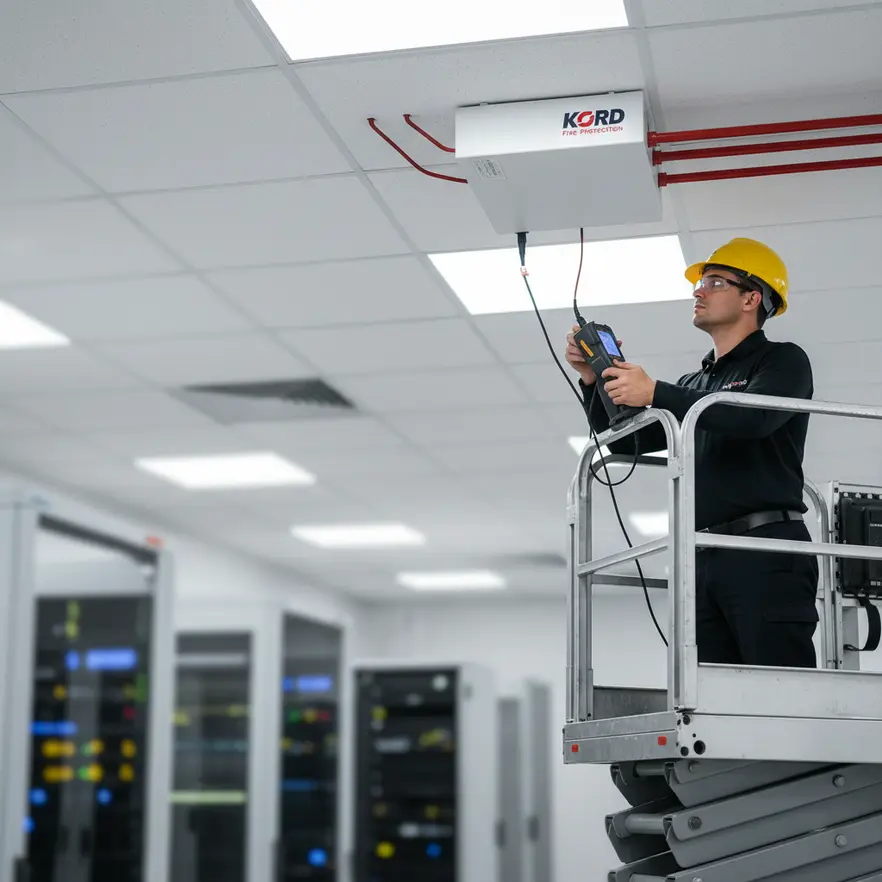
Now, let’s take a deep dive—slow and steady—into just how today’s digital fortresses armor themselves against the threat of fire. Along the way, keep your hard hat on, your sarcasm detector calibrated, and trust in the silky-smooth narration of Captain Serious with a splash of stand-up.

Whispers in the Wires: Why Fire Is Public Enemy #1 for Data Centers
Imagine this: thousands of servers, all humming a digital lullaby, working around the clock to process everything from cat videos to company payrolls. Now throw in excessive heat, densely packed equipment, and high-voltage circuits. It’s basically inviting disaster to prom with a flamethrower corsage.
Data centers aren’t some magical cloud castle in the sky; they’re physical spaces loaded with combustible materials, including power distribution units, copper cabling, and sometimes even… carpet. Yes, carpet—because who doesn’t want a cozy inferno under their server racks?
This is where data center fire prevention steps in—not as a glorified smoke detector, but as an orchestrated mix of anticipation, engineering, and just plain common sense. But don’t worry, Captain Obvious isn’t running this show. Trained pros like Kord’s technicians are.
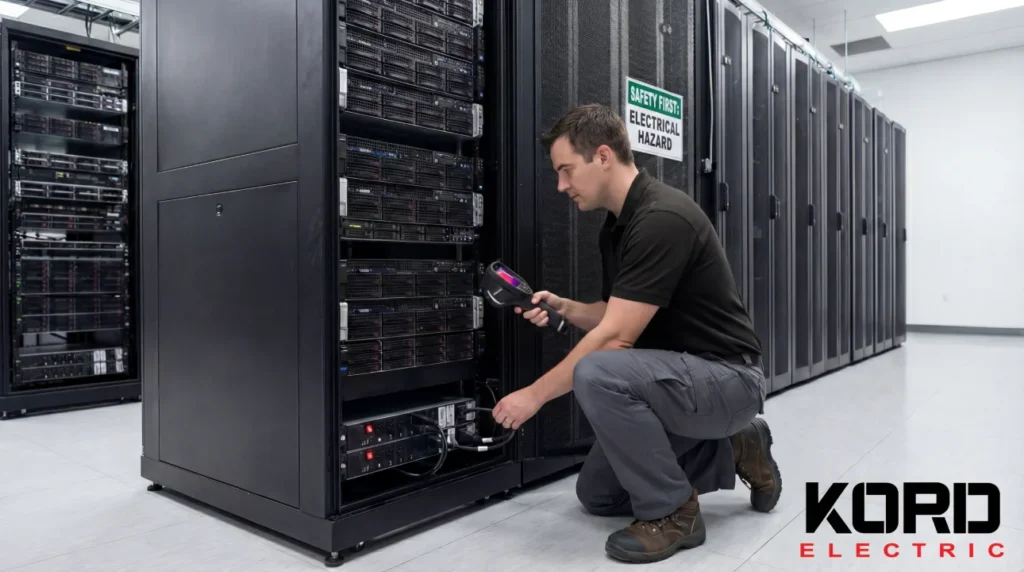
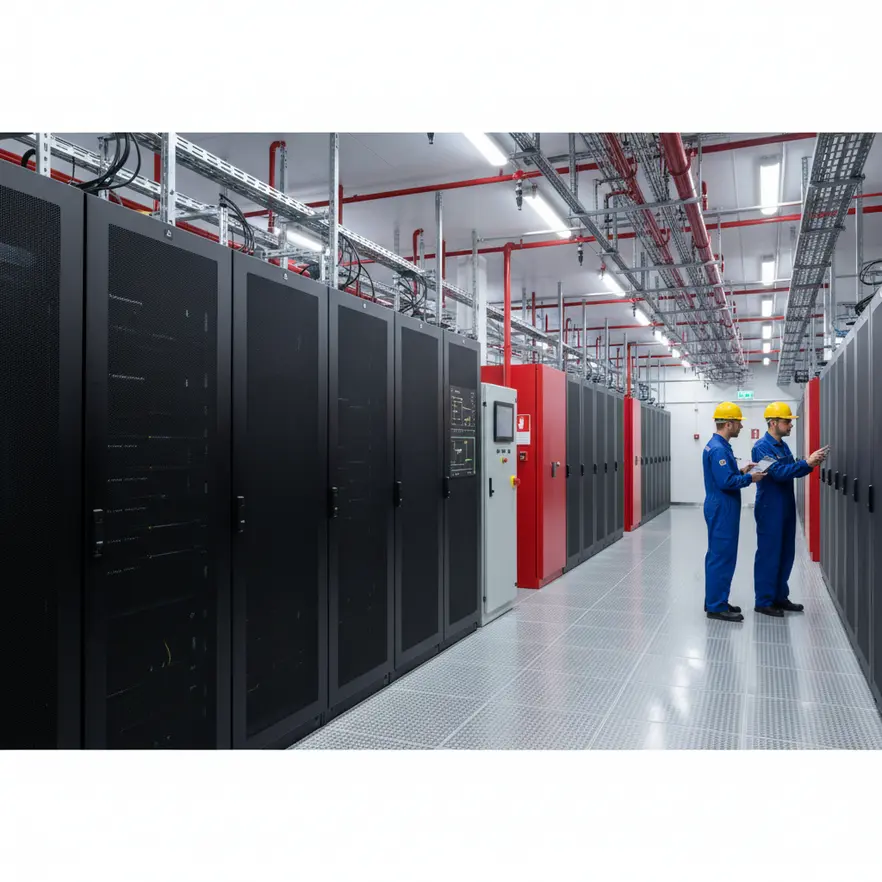
Image from associated Company – Kord Electric
How Experts Build Fire Safety Into Data Center Design from Day One
You don’t pour a glass of wine and then build the wine rack—that’s backward logic. The same goes for fire safety. It starts before the walls go up.
Kord Fire Protection technicians emphasize that prevention is less about reaction and more about architecture. Think about firewalls (the literal ones), fire-rated walls, raised flooring to keep cables cool and cats away, and zoned suppression systems that can distinguish between an annoying sneeze of static and a legit blaze.
Oh, and ventilation. You want just enough airflow to keep cooling efficient and not so much that flames start doing The Cha-Cha Slide across your fiber optics. Every part of a modern facility is designed with “don’t let things burn” as Rule #1—even the paint sometimes.
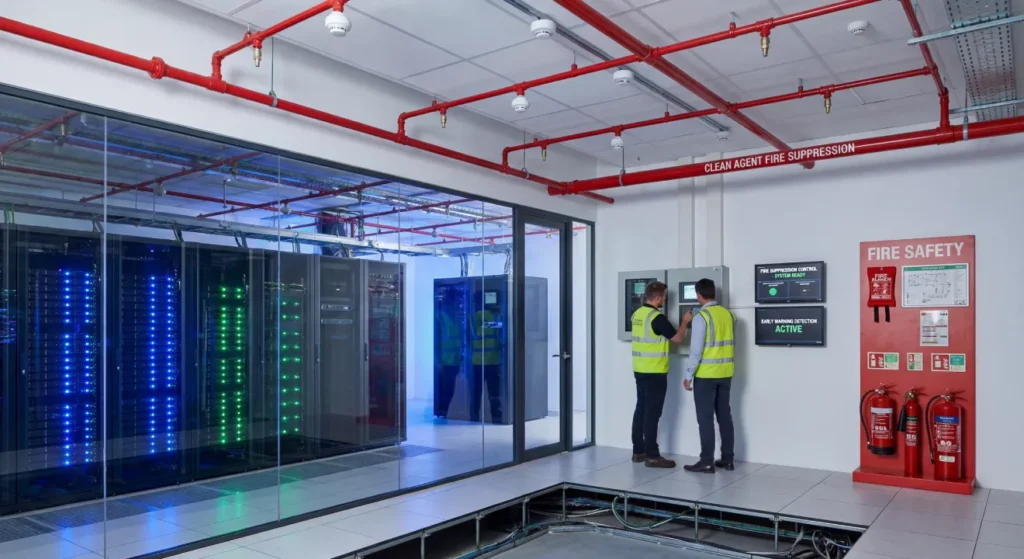
Quick Actions, Lasting Impacts: The Role of Advanced Detection Systems
You know how your dog can hear a sandwich being made from three rooms away? That’s the kind of hyper-attentive tech we’re talking about here—but for smoke and heat instead of tuna melt aromas.
Modern data centers rely on very early smoke detection apparatuses (VESDA, if you’re into sci-fi acronyms). These systems sample air continuously, like a barista sniffing for burnt espresso beans, and detect particles long before you see smoke.
But what separates the pros from the amateurs? Integration. Kord Fire Protection’s specialists don’t just install sensors and pray. Instead, they connect detection with suppression systems, server shutdown protocols, and even on-site maintenance alerts. It’s like giving your servers their own bodyguards and EMTs.
Gas vs. Water Suppression Systems: The Age-Old Battle (With No Bad Guy)
Ah yes, the infamous question: Do you want to drown your million-dollar servers or gas them gently to sleep? Sounds terrible phrased like that—but that’s the essence of suppression system selection.
Let’s break it down:
Gaseous Suppression Systems:
- Use inert or chemical gases
- Leave behind no residue
- Ideal for electronics-rich environments
- Require sealed rooms and pressurization
Water Mist Systems:
- Use ultra-fine droplets
- Can lower the temperature rapidly
- Environmentally friendly
- May not be ideal for sensitive electronics
Kord technicians often guide facility managers through this tricky decision. The verdict usually depends on the size of the center, the asset protection value, and sometimes just how allergic you are to the possibility of an actual flood.
Beyond Equipment: Human Error and Fire Risks in Server Rooms
You can build the Sistine Chapel of server spaces, but if Gary from Accounting plugs a space heater into the PDU, the Sistine’s going up in smoke.
Human behavior is the uninvited guest in lots of data center fire incidents. Coffee spills, blocked airflow vents, hot-swapping cables when you shouldn’t—all common and casually dangerous.
This is why fire prevention is part culture, part tech. Kord Fire Protection doesn’t just install systems—they train people. From mock drills that don’t include a fog machine (unfortunately) to signage that’s both helpful and designed to discourage dumb choices, human-centered precautions can make or break a safety plan.
Side note: If you need a sign that says “Don’t microwave popcorn in the server room,” that’s a bigger problem. Yes, it’s happened.
Compliance Isn’t Just Red Tape—It’s a Safety Net
Most folks hear “compliance” and immediately get that glazed-donut look in their eyes. We get it. But those building codes and standards aren’t just bureaucratic bedtime stories. They’re your roadmap to not ending up in the newspaper for all the wrong reasons.
Codes like NFPA 75 (for electronic equipment protection) and ISO/IEC 27001 (for info security management) are must-follow guides if you want both certification and peace of mind. Kord technicians don’t just know them—they live them.
They’re the kind of people who read building codes like thriller novels—and sometimes even argue over them at lunch. Unironically.
Scaling Fire Prevention as Your Data Center Grows
Startups in garages have different worries than enterprise-level data centers in multi-million-dollar compounds. But both need fire prevention. And as data centers evolve—from basic cages to hyperscalers—the systems need to grow too.
This means modular suppression components, scalable alert tech, and forward-thinking system designs. It’s like building a LEGO set that can expand into a Death Star later—with fireproof bricks, of course.
Kord’s approach always accounts for growth. Their team doesn’t just whisper sweet nothings to your data center today; they plan for what it might become tomorrow. And if you’re lucky—they’ll even leave behind a checklist instead of a love letter.
Remote Monitoring and AI: Fire Prevention Enters the Jetsons Era
Today, you don’t need someone physically watching blinking lights. Fire safety has entered the world of robots—sort of.
Remote monitoring platforms offer 24/7 digital surveillance of your fire systems. AI now helps detect anomalies, pattern behavior, and trigger alerts faster than a caffeine-rushed intern.
But here’s the kicker—technology doesn’t replace expert oversight. It enhances it. Kord technicians integrate smart tech with physical inspections to catch issues robots miss, like a blocked vent or—once again—Gary’s toaster oven. (What is it with Gary?)
Who’s In Charge of Maintenance? Hint: You Can’t “Set It and Forget It”
Fire prevention systems aren’t Ronco Rotisserie Ovens. You don’t just install, then head to brunch and hope for the best. These systems require routine testing, recalibration, and sometimes replacement, especially after any change in your server layout or cooling plan.
Kord Fire Protection schedules regular inspections, updates compliance documentation, and services whatever needs servicing—meticulously. Because a faulty suppression system is like a smoke alarm powered by a potato: useless come crunch time.
Maintenance also ensures you’re not tripping false alarms or missing slow drifts in atmospheric conditions. One hiccup, and suddenly you’re playing real-life Tetris with million-dollar hardware every time you swap a rack.
Frequently Asked Questions
What is the most common cause of data center fires?
Electrical faults, especially due to human error or overloaded circuits.
Do data centers use regular sprinkler systems?
No. They typically use gas or water mist systems to protect sensitive equipment.
How often should fire systems be inspected?
At least semi-annually, though quarterly checks are preferred in high-density centers.
What role do fire-rated barriers play?
They compartmentalize potential fires, preventing them from spreading quickly.
Are VESDA systems worth it for smaller facilities?
Absolutely. Early smoke detection is critical regardless of facility size.
Protecting Data from the One Thing Backup Tapes Can’t Save
Let’s be real. You can encrypt files, build redundancies, and upload everything to the almighty cloud—but if your data center burns, none of that matters. This is why modern data center fire prevention isn’t just a feature; it’s a foundation. And with pros like the team at Kord Fire Protection leading the charge, your facility is in trusted, level-headed, smoke-detecting hands.
Want your data fortress to stand the test of time, heat, and Gary’s carelessness? Good. Then it’s time to take action.
Reach out to the experts at Kord Fire Protection today and get your first real firewall—before smoke becomes your notification system.

Join Our Newsletter!
Get the latest fire safety tips delivered straight to your inbox From our Newsletter.